Log in
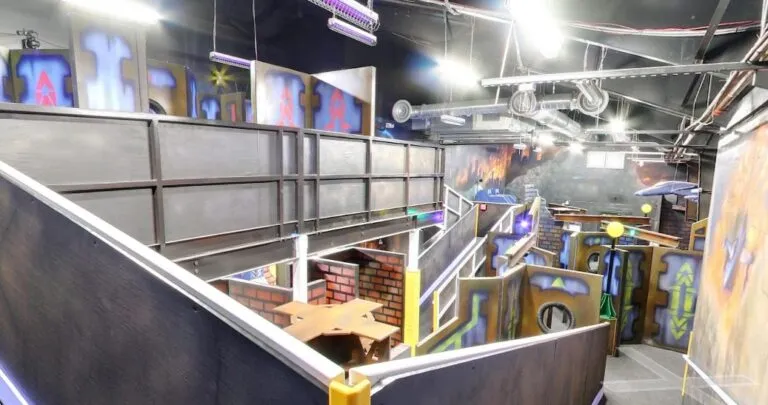
Destin Laser Tag and Blacklight Mini-Golf is located on the second floor of the Sunsations Beach Store along Emerald Coast Parkway in Destin, Florida. The venue offers a 4,000-square-foot laser tag maze accommodating up to 40 players, with free-for-all and team-based gameplay, plus an 18-hole blacklight mini-golf course that provides a fun indoor activity regardless of weather. A Game Master briefs all players before each session, and the arcade area features racing games, shooters, pool, air hockey, and a vintage Ms. Pac-Man machine.
Birthday party packages include three hours of reserved space, unlimited laser tag and mini-golf, and a drink per participant. Group events are available for weekdays, Saturday mornings, and after-hours with minimum player requirements. The venue also welcomes youth groups, sports teams, and field trips. Soft drinks and water are sold on-site, and guests may bring their own food for special events. The facility is wheelchair accessible with elevator access and free parking out front.
IndoorsThrills Laser Tag and Arcade is located in the Seascape Towne Centre in Miramar Beach, Florida.
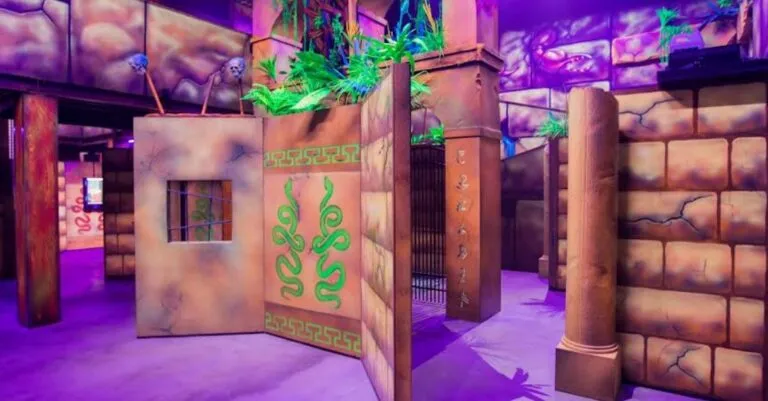
The club centers around the Temple of Doom, a two-story laser tag arena filled with themed obstacles, cobra pillars, and interactive elements that create a genuinely immersive battle experience. The arcade offers a variety of redemption games with a well-stocked prize counter that stands out for its quality. Party packages are available for groups of eight or more, including reserved seating, laser tag games, and arcade credits, with the option to bring your own food and drinks.
Adjacent to the gaming area is Moo La-La Ice Cream & Fudge, making it easy to turn a game session into a full evening out. The facility is clean, well-maintained, and works well for birthday parties, family outings, and rainy-day activities. Staff members are known for being patient and helpful, especially with younger visitors, though some recent reviews mention occasional machine downtime and longer waits during peak hours.
IndoorsWild Willy’s Adventure Zone is located on Okaloosa Island in Fort Walton Beach, Florida, along Miracle Strip Parkway.
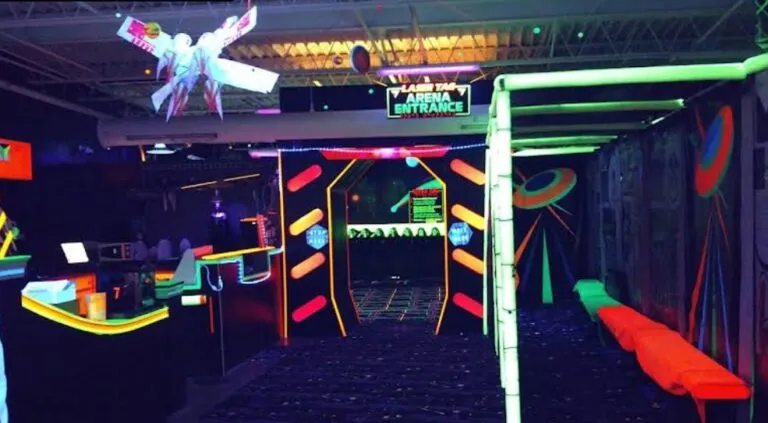
This family entertainment center spans 17,000 square feet of indoor space and a large outdoor area. The Urban Assault Laser Tag arena offers a two-story battlefield with urban obstacles, interactive targets, and 19 challenge modes. Other attractions include two 18-hole animatronic mini-golf courses (dinosaur and pirate themes), a 9-hole kiddie course, a 60-foot ropes course, go-karts, bumper boats, a 4D theater, VR experiences, and a redemption arcade with over 70 games.
The venue provides a private party room for birthdays, corporate events, team-building, wedding parties, and school field trips. On-site dining includes Salvati’s Pizza Factory and YogoMogo’s frozen yogurt. The Build Your Own Party Pack allows customization with add-ons like laser tag, go-karts, and bumper boats. Military and public safety personnel receive a 10% discount year-round. The facility is known for its friendly staff, clean environment, and ability to accommodate both small groups and large celebrations.
Indoors
Laser tag is an exciting and safe way for friends and family of all ages to have fun. It is a unique game of tag that uses completely safe beams to tag special sensors on the clothes of opposing players. The game is a growing trend in Fort Walton Beach, FL, as there are many laser tag arenas and outdoor fields to choose from.
No matter the age, laser tag is a great way to spend quality time together. It is a perfect activity for kid’s birthdays, parties, family events, and corporate retreats. The game can be as competitive or as relaxed as players want. Players can use strategy and teamwork to defeat their opponents, or just have a great time running around and tagging each other.

Laser‑tag is a team‑oriented sport that blends technology, strategy, and physical activity. Participants wear a vest fitted with infrared sensors and carry a handheld “phaser” that emits a low‑energy infrared beam. When the beam strikes a sensor, the vest registers a hit and tallies points. Unlike traditional paintball, laser‑tag is silent, non‑messy, and safe for players of virtually any age. Games are usually timed, and scores are displayed on a central console or a mobile app, allowing players to track their performance in real time. The core appeal lies in the combination of fast‑paced movement, tactical decision‑making, and the thrill of “shooting” an opponent without any physical projectile.
The flexibility of laser‑tag equipment makes it adaptable to a broad spectrum of scenarios, each designed to keep the experience fresh and exciting.
Classic Arena Battles – Two teams face off in a confined arena, battling for control of “bases” or simply trying to outscore the opposition before the clock runs out. This is the most common format found in commercial venues.
Mission‑Based Campaigns – Players receive a narrative “mission” such as rescuing hostages, disarming a virtual bomb, or retrieving a hidden artefact. Objectives are layered onto the core tagging mechanics, encouraging teamwork and problem‑solving.
Zombie Survival – A small group of “survivors” must evade an expanding horde of “zombies.” The zombies are often equipped with a different set of sensors that allow them to “infect” survivors, turning them into additional zombies.
Capture the Flag – Two sides defend their flag while attempting to infiltrate the opponent’s territory and capture the enemy flag. The element of stealth adds a strategic dimension to the fast‑paced action.
Space‑Station Simulations – In venues with darkened, high‑tech environments, players might navigate a simulated spacecraft, completing tasks while fending off alien attackers. Ambient lighting and sound effects heighten immersion.
Corporate Scenario Play – Tailored to business audiences, these games incorporate problem‑solving challenges, leadership exercises, and debrief sessions that translate the on‑field experience into workplace skills.
The diversity of scenarios ensures that laser‑tag can be repeatedly enjoyed without feeling repetitive, making it a popular choice for both casual outings and structured events.
Beyond its entertaining surface, laser‑tag delivers several measurable benefits that appeal to parents, educators, and corporate organizers alike.
Physical Activity – Players sprint, duck, and maneuver through obstacles, providing cardiovascular exercise comparable to a moderate-intensity workout. The high‑energy nature of the game encourages participants to stay active without the monotony of traditional gym routines.
Cognitive Stimulation – Successful gameplay requires quick decision‑making, spatial awareness, and strategic planning. Players constantly assess threats, coordinate with teammates, and adjust tactics in real time, sharpening mental agility.
Team Building – The team format fosters communication, trust, and collaborative problem‑solving. Participants learn to delegate roles, share information, and support each other under pressure, skills that translate directly to academic or professional environments.
Stress Relief – The combination of physical exertion and a light‑hearted competitive outlet helps lower cortisol levels, providing a healthy release for pent‑up tension. The non‑violent nature of infrared beams ensures that the excitement remains safe and family‑friendly.
Inclusivity – Because the equipment is non‑projectile and adjustable for different skill levels, laser‑tag is accessible to people with varying physical abilities. Many venues offer wheelchair‑friendly layouts and adaptive sensors, ensuring that everyone can participate.
Technological Literacy – Engaging with sensor‑based gear and digital scoreboards introduces players to basic concepts of data collection, real‑time feedback, and user interfaces, subtly reinforcing tech fluency.
Collectively, these benefits make laser‑tag a multidimensional activity that supports health, social development, and cognitive growth.
Researchers in kinesiology and psychology have examined laser‑tag as a model for active gaming. Studies indicate that laser‑tag sessions can elevate heart rate to 70‑80 % of maximum, mirroring the intensity of recreational sports like basketball or soccer. Moreover, the intermittent nature of the activity—short bursts of sprinting followed by brief pauses for strategic planning—mirrors high‑intensity interval training (HIIT), which has been linked to improved cardiovascular health and metabolic efficiency.
From a developmental perspective, child psychologists note that laser‑tag encourages prosocial behavior. The requirement to cooperate, share resources, and adhere to rules helps children develop empathy and conflict‑resolution skills. The immediate feedback provided by electronic scoring systems reinforces positive reinforcement loops, motivating repeated attempts and incremental skill improvement.
Industry analysts see laser‑tag as a growing segment of the experiential entertainment market. The technology’s relatively low maintenance costs, combined with the ability to repurpose venues for other immersive experiences (e.g., virtual reality, escape rooms), makes it attractive to investors. Experts also highlight the potential for data analytics: sensors can capture movement patterns, heat maps of player traffic, and engagement metrics, offering venue owners actionable insights for optimizing layout and game design.
Overall, the consensus among scientists and industry leaders is that laser‑tag occupies a unique niche where physical activity, technology, and social interaction intersect, positioning it as a valuable tool for health promotion, education, and entertainment.
Laser‑tag’s appeal cuts across age groups, cultural backgrounds, and interests, making it a truly inclusive pastime.
Children and Pre‑Teens – For younger players, laser‑tag serves as a safe alternative to paintball, offering excitement without mess or injury. Parents appreciate the controlled environment and the opportunity for kids to develop teamwork skills.
Teenagers – High‑school students often gravitate toward laser‑tag for its competitive edge and the chance to socialize outside the classroom. School clubs and after‑school programs frequently incorporate laser‑tag tournaments.
College Students and Young Adults – Campus recreation centers use laser‑tag for intramural leagues, while local venues host “late‑night” sessions that double as social mixers.
Corporate Teams – Companies organize laser‑tag outings as part of leadership development or employee‑engagement initiatives. The activity provides a low‑risk setting to observe team dynamics and identify natural leaders.
Seniors and Adaptive Athletes – Many facilities offer senior‑friendly game modes with slower pacing and larger arenas. Adaptive equipment—such as adjustable sensor mounts—allows participants with mobility challenges to join in.
The broad demographic reach is a testament to laser‑tag’s versatility and its capacity to be tailored to specific group needs.
For children, laser‑tag offers a structured environment in which they can explore physical challenges while learning cooperation. Youth programs often incorporate age‑appropriate rules, such as limiting hit zones to the torso and providing longer “respawn” times to avoid frustration. Sessions are typically shorter—15 to 20 minutes per round—to match attention spans, and the games are supervised by trained staff who emphasize safety and positive sportsmanship.
In addition to pure fun, many educators integrate laser‑tag into curricula focused on STEM concepts. For example, teachers might use the game’s scoring data to teach basic statistics, or discuss the infrared technology underlying the equipment to spark interest in physics and engineering.
Laser‑tag’s adaptability makes it an attractive option for special occasions.
Birthday Parties – A laser‑tag party provides a high‑energy, interactive alternative to traditional cake‑and‑games celebrations. Packages often include private arena time, themed decorations, and customizable game scenarios that align with the birthday child’s interests (e.g., space missions or superhero battles). The built‑in scoring system automatically creates a leaderboard, adding a friendly competitive edge.
Graduations – Whether marking the end of high school or a university degree, graduation laser‑tag events combine celebration with team bonding. Organizers can schedule a series of short matches that allow all graduates to rotate through teams, encouraging mingling and the formation of new connections before entering the workforce.
Corporate Parties – For companies seeking memorable team‑building experiences, laser‑tag can be framed as a strategic exercise. Facilitators can embed company values into mission‑based games—such as “innovate” or “collaborate”—and follow up with debrief sessions that translate game outcomes into actionable workplace insights. The non‑violent, inclusive nature of the activity also aligns with corporate safety policies and diversity initiatives.
In each of these contexts, laser‑tag delivers an energetic, memorable backdrop that encourages participants to let loose while still fostering constructive interaction.
Laser‑tag can be enjoyed in a variety of settings, each offering distinct advantages.
Most commercial laser‑tag facilities are indoor, featuring darkened rooms, neon lighting, and modular obstacles such as inflatable barriers, concrete walls, and multi‑level platforms. Indoor venues provide climate control, allowing year‑round operation regardless of weather. They also often incorporate sophisticated audio‑visual effects—laser beams, fog machines, and surround sound—that amplify immersion.
Key considerations for choosing an indoor arena include:
Outdoor laser‑tag expands the play area to parks, forests, or specially designed campuses. Natural terrain adds a strategic layer: trees, hills, and uneven ground create cover and line‑of‑sight challenges not possible in a confined indoor space. Portable laser‑tag kits—battery‑powered vests and phasers—allow organizers to set up temporary fields for festivals, school outings, or corporate retreats.
Benefits of outdoor play include:
When selecting an outdoor venue, organizers should account for lighting conditions (laser sensors may be less effective in bright sunlight), weather contingencies, and the need for portable power sources for the equipment.
Some companies provide mobile laser‑tag services that bring the equipment to schools, corporate campuses, or private residences. These hybrid setups combine the logistical convenience of indoor tech with the expansive possibilities of outdoor terrain, offering a flexible solution for groups that require a bespoke experience.
Laser‑tag has evolved from a niche amusement into a multifaceted activity that intersects health, education, entertainment, and corporate development. Its core technology—a simple infrared sensor system—has proven adaptable enough to support a wide array of scenarios, from classic arena battles to narrative‑driven missions and corporate team‑building exercises. Scientific research validates its physical and cognitive benefits, while industry analysts recognize its growing market potential and data‑driven capabilities.
The sport welcomes participants of all ages, with tailored experiences for children, teenagers, adults, and seniors. Whether it is a birthday party, a graduation celebration, or a corporate retreat, laser‑tag provides an energizing platform for social interaction, strategic thinking, and memorable fun. With both indoor arenas and outdoor fields readily available, groups can choose the environment that best fits their size, theme, and logistical needs.
In a world increasingly dominated by screen‑based entertainment, laser‑tag stands out as an active, collaborative, and technology‑enhanced experience that encourages players to move, think, and connect—making it a valuable addition to any recreational or professional program.