El Monte
 Log in
Log in
Log in

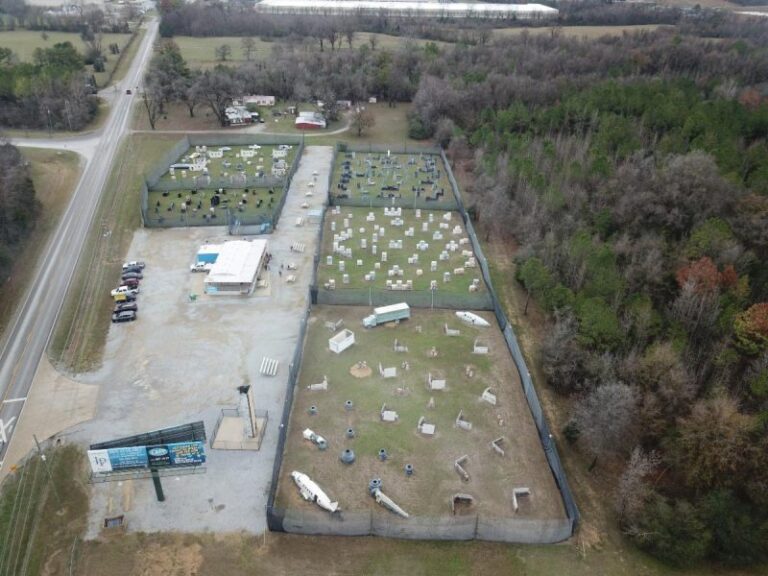
Alabama Paintball 280 is located in Sterrett, AL.
Alabama Paintball 280: The Newest Premier Paintball Experience in Sterrett, AL
Alabama Paintball 280, located in Sterrett, AL, is presented as the newest premier paintball experience in the state. They offer open play every Saturday, with equipment provided.
They offer Open Play, which are public sessions where individuals and small groups are combined. These package options are for a public paintball playing session where individuals may be added to a group of other Open Play guests. Participants will still rotate between all 5 of their playing fields while under the supervision and guidance of their service-oriented Safety Hosts, who act as referees and assistants throughout the stay. They provide clean and reliable rental equipment. Equipment is guaranteed to be available for up to 2 hours, with the only limit being the amount of ammo consumed. Players can anticipate consuming between 50-100 paintballs per game, with each game lasting between 3-10 minutes. The facility features outdoor space for parties and events.
 Indoors
Doomsday Paintball & Airsoft Park is located in Athens, AL
Doomsday Paintball & Airsoft Park is an adrenaline-packed adventure park located in Athens, AL. The park features 55 acres of dense woodlands and open fields, offering a variety of game scenarios for paintball and airsoft enthusiasts of all levels. The park also offers rental equipment and a pro shop for all your paintball and airsoft needs. With professional referees on-site and a commitment to safety, Doomsday Paintball & Airsoft Park is the perfect destination for a thrilling day of tactical gaming.
 Outdoors
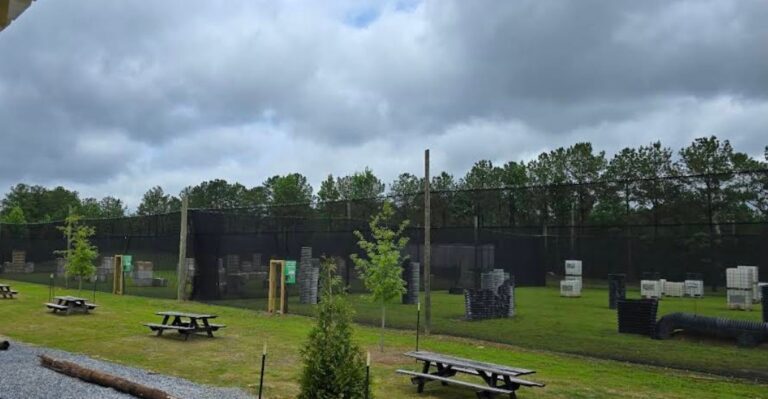
Central Alabama Paintball Park is located in Calera, AL
Nestled in the heart of the Deep South, Central Alabama Paintball Park stands out as a premier destination for paintball enthusiasts of every skill level. The complex is not a single, homogeneous field but a curated collection of five completely different arenas, each engineered to deliver a unique tactical experience. Whether a group of friends is looking for a quick, high‑energy skirmish or an organization is planning a sprawling tournament that could host hundreds of players, the park’s versatile layout accommodates both. Its blend of makeshift fortifications, repurposed vehicles, and thoughtfully designed terrain creates an immersive battlefield that keeps participants coming back for more.
Outdoors
Gelly Ball is a fast‑growing, hybrid sport that blends the kinetic excitement of dodgeball, the strategic positioning of volleyball, and the tactile novelty of soft, gelatinous projectiles. The “gelly” component refers to the specially engineered, low‑density balls made from a non‑sticky, food‑grade polymer that feels like a firm, rubbery jelly when squeezed. These balls are safe enough for indoor play, yet resilient enough to bounce off concrete or grass without breaking. Because they are lightweight (typically 150‑200 g) and possess a gentle “squish” on impact, they can be hurled, caught, and even bounced off walls without causing injury, making the game appealing to a broad age range and a variety of venues.
Unlike traditional dodgeball, where a single hit ends a player’s participation, Gelly Ball uses a point‑based system that rewards both offensive throws and defensive catches. Teams earn “gelly points” for striking opponents, for successful rebounds off a designated wall, and for spectacular catches that turn the ball back toward the opposing side. The result is a dynamic, constantly shifting contest that demands quick reflexes, spatial awareness, and teamwork—all while keeping the risk of bruises or broken equipment to an absolute minimum.
A standard Gelly Ball match pits two squads of five to eight players against each‑other on a rectangular court that can be as small as a classroom or as large as a basketball half‑court, depending on the venue. The playing surface is divided into three zones: a front zone, a mid‑zone, and a back zone. At the center of the mid‑zone stands a low, padded “bounce wall” (often a portable foam panel) that serves as the primary rebound surface. Each team occupies one half of the court, with a “home line” marking the rear boundary.
Kick‑off – At the start of a round, the balls are placed in the center of the bounce wall. The referee blows the whistle, and both teams rush to retrieve as many balls as they can within the first 10 seconds. This surge creates an immediate scramble, encouraging quick decision‑making.
Offensive Phase – Once a player secures a ball, they may either launch it directly at opponents in the opposing half‑zone or aim it at the bounce wall. A direct hit scores one gelly point; a hit that rebounds off the wall before striking an opponent scores two points because the wall adds an element of skillful angling.
Defensive Phase – Players may intercept incoming balls with their hands or forearms. A clean catch awards the catching team three points and grants the catcher the right to immediately re‑throw the ball toward the opposite side, potentially turning defense into instant offense.
Elimination & Revival – If a player is hit by a ball, they briefly step out of the active play area and perform a quick “gelly‑jump” (a light hop on the spot) before rejoining. This temporary removal keeps the game fluid while still penalizing careless positioning.
Scoring & Rounds – A typical match consists of three five‑minute rounds, with a brief 2‑minute intermission. Points accumulate across rounds; the team with the highest total at the conclusion wins. In the event of a tie, a sudden‑death “bounce‑off” is played, where a single ball is placed on the bounce wall and the first team to score a point claims victory.
These adaptable rule sets allow organizers to tailor the intensity and complexity of Gelly Ball to fit school recess, birthday parties, corporate team‑building events, or competitive league play.
Physical Development – The sport is a full‑body workout. Sprinting between zones, lunging to catch, and twisting to aim a throw all engage core muscles, improve cardiovascular endurance, and develop fine motor coordination. Because the balls are light, the impact on joints is minimal, making it suitable for participants who may be prone to injuries in higher‑impact sports.
Cognitive Growth – Gelly Ball demands rapid assessment of angles, distances, and opponent positioning. Players must constantly calculate whether a direct throw or a wall‑bounce offers a higher probability of scoring. This real‑time problem solving sharpens spatial reasoning and decision‑making under pressure.
Social Skills & Teamwork – Points are awarded not only for individual feats but also for collective strategies such as setting up a “wall cascade” where several teammates coordinate consecutive bounces. Success hinges on clear communication, trust, and the ability to read teammates’ intentions—a natural ice‑breaker for new groups.
Safety & Accessibility – The soft gelly composition eliminates the bruises, broken noses, or cracked teeth that can accompany traditional dodgeball. The optional helmets and the rule that a hit only pauses a player (rather than eliminating them) keep the game inclusive for children, seniors, and people with limited mobility.
Versatility of Space – Because the bounce wall can be a portable foam panel, the game can be set up on a gym floor, a school hallway, a parking lot, or a backyard lawn. This flexibility makes Gelly Ball an attractive option for venues that lack permanent sports infrastructure.
Stress Relief – The tactile sensation of the squishy balls, combined with the laughter that often erupts when a spectacular bounce or catch occurs, triggers the release of endorphins. For adults, a quick Gelly Ball session during a lunch break can provide a mental reset, boosting productivity for the remainder of the day.
Overall, the sport delivers a balanced blend of aerobic exercise, mental agility, and social interaction—all within a low‑risk environment.
The design ethos behind Gelly Ball was “fun for everyone.” Consequently, the sport accommodates a broad demographic spectrum:
Children (5–12 years) – With simplified rules (no catching) and a focus on play rather than competition, younger kids can develop basic motor skills while having a blast. The gentle nature of the balls assuages parental concerns about injuries.
Teenagers (13–18 years) – At this stage, the full rule set—complete with wall rebounds, point multipliers, and strategic catching—offers a competitive edge that appeals to school clubs and after‑school programs.
Adults – Corporate wellness programs and community leagues use Gelly Ball to foster teamwork and break down hierarchical barriers. The fast‑paced nature serves as an engaging alternative to standard office fitness activities.
Seniors – Because the sport can be played at a reduced intensity—using a larger court, fewer balls, and longer recovery times—older adults can enjoy light cardio and coordination drills without overexertion.
Special‑Needs Participants – The adjustable rules, low‑impact equipment, and clear visual cues (different‑colored balls, bright bounce walls) make Gelly Ball accessible for individuals with autism, ADHD, or limited motor control. Adaptations such as allowing a single hand for catching or providing a “coach” to guide positioning further broaden inclusion.
In short, Gelly Ball is not confined to a single age group or ability level; it thrives on the diversity of its participants, each bringing a unique style to the game.
Birthday celebrations often revolve around activities that are easy to set up, safe, and instantly entertaining. Gelly Ball checks all those boxes and adds a memorable twist that can be customized to any theme.
Instant Setup – A portable bounce wall, a handful of gelly balls, and a delineated play area can be assembled in under ten minutes. No permanent fixtures or extensive equipment rentals are required.
Scalable Teams – Depending on the number of guests, the host can form multiple mini‑teams or run a “free‑for‑all” style where every participant competes for individual points. This flexibility ensures no one is left waiting on the sidelines.
Thematic Customization – Balls are available in a rainbow of colors, allowing organizers to match a party’s palette—neon orange for a superhero bash, pastel pink for a princess party, or metallic silver for a futuristic theme. The bounce wall can be draped with banners or stickers to reinforce the motif.
Non‑Messy Fun – Unlike balloon popping or paint‑filled water balloons, gelly balls leave no residue. After the game, the only cleanup involves gathering the balls and folding the bounce wall, making post‑party tidying a breeze.
Warm‑up Round – A short 3‑minute “tag‑the‑ball” session introduces guests to the feel of the gelly balls and builds excitement.
Main Tournament – Teams of three to four compete in three 5‑minute rounds, with a simple scoreboard displayed on a whiteboard.
Championship Face‑off – The top two teams battle in a sudden‑death bounce‑off for the “Gelly Grand Champion” title. A small trophy or a bag of candy can be awarded.
Cool‑Down & Photo Op – A group photo with the bounce wall and the victorious team holding their trophy preserves the memory.
Because the game naturally generates laughter, shrieks, and high‑five moments, it becomes the centerpiece of the celebration rather than a peripheral activity. Parents appreciate the blend of physical exertion and controlled excitement, while kids relish the chance to “throw” something soft at their friends without fear of hurting anyone.
One of Gelly Ball’s greatest strengths is its adaptability to a variety of environments. Below are the most common settings where the sport thrives, along with practical tips for each.
School Gyms and Multipurpose Rooms – The hard‑floor surface provides an ideal bounce for the wall panel. Gymnasiums typically have the required square footage, and existing benches or bleachers can serve as spectator seating.
Community Centers – Many local recreation halls have removable flooring or carpeted areas. Using a portable rubber mat under the bounce wall ensures the panel stays stable on softer surfaces.
Corporate Offices – Large conference rooms or empty breakout areas can be cleared for a quick 30‑minute game during lunch hours. Portable pop‑up walls and a small set of balls fit easily into a storage closet.
Retail Spaces and Malls – Seasonal pop‑up events—especially during holidays—use Gelly Ball as an interactive attraction. The bright colors of the balls draw attention, while the safe, low‑impact nature guarantees that shoppers won’t be inadvertently knocked over.
Parks and Playgrounds – The open grass fields accommodate larger courts, enabling longer throws and more elaborate wall placements. In a park setting, the bounce wall can be anchored to a sturdy metal frame or a weighted base.
Backyards and Private Gardens – For family gatherings, a simple foam panel propped against a fence serves as the wall. The compact size of the equipment makes it easy to store in a garage when not in use.
Beach Boards – On sand, the bounce wall is placed on a wooden platform to prevent sinking. The softer landing surface adds an extra cushion for players who may fall.
Sporting Complexes – Some modern sports centers now include a dedicated “Gelly Zone,” where multiple bounce walls are arranged in a circular configuration, allowing simultaneous games or a large free‑for‑all.
Because the bounce wall is modular, event planners often create “pop‑up Gelly Courts” that can be assembled in temporary venues such as festivals, school fairs, or corporate expos. These kits typically include:
The entire system can be loaded into a single van and set up by two people in under fifteen minutes, making Gelly Ball an attractive sport for itinerant entertainers and community outreach programs.
Gelly Ball has emerged as a versatile, low‑risk, high‑energy sport that merges the exhilaration of throwing games with the strategic depth of coordinated team play. Its soft, bouncy balls, portable bounce wall, and adaptable rule set enable anyone—from preschoolers to corporate executives—to join in without the fear of serious injury. The benefits span physical fitness, cognitive sharpening, social bonding, and stress relief, while the ease of setup opens doors to birthday parties, school recess, community festivals, and even pop‑up events at shopping centers.
Whether played on a polished gym floor, a sun‑splashed park lawn, or a temporary expo hall, Gelly Ball delivers a universal language of fun: the satisfying “squish” of a well‑thrown ball, the roar of a crowd when a spectacular rebound lands, and the collective high‑fives that follow a successful catch. As more schools, recreation departments, and event organizers discover its inclusive charm, Gelly Ball is poised to become a staple of modern recreational culture—one gelatinous projectile at a time.


 13211 US-280, Sterrett, AL 35147, United States