El Monte
 Log in
Log in
Log in

Hinkle Fun Center sits at the northwest corner of Indian School Road and Tramway on Albuquerque’s East Side, a family entertainment destination that has been operating for over 25 years.
The venue’s main draws are its tactical games and attractions: a 4,500-square-foot black-light Helios laser tag arena, outdoor paintball and Splatmaster fields, Bazooka Ball, an XD Dark Ride, and immersive virtual reality. Guests can choose single-attraction passes, three-attraction passes, or an all-day Ultimate Play Pass covering go-karts, bumper boats, mini golf, rock climbing, and more.
Beyond the games, Hinkle offers two game rooms with over 115 arcade and redemption games, prize centers, two 18-hole mini golf courses, and Cody’s Cafe at both buildings. It is well suited to birthday parties, corporate events, team outings, and group celebrations, with customizable packages for groups of ten or more and a friendly staff that keeps the grounds well maintained.
 Indoors
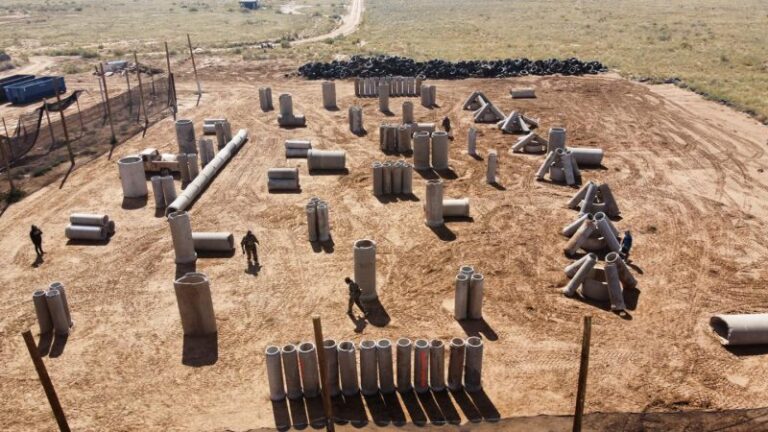
Ruckus Paintball + Airsoft sits on the west side of Albuquerque, inside the Albuquerque City Shooting Range Park at 16001 Shooting Range Access Rd, as the largest paintball park in New Mexico.
The park offers four game styles across three themed fields: classic paintball and low-impact paintball for ages 10 and up, airsoft on the first and third Saturdays, and Gellyball for younger kids ages 6 to 10. Full rental packages include guns, face masks, unlimited air fills, and all-day admission, with paintballs included. Walk-on players are welcome on weekends, and the fields feature bunkers, forts, trenches, and varied obstacles supporting capture-the-flag, elimination, and scenario games.
Ruckus doubles as a full event venue, hosting birthday parties, bachelor and bachelorette parties, corporate outings, youth and school groups, church groups, and sports teams, with private bookings available any day of the week and custom quotes for groups of 30-plus. The professional, safety-focused staff includes dedicated airsoft referees with decades of combined experience. Gift cards are available, and reservations are recommended since rentals book up quickly on weekends.
 Outdoors
Main Event Albuquerque sits in the Montgomery Heights neighborhood, just off I-25 North on the Pan American Freeway, north of Comanche Road, about ten minutes from downtown Albuquerque.
The center is a full-scale family entertainment destination with 22 state-of-the-art bowling lanes, a multi-level laser tag arena, an arcade with more than 100 retro and modern games, gravity ropes, billiards, virtual reality, and mini golf. Birthday packages include a dedicated party host, reserved party space, food, and activities, with options ranging from a simple laser tag party to all-access celebrations.
Beyond the games, the venue offers a full-service restaurant and sports bar with pizza, burgers, wings, and custom cocktails, plus banquet menus for larger groups. It also provides private rooms and meeting space with free Wi-Fi and big-screen TVs, making it a popular choice for corporate events, team building, holiday parties, and group gatherings of all sizes.
IndoorsCool Springz is a locally owned family activity center located at 5205 San Mateo Blvd NE in the northeast part of Albuquerque, New Mexico. It is an active, operating venue that combines a full trampoline park with laser tag, a ninja course, climbing walls, a stunt airbag, trampoline dodgeball, a battle beam, an arcade, and a dedicated play area for little ones. Guests can buy a day pass and move freely between all the features, with laser tag standing out as a major draw thanks to its themed scenarios and team-based gameplay.
The facility also serves as a versatile event venue for birthdays, church events, school trips, group outings, and corporate team-building, with dedicated party rooms and reserved decorated tables. The on-site Jumpin’ Jax cafe offers pizza, snacks, and drinks, while the climate-controlled building provides free high-speed internet and comfortable seating, making it easy to turn a visit into a full day of active family fun.
IndoorsLaser tag has evolved from a niche recreational activity into a sophisticated global phenomenon that combines high-tech hardware with intense physical strategy. Often described as a live-action video game, it offers a unique blend of adrenaline-pumping excitement and tactical depth. Unlike many other competitive sports, laser tag bridges the gap between different age groups and fitness levels, making it one of the most versatile forms of modern entertainment.
Laser tag is a non-contact competitive shooting game where participants use infrared-emitting devices, commonly referred to as taggers, to target infrared-sensitive sensors worn by their opponents. Despite its name, the technology utilized in modern laser tag is rarely based on actual lasers, which can be hazardous to the eyes. Instead, most commercial systems employ coded infrared signals, similar to those used in television remote controls. When a player successfully “tags” an opponent’s sensor, the hit is registered by an onboard computer within the equipment, often accompanied by sound effects, haptic feedback, or visual indicators on a display.
The equipment typically consists of two primary components: the tagger and the sensor array. In many indoor facilities, the sensors are integrated into a wearable vest that covers the chest, back, and shoulders. In outdoor or tactical settings, sensors are often mounted on a headband to provide a more streamlined experience. Because the “bullets” are merely beams of light, laser tag is entirely painless, making it a preferred alternative to combat sports like paintball or airsoft. The sophisticated software powering these systems allows for real-time tracking of scores, health levels, and ammunition, creating a fully immersive digital-physical hybrid environment.
The versatility of laser tag software allows facility operators to move far beyond a simple free-for-all match. Various game scenarios turn a standard round into a complex exercise in strategy and cooperation. One of the most common modes is Team Deathmatch, where two or more groups compete to accumulate the highest number of tags within a set time limit. This mode emphasizes basic coordination and positional awareness.
For those looking for more depth, Capture the Flag is a staple scenario. In this version, teams must penetrate the enemy’s territory to retrieve a physical or digital flag while defending their own base. This requires a division of labor, with some players acting as aggressive “rushers” and others serving as “defenders.” Another popular scenario is the VIP or Escort mission, where one team must protect a designated player while moving them to a specific extraction point, while the opposing team attempts to eliminate the VIP.
Advanced scenarios can even incorporate RPG-like elements. Base Defense missions involve one team hunkering down in a fortified position against an overwhelming force of attackers with limited lives. Additionally, many modern venues offer “Zombie” modes, where a small number of infected players must tag survivors to turn them into teammates, creating an asymmetrical and tension-filled experience. These scenarios ensure that the game remains fresh and mentally stimulating for recurring players.
Participating in laser tag offers a wide range of benefits that span physical, cognitive, and social domains. Physically, it is a high-intensity cardiovascular workout disguised as play. During a typical session, players engage in constant movement, including sprinting, crouching, and pivoting. This improves agility, stamina, and overall motor coordination. Unlike a traditional gym workout, the gamified nature of laser tag keeps players engaged, leading to higher caloric expenditure without the perceived boredom of repetitive exercise.
Cognitively, laser tag is a test of split-second decision-making and spatial awareness. Players must constantly process information about their surroundings, track enemy movements, and manage their resources like ammunition and health. This sharpens focus and enhances the ability to remain calm under pressure. Communication is also a vital component; successful teams must use verbal and non-verbal cues to coordinate their movements and execute complex strategies.
Socially, laser tag acts as a powerful bonding tool. It fosters a sense of camaraderie and shared purpose. Because the game relies on teamwork rather than individual athleticism, it encourages players to support one another, building trust and strengthening relationships. It is one of the few activities where a child and an adult can compete on relatively equal footing, promoting intergenerational interaction.
Scientists and industry experts have long recognized the pedagogical and psychological value of laser tag. From an educational standpoint, experts in child development view laser tag as a form of kinesthetic learning. It teaches children about cause and effect, the importance of rule-following, and the basic principles of physics regarding light and reflection. Because it is a “safe” simulation of conflict, it allows participants to explore competitive drive and leadership without the risks of physical injury or hostility.
Technological experts in the leisure industry emphasize the safety and precision of the infrared technology used. Unlike other projectile-based games, laser tag does not require protective eyewear or heavy padding, as the infrared beams are entirely harmless. Furthermore, the data-driven nature of the sport is a point of interest. Industry analysts note that the ability to track every shot and movement via cloud-based software provides a level of transparency and competitive integrity that traditional sports often lack.
Moreover, psychologists have studied the stress-relief aspects of laser tag. The engagement in “flow state”—where a participant is fully immersed in an activity—provides a mental break from daily stressors. The release of endorphins and adrenaline during play contributes to improved mood and mental well-being, leading many wellness experts to recommend social active gaming as a supplement to traditional exercise.
While laser tag is enjoyed by all ages, it holds a special place in the lives of children. It is often the first introduction many kids have to organized, competitive team play outside of traditional school sports. One of the primary reasons it is so popular for kids is the high success rate and low entry barrier. Most taggers are designed with ergonomic considerations for smaller hands, and the rules can be simplified for younger participants.
For parents, laser tag is an ideal choice because it eliminates the “ouch factor” associated with activities like paintball. There are no bruises or messy paint ruins on clothing. It provides a safe environment where children can run and burn off energy in a controlled, supervised setting. Additionally, laser tag promotes inclusivity. Children who may not excel in traditional sports like soccer or basketball often find their niche in laser tag, where stealth, patience, and strategy are just as valuable as raw speed. It builds confidence in children by rewarding different types of intelligence and physical skills.
Laser tag has become a premier choice for milestone celebrations due to its ability to accommodate large groups and provide a memorable, shared experience. For birthday parties, it offers a turnkey solution. Many venues provide private rooms, dedicated hosts, and a structured schedule that keeps children entertained while removing the logistical burden from the parents. The birthday child often gets to play as the “captain” or receives special power-ups, making them feel like the star of the show.
Graduation parties also benefit from the high-energy nature of the game. It serves as a perfect outlet for students to celebrate their achievements and decompress after the stress of exams. It provides a final opportunity for classmates to bond before moving on to new chapters of their lives, creating lasting memories through friendly competition.
In the corporate world, laser tag is increasingly utilized for team building. Unlike traditional trust falls or seminars, laser tag forces employees to work together in a fast-paced environment. It levels the corporate hierarchy; a junior employee and a CEO are equals on the battlefield. This dynamic helps break down social barriers, improves communication, and highlights natural leadership qualities within a team. Many corporations use laser tag to boost morale and foster a more collaborative office culture.
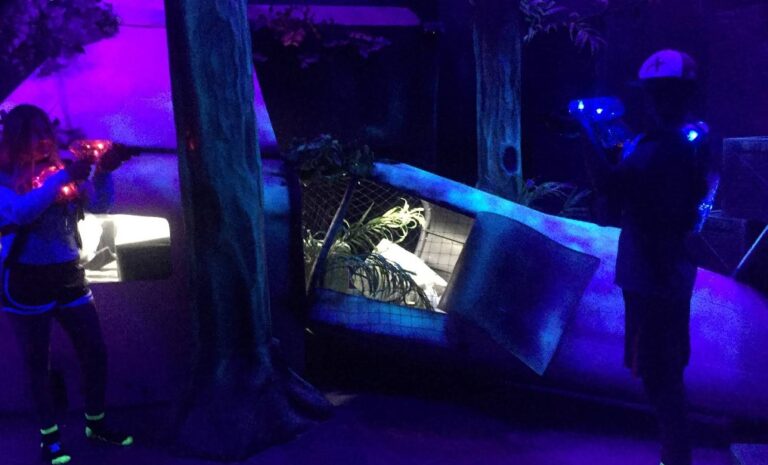
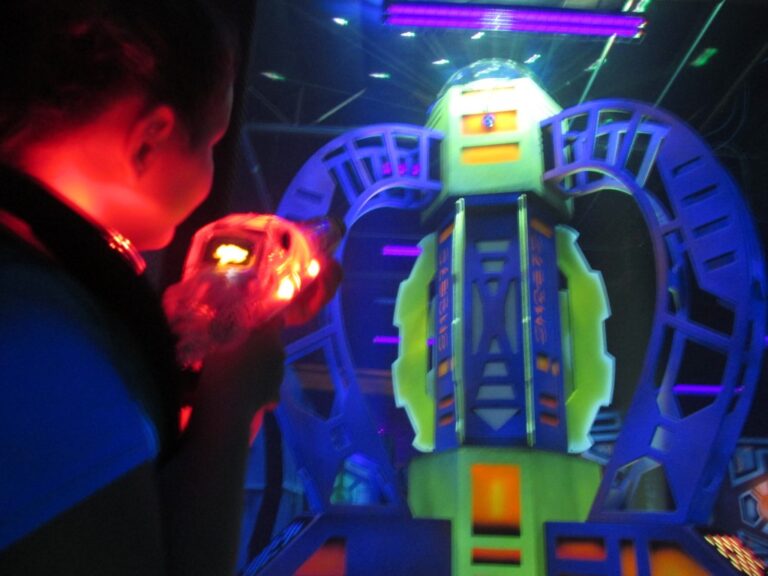
The environment in which laser tag is played significantly alters the experience, and players can choose between indoor and outdoor venues based on their preferences. Indoor venues are the most common and are typically designed with a “sci-fi” or “urban” aesthetic. These arenas use neon lights, blacklights, fog machines, and loud music to create a sensory-heavy atmosphere. The close quarters of an indoor arena lead to fast-paced, reactionary gameplay where stealth is difficult and action is constant. Climate control is a major benefit here, making indoor laser tag a year-round activity regardless of the weather.
Outdoor laser tag, often referred to as “Tactical Laser Tag,” offers a completely different vibe. These venues are typically much larger, utilizing natural terrain like forests, hills, and man-made bunkers. The equipment used outdoors is often more rugged and has a much longer range, sometimes reaching up to several hundred feet even in direct sunlight. Outdoor play emphasizes long-range strategy, camouflage, and flanking maneuvers. It feels more like a military simulation than an arcade game. The abundance of space allows for massive games with dozens of players, providing a sense of scale that indoor facilities cannot match.
Each venue type has its own merits. Those seeking an intense, neon-soaked “party” atmosphere generally gravitate toward indoor centers, while those looking for a realistic, tactical, and nature-based experience prefer the outdoor variant. Regardless of the setting, the core appeal of the game—the thrill of the hunt and the joy of the tag—remains the same.


 12931 Indian School Rd NE, Albuquerque, NM 87112, United States