
 El Monte
 Log in
Log in
Log in

Planet Trog Entertainment Complex sits in Whitehall Township, Pennsylvania, a short drive north of the Lehigh Valley Mall along MacArthur Road.
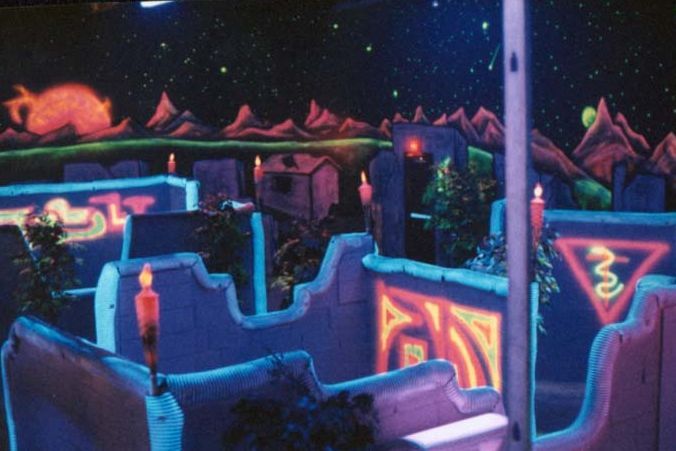
Home to the largest laser tag arena in the Lehigh Valley and voted one of the top ten laser tag places in the country, it runs private, group-only laser battles on a classic Actual Reality system, with solo, team, and other game formats. The venue also offers wireless virtual reality with over thirty experiences, a ticket redemption arcade, and sought-after team-building games, all in a wheelchair-accessible space where players must be eight or older.
Beyond the arena, Planet Trog hosts birthdays, corporate and business parties, sports team celebrations, youth group gatherings, and team-building meetings, with a private party room included in every booking. Guests can bring their own food and drinks, refuel at the on-site snack bar, and enjoy a lounge and recreation area, while the facility’s separate concert stages add a live music side to the complex.
 Indoors
In an era dominated by digital screens and sedentary entertainment, laser tag has emerged as a premier physical activity that bridges the gap between high-tech gaming and real-world kinetic movement. It is more than just running around in the dark; it is a complex, tactical experience that challenges both the mind and the body.
At its core, laser tag is a recreational shooting sport where players compete to score points by tagging opponents with infrared-emitting light guns. Each player typically wears a vest or a headband equipped with sensors that track these infrared beams. When a sensor is successfully “tagged,” the system registers a hit, often providing immediate feedback through sound effects, vibration, or lights on the equipment.
Unlike paintball or airsoft, laser tag is completely non-contact and utilizes harmless infrared technology, similar to that found in a television remote. Because there are no projectiles involved, it is considered safe for all ages and requires minimal protective gear. Modern laser tag has evolved significantly from the early 1980s prototypes, now incorporating sophisticated software that tracks accuracy, team rankings, and mission objectives in real-time.
The true brilliance of laser tag lies in its adaptability. It is rarely just a “free-for-all” deathmatch; instead, modern venues design scenarios that mimic tactical exercises or video game objectives. Common scenarios include:
Beyond the excitement, laser tag offers substantial health and social benefits. Physically, it is an intense form of interval training. Players are constantly sprinting, crouching, ducking, and navigating obstacles, which improves cardiovascular health, agility, and core strength.
Socially, the game acts as a catalyst for communication and cooperation. Because players are often divided into squads, success depends on verbal communication, strategic planning, and building trust with teammates. It requires individuals to think critically under pressure, fostering problem-solving skills that translate well outside of the arena.
Research into “exertion games” suggests that laser tag provides a unique form of “social exercise.” Psychologists have noted that participants often forget they are exercising because they are so engaged in the gamified objectives. This “cognitive distraction” allows people to exert themselves far more than they would during a standard trip to the gym.
Industry experts observe that the technology behind laser tag is currently experiencing a “second golden age.” As augmented reality (AR) and Internet of Things (IoT) technologies advance, laser tag equipment is becoming increasingly precise. Experts believe that the future of the industry lies in hybrid venues—spaces that use projection mapping on walls to change the arena’s layout instantly, allowing for a fresh experience every time a player enters the field.
While often associated with childhood, laser tag is a “sport for all seasons.” For children, it serves as an excellent outlet for boundless energy. It encourages motor skill development, hand-eye coordination, and spatial awareness. Furthermore, participating in a structured game helps children understand the importance of following rules, respecting teammates, and learning how to handle both victory and defeat with grace.
However, the appeal does not stop at childhood. Many adults find themselves drawn to the hobby, finding it a refreshing change of pace from the monotony of office work. It provides an environment where one can shed professional responsibilities and engage in healthy, competitive play.
Laser tag has become a cornerstone of event planning due to its high-engagement nature. For birthday parties, it provides a contained, active environment that keeps groups of children occupied in a supervised setting. Parents appreciate the organization, while children enjoy the immersive “hero” experience.
For graduation parties, it offers a nostalgic yet competitive way for friends to celebrate before moving on to new life stages. Perhaps most notably, corporate parties have adopted laser tag as a premier team-building tool. It breaks down professional hierarchies; when everyone is wearing the same vest and crouching behind the same barrier, the traditional office structure dissolves. It forces managers and subordinates to collaborate in a high-stakes, non-work-related environment, which often highlights hidden leadership skills and improves morale in the workplace.
The experience of laser tag varies significantly depending on the environment. Indoor arenas are typically designed as “blacklight” environments, often themed as futuristic cities, sci-fi space stations, or apocalyptic bunkers. These venues rely on intricate layouts, fog machines, and high-energy music to create an intense, fast-paced atmosphere. They are ideal for year-round play, regardless of weather conditions.
Outdoor laser tag, by contrast, focuses on realism. These fields often utilize natural terrain—forests, hills, or custom-built “military” villages—to provide a more immersive simulation. Outdoor equipment usually features longer ranges, allowing players to engage in long-distance sniping or tactical maneuvers. Whether one prefers the intense, close-quarters chaos of an indoor neon maze or the tactical, sprawling nature of an outdoor forest, there is a venue suited to every preference.
Laser tag remains a unique phenomenon in the world of entertainment. By successfully combining the adrenaline of competitive sports with the strategic depth of gaming, it provides an experience that is physically demanding, cognitively stimulating, and profoundly social. As technology continues to close the gap between virtual gaming and physical reality, laser tag will undoubtedly continue to evolve, remaining a vital part of social life for children and adults alike. Whether you are looking to host a high-energy party or simply want a new way to stay active, the arena is ready for you.


 3578 MacArthur Rd, Whitehall Township, PA 18052, United States