El Monte
 Log in
Log in
Log in

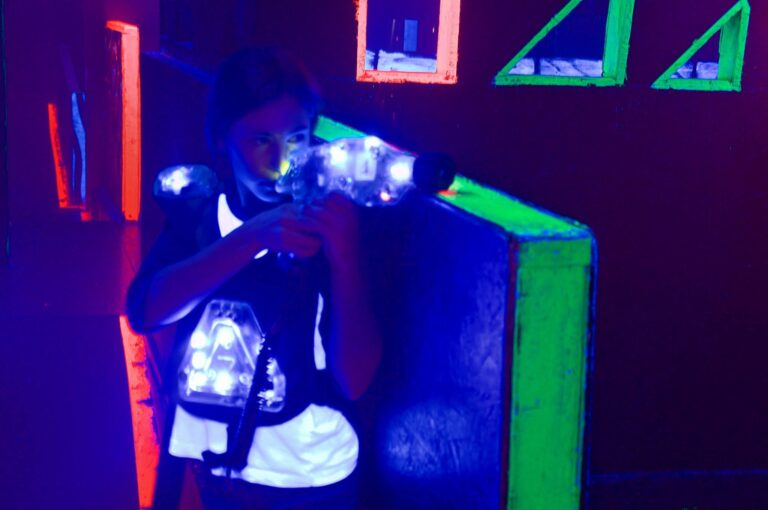
Lazer Mania Indoor Laser Tag is located in Hamilton, ON
In the heart of Hamilton, Ontario, lies a hidden gem that promises unparalleled excitement and entertainment for families and groups alike—Lazer Mania. As Hamilton’s premier location for interactive fun, Lazer Mania boasts a multi-level, state-of-the-art laser tag arena complemented by a cutting-edge selection of arcade and redemption games. It’s the go-to place for those looking to enjoy a heart-healthy and thrilling activity with their children or friends.
Lazer Mania isn’t just any laser tag venue; it prides itself on being home to the world’s most advanced laser game entertainment system. The arena itself is a marvel of design—an intricate maze featuring multiple levels, ramps, and visible laser beams that create an immersive experience filled with adventure and joy. From the moment you step into the arena, you are transported into a world of strategy and fast-paced action
 Indoors
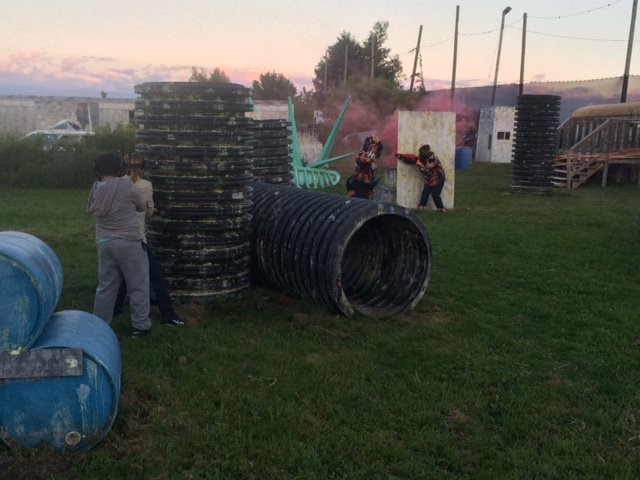
Outdoor Cameron Speedway & Amusements is located in Hamilton, ON
Cameron Speedway & Amusements in Hamilton, ON, is the quintessential family-owned and operated entertainment center, where the pursuit of fun and the creation of unforgettable memories have been paramount since 2002. Nestled conveniently near the Hamilton Airport, this year-round attraction is a beacon for thrill-seekers and fun-lovers of all ages.
Rain or shine, Cameron Speedway & Amusements has everything you need to celebrate life’s special moments or simply enjoy a day out with loved ones. Their versatile offerings make it a perfect venue for birthdays, group events, and casual outings. The facility’s year-round availability and ample free parking add to the convenience, ensuring that a fun-filled day is always within reach.
 Outdoors
Laser tag is a fast‑paced, team‑oriented game that blends technology with the classic thrills of hide‑and‑seek, paintball, and video‑game combat. Players wear lightweight vests equipped with infrared sensors and carry handheld “phasers” that emit invisible laser beams. When a beam strikes a sensor, the hit is recorded and displayed on a digital scoreboard. Most arenas use a central computer system to track scores, monitor player locations, and manage game modes, creating a seamless, real‑time experience that feels both futuristic and intuitively familiar. Because the equipment is non‑lethal, the activity is safe for participants of almost any age, making it a popular choice for recreation, training, and special events.
The versatility of laser tag lies in its ability to accommodate a wide variety of scenarios, each designed to challenge different skills and keep the experience fresh.
Classic Team Battle – Two squads compete to achieve the highest score within a set time limit. This format emphasizes coordination, communication, and rapid decision‑making.
Capture the Flag – A strategic twist where each team must infiltrate the opponent’s side, retrieve a “flag” sensor, and bring it back to their home base while defending their own flag. This scenario encourages stealth and tactical planning.
Zombie Apocalypse – One player starts as a “zombie” and attempts to “infect” others by tagging them. Infected players join the zombie team, creating an escalating challenge that tests both survival instincts and teamwork.
Mission‑Based Objectives – Players receive specific tasks such as deactivating virtual “bombs,” rescuing hostages, or securing high‑value targets. These missions add narrative depth and require problem‑solving under pressure.
Free‑For‑All – Every participant competes individually, aiming for the top spot on the leaderboard. This mode is ideal for smaller groups or competitive events where personal performance is the focus.
These scenarios can be customized further by adjusting arena lighting, sound effects, and sensor sensitivity, allowing operators to tailor the difficulty level to beginners, seasoned veterans, or mixed‑ability groups.
Beyond pure entertainment, laser tag offers a range of physical, mental, and social benefits that make it an attractive activity for schools, corporations, and families alike.
Physical Activity – Players are constantly moving, ducking, sprinting, and navigating obstacles, providing a cardio workout that can rival a moderate‑intensity aerobic session. The low impact nature of the game also reduces the risk of joint strain compared with high‑impact sports.
Cognitive Development – Successful play requires rapid information processing, spatial awareness, and strategic foresight. Participants learn to assess threats, plan routes, and adapt tactics in real time, sharpening executive functions such as decision‑making and problem‑solving.
Team Building – The reliance on clear communication and coordinated action fosters trust, leadership skills, and a sense of shared purpose. In corporate settings, the game serves as a low‑stakes environment for observing group dynamics and encouraging collaborative problem‑solving.
Stress Relief – The immersive, game‑like setting offers a healthy outlet for releasing tension. The combination of physical exertion and mental focus can trigger endorphin release, leaving players with an elevated mood after the session.
Inclusivity – Because laser tag eliminates the risk of physical injury from projectiles, it can be enjoyed by individuals with varying physical abilities. Adjustable sensor sensitivity and customizable game speeds further broaden accessibility.
Researchers in kinesiology and cognitive psychology have examined laser tag as a model for active video gaming, sometimes termed “exergaming.” Studies indicate that the activity can elevate heart rate to moderate aerobic zones while simultaneously engaging the prefrontal cortex, which governs planning and attention. This dual engagement suggests that laser tag may serve as an effective tool for promoting both physical fitness and cognitive health, especially among youth and sedentary adults.
From an industry perspective, experts highlight laser tag’s potential as a bridge between entertainment and training. Military and law‑enforcement agencies have adopted laser‑based simulation systems to rehearse tactical scenarios without the logistical and safety challenges of live‑fire exercises. Similarly, emergency‑response teams use laser tag‑style platforms to practice coordination in low‑visibility, high‑stress environments. The technology’s scalability—ranging from portable backyard setups to large‑scale arena installations—makes it attractive for a broad spectrum of commercial and educational applications.
Laser tag’s appeal cuts across age groups, gender, and cultural backgrounds, largely because its core mechanics are intuitive yet sufficiently complex to satisfy seasoned gamers.
Kids and Pre‑Teens – Younger participants are drawn to the bright lights, sci‑fi aesthetics, and the immediate feedback of scoring points. The activity’s safety record makes it a favorite among parents seeking an energetic alternative to screen time.
Teenagers – Adolescents enjoy the competitive edge and the opportunity to engage in strategic play with friends. Many high schools incorporate laser tag into physical‑education curricula or as a club activity, leveraging its blend of teamwork and technology.
Adults – For adults, laser tag offers a nostalgic return to childhood play combined with a workout. Corporate wellness programs frequently use the game to foster camaraderie and break down hierarchical barriers in a relaxed setting.
Senior Citizens – Even older adults can benefit from laser tag’s low‑impact movement and mental stimulation. Adapted arenas with slower pacing and larger obstacles make the game accessible to those with mobility considerations.
When organizing laser tag for children, safety and enjoyment are paramount. Venues typically provide age‑appropriate equipment with smaller, lighter vests and phasers that feature easy‑to‑press trigger mechanisms. Game durations are shortened to match attention spans, and staff members often act as facilitators, guiding younger players through basic rules and encouraging good sportsmanship. Many facilities also integrate themed storylines—such as space missions or superhero battles—to spark imagination and keep the experience immersive. Parents appreciate the ability to monitor scores and playtime through digital dashboards, ensuring the activity remains both fun and well‑controlled.
Laser tag’s adaptable format makes it an ideal centerpiece for a wide range of celebrations.
Birthday Parties – A laser‑tag session can serve as the main event or as an energetic interlude between cake and presents. Packages frequently include private arena time, customizable music playlists, and decorative lighting to match the birthday theme. The competitive nature of the game encourages guests to mingle and collaborate, turning a simple party into a memorable adventure.
Graduation Gatherings – For high‑school or college graduates, laser tag offers a dynamic way to mark the transition into the next life chapter. Organizers can design custom missions that reflect the graduating class’s inside jokes or future aspirations, adding a personalized touch that resonates long after the event ends.
Corporate Parties and Team‑Building – Companies often choose laser tag to break routine, inspire creativity, and assess group dynamics in a stress‑free environment. Facilitators can incorporate debrief sessions after gameplay to discuss communication styles, leadership moments, and strategies that emerged during the match. This reflective component transforms a fun activity into a structured learning experience that aligns with organizational development goals.
Laser tag can be enjoyed in a variety of settings, each offering distinct advantages.
Indoor Arenas – Purpose‑built facilities provide controlled lighting, sound, and obstacle layouts, ensuring consistent gameplay regardless of weather. These arenas often feature multi‑level platforms, laser‑cut mazes, and themed rooms that enhance immersion. Because the environment is fully managed, indoor venues can host large groups, corporate events, and birthday parties with reliable scheduling and professional staff.
Outdoor Fields – Portable laser‑tag systems enable play in parks, forests, and even urban rooftops. Outdoor setups typically use battery‑powered vests and rugged, weather‑resistant phasers. Natural terrain adds an extra layer of strategy, as players must navigate trees, hills, and structures while maintaining line‑of‑sight. Military‑style “tactical” courses are popular in outdoor formats, offering realistic cover and concealment scenarios.
Hybrid Locations – Some facilities combine indoor arenas with outdoor courses, giving participants the option to transition between environments within a single session. This hybrid approach maximizes variety and can accommodate larger groups by splitting them across different zones while maintaining a unified scoring system.
Choosing the right venue depends on the group’s size, desired level of immersion, and logistical considerations such as travel distance and weather forecasts. Regardless of setting, modern laser‑tag equipment is designed for quick deployment, easy maintenance, and rapid turnover, ensuring that players spend more time in the game and less time waiting for setup.
Laser tag stands at the intersection of technology, sport, and social interaction, offering a multifaceted experience that appeals to a broad audience. From its core mechanics—infrared‑based hit detection and real‑time scoring—to the myriad scenarios that keep the gameplay fresh, the activity delivers both physical exercise and cognitive challenge. Scientific research underscores its potential as a health‑promoting exergame, while industry experts recognize its value for training and team development. Whether enjoyed by children at a birthday celebration, graduates seeking an adventurous send‑off, or professionals looking to strengthen workplace cohesion, laser tag adapts to the needs of its participants. With options ranging from sophisticated indoor arenas to rugged outdoor fields, enthusiasts can find a venue that matches their preferred style of play. As technology continues to evolve, laser tag is poised to expand its role not only as a popular pastime but also as a versatile tool for education, fitness, and organizational growth.


 865 Upper James St.Hamilton, On L9C 3A3