TOP 10 best of the best Laser tag in Lexington, KY – Battleonix
El Monte
Log in
0

Advanced Search:

City

Rating

Playground


Price:

Main / Catalog / Laser tag / Kentucky, US / Lexington, KY

The best Laser tag near me in Lexington, KY

img
from $17
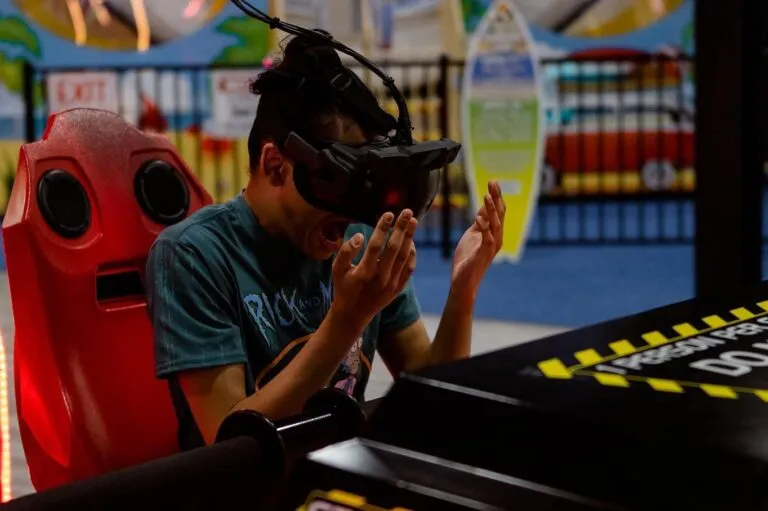
Laser tagVR

Main Event Lexington is located at 240 Canary Road in Lexington, KY, near the intersection of New Circle and Nicholasville Roads.


This 50,000-square-foot entertainment center offers something for everyone under one roof. Guests can enjoy 22 state-of-the-art bowling lanes, a multi-level laser tag arena with neon-lit obstacles, over 100 arcade games including classics and modern favorites, a Gravity Ropes aerial obstacle course with a zip line, virtual reality experiences, billiards, and shuffleboard. The venue specializes in birthday parties with dedicated hosts and customizable packages, corporate team building events, school lock-ins, and group celebrations of all sizes.


Beyond the activities, Main Event features a full-service restaurant and bar with chef-inspired American fare, handcrafted cocktails, and big-screen TVs for watching sports. Private event spaces include a VIP bowling room with four lanes, semi-private party rooms, and the option to buy out the entire facility. The staff is known for being friendly and attentive, and the venue offers free Wi-Fi, full-service catering, and a dedicated party planning team to help coordinate every detail.

Indoors
img
from $9
Laser tag

Malibu Jack’s Ashland is located just off US-60 in Ashland, Kentucky, serving as a go-to indoor destination for families and groups across Eastern Kentucky and the surrounding Tri-State area.


Spanning 135,000 square feet, the venue features 9 indoor attractions including a multi-level laser tag arena for up to 25 players, an indoor go-kart track with speed boosts, an 18-hole mini golf course with an 11-foot waterfall, the Twist-N-Shout indoor roller coaster, the Wipeout spinning ride (exclusive to Ashland), Bounce Beach for younger kids, and an arcade with over 100 games. Individual attraction prices range from $5 to $11 per ride, with all-day unlimited passes available starting at $29.99 on weekdays and $34.99 on weekends.


Beyond the attractions, the venue offers over 13 event spaces including private cabanas and a banquet room for birthdays, corporate events, field trips, and holiday parties. A full-service food zone serves pizza, burgers, and snacks, and the dedicated event planning team handles setup and cleanup so guests can focus on having fun. Free parking and Wi-Fi are included, making it a convenient and complete destination for a full day of indoor entertainment.

Indoors
img
from $9
Laser tag

Malibu Jack’s Lexington is located on Nicholasville Road in Lexington, Kentucky. This 135,000-square-foot indoor theme park offers nine attractions including an indoor go-kart track, a two-level laser tag arena for up to 25 players, a 9-hole mini-golf course with an 11-foot waterfall, a Twist-N-Shout roller coaster, bumper cars, motion simulators, a virtual reality ride, Bounce Beach for younger kids, 16 bowling lanes, and an arcade with over 100 games. Individual attraction pricing ranges from $5 to $11 depending on the ride and day of the week.


The venue features 11 customizable event spaces including the semi-private Party Beach and VIP Private Cabana, all with complimentary A/V and Wi-Fi. Birthday party packages start around $19.99–$29.99 per person. Corporate packages like the “Grown Up All-Play” ($22.99/guest) and “Corporate Stay & Play” ($24.99/guest) include all-access attractions and private event space. Field trip packages range from $14.95 to $29.95 per student with options for arcade cards and meal add-ons. The on-site food zone serves pizza, burgers, and snacks, and the experienced events team handles everything from small family celebrations to full venue buyouts.

Indoors
img
from $8
Laser tag

Champs Entertainment Complex is located at 297 Ruccio Way in Lexington, Kentucky, inside a 50,000-square-foot indoor multilevel facility. The venue offers a three-level laser tag arena for up to 40 players, an 18-hole glow-in-the-dark miniature golf course with a jungle-ruins theme, a full roller skating rink with learn-to-skate classes, a laser maze, and an arcade with over 42 games. Private birthday party packages and group discounts are available, and the on-site restaurant provides food and drinks for guests.


Beyond the main attractions, Champs features a Nerf Arcade, a VIP room for private functions, and a skate shop with souvenirs. The facility is stroller-friendly with baby changing stations, and the staff is noted for being friendly and helpful. The venue is well-suited for birthday parties, school trips, corporate team-building events, and casual family outings, with a relaxed atmosphere that lets guests move between activities at their own pace.

Indoors

Best of the best Laser tag in Lexington, KY


Laser tag in Lexington, KY is a fun and exciting way to get out and have some fun with your friends. Laser tag is a game in which players use laser guns to tag each other in an arena. It’s a great way to let off some steam, bond with friends, and even get a little exercise.


Laser tag in Lexington, KY


What Is Lasertag?

Lasertag is a fast‑paced, team‑oriented game that uses infrared‑emitting “guns” and wearable sensors to simulate combat without any physical projectiles. Players wear a vest or wristband that detects hits, while a handheld phaser emits a coded infrared beam when the trigger is pulled. The equipment is linked to a central computer that tracks each participant’s score, health status, and sometimes even the location of the action in real time. The result is a safe, repeatable sport that blends elements of traditional tag, paintball, and video‑game mechanics into a physical experience that can be enjoyed by anyone from early childhood through adulthood.

Because the technology relies on light rather than paintballs, pellets, or foam darts, lasertag can be set up in a wide variety of environments—darkened arenas, warehouses, forest trails, or even school gyms—without the need for extensive safety gear or cleanup. The game’s digital nature also makes it easy to adjust difficulty levels, set time limits, and introduce narrative elements, turning a simple bout of tag into a fully fledged scenario with missions, objectives, and story arcs.


Lasertag Scenarios

The flexibility of the infrared system allows organizers to create countless scenarios, each designed to emphasize different skills such as strategy, teamwork, or quick reflexes. Some of the most popular formats include:

  • Capture the Flag – Two teams compete to retrieve the opposing side’s flag while defending their own. This classic game tests coordination and the ability to balance offensive thrusts with defensive coverage.
  • Team Deathmatch – Players earn points by “tagging” opponents. The round ends when a time limit is reached or one side reaches a predetermined score, encouraging aggressive play and rapid decision‑making.
  • Mission‑Based Ops – A narrative thread is added, such as infiltrating a “base,” rescuing hostages, or disabling a virtual bomb. Objectives are displayed on individual wrist displays or through a central monitor, guiding players through a storyline that unfolds as the round progresses.
  • Zombie Survival – One or more “infected” players start as zombies; when they tag a human, that human becomes a zombie as well. The goal for the survivors is to last a set duration, emphasizing stealth and endurance.
  • Free‑For‑All – In a chaos‑driven setting, every player competes individually, striving for the highest personal score. This format is popular at large parties where team formation may be impractical.

Advanced arenas often integrate ambient lighting, sound effects, and even fog machines to heighten immersion. Some venues program the central computer to simulate “power‑ups,” such as temporary shields or increased fire rate, further blurring the line between physical sport and video‑game experience.


Laservag Benefits

Beyond pure entertainment, lasertag offers a suite of physical, cognitive, and social advantages that appeal to educators, parents, and corporate wellness planners alike.

Physical Activity

Although the movements are typically less intense than those in high‑impact sports, lasertag still provides a solid aerobic workout. Players dash, duck, slide, and crouch in a dynamic environment, burning calories while improving agility and coordination. The low‑impact nature also reduces the risk of joint strain, making it suitable for participants of varying fitness levels.

Cognitive Development

The game demands rapid decision‑making, spatial awareness, and strategic planning. Players must constantly assess threats, anticipate opponent movements, and adapt tactics on the fly. Research in game‑based learning shows that such mental engagement can enhance problem‑solving skills, working memory, and reaction time.

Teamwork and Communication

Most scenarios require coordinated action, encouraging clear communication and role allocation. Players learn to delegate responsibilities—such as front‑line assault, flank protection, or reconnaissance—and to trust teammates’ judgments. These experiences translate directly to classroom projects, workplace collaborations, and community initiatives.

Emotional Regulation

The controlled competitive environment of lasertag offers a safe outlet for adrenaline and excitement. Participants practice managing stress, handling victories and defeats with sportsmanship, and maintaining focus under pressure—all valuable life skills.

Inclusivity

Because the equipment is lightweight and the rules can be adapted, individuals with mobility limitations can participate alongside able‑bodied peers. Adjustable sensitivity settings on the sensors also accommodate younger children or beginners, ensuring that everyone can enjoy the game without feeling left out.


Scientists and Industry Experts View on Laser Tag

From a technological perspective, lasertag sits at the intersection of optics, wireless networking, and human‑computer interaction. Engineers appreciate the reliability of infrared communication, which offers low latency and near‑instantaneous feedback essential for a fluid gaming experience. Recent advances in micro‑LED emitters and low‑power photodiodes have extended the effective range of the devices, allowing for larger outdoor arenas without sacrificing accuracy.

Behavioral scientists highlight lasertag’s potential as a research platform. Because each hit, movement, and decision is logged digitally, researchers can analyze patterns of cooperation, aggression, and decision latency in real time. Such data sets provide valuable insight into group dynamics, risk assessment, and the effects of environmental stressors—information that can inform everything from military training simulations to emergency response planning.

Health professionals note the moderate intensity of lasertag makes it an appealing form of “exergaming” for sedentary populations. By embedding physical motion within a playful context, the activity encourages cardiovascular exertion without the intimidation of conventional gym workouts. Studies have demonstrated short‑term improvements in heart rate variability and mood after a single 30‑minute session, suggesting it could serve as an adjunct to wellness programs.

Industry analysts project steady growth for the sector, driven by the rise of immersive entertainment venues and the adoption of augmented‑reality (AR) overlays. Hybrid systems that blend infrared tagging with AR headsets are already in pilot phases, promising deeper narrative integration and personalized feedback. These developments indicate that lasertag will continue to evolve from a niche pastime into a mainstream component of the experiential economy.


Who Plays Lasertag? Laser Tag for Kids

Children represent the largest demographic for lasertag, and the activity aligns well with developmental milestones. For younger participants—typically ages 5 to 10—venues often offer simplified rules, larger sensor zones, and “soft‑hit” modes that count only a few hits before resetting. This approach minimizes frustration while still delivering the thrill of competition.

At this age, lasertag serves as a playground for imagination. The narrative scenarios—space missions, superhero battles, or treasure hunts—stimulate creative storytelling and role‑play. Simultaneously, the game hones gross motor skills, hand‑eye coordination, and spatial reasoning. Many educators incorporate lasertag into physical‑education curricula, using it as a tool to teach concepts like geometry (angles of fire) or physics (line‑of‑sight).

For pre‑teens and early teens, the emphasis often shifts toward strategy and teamwork. Tournament‑style formats encourage the formation of clubs and leagues, fostering a sense of belonging and healthy competition. As adolescents develop more sophisticated social networks, lasertag provides a constructive outlet for peer interaction, reducing the allure of less constructive risk‑taking behaviors.


Laser Tag for a Birthday Party, Graduation, Corporate Party

The adaptability of lasertag makes it an attractive choice for a wide spectrum of celebrations and events.

Birthday Parties

Parents increasingly select lasertag for birthdays because it offers a controlled, indoor‑friendly environment that can accommodate large groups. Packages typically include equipment rental, arena time, and themed decorations—pirate quests, superhero clashes, or sci‑fi battles—allowing the party to feel unique without extensive planning. The built‑in scoring system automatically crowns a “winner,” adding a natural climax to the festivities.

Graduation Ceremonies

High‑school or college graduation celebrations can incorporate lasertag as a “last‑hurrah” activity. Organizers often design a custom mission that reflects the graduating class’s shared experiences—such as “unlocking the future” by locating hidden QR codes that reveal alumni memories. The cooperative nature of the game encourages graduates to collaborate one final time before moving on to separate paths, creating a memorable bonding experience.

Corporate Parties and Team‑Building

Companies leverage lasertag for off‑site retreats, product launches, or employee appreciation events. The competitive yet non‑violent format mirrors workplace challenges, making it an effective platform for team‑building exercises. Facilitators can embed specific objectives—like “secure the confidential data” or “protect the executive”—to parallel real‑world project goals. Post‑game debriefs allow participants to reflect on communication styles, leadership dynamics, and decision‑making processes observed during the match.

Because the technology tracks individual and team scores in real time, organizers can generate instant performance reports, adding a data‑driven layer to the experience that appeals to corporate audiences focused on metrics.


Where to Play Lasertag? Outdoor and Indoor Venues

The choice between indoor and outdoor lasertag largely depends on climate, group size, and the desired atmosphere.

Indoor Arenas

Most urban centers host purpose‑built indoor arenas that feature darkened corridors, multi‑level platforms, and themed set pieces. The controlled lighting and sound conditions guarantee a consistent experience regardless of weather. Indoor venues also offer safety features such as padded walls, non‑slip flooring, and clearly marked exits. For groups seeking a quick, hassle‑free session, these facilities typically provide on‑site equipment rental, staff‑run briefings, and optional video playback of the match for post‑game analysis.

Outdoor Fields

When space and weather permit, outdoor lasertag expands the playing field dramatically. Forest trails, abandoned warehouses, or even university campuses can be transformed into sprawling battlegrounds. Natural obstacles—trees, rocks, and uneven terrain—introduce a tactical element that mirrors real‑world combat training. Outdoor setups often require portable power sources and weather‑proof equipment, but they reward participants with fresh air, broader movement ranges, and the chance to incorporate “day‑night” cycles by scheduling games at dusk.

Hybrid venues are emerging, combining indoor “base” zones with outdoor “field” extensions. This model allows organizers to start a mission indoors for briefing and equipment check, then transition players outdoors for the main engagement, providing the best of both worlds.

DIY and Home Setups

Advances in consumer‑grade lasertag gear have also made it feasible for schools, community centers, and even families to create their own arenas. Simple blackout curtains, LED strip lighting, and modular foam barriers can convert a gymnasium or basement into a functional battlefield. While these DIY setups lack the professional scoring infrastructure of commercial venues, they afford unparalleled flexibility for customized scenarios and extended playtimes.


Closing Thoughts

Lasertag has evolved from a novelty activity into a versatile platform that satisfies the needs of diverse audiences. Its blend of physical movement, strategic depth, and digital feedback creates a compelling experience that appeals to children craving adventure, teenagers seeking competition, and adults looking for innovative team‑building or celebration options. With ongoing technological enhancements—from smarter sensors to augmented‑reality overlays—the future of lasertag promises richer narratives, finer data analytics, and ever‑more immersive environments. Whether staged in a sleek indoor arena, a mist‑shrouded forest, or a community hall turned into a sci‑fi battleground, lasertag continues to illuminate the intersection of play, fitness, and social connection.