Log in
Tilt Studio Dakota Square Indoor Center is located in Minot, ND.
Tilt Studio Dakota Square, located in the heart of downtown Minot, offers a unique and immersive entertainment experience for all ages. With state-of-the-art virtual reality games, classic arcade machines, and a variety of bowling lanes, there’s something for everyone at this modern entertainment center. Guests can also enjoy delicious food and drinks at the on-site restaurant and bar, making it the perfect destination for a fun night out with friends or family. Whether you’re looking to test your skills in virtual reality, compete against others in classic arcade games, or just enjoy a night of bowling and good company, Tilt Studio Dakota Square is the ultimate destination for entertainment in Minot.
Indoors
Laser tag has transformed from a niche novelty into a global entertainment phenomenon. Combining high-end technology with physical exertion and strategic depth, it offers an experience that appeals to a vast demographic, ranging from competitive athletes to families seeking weekend fun. Unlike other combat-simulation sports, laser tag prioritizes safety and accessibility while providing an immersive environment that stimulates both the body and the mind. Understanding the mechanics, benefits, and diverse applications of this activity reveals why it remains a staple of modern recreational culture.
At its core, laser tag is a non-contact recreational sport that utilizes infrared-emitting signaling devices to track hits on target-sensing vests or headsets. Despite the name “laser” tag, the majority of systems actually use infrared light beams—technologically similar to those found in television remote controls—which are invisible to the naked eye and completely safe for players of all ages. When a player “tags” an opponent, the receiver on the opponent’s equipment registers the signal, often triggering sound effects, haptic vibrations, or lights to indicate a successful strike.
The equipment has evolved significantly since the sport’s inception in the late 1970s and early 1980s. Modern gear includes sophisticated software capable of tracking real-time statistics, such as accuracy, number of tags, and objective completions. High-end tactical systems can even simulate different weapon types, reload times, and health levels, making the experience feel like a live-action version of a first-person shooter video game. The absence of projectiles makes it a preferred alternative to paintball or airsoft, as there is no mess, no pain, and no need for heavy protective padding.
The versatility of laser tag is best displayed through its variety of game scenarios. Gone are the days of simple every-man-for-himself free-for-alls. Facilities now implement complex mission-based sets that require communication and tactical planning.
One of the most popular formats is “Capture the Flag,” where teams must infiltrate enemy territory to retrieve a digital or physical beacon and return it to their base. Another common scenario is “Domination,” where teams compete to control specific points on the map for as long as possible. “VIP Protection” adds a layer of role-playing, where one team must escort a designated player to a safety zone while the opposing team attempts to eliminate that player. For those who enjoy more intense challenges, “Infection” modes start with one “infected” player who must tag others to turn them onto their team, leading to a frantic survival-style experience. These scenarios turn a physical game into a mental chess match, forcing players to think several steps ahead.
Participating in laser tag offers a wide array of physical and psychological benefits. From a fitness perspective, a single session can provide an intense cardiovascular workout. Players are constantly moving—crouching, sprinting, and navigating obstacles—which builds stamina, improves agility, and tones muscles. Because the game is so engaging, participants often reach high levels of physical exertion without the perceived boredom of traditional gym exercises.
Beyond the physical, laser tag serves as a powerful tool for cognitive development. It requires rapid decision-making under pressure, spatial awareness, and problem-solving. Socially, the game is unparalleled in its ability to foster teamwork. Success in team-based scenarios is impossible without clear communication and synchronization. Players must learn to trust their teammates, delegate roles, and work toward a collective goal, which strengthens interpersonal bonds and builds confidence.
From a scientific and academic standpoint, laser tag is frequently cited as a prime example of “gamified fitness.” Kinesiologists observe that the high-intensity interval nature of the game promotes metabolic health. Meanwhile, social psychologists often study laser tag environments to understand group dynamics and leadership emerging in high-stress, low-risk scenarios. Experts suggest that the controlled “combat” environment allows individuals to release stress and satisfy a competitive urge in a safe, constructive manner.
Industry experts point to the technological advancements as the driving force behind the sport’s longevity. The integration of Augmented Reality (AR) and mobile app connectivity is the current frontier. Experts in the amusement industry note that today’s technology allows for “tactical” laser tag, which focuses on realism and military-style simulations. This shift has expanded the market, attracting older audiences and professional training groups who use the technology for non-lethal tactical drills. The consensus among experts is that laser tag is no longer just a “toy” but a sophisticated platform for both entertainment and skill development.
While people of all ages enjoy the sport, laser tag holds a special place in youth recreation. It serves as an ideal entry point into organized team play because it is inclusive and safe. Unlike contact sports, size and physical strength do not provide a significant advantage in laser tag; instead, stealth, observation, and strategy are the keys to success. This levels the playing field for children who may not feel comfortable in more traditional athletic settings.
For kids, laser tag provides a much-needed bridge between digital entertainment and physical activity. In an era dominated by screens, laser tag offers the visceral excitement of a video game in a three-dimensional, social world. It teaches children essential life skills, such as how to lose gracefully, how to lead a team, and how to follow complex rules. Most facilities offer lightweight equipment specifically designed for smaller frames, ensuring that children as young as six can participate without physical strain.
The adaptability of laser tag makes it a premier choice for celebratory events. For birthday parties, it provides an all-in-one entertainment solution that keeps large groups of children engaged and supervised within a contained environment. The excitement of a private match, combined with themed party rooms, makes for a memorable experience that requires very little logistical effort from parents.
For graduations, laser tag offers a high-energy way for classmates to bond one last time before embarking on new chapters of their lives. It serves as a rite of passage that emphasizes friendship and shared history.
In the professional world, laser tag has become a favorite for corporate parties and team-building retreats. It effectively breaks down workplace hierarchies; a junior employee and a CEO are equals on the laser tag field. Corporate groups use these sessions to improve office communication and morale. The strategic nature of the game mirrors project management and collaborative problem-solving, making it a “serious play” activity that provides genuine ROI for companies looking to strengthen their culture.
The experience of laser tag varies greatly depending on the venue. Both indoor and outdoor settings offer unique advantages that cater to different playstyles.
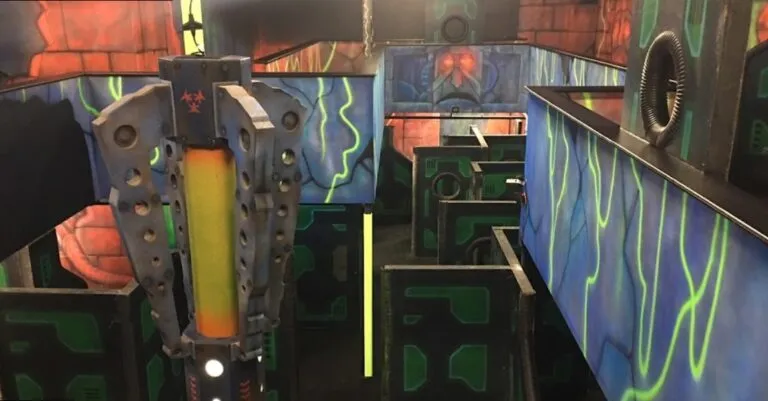
Indoor Venues: Indoor arenas are typically characterized by their controlled environments. They often utilize “glow-in-the-dark” or “industrial” themes, featuring neon paint, blacklights, fog machines, and booming soundtracks to create an otherworldly atmosphere. These venues are usually multi-level, with ramps and catwalks that encourage vertical gameplay. The primary advantage of indoor play is the climate control, ensuring that matches can happen regardless of rain or extreme temperatures. The confined space makes for fast-paced, high-intensity rounds.
Outdoor Venues: Outdoor laser tag, often referred to as “Tactical Laser Tag” or “Woodsball,” takes place in natural environments like forests, parks, or specifically designed outdoor urban ruins. Outdoor systems use high-powered infrared transmitters that can reach targets hundreds of feet away, even in direct sunlight. This style of play focuses more on stealth, long-range marksmanship, and utilizing natural camouflage. Outdoor venues offer much larger fields, allowing for longer, more strategic matches that feel like a live-action simulation of a military patrol.
Laser tag has evolved into a sophisticated sport that balances technology, strategy, and physical fitness. Whether it is being used as a tool for corporate team building, a safe environment for a child’s birthday party, or a competitive hobby for adults, its appeal lies in its ability to bring people together. As technology continues to advance, the line between reality and the game will only blur further, ensuring that laser tag remains at the forefront of the entertainment industry for decades to come. Through its many scenarios and environments, it continues to prove that moving, thinking, and playing together is a timeless human need.