Log in
Southern Lanes Indoor Center is located in Owensboro, KY.
Southern Lanes is a bowling alley located in Owensboro, Kentucky. It features 24 lanes with automatic scoring and bumpers for children. In addition to bowling, Southern Lanes offers an arcade, laser tag, and billiards. They also have a full-service bar and grill with a variety of food and drink options. Southern Lanes is open seven days a week and offers cosmic bowling on weekends. They also host birthday parties, corporate events, and fundraisers. Overall, Southern Lanes provides an enjoyable entertainment experience for people of all ages.
Indoors
In an era dominated by digital screens and sedentary entertainment, laser tag has emerged as a powerhouse of active, social, and tactical engagement. It is more than just a game; it is a high-octane experience that blends technology, physicality, and strategic thinking. By simulating combat-style scenarios through harmless infrared beams, laser tag allows participants to step into a real-life video game, fostering teamwork and adrenaline-fueled excitement in a controlled environment.
At its core, laser tag is a recreational shooting sport where players compete to score points by tagging opponents with infrared-emitting light guns. Each player typically wears a vest or a headband embedded with infrared sensors. When a sensor is “hit” by a beam from an opponent’s phaser, the system registers the strike, often disabling the player for a few seconds or deducting points, depending on the game mode.
The technology behind laser tag has evolved significantly since its inception in the 1980s. What once relied on bulky equipment and limited connectivity has transformed into high-precision, wireless systems that offer real-time data tracking. Whether played in a dark, neon-lit arena with fog machines or on an expansive outdoor field with natural cover, the objective remains the same: outmaneuver the opposition, protect your teammates, and complete the mission objectives.
The versatility of laser tag lies in the variety of scenarios available to players. While “Free-for-All” remains the classic entry point—where every individual plays for themselves—modern facilities offer complex mission-based games that demand deep coordination.
Common scenarios include “Capture the Flag,” where teams must infiltrate enemy territory, retrieve a virtual or physical flag, and return it to their base without being tagged. Another popular mode is “VIP Protection,” in which a specific player must be escorted across the map while the opposing team attempts to tag the designated target. Others include “King of the Hill,” where teams fight for control of a central point, and “Zombie Outbreak,” a high-pressure mode where a small team of survivors tries to outrun an expanding horde of tagged players. These scenarios force participants to move beyond simple running and gunning, encouraging them to develop communication skills and tactical patience.
Laser tag is a deceptive workout. Because the game is so immersive, players often forget they are exercising, yet a single session can involve miles of movement, sprinting, dodging, and squatting. This makes it an ideal activity for improving cardiovascular health, agility, and reflexes.
Beyond the physical, laser tag is a mental workout. It requires split-second decision-making, spatial awareness, and the ability to remain calm under pressure. It also builds social confidence; in a game, hierarchies are replaced by immediate goals. Shy children and introverted adults often find that the shared mission of a laser tag match allows them to communicate more freely, fostering a sense of belonging and community that is difficult to replicate in other high-intensity sports.
Research into human behavior and recreational sports consistently highlights the value of “gamified activity.” Industry experts note that laser tag satisfies the human psychological need for competitive play while providing a safe outlet for aggression. Unlike contact sports, which carry a risk of physical injury, laser tag provides all the thrill of simulated combat without the physical impact.
Sports scientists have noted that the rapid-fire interval training nature of laser tag contributes to improved anaerobic endurance. Furthermore, experts in developmental psychology suggest that tactical games help refine executive functioning in youth, specifically in areas like impulse control and strategic planning. By navigating a complex environment to achieve a goal, players learn to evaluate risks and rewards in real-time, a skill that translates effectively into academic and professional settings.
One of the most remarkable aspects of laser tag is its demographic reach. While it is a staple of childhood, laser tag is increasingly becoming a preferred adult pastime.
For kids, laser tag is an introduction to sportsmanship and team dynamics. It provides a structured environment where children learn to follow rules, respect boundaries, and support their teammates. Because it requires no specialized training or equipment, it is an inclusive activity that can be enjoyed by children of all athletic abilities. However, the interest does not fade with age. Adults are increasingly drawn to the sport as a way to blow off steam, engage in competitive leagues, or simply find a creative way to stay active.
Laser tag has become a go-to choice for hosting memorable celebrations. For a birthday party, it offers an all-inclusive experience that keeps a large group of friends entertained for hours, eliminating the stress of managing bored children. For graduation parties, it serves as a nostalgic yet high-energy way to celebrate a milestone with peers.
Perhaps most notably, laser tag has become a fixture in corporate team-building events. Companies are turning away from traditional, often awkward, office mixers in favor of team-based laser tag sessions. In the arena, the office hierarchy is stripped away. The marketing manager might be taking orders from the intern, and the CEO might be relying on the quietest developer to provide cover. This forced collaboration breaks down communication silos and builds trust in a way that board games or trust falls never could.
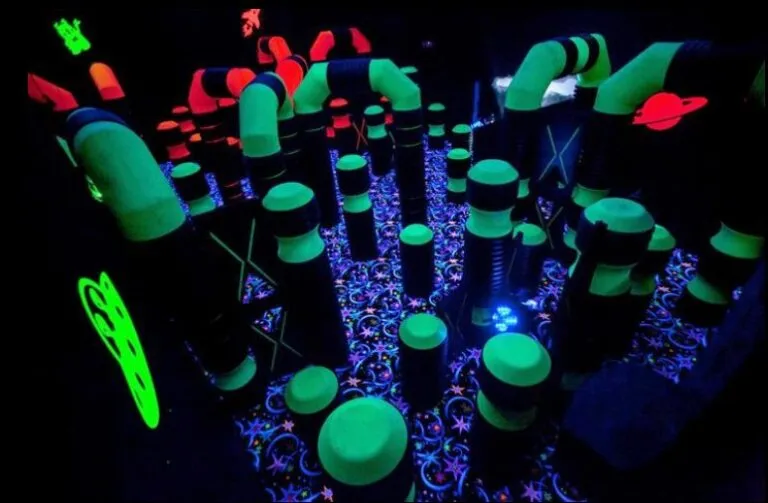
The experience of laser tag varies wildly depending on the environment. Indoor arenas are typically designed for rapid-fire, close-quarters combat. These venues often feature multi-level layouts, strobe lights, neon paint, and swirling fog, creating an intense, disorienting, and fast-paced atmosphere. They are ideal for quick games and are weather-proof, making them the most consistent option for year-round play.
Conversely, outdoor laser tag provides a completely different experience. Set in forests, abandoned lots, or large tactical playfields, outdoor laser tag allows for long-range engagements and true stealth gameplay. Players must use camouflage, natural terrain, and complex flanking maneuvers to succeed. While indoor tag is about reflexes and speed, outdoor tag is about patience, observation, and long-term strategy. Both environments offer unique perks, and the choice between them usually comes down to the desired intensity level and the scale of the game being planned.
In conclusion, laser tag has transcended its origins as a simple party novelty to become a legitimate tool for fitness, social bonding, and strategic development. Whether you are a child looking to celebrate a birthday or a corporate team looking to improve synergy, the arena offers a space where technology and human effort collide to create an unforgettable experience.