
 El Monte
 Log in
Log in
Log in

Spare Time Portland is located at 867 Riverside Street in Portland, Maine.
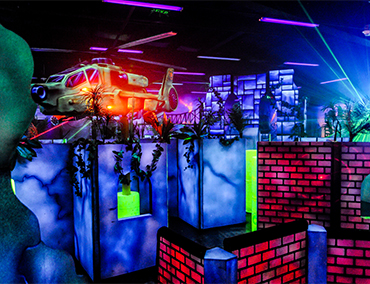
This full-scale entertainment center brings together a state-of-the-art Fallen City themed laser tag arena, over 80 arcade games in the Game Zone, and luxury bowling lanes under one roof. Laser tag sessions are $9.00 per game, and the venue offers four distinct two-hour birthday party packages (Bowling, BASH, Laser Tag, and Gamer) starting at $22.99 per child, each including pizza, drinks, a party host, and prize points. The facility also runs a popular Wednesday Half Off Day with 50% off all activities.
For larger gatherings, Spare Time Portland features private event spaces for up to 75 guests in the restaurant area, bowling events for groups of 13 to over 300, and full-facility rentals for up to 325 guests. The venue is a prime choice for corporate team building, holiday parties, fundraisers, and milestone celebrations, with professional event coordinators and a customizable catering menu ranging from appetizers to plated dinners. The on-site City Sports Grille restaurant and bar rounds out the experience, offering hand-tossed pizzas, burgers, and a full menu in a relaxed setting.
 Indoors
Laser tag has evolved from a futuristic novelty in the 1980s into a sophisticated, high-energy activity enjoyed by millions worldwide. By blending physical movement with tactical gameplay and high-tech equipment, laser tag offers a unique experience that transcends traditional gaming. Whether played in a dimly lit indoor arena or a sprawling outdoor field, the core objective remains the same: outsmart the opposition while navigating a challenging environment.
At its most fundamental level, laser tag is a recreational shooting sport where participants utilize infrared-emitting light guns to tag designated targets, usually worn on vests or the phaser units themselves. Unlike paintball or airsoft, which utilize physical projectiles, laser tag uses harmless infrared beams, making it a pain-free experience that requires no heavy protective gear like masks or body armor.
When a player fires, the infrared signal is registered by the sensors on an opponent. Sensors then log the “hit,” often triggering sound effects, vibration, or flashing lights on the player’s gear to indicate they have been tagged. Modern systems are highly advanced, offering real-time score tracking, wireless synchronization, and complex game parameters managed by central computer systems. This technological backbone ensures that players receive immediate feedback on their performance, fostering a sense of accomplishment and competition.
The versatility of laser tag lies in its adaptable scenarios, which turn simple skirmishes into immersive tactical missions. Most arenas offer a variety of game modes that cater to different skill levels and group dynamics:
These scenarios force players to communicate, assign roles—such as scouts, snipers, and defenders—and develop collective strategies to overcome the opposition.
Beyond the excitement, laser tag provides a comprehensive workout that balances physical exertion with mental stimulation. It is an effective form of cardiovascular exercise, requiring players to run, crouch, sprint, and dodge for extended periods. Because the game is so engaging, participants often find themselves exercising for an hour or more without feeling the fatigue typically associated with gym workouts.
Mentally, the sport acts as a fast-paced problem-solving exercise. Players must constantly process spatial information, anticipate enemy movements, and adjust their tactics on the fly. This encourages quick decision-making under pressure, improves hand-eye coordination, and enhances focus. Furthermore, it is a highly social activity that demands teamwork and communication, helping players build rapport and trust with their companions.
Research into recreational activities suggests that laser tag occupies a unique “sweet spot” in human development. Educational psychologists note that games like laser tag facilitate cognitive growth by requiring players to map out environments and predict the behavior of others. The feedback loops provided by digital scoring systems help players understand the consequences of their actions immediately, which is an effective method for learning and skill development.
Industry experts emphasize that the evolution of laser tag equipment—moving from heavy, tethered vests to lightweight, wireless, and even augmented reality-enabled sensors—has made the sport more inclusive and competitive than ever. Experts point out that the sport bridges the gap between sedentary screen-based gaming and physical sports, providing a “phygital” (physical-digital) experience that is becoming increasingly important in an era dominated by technology.
While laser tag is often marketed toward younger audiences, its appeal is truly universal. For children, it is a rite of passage. It provides a safe environment for kids to burn off energy, learn the value of sportsmanship, and practice leadership in a structured setting. Because laser tag is non-contact and non-messy, it is frequently cited by parents as a highly manageable way to host large groups of children. It allows kids to “embody” characters from their favorite adventure movies or video games, fostering creativity and imaginative play.
The adaptability of laser tag makes it a premier choice for celebratory events and professional functions.
The playing environment significantly alters the nature of the game. Indoor arenas are typically purpose-built environments featuring neon lighting, fog machines, and complex bunker structures. These “blacklight” arenas prioritize fast, close-quarters combat and atmospherics that make players feel like they are inside a science fiction film.
Outdoor laser tag, on the other hand, utilizes natural terrain—such as forests, fields, or designated outdoor tactical courses. Outdoor venues often use longer-range equipment and allow for more stealth-based gameplay. These venues benefit from natural sunlight and larger play areas, making them ideal for larger groups who want a more “mil-sim” (military simulation) experience.
Whether one prefers the neon-drenched, high-speed intensity of an indoor tactical center or the sprawling, nature-infused challenge of an outdoor field, laser tag remains one of the most accessible and exciting ways to engage in active play. It is a testament to the idea that games—when played with enthusiasm and spirit—can provide much more than just a passing distraction; they offer a space for connection, personal growth, and genuine excitement.


 867 Riverside Street Portland, ME 04103