El Monte
 Log in
Log in
Log in

Indoor Laser Game Évolution Vanier is located in Québec, QC
If you’re looking for a thrilling and immersive experience in Québec, QC, Laser Game Évolution Vanier is definitely the place to be. Conveniently located at the junction of the Capitale Highway and Pierre-Bertrand Boulevard, in the vibrant Vanier sector, this entertainment venue promises an exhilarating time for both kids and adults alike. Here’s everything you need to know about this fantastic laser tag destination.
At the heart of the Laser Game Évolution Vanier are its three multilevel labyrinths that set this venue apart. Each labyrinth offers a unique configuration and design, ensuring that every game is a new adventure. These intricate mazes span multiple floors, providing plenty of strategic hiding spots and vantage points for both novices and seasoned players. Navigating through these labyrinths is an adrenaline rush like no other, making every session an exciting challenge.
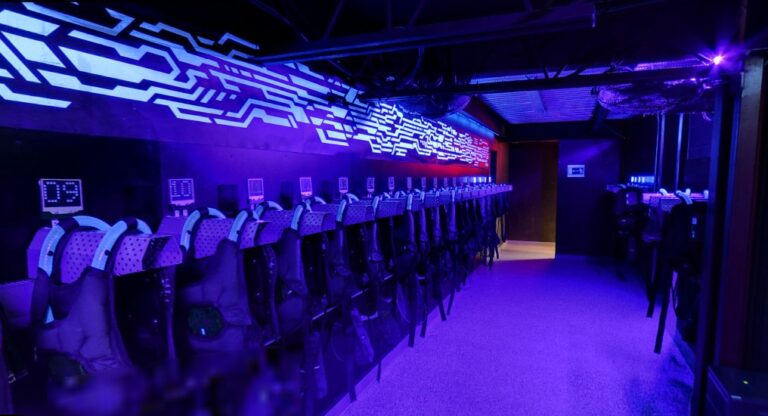
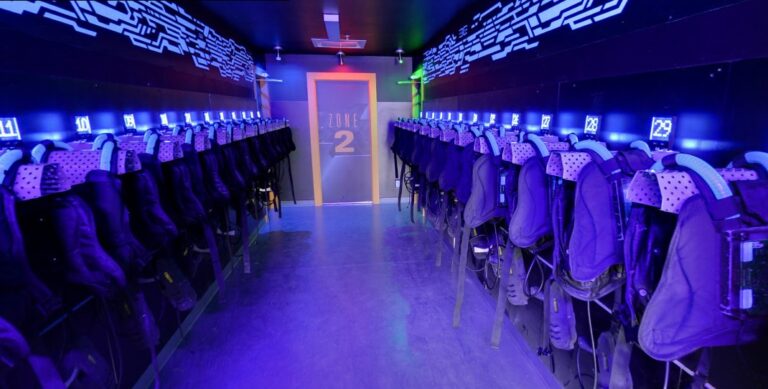
Equipped with 35 high-tech vests, Laser Game Évolution Vanier can host large groups, making it an excellent spot for family outings, team-building events, or friendly competitions. Children’s birthday parties are a specialty here, with customized packages that include game sessions, party rooms, and more.
 Indoors
Indoor Laser Game Evolution Sainte-Foy in Québec, QC.
Nestled in the heart of Sainte-Foy, just a few minutes away from the renowned Laval University, Laser Game Evolution Sainte-Foy offers an exhilarating laser tag experience that’s second to none. This premier entertainment venue features three multilevel labyrinths, each designed to challenge and thrill players of all ages. Whether you’re new to laser tag or a seasoned pro, Laser Game Evolution Sainte-Foy has something unique to offer for everyone.
Laser Game Evolution Sainte-Foy is not just about intense laser tag battles; it’s also an incredible destination for celebrations. The venue specializes in hosting children’s birthday parties, providing a memorable and unforgettable experience for young adventurers.
Laser Game Evolution Sainte-Foy in Québec, QC, stands out as a premier destination for unparalleled laser tag fun. With its three multilevel labyrinths, state-of-the-art equipment, and exceptional birthday party packages, it offers an unforgettable adventure that caters to all ages and skill levels. Just minutes away from Laval University, it’s a convenient and exciting option for students, families, and groups looking to engage in a thrilling activity. The combination of cutting-edge technology, detailed arena design, and dedicated customer service ensures that every visit to Laser Game Evolution Sainte-Foy is a remarkable experience worth repeating. So gather your friends, strap on a vest, and dive into the world of Laser Game Evolution Sainte-Foy for a laser tag adventure like no other!
IndoorsLaser tag is a fast‑paced, team‑oriented game that uses infrared‑based “guns” and wearable sensors to simulate combat without any projectiles. Players wear a vest or wristband that registers hits when the infrared beams from an opponent’s gun are detected. The equipment is battery‑powered, lightweight, and typically includes a built‑in scoreboard that updates in real time, allowing participants to track individual and team performance instantly.
The concept originated in the late 1970s as a portable alternative to paintball, but modern systems have evolved dramatically. Contemporary laser‑tag arenas employ sophisticated software that can generate dynamic maps, control lighting, play background music, and even adjust the difficulty level on the fly. Because the technology relies on light rather than physical ammunition, the sport is safe for participants of almost any age, requires minimal protective gear, and can be set up in a wide variety of environments—from dimly lit warehouses to outdoor fields.
One of the most compelling aspects of laser tag is the breadth of scenarios that can be programmed into the game. Traditional “team deathmatch” pits two groups against each other, with the winner determined by the highest score or the fastest elimination of the opposing side. More elaborate missions transform the arena into a narrative playground:
These scenarios can be tailored to the skill level of participants, the size of the venue, and the thematic preferences of the group. For corporate events, for example, a “mission‑critical objective” format may be used to simulate project management challenges, while birthday parties often gravitate toward fast‑paced, high‑energy modes that keep children constantly moving.
Beyond pure entertainment, laser tag delivers a suite of physical, cognitive, and social advantages that have attracted educators, fitness professionals, and health researchers alike.
Collectively, these benefits make laser tag a versatile tool for both recreational recreation and structured development programs.
Researchers in exercise science and cognitive psychology have begun to examine laser tag as a hybrid modality that merges physical exertion with mental stimulation. Studies measuring heart‑rate variability during gameplay indicate that participants experience aerobic intensities in the moderate‑to‑vigorous range, confirming the sport’s potential as an alternative to conventional fitness classes.
Neuroscientists note that the rapid decision‑making required in laser tag activates prefrontal cortical regions associated with executive function, suggesting that regular participation may support attentional control and working memory. Moreover, the social nature of team‑based play has been linked to increased oxytocin release, which can improve group cohesion and interpersonal trust.
Industry analysts point out that the market for immersive, technology‑driven entertainment is expanding, with laser tag positioned as a bridge between traditional arcade experiences and emerging virtual‑reality platforms. The low barrier to entry—no need for bulky protective gear or extensive safety protocols—combined with the ability to retrofit existing spaces, makes laser tag an attractive investment for entertainment centers, schools, and community recreation departments.
The sport’s inclusive design has drawn a remarkably diverse audience.
Because the game does not rely on physical contact, it appeals to individuals who might avoid high‑impact sports but still seek an energetic, competitive outlet.
When marketed to children, laser tag emphasizes safety, imagination, and skill development. Facilities catering to younger audiences typically use brightly colored equipment, simplified scoring systems, and shorter game rounds to keep attention spans engaged. Many venues also integrate themed storylines—such as “space explorers” or “dinosaur hunters”—that transform the arena into a narrative playground.
Parents appreciate the controlled environment: infrared beams are harmless, and the absence of paintballs or airsoft pellets eliminates concerns about bruises or eye injuries. Moreover, the teamwork aspect helps children practice communication, learn to respect rules, and develop sportsmanship in a setting that feels like play rather than a formal competition.
Laser tag’s flexibility makes it a popular choice for milestone celebrations and group gatherings.
Because the equipment records individual performance, event organizers can generate instant leaderboards, certificates, or digital badges, reinforcing the sense of accomplishment without fostering unhealthy competition.
Laser tag can be enjoyed in a variety of settings, each offering distinct advantages.
Indoor facilities are the most common venues, featuring controlled lighting, sound systems, and built‑in obstacles such as inflatable barriers, maze walls, and multi‑level platforms. These environments allow for consistent gameplay regardless of weather and enable precise calibration of infrared sensors. Many urban centers house dedicated laser‑tag complexes that provide private rooms for groups, party packages, and even league play.
Outdoor laser‑tag experiences capitalize on natural terrain—forests, open fields, and even abandoned warehouses repurposed as “battle zones.” The larger playing area encourages strategic movement over longer distances and can incorporate environmental obstacles like trees, hills, and structures. Portable laser‑tag kits make it possible to set up temporary arenas at camps, festivals, or corporate retreats, bringing the excitement of the sport to locations without permanent installations.
Some operators blend indoor technology with outdoor flexibility, using wireless sensor networks that can be quickly installed in a variety of spaces. Pop‑up laser‑tag events have become popular at conventions, schools, and community fairs, where a compact set of equipment can transform a gymnasium or parking lot into a temporary arena for a few hours.
When choosing a venue, organizers should consider factors such as the size of the participant group, the desired complexity of scenarios, accessibility for disabled players, and any logistical constraints (e.g., power supply for equipment, time limits imposed by the facility).
Laser tag has evolved from a novelty pastime into a multi‑dimensional activity that blends physical exercise, strategic gameplay, and social interaction. Its adaptable technology supports a wide spectrum of scenarios—from simple tag‑style matches to intricate mission‑based challenges—making it suitable for children’s birthday parties, graduation celebrations, and corporate team‑building events alike. The growing body of scientific research underscores its health and cognitive benefits, while industry experts highlight its expanding market potential in an entertainment landscape increasingly focused on immersive, tech‑driven experiences. Whether played in a high‑tech indoor arena or a sprawling outdoor field, laser tag offers a safe, engaging, and inclusive way for people of all ages to move, think, and connect.


 155 Rue Fortin, Québec, QC G1M 3M2