
 El Monte
 Log in
Log in
Log in

Battle House Laser Tag sits in the northern part of Wilmington, North Carolina, in New Hanover County, not far from the Wilmington International Airport.
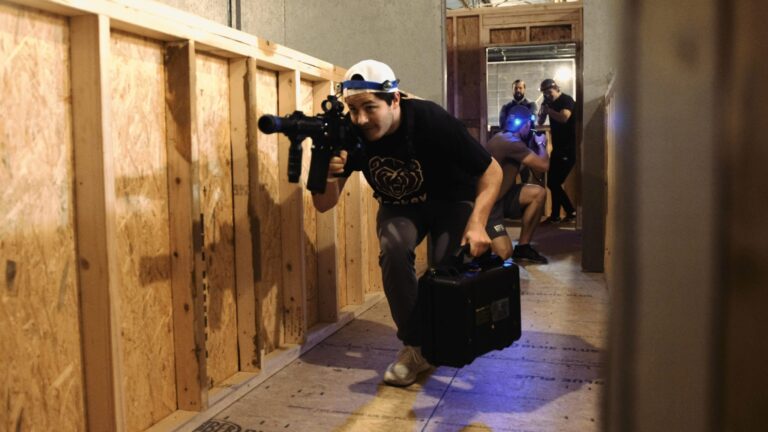
The club runs a 10,000-square-foot indoor arena with five two-story buildings, tramways, abandoned vehicles, and a mix of high-tech and low-tech props, supporting up to 36 players per game. Sessions last about 90 minutes and rotate through mission-based scenarios like Bomb missions, Domination Cube games, Money Heist, Capture the Flag, rescue, and elimination modes. The Armory offers a wide selection of laser tag weapons with different stats, plus upgrades to tailor each loadout.
Beyond the arena, Battle House offers a private party room and conference space for birthdays, corporate team building, fundraisers, and school events. A lounge area lets players rest between matches, and the staff—many with military or public safety backgrounds—is known for being friendly and attentive. Weapon upgrades, military and first responder discounts, and summer passes round out the offerings.
 Indoors
The landscape of modern recreation has undergone a significant transformation over the last few decades. As digital entertainment becomes increasingly sedentary, the demand for activities that bridge the gap between high-tech gaming and physical movement has surged. Laser tag stands at the forefront of this revolution. Often described as a live-action video game, laser tag offers a sophisticated blend of tactical strategy, physical exertion, and technological innovation. It has evolved from a niche sci-fi novelty into a multi-billion dollar global industry that serves everyone from young children to corporate executives looking for a unique team-building experience.
At its core, laser tag is a non-contact shooting sport where players use infrared-emitting light devices to “tag” sensors worn by their opponents. Despite the name, the “lasers” used in most commercial arenas are actually invisible infrared beams, similar to the technology found in a television remote control. These beams carry digital data packets that communicate with receivers, usually mounted on vests, headbands, or the equipment itself.
When a sensor detects a beam, the system registers a hit, often accompanied by sound effects, vibrations, or light signals to alert the player. Internal computers track statistics such as accuracy, number of tags, and mission objectives in real-time. This digital foundation allows for a level of precision and data tracking that traditional sports like dodgeball or tag cannot match. Because there is no physical projectile—unlike paintball or airsoft—laser tag is entirely painless, clean, and safe for a wide range of environments and age groups.
The versatility of laser tag is largely due to its programmable nature. Modern software allows operators to move far beyond the traditional “everyone for themselves” format, creating complex, mission-based scenarios that require intense communication and strategy.
One of the most popular formats is Team Deathmatch, where two or more squads compete to accumulate the highest number of points within a set timeframe. However, players seeking a more immersive experience often opt for objective-based games. These might include “Capture the Flag,” where teams must infiltrate an enemy base to retrieve a physical or digital token, or “Domination,” where players must hold specific control points on the field to gain points over time.
More advanced scenarios include “The VIP,” where one team must escort a specific player to an extraction point while the other team attempts to “assassinate” them. Some facilities even employ “Zombie” modes, where a small group of players can “infect” others, turning the game into a chaotic survival struggle. These varied scenarios ensure that the game remains fresh and mentally stimulating for recurring players.
Engaging in laser tag offers a multifaceted array of benefits that extend beyond simple entertainment. From a physical perspective, a single session can be an intense cardiovascular workout. Players are constantly moving—crouching, sprinting, and navigating obstacles—which improves agility, coordination, and stamina. Unlike a treadmill, the gamified nature of laser tag provides an “invisible workout” where participants are often too engrossed in the mission to realize the extent of their physical exertion.
Psychologically, the game serves as a powerful tool for cognitive development and stress relief. It requires high-level functions such as situational awareness, rapid decision-making under pressure, and spatial reasoning. Furthermore, the social aspect of playing in a shared physical space fosters a sense of community and belonging. The release of endorphins and dopamine during play provides a natural mood boost, making it an effective outlet for relieving the stresses of daily life.
Behavioral scientists and industry experts have long studied the impact of active play on human development and social dynamics. From a psychological standpoint, experts often categorize laser tag under the umbrella of “Serious Play.” This concept refers to activities that use the mechanics of games to solve problems or build skills. Researchers note that the collaborative nature of the game activates the same neural pathways as professional problem-solving, requiring participants to synchronize their movements and thoughts to achieve a common goal.
Technology experts focus on the industry’s rapid hardware evolution. The integration of Augmented Reality (AR) is a major topic of discussion, with experts predicting a future where players wear headsets that overlay digital graphics—such as virtual explosions or power-ups—onto the physical environment. Furthermore, the safety of the technology is a point of consensus among health professionals. Since the infrared light used is low-powered and non-coherent, it poses no risk to the eyes or skin, making it one of the safest high-energy sports available today.
While the technology is sophisticated, the accessibility of laser tag makes it a universal sport. It is one of the few activities where a ten-year-old and a forty-year-old can compete on a level playing field. The equipment is generally lightweight and adjustable, ensuring that physical size is not a barrier to entry.
For children, laser tag serves as an essential developmental tool. In an era dominated by screens, it offers a compelling reason to engage in physical play. It teaches children the importance of teamwork and sportsmanship in a controlled, safe environment. Many childhood development specialists point out that the game helps shy children build confidence by giving them a defined role within a team. Because the game is non-violent in its physical execution—no one gets hurt and there is no physical contact—it provides a safe outlet for a child’s natural competitive drive.
The adaptability of laser tag venues makes them premier destinations for milestone celebrations. For birthday parties, the “all-inclusive” nature of most arenas allows parents to provide a high-energy experience with minimal logistical stress. The structured environment ensures that even large groups of children remain supervised and engaged throughout the event.
Graduations and youth group events often use laser tag as a “rite of passage” activity. It provides a high-adrenaline communal experience that serves as a memorable celebration of achievement. The inclusive nature of the sport ensures that no one is left on the sidelines regardless of their athletic ability.
In the corporate world, laser tag has emerged as a preferred alternative to traditional “ice-breaker” activities. Corporate parties and team-building retreats utilize the game to break down workplace hierarchies. When executives and entry-level employees are forced to coordinate a tactical assault on an objective, communication barriers tend to dissolve. It tests leadership, delegation, and the ability of a team to adapt to changing circumstances in real-time. Many companies find that the lessons learned on the laser tag field—such as the importance of clear communication and mutual support—translate directly back to the office environment.
The experience of laser tag varies significantly depending on the venue. Indoor arenas are the most common and are often located in family entertainment centers. These venues typically feature neon aesthetics, UV-reactive paint, fog machines, and pulsing music to create a high-intensity, “cyber-punk” atmosphere. Indoor play is characterized by “Close Quarters Battle” (CQB), focusing on quick reflexes and short-range engagements. These facilities are climate-controlled, making them a reliable option regardless of the weather.
Outdoor laser tag, often referred to as “Tactical Laser Tag,” offers a different experience. Played in forests, fields, or specialized urban combat simulations, these games utilize long-range equipment that can tag opponents from hundreds of feet away. Outdoor play emphasizes stealth, environmental utilization, and long-term strategy. The use of natural terrain—trees, hills, and bunkers—adds a layer of realism and physical challenge that indoor arenas cannot replicate.
Laser tag has transcended its origins as a simple game to become a sophisticated platform for recreation, fitness, and social bonding. It combines the thrill of competition with the safety of modern technology, making it accessible to virtually everyone. Whether it is a child’s first birthday party, a high-stakes corporate retreat, or a casual weekend workout, laser tag offers a unique opportunity to step into a different world, if only for twenty minutes at a time. As technology continues to advance, the line between digital gaming and physical reality will continue to blur, ensuring that laser tag remains at the cutting edge of modern entertainment for generations to come.


 1817 Hall Dr, Wilmington, NC 28405, United States