El Monte
 Log in
Log in
Log in

Celebration Station sits in the western part of Greensboro, North Carolina, on Big Tree Way, not far from the Piedmont Triad International Airport.
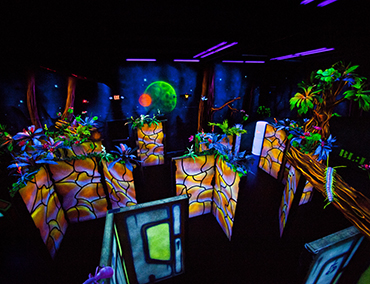
The park is a long-running family entertainment destination with seven main attractions, including a laser tag arena billed as Greensboro’s Ultimate Laser Tag Challenge, go-karts, mini golf, bumper boats, batting cages, and an arcade with dozens of games. The laser tag arena is a high-tech labyrinth of obstacles, lights, and music open to players aged six and up, and the park supports birthday parties, field trips, youth groups, and corporate events across 13 event spaces.
On-site dining serves fresh-made pizzas, smash burgers, tacos, and wings, with boba drinks and kid-friendly options, and there are party rooms, covered outdoor tables, a gazebo, and an upstairs party space for relaxing between rounds. Experienced event staff help plan everything from small parties to large corporate gatherings, making it a versatile spot for families, schools, and teams.
 Indoors
Kersey Valley is located in Archdale, North Carolina, just outside Greensboro in the heart of the Triad between Greensboro, High Point, and Winston-Salem. The park’s signature outdoor laser tag is played in the woods with up to 60 players, using high-end Battle Company taggers with vibration feedback, weapon customization, and live scoring on a big screen. Beyond laser tag, the park offers zipline tours, four themed escape rooms, and axe throwing, all set in a family-owned adventure park that runs year-round.
The venue also hosts birthday parties, school field trips, and corporate team days, with friendly instructors who often join in the games. Between activities, guests can relax at picnic shelters and refuel at the Apple Cider Donut Shop, Snow Drifts shaved ice, and several snack stands, while seasonal events like the corn maze, Spookywoods haunted attraction, and Christmas lights keep the grounds lively throughout the year.
 Outdoors
Spare Time Greensboro is located in the northern part of Greensboro, North Carolina, at 5502 Hornaday Road, just outside Winston-Salem. It’s a large, modern entertainment complex that brings bowling, arcade games, laser tag, dining, and nightlife together under one roof.
The venue features a state-of-the-art two-story laser tag arena, luxury bowling lanes with LCD scoring and cosmic bowling nights, and a huge Game Zone arcade with ticket redemption. A full restaurant and bar serve everything from pizza and hot dogs to burgers and salads, with multiple bars and a VIP lounge for adults. The venue hosts kids’ birthday parties with four two-hour packages, teen and adult parties, corporate events, and full-facility rentals, all supported by a friendly staff and a simple card-based play system.
IndoorsLaser tag has evolved from a niche science-fiction-inspired hobby into a global recreational phenomenon. Since its commercial inception in the 1980s, the sport has merged advanced technology with physical activity to create a safe, high-energy environment for competition. Far from being just a game for children, it has become a multi-generational activity that serves various purposes, from professional team building to intense tactical simulations. By understanding the mechanics, benefits, and diverse applications of laser tag, one can see why this industry continues to grow and adapt in an increasingly digital world.
At its core, laser tag is a tag-based recreational sport where participants use infrared-emitting devices to target sensors worn by their opponents. Despite the name, the “lasers” used in most commercial settings are actually non-visible infrared light beams, similar to those used in television remote controls. These beams are housed within a “phaser” or “tagger.” When a player pulls the trigger, the device emits a signal that is picked up by sophisticated sensors located on vests or headbands worn by other players.
The technology is governed by software that tracks individual and team performance in real-time. This digital integration allows for a variety of game mechanics, such as limited ammunition, health points, “respawn” cycles, and distinct character classes. Unlike paintball or airsoft, laser tag is entirely non-contact and involves no physical projectiles. This makes it a clean, painless, and highly accessible alternative for people of all ages and physical abilities. The equipment has grown increasingly lightweight and ergonomic over the decades, ensuring that the focus remains on movement and strategy rather than managing heavy gear.
The versatility of the software behind modern laser tag equipment allows for a nearly endless array of gameplay scenarios. While the classic “Team Deathmatch”—where two teams compete for the highest total score—remains a staple, many venues now offer objective-based missions that mirror popular video games. These scenarios require higher levels of coordination and tactical thinking than simple run-and-gun play.
One common scenario is “Capture the Flag,” where teams must infiltrate enemy territory to retrieve a digital or physical beacon and return it to their home base. Another popular mode is “King of the Hill,” which involves maintaining control over a specific “zone” or sensor on the field for as long as possible. Advanced tactical arenas often implement “Infection” or “Zombie” modes, where a single player starts as the “infected” and must tag others to turn them to their side, creating a tense, survivalist atmosphere. These diverse scenarios ensure that the game remains fresh and challenging, encouraging players to return and refine their strategies.
Participating in laser tag offers a wide range of benefits that extend beyond simple entertainment. From a physical perspective, the game serves as an excellent form of cardiovascular exercise. Players are constantly moving, pivoting, crouching, and sprinting, often covering several miles during a single hour of play. Because the game is so immersive, participants frequently engage in high-intensity interval training without the perceived boredom often associated with traditional gym workouts.
On a cognitive level, laser tag demands rapid decision-making and spatial awareness. Players must keep track of their surroundings, monitor the movements of both teammates and enemies, and manage resources like health and ammunition. Furthermore, the social benefits are significant. Success in laser tag is rarely the result of a single person’s effort; it requires clear communication, the delegation of roles, and mutual trust. For younger players, this helps develop foundational social skills, while for adults, it provides a unique outlet for stress relief and camaraderie.
Industry experts and behavioral scientists have often studied laser tag to understand its impact on human interaction and physical health. From a technological standpoint, experts highlight the sport as a pioneer in “active gaming” or “exergaming.” By bridging the gap between digital play and physical exertion, laser tag addresses the modern concern of sedentary lifestyles. Industry analysts point to the rapid advancement of “Tactical Laser Tag,” which uses realistic equipment and sophisticated software to create immersive experiences that rival professional military simulations.
Scientists focusing on sports psychology have noted that laser tag provides a “flow state” experience. This is a mental state where a person is fully immersed in an activity, leading to increased focus and a sense of enjoyment. Because the risks are low—meaning there is no physical pain from being hit—players are more willing to take creative risks and engage in strategic experimentation. Additionally, industry safety experts emphasize that laser tag remains one of the safest recreational sports available, with a lower injury rate than traditional sports like soccer or basketball, primarily due to the lack of projectiles and strict “no-running” or “no-contact” rules in many indoor facilities.
While laser tag attracts a broad demographic, it is exceptionally popular among children and adolescents. The game provides a safe environment for kids to channel their energy and engage in imaginative play. Unlike many competitive sports that may be intimidating for children who are not traditionally “athletic,” laser tag acts as a great equalizer. Success is based as much on stealth and strategy as it is on speed or strength.
For parents, laser tag for kids is an attractive option because it fosters healthy competition without the aggression or mess associated with other hobbies. It encourages children to get off their screens and engage in face-to-face interaction. Many facilities offer specialized equipment for younger children, featuring smaller, lighter taggers and simplified game rules. This ensures that even the youngest participants can feel a sense of achievement and contribute to their team’s success. It also serves as a gateway to understanding the importance of teamwork and following rules within a structured environment.
The adaptability of laser tag makes it a premier choice for organized events. For birthday parties, it offers a turnkey solution for parents. Many venues provide private rooms, dedicated hosts, and a structured schedule that keeps children engaged from start to finish. The high-energy nature of the game ensures that the attendees are entertained, making it a memorable experience for the celebrant.
Beyond childhood celebrations, laser tag has become a favored option for high school or college graduation parties. It serves as a great way for peers to blow off steam after the rigors of exams and celebrate their transition to the next phase of life in a fun, inclusive setting.
In the professional world, corporate event planners have increasingly turned to laser tag for team-building exercises. Unlike trust falls or seminars, laser tag forces colleagues to work together under pressure in a dynamic environment. It breaks down office hierarchies, as a junior employee might find themselves leading a tactical squad that includes senior management. This creates a level playing field where communication and collective strategy are the only paths to victory, often leading to improved morale and better working relationships back in the office.
The environment in which laser tag is played significantly changes the experience. Indoor venues are the most common and are often designed with a futuristic or “cyberpunk” aesthetic. These arenas typically use blacklights, fluorescent paint, fog machines, and loud music to create a sensory-heavy, fast-paced atmosphere. Indoor play is ideal for those who prefer a controlled environment sheltered from the weather, featuring multi-level structures and short-range, intense exchanges.
Conversely, outdoor laser tag offers a more “tactical” and realistic experience. Played in forests, fields, or purpose-built urban “war zones,” outdoor sessions rely on natural sunlight and large-scale obstacles. The equipment used outdoors is often more powerful, with infrared beams capable of reaching targets hundreds of feet away. Outdoor play emphasizes long-range accuracy and large-scale maneuvers, making it a favorite for those who enjoy a more “military-style” simulation. Both venue types have their unique charms, and the choice often depends on whether the players want a high-octane, neon-lit sprint or a more measured, tactical outdoor adventure.
As technology continues to advance with the integration of Augmented Reality (AR) and more precise haptic feedback, the world of laser tag is poised for even greater expansion. It remains a rare example of a recreational activity that successfully combines technology, physical health, and social bonding. Whether it is a child’s first birthday party, a high-stakes corporate retreat, or a casual weekend gathering with friends, laser tag provides a unique and exhilarating experience that continues to stand the test of time.



 4315 Big Tree Way, Greensboro, NC 27409, United States