El Monte
 Log in
Log in
Log in

Texas Paintball sits in the small lakeside community of Jonestown, Texas, roughly eight miles from Cedar Park and close to Lake Travis in the Texas Hill Country. Spread across 40 acres, the park offers ten custom-built fields ranging from fast airball courses to forested and two-story building scenarios, with three ways to play: traditional paintball (ages 10+), gentler low-impact paintball (ages 8+), and Sunday airsoft (ages 10+). Rental packages include gun, mask, pod pack, CO2 tank, and 500 paintballs, while self-equipped players can buy admission and paint separately.
The park is especially well suited to group events—birthday parties, bachelor parties, corporate team building, fundraisers, and youth groups—with private parties getting their own referee and weekday reservations available for exclusive use. A professional photographer can be hired, the staging area accommodates caterers and decorations, and the whole facility can be rented for larger gatherings. Memberships, a pro shop, and free CO2 fills round out the experience, with a knowledgeable staff and hands-on owner regularly praised by regulars.
 Outdoors
Outlaw Paintball sits just east of I-35 on Grand Avenue Parkway in Pflugerville, Texas, a short drive from the Austin metro area.
The park offers four distinct outdoor fields—Hyperball, Fort Field, Spools, and Airball—covering everything from fast tournament-style matches and Capture the Flag to fort-defense sieges and beginner-friendly arenas. Open play lets walk-ons mix with other players all day, while private play reserves a field exclusively for a group. Group rates include paintball markers and face masks, and experienced referees keep every match fair, safe, and fun.
Outlaw hosts birthdays, corporate team-building days, graduations, family reunions, and charity fundraisers, with a bring-your-own-food policy and no outside catering fee. Two covered staging areas offer snacks, cold drinks, and shade between rounds, and after-hours bookings give larger groups the entire facility to themselves. Gift certificates are available, making it an easy outing for families, coworkers, and friends.
OutdoorsXtreme Paintball sits on more than 15 acres of rolling Texas terrain in Manor, a short drive northeast of downtown Austin, and is the closest paintball field to the state Capitol.
The club runs multiple courses, including a speedball field and the Cedar Village and Bamboo Village tactical arenas, all designed by former players and combat veterans. Big recreational games blend all comers into one group, with sessions opening on a thorough safety briefing and a minimum of ten players per match.
Beyond the fields, Xtreme Paintball provides rental equipment and is field-paint only for consistent performance. It hosts birthdays, corporate outings, bachelor parties, and team-building events, with private games available at an additional cost. The family friendly atmosphere and weekend public sessions make it a dependable outdoor activity just outside Austin.
OutdoorsLost Paintball is a paintball, airsoft and gelly ball playground located near San Marcos, TX
Lost Paintball is a riveting way to spend some time in the fresh air. It includes 5 different game zones:
Anarchy – make your way down the forest pathways, find cover behind kegs and barrels, ragged buses, or even an abandoned plane!
The Siege – navigate around the castle, which is surrounded with all sorts of tire fortifications and other debris.
Wasteland – the main game zone that covers a whole forest sprinkled with all kinds of forts and fortifications and 5 semi-indoor facilities.
Lost City – an old abandoned town with a fair share of streets and alleyways to keep you on your toes.
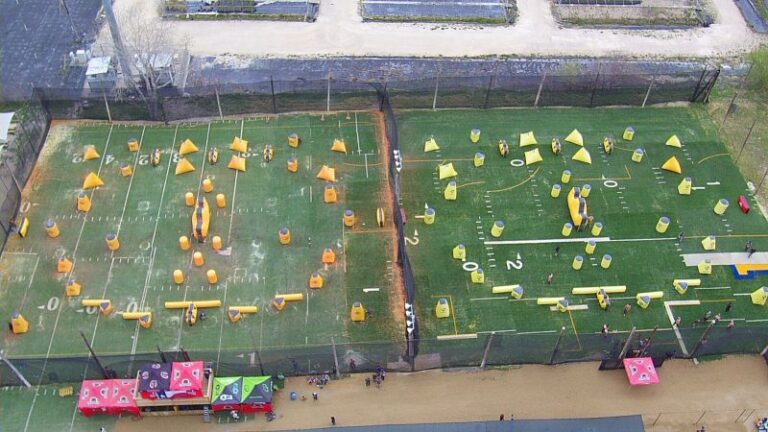
Airball – includes artificial grass flooring and all kinds of inflated structures and air bunkers.
This location is an outstanding option for corporate events and all kinds of celebrations.
OutdoorsAustin Paintball sits on 30 acres in Dripping Springs, Texas, about twenty minutes southwest of Austin, just off East Highway 290.
The facility offers six distinct outdoor paintball fields — Underground, Barrels, Ties and Tires, Cat Walks, Greg’s Place, and the intense Iwo Jima course — plus three impact levels so nearly anyone can play: high-impact .68 caliber paintball (12+), low-impact .50 caliber Turbo (8+), and soft-impact GellyBall (5+). Packages include sanitized masks, rental markers with all-day air, and paintballs, with extra paint available by the bag.
Beyond paintball, the venue adds axe throwing and is set up for birthday parties, bachelor and bachelorette events, company team building, and church groups. Visitors can bring their own food and non-alcoholic drinks, and the trained, safety-focused staff and attentive referees are widely praised. Open weekends for walk-in play with weekday private events, it’s a solid choice for families, friends, and corporate groups seeking an active day in the Hill Country.
OutdoorsPaintball has evolved from a niche hobby invented by forest enthusiasts into a global phenomenon that combines tactical decision-making, physical exertion, and social bonding. Whether played in muddy woodlands or pristine indoor arenas, it remains one of the few sports that forces participants to balance high-speed movement with calculated patience.
At its core, a paintball is a spherical, thin-walled gelatin capsule filled with a liquid payload. This payload is typically composed of non-toxic, water-soluble polyethylene glycol, mineral oil, and food-grade dyes. The chemistry behind the paintball is specifically engineered to ensure that upon impact with a solid object, the capsule shatters, marking the target with a vibrant burst of color.
These projectiles are designed to be environmentally friendly and biodegradable, allowing them to dissolve after rainfall. When fired from a paintball marker (powered by compressed air or CO2), these capsules travel at regulated velocities—usually capped at 300 feet per second—to ensure safety while maintaining accuracy. The marriage of ballistics and chemistry makes the paintball a unique instrument in recreational warfare.
Safety is the cornerstone of every paintball field. Regardless of the scenario or the skill level of the players, strict rules are enforced to protect the participants. The most critical rule is the mandatory use of a paintball-rated protective mask at all times while on the field. Because paintballs travel at significant speeds, direct impact on unprotected eyes or ears can result in severe injury.
Beyond eye protection, “barrel bags” or “barrel socks” must cover the muzzle of the marker whenever players are in a non-playing area (such as the staging zone). This prevents accidental discharges. Within the game, the fundamental rule is “one shot, one kill”: if a paintball strikes a player and leaves a mark—or a “splat”—that player is considered eliminated and must leave the field. Players who are hit are expected to demonstrate integrity, call themselves out, and raise their markers above their heads to signify their status.
The versatility of paintball lies in the game’s inherent theater. While “Capture the Flag” remains the quintessential mode, modern venues offer deep narrative scenarios.
Paintball serves as an exceptional tool for physical and psychological development. From a physiological standpoint, it is a high-intensity interval training (HIIT) workout. Players spend minutes crouching, sprinting, crawling, and climbing, which drastically improves cardiovascular endurance and core stability.
Beyond the physical, paintball is a masterclass in leadership and communication. Because the environment is chaotic and high-stakes, teams that fail to communicate effectively almost always lose. Players must provide intelligence to their teammates, coordinate flanking maneuvers, and suppress enemy fire in real-time. It is frequently used in corporate team-building retreats because it strips away workplace hierarchy; in the woods, success depends solely on how well the team functions as a single, cohesive unit.
The demographic of paintball is remarkably diverse. Historically associated with “weekend warriors” seeking an adrenaline rush, the sport has grown to encompass wide-ranging age groups and backgrounds. Professional leagues like the NXL (National Xball League) feature elite, high-performance athletes who train with the same intensity as professional soccer or football players.
Conversely, the sport is a staple for birthday parties, bachelor parties, and family outings. Because modern markers are lightweight and various low-impact versions (like “Low Impact Paintball” for younger players) have been developed, the sport is accessible to children as young as eight, as well as adults looking for a hobby that defies the monotony of the gym.
Industry experts view paintball as a prime example of successful equipment evolution. The transition from crude, pump-action markers of the 1980s to the modern, electronic, high-rate-of-fire markers has turned the game into a fast-paced “chess with adrenaline.”
Scientists who study team dynamics and cognitive load often point to paintball as an ideal environment for observation. Research into decision-making under stress shows that in an environment like a paintball field, humans are forced to bypass “analysis paralysis.” Studies suggest that the immediacy of consequences (being hit) forces the brain to prioritize intuitive, pattern-based thinking. This makes paintball an interesting subject for behavioral psychologists who study how humans form hierarchies and cooperate during simulated survival scenarios.
The experience of playing paintball differs significantly based on the environment.
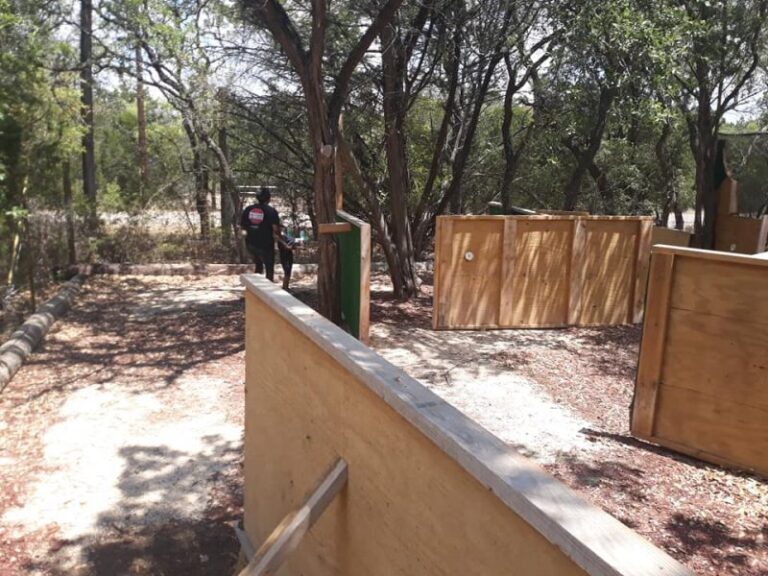
Outdoor Venues: These are generally massive in scale, utilizing forests, fields, and purpose-built “towns” constructed from plywood and repurposed vehicles. Outdoor play favors long-range engagement, natural camouflage, and the use of terrain like hills and trenches. It is ideal for players who want to experience the sensation of “wilderness” tactical combat.
Indoor Venues (Airball): Indoor fields, often called “tournament” or “speedball” fields, are characterized by inflatable bunkers set on artificial turf. These venues remove the variables of weather and uneven terrain. Because the distance between players is much shorter, matches are lightning-fast and require extreme reflexes. Indoor fields are the preferred training ground for those interested in the competitive, athletic side of the sport.
Whether one prefers the tactical complexity of an outdoor forest skirmish or the raw, high-speed intensity of an indoor speedball court, paintball remains a sport that demands respect, tactical planning, and a spirit of cooperation. It continues to be one of the best ways to disconnect from the digital world and engage in a high-stakes, human-centric pursuit.



 18300 Medina Vista Ln, Jonestown, TX 78645