TOP 10 best of the best Free-roam VR in Jacksonville, FL – Battleonix
El Monte
Log in
0

Advanced Search:

City

Rating

Playground


Price:

Main / Catalog / VR / Florida, US / Jacksonville, FL

The best Free-roam VR near me in Jacksonville, FL

img
from $5
VRLaser tag

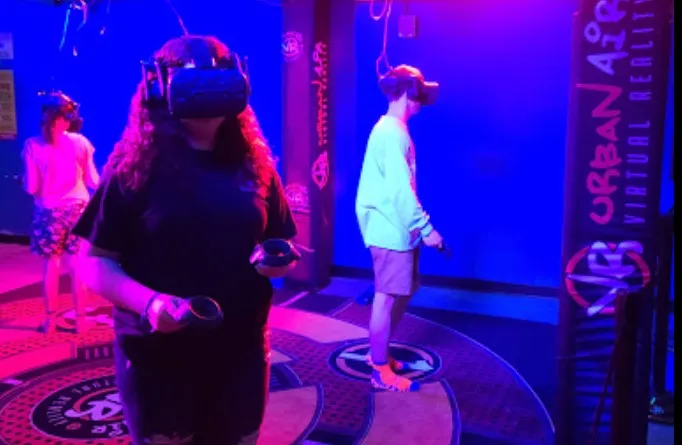
Urban Air Adventure Park is located along Emerald Coast Parkway in Destin, Florida, just off the main thoroughfare connecting the beach communities of the Florida Panhandle.


The park features over a dozen attractions including wall-to-wall trampolines, the Sky Rider indoor zip line, a multi-level ropes course, climbing walls, laser tag, virtual reality, a Warrior obstacle course, dodgeball, and a dedicated toddler soft-play zone. Visitors can choose from Deluxe or Ultimate admission levels, with the Ultimate pass granting access to all attractions including premium experiences like the zip line and ropes course.


The on-site Urban Café serves pizza, snacks, and drinks, and there is ample seating for parents to relax while children play. The park specializes in stress-free birthday parties with private rooms and party hosts, and also offers memberships for frequent visitors, group event packages, field trip programs, and special morning sessions for toddlers. Free Wi-Fi is available throughout the facility.

Indoors
img
from $35
VR

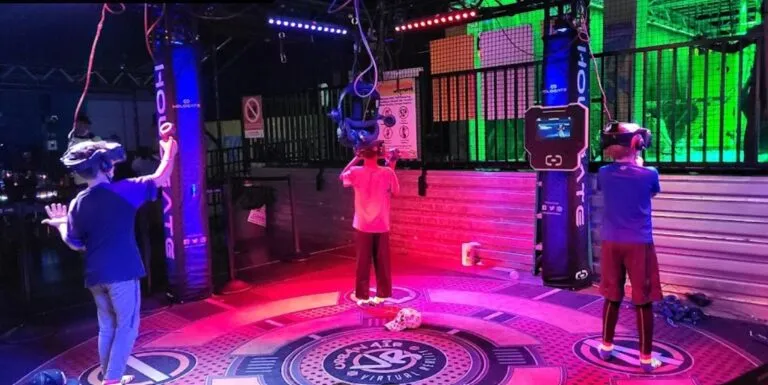
Zero Latency JAX is located in the Baymeadows area of Jacksonville, off Philips Highway.


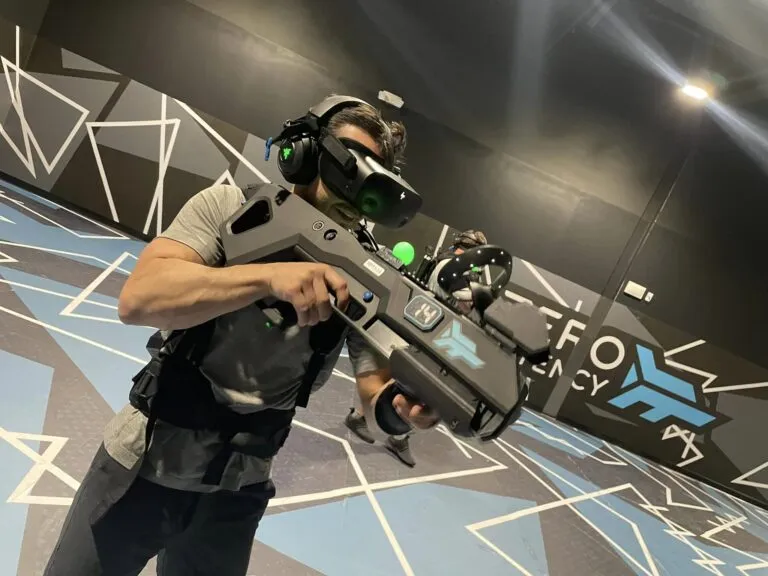
The venue offers free-roam virtual reality in a 2,300-square-foot arena where players move naturally without cables or backpacks. The game library includes over a dozen VR titles — zombie survival games like Outbreak and Outbreak 2: Mall Mayhem, sci-fi shooters like Space Marine VR and Far Cry VR, competitive PvP in Sol Raiders, and horror experiences like Haunted. There are also more than a dozen VR escape rooms, including Ninja Trials, Runaway Train, Alien Infection, and Dragon Tower, each accommodating up to five players.


The venue is well-suited for birthday parties, corporate team-building events, and group outings, with customizable packages that include catering options (pizza, sushi, tacos). The lobby features spectator TVs, a scoreboard display, and table games like foosball and ping pong. Experienced game masters guide each session from briefing to gameplay. Group discounts are available for parties of 16 or more, and the entire venue can be booked for private events.

Indoors
img
from $8
Laser tagVR

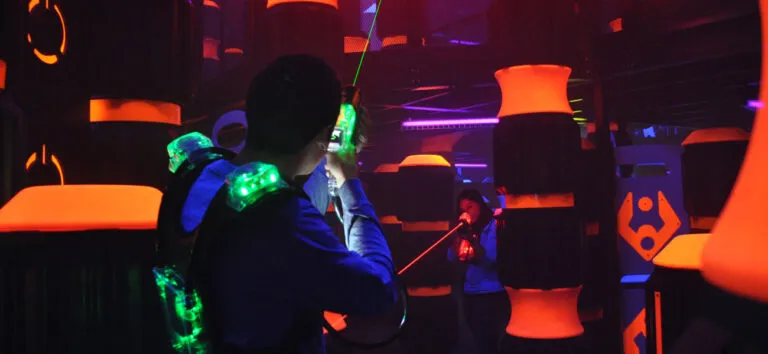
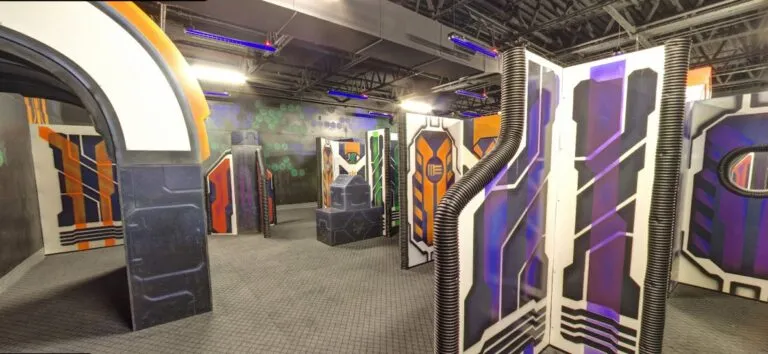
Main Event Jacksonville is located off I-95 on Phillips Highway across from The Avenues Mall, about 15 minutes from downtown. This 50,000-square-foot entertainment center features a multi-level laser tag arena with fog and black lights, 20 pro-level bowling lanes, a 20-foot gravity ropes course, over 100 arcade games, billiards, and virtual reality experiences. Birthday packages include a dedicated party host, reserved space, food, and activity wristbands, while corporate clients can book private meeting rooms with full AV setup.


The venue also offers a full-service restaurant and bar with pizza, burgers, and cocktails, plus lounge areas for relaxing between games. Additional amenities include free WiFi, big-screen sports viewing, and full-service catering for group events. The staff is frequently praised for being attentive and accommodating, making it a solid choice for birthdays, team-building outings, school events, and holiday parties.

Indoors
img
from $9
VR

Urban Air Adventure Park is located in the Southside area of Jacksonville, Florida, on Southside Boulevard.


This indoor adventure park offers far more than trampolines — visitors can race go-karts, battle in bumper cars, climb walls, navigate a ropes course, ride a Sky Rider zip line, and explore virtual reality worlds. The park features a Warrior Course, a Wipeout zone, a Tubes Playground for younger kids, and multiple trampoline areas including the APEX Trampolines and Slam Dunk Zone. Dodgeball, Battle Beam, and the ProZone Performance Trampolines round out the attractions. Birthday party packages start at $249 for ten guests and include a host, decorations, and cleanup, with upgrades available for private rooms and premium attractions.


Beyond parties, Urban Air hosts team-building events, school field trips, fundraisers, and youth sports celebrations. The Urban Café serves pizza, chicken tenders, snacks, and drinks for refueling between activities. Monthly memberships start at $11.99 and include unlimited visits, free snacks, and discounts on food and merchandise. A Parent Pass allows accompanying adults to join at half price. The facility is fully indoor, making it a reliable option for active fun regardless of weather.

Indoors
img
from $34
VR

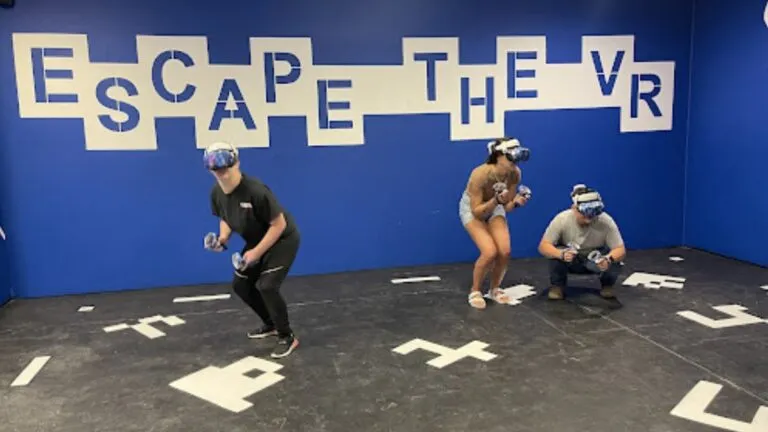
Escape The VR is located in the Blanding Boulevard commercial corridor of Orange Park, Florida, operating as the virtual reality wing of the larger Just Smash That entertainment complex at 1101 Blanding Blvd.


The venue offers two distinct VR experiences: collaborative escape room adventures where groups of two to five solve puzzles in immersive digital worlds, and action games including zombie battles and team deathmatches for one to six players. Both use state-of-the-art VR headsets and motion tracking to create realistic, interactive environments. The facility has been operating since 2019, has completed over 14,000 sessions, and staff are frequently praised for their patience and helpfulness with first-time VR users.


Beyond VR, the same location offers glow-in-the-dark axe throwing, paint rooms, and rage rooms, with bundle deals available that save $10 to $20 per person when combining activities. The venue is wheelchair accessible, suitable for birthday parties and corporate team building, and sits within walking distance of several restaurants on Blanding Boulevard for pre- or post-visit meals.

Indoors
img
from $7
Laser tagVR

Splitz Bowling is located in northwest Gainesville, Florida, near the I-75 corridor. The venue offers three distinct bowling experiences (family, boutique, and private lanes), a laser tag arena called Lazer Runner with specialty lighting and fog effects, a full arcade, and the Thirsty Gator restaurant and bar. Birthday packages and group event options include bowling or laser tag, food, drinks, arcade credits, and a private party area with a dedicated host.


Beyond the core attractions, Splitz provides catering services starting at $9 per person, regular live entertainment such as poker nights, karaoke, and music bingo, and a comfortable lounge area with big-screen TVs. The facility is suited for children’s birthday parties, corporate team-building, league nights, and casual group outings. Walk-ins are welcome, and reservations for lanes or events can be made in advance.

Indoors

VR in Jacksonville, FL


In recent years, Jacksonville, Florida has emerged as a leader in virtual reality arena entertainment. With its affordable cost of living and central location at the intersection of I-10 and I-95, Jacksonville is becoming one of the go-to spots for virtual reality game arenas in the United States.


VR in Jacksonville, FL


What Is a Free‑Roam VR Arena?

A free‑roam virtual‑reality arena is a purpose‑built physical space that blends the freedom of real‑world movement with the immersive power of head‑mounted displays (HMDs). Unlike seated or desk‑bound VR experiences, which constrain the user to a fixed spot, a free‑roam arena equips participants with wireless VR headsets, motion‑tracking rigs and, in many cases, haptic vests or handheld controllers that capture full‑body gestures. The arena itself is often lined with safety padding, motion‑capture cameras, and strategically placed obstacles that correspond to elements in the digital environment.

The key differentiator is the lack of tethered cables and the ability to walk, duck, jump, or even climb within a bounded, yet expansive, digital world. This design eliminates the “room‑scale” limitation of home VR setups (typically a 2 × 2 m play area) and expands it to spaces that can cover dozens of square meters. The result is a more natural, cinematic experience that feels less like a game and more like stepping directly into a story.


Free‑Roam VR Scenarios

Because the technology no longer restricts movement, designers can imagine scenarios that would be impossible on a traditional console or PC. Some of the most popular free‑roam VR experiences include:

  • Adventure Quests – Participants become explorers navigating alien landscapes, ancient ruins, or futuristic cities. The arena’s layout mirrors the virtual map, allowing users to physically walk from one “room” to another while battling foes or solving puzzles.

  • Sports Simulations – From sword‑fighting duels to futuristic hover‑board races, the combination of motion tracking and haptic feedback reproduces the kinetic feel of real sport. Players can sprint, block, or swing a virtual paddle as if they were on an actual court.

  • Collaborative Escape Rooms – Groups must cooperate, sharing physical space and virtual clues to unlock doors, disable traps, and escape within a time limit. The tactile nature of moving objects in the real world adds a layer of urgency that traditional escape‑room video games lack.

  • Educational Field Trips – Museums, archaeological sites, and even the human bloodstream become walk‑through learning environments. Students can wander through a reconstructed dinosaur habitat or explore the inner workings of a turbine, gaining visceral context that static displays cannot provide.

  • Horror Experiences – The combination of darkness, sudden sounds, and the inability to see the physical arena’s walls creates a potent sense of dread. Designers use the environment’s real‑world constraints to produce jump scares that feel genuinely unsettling.

Each scenario leverages the free‑roam arena’s strengths: unrestricted movement, immersive audio, and precise tracking. The result is a sense of agency that transforms passive viewing into active participation.


Who Plays on Free‑Roam VR Arenas?

The demographic landscape of free‑roam VR is surprisingly broad. While early adopters were primarily tech enthusiasts and gamers, the accessibility and novelty of the format have attracted a wide spectrum of participants:

  • Gamers and Esports Enthusiasts – For them, free‑roam VR offers a new frontier for competitive play. Some leagues now host “live‑action” tournaments where teams battle in physically demanding courses.

  • Families and Casual Visitors – Many arcades and entertainment centers feature free‑roam VR as a family‑friendly attraction. The novelty of walking through a digital world together creates shared memories that traditional video games struggle to match.

  • Corporate Teams – Companies use the arenas for team‑building exercises, leadership training, and problem‑solving workshops. The physical collaboration required forces participants to communicate clearly and adapt quickly.

  • Educational Institutions – Schools and universities are experimenting with free‑roam VR for immersive lessons in science, history, and art. The hands‑on nature of the experience resonates with kinetic learners.

  • Therapeutic Practitioners – Physical therapists and rehabilitation specialists are exploring free‑roam VR as a motivator for patients recovering from injuries, providing a safe yet challenging environment to regain mobility.

The inclusive design—often featuring adjustable headset straps, wheelchair‑compatible paths, and a variety of difficulty levels—ensures that participants of different ages, physical abilities, and tech comfort can enjoy the experience.


Free‑Roam VR Arenas for Kids

Designing a child‑centric free‑roam arena requires a blend of safety, imagination, and educational value. Operators typically incorporate the following considerations:

  1. Safety First – Soft padded walls, padded floor mats, and low‑height obstacles reduce injury risk. All equipment is calibrated for lighter heads and shorter necks, with quick‑release straps for emergencies.

  2. Age‑Appropriate Content – Experiences are filtered by age rating, ensuring that themes remain suitable. Younger children often engage with bright, cartoon‑style worlds where the stakes are low (e.g., rescuing friendly creatures rather than battling villains).

  3. Interactive Learning – Partnerships with educational publishers bring curriculum‑aligned modules into the arena. For instance, a “Space Explorer” mission may teach basic astronomy concepts while encouraging kids to physically navigate a simulated lunar surface.

  4. Parental Supervision – Many venues provide a “view‑only” headset for parents, allowing them to watch their child’s experience in real time without immersing themselves. This builds trust and facilitates shared enjoyment.

  5. Scalable Difficulty – Games often include adjustable speed and challenge settings. A child who masters a level can opt for a more complex variant, keeping the experience fresh and fostering a growth mindset.

The result is a space where children can safely expend energy, develop spatial awareness, and engage with interactive storytelling—qualities that traditional screen‑based media cannot replicate.


Free‑Roam VR for a Birthday Party, Graduation, Corporate Party

Event planners are increasingly turning to free‑roam VR arenas as a distinctive venue alternative. The technology’s versatility lets organizers craft experiences that match the occasion’s tone:

  • Birthday Parties – A themed adventure (pirates, superheroes, mythical beasts) can be tailored to the birthday child’s interests. Group challenges encourage teamwork, while personalized digital trophies reward each participant, creating a memorable take‑away.

  • Graduations – Universities and high schools employ free‑roam VR to celebrate milestones. Graduates might walk through a virtual timeline of their school’s history, interact with holographic alumni, or partake in a “future‑vision” scenario where they explore potential career pathways.

  • Corporate Parties – For product launches or year‑end celebrations, companies can embed branding into the virtual environment. A tech firm might showcase its latest hardware within a futuristic cityscape, letting employees explore and test features in a fun context. Team‑building modules, such as cooperative puzzle rooms, reinforce corporate values while providing entertainment.

From a logistical standpoint, free‑roam VR arenas simplify party planning. The venue supplies all hardware, technical staff, and sanitization protocols, allowing hosts to focus on catering, decorations, and guest interaction. Moreover, the novelty factor generates buzz on social media, extending the event’s reach beyond the physical attendees.


Scientists and Industry Experts View on Free‑Roam VR

The academic and industrial research communities have expressed a nuanced optimism about free‑roam VR. Their perspectives converge on three central themes: cognitive impact, physiological effects, and future scalability.

Cognitive Impact – Neuroscientists highlight that the embodied interaction in free‑roam VR activates sensorimotor circuits more robustly than seated VR. Studies using functional MRI have demonstrated heightened activity in the parietal lobes, which integrate visual and proprioceptive information. This suggests potential benefits for spatial cognition training and rehabilitation of patients with motor impairments.

Physiological Effects – Exercise physiologists observe that participants in free‑roam VR can achieve moderate‑intensity cardiovascular activity while immersed in a narrative. In controlled trials, subjects walked at an average of 4.5 km/h for 30 minutes, burning comparable calories to brisk walking outdoors, but with the added motivational boost of gamified objectives. However, experts also warn of motion‑induced fatigue and the need for gradual acclimatization, especially for users unaccustomed to prolonged physical VR sessions.

Future Scalability – Industry analysts see free‑roam VR as a catalyst for the “metaverse” concept, where physical and digital realms merge seamlessly. Emerging advancements—such as inside‑out tracking cameras, lightweight battery packs, and AI‑driven procedural content generation—promise to reduce operational costs and expand venue sizes. Some foresee modular arena designs that can be reconfigured on‑the‑fly, allowing a single space to host multiple experiences in rapid succession.

Collectively, the scientific consensus acknowledges free‑roam VR’s capacity to enhance engagement, learning, and physical activity while urging continued research into long‑term effects, accessibility, and safety standards.


Free‑roam VR arenas are reshaping how people interact with digital content. By removing the shackles of stationary hardware, they open a realm where imagination can be walked, run, and even danced through. Whether it is a child discovering the wonders of space, a corporate team solving a high‑stakes puzzle, or a researcher probing the limits of human perception, the arena serves as a bridge between the virtual and the tangible—a space where the future of entertainment, education, and experiential design is already being lived.