
 El Monte
 Log in
Log in
Log in

Jacksonville Xtreme Sports is located on the west side of Jacksonville, Florida, near Normandy Boulevard and I-295.
The facility offers paintball on NXL regulation turf and Hyperball fields, plus airsoft, laser tag, and archery tag. Walk-on sessions, tournament layouts, and scenario games are available for all skill levels. The venue is especially popular for birthday parties, church groups, corporate team-building, and youth outings, with dedicated packages that include private referees, equipment, and picnic table seating.
Between games, guests can relax in the lounge and recreation area with changing rooms and parking available. The staff handles all setup and cleanup, making it a stress-free choice for group events. The facility also sponsors local teams and hosts community events, reflecting its deep roots in the Jacksonville adventure sports scene.
 Outdoors
Paintball Adventures is located in North Jacksonville, minutes from River City Marketplace and Jacksonville International Airport.
The park features several woodsball and scenario fields, including a massive castle, a crashed airplane prop, and dedicated sniper trails. Games run every Saturday and Sunday with professionally trained referees overseeing Capture the Flag, Elimination, and themed scenarios. Rental equipment is available for all ages 8 and up, with complimentary chest protectors for women and masks that fit over glasses.
A dedicated outdoor party area allows guests to bring their own food and cake, making it a natural fit for birthdays, bachelor parties, and corporate team-building events. Off-hours private bookings are available for groups of 11 or more who want the entire facility to themselves during the week. The staff works closely with organizers to tailor game flow and scenarios to the group’s size and preferences.
Outdoors
Paintball is an exciting and fun sport for people of all ages in Jacksonville, Florida. Paintball is a recreational activity that is similar to a combination of tag and capture the flag, where two or more teams are armed with paintball guns and compete in an outdoor field. Players use paintball markers, specialized clothing and protective masks to eliminate opposing team members by shooting them with pellets of paint. Paintball is an exhilarating and competitive sport that requires a great deal of skill and strategy.
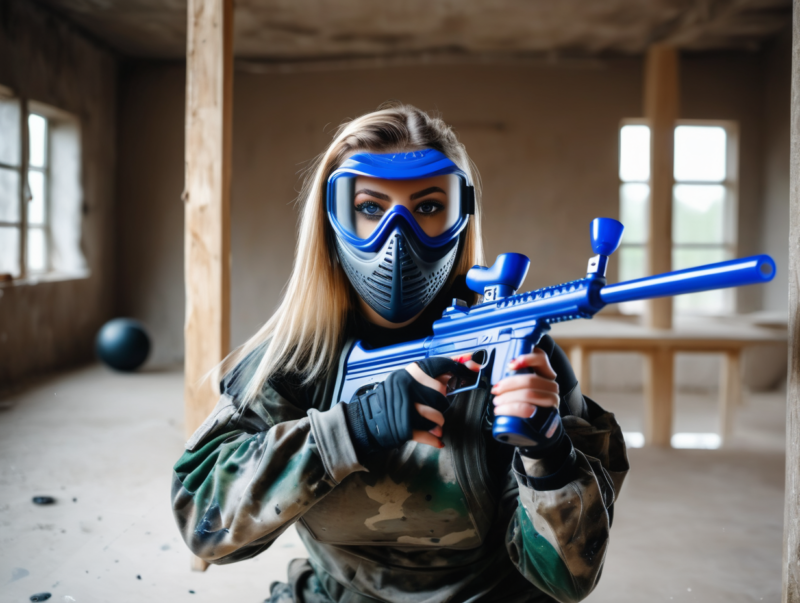
Paintball is a fast‑paced, team‑oriented sport in which participants use specially designed markers to launch spherical gelatin capsules filled with non‑toxic, water‑based paint. When a capsule bursts on impact, it leaves a visible mark that counts as a “hit.” The game can be played in a wide variety of settings, from sprawling woodland fields to compact indoor arenas, and the equipment ranges from entry‑level “starter kits” to high‑performance, custom‑tuned markers used by professional competitors. At its core, paintball blends strategy, athleticism, and a dash of adrenaline, offering players a chance to test reflexes, teamwork, and tactical thinking in a controlled, safe environment.
Although specific rule sets can differ between leagues, tournaments, and casual “run‑and‑gun” sessions, several fundamental principles are nearly universal:
Safety Gear Must Be Worn – Every player is required to wear an approved mask or goggles that protect the eyes and face. Many fields also mandate chest protectors, gloves, and elbow/knee pads, especially for younger participants.
Markers Must Be Regulated – Paintball markers are limited by velocity, typically capped at 300 feet per second (fps) for most public fields. This limit reduces the risk of serious injury while preserving the sport’s competitive nature.
Hit Confirmation – A player is eliminated when a paint capsule breaks and leaves a distinct mark on the body, clothing, or equipment. Some venues employ “paint‑check” stations where referees verify hits before a player exits the field.
No Physical Contact – Unlike some contact sports, paintball strictly forbids tackling, pushing, or any other form of physical aggression. The focus remains on the marker’s projectile.
Field Boundaries and “Dead‑Ball” Zones – Players must stay within designated play areas. Certain zones, such as safety walls or “no‑fire” areas, are off‑limits for shooting to protect spectators and staff.
Respect for Equipment – Markers and air tanks must be maintained according to manufacturer guidelines. Players are prohibited from tampering with safety mechanisms or using unauthorized modifications.
Sportsmanship – Good conduct is expected at all times. Cheating, deliberate sabotage, or harassment of opponents can result in immediate disqualification and a ban from the venue.
By adhering to these rules, participants ensure that the game remains fun, fair, and, most importantly, safe for everyone involved.
One of paintball’s greatest appeals lies in its versatility. Organizers can craft a near‑endless array of scenarios, each with its own objectives and narrative flair:
Capture the Flag (CTF). Two (or more) teams vie to infiltrate the opponent’s base, seize a flag, and return it to their own safe zone. The scenario emphasizes speed, stealth, and coordinated assaults.
Elimination (Team Deathmatch). Every player is a target; the last surviving individual or team wins. This classic format is often the default for quick, high‑intensity matches.
Scenario (Scenario‑Based) Games. These longer, immersive events can last several hours and involve elaborate storylines—zombie outbreaks, hostage rescues, or futuristic warfare. Players may receive mission briefings, props, and role‑specific objectives.
King of the Hill. A central “hill” area awards points to any team that maintains control for a set period. Teams must balance offense and defense, rotating players to keep fresh blood on the hill.
Zombie Survival. A small number of “zombies” start the game; when they tag a human, that player transforms into a zombie. The last human standing wins, creating a dramatic, asymmetrical battle.
Speedball (Arena) Matches. Played on compact, symmetrical fields with inflatable bunkers, speedball focuses on rapid engagements and is the primary format for competitive leagues.
Each scenario can be tweaked with additional rules—such as limited ammunition, timed respawns, or special “power‑up” zones—to keep the experience fresh and challenging.
Beyond its obvious entertainment value, paintball offers a suite of tangible benefits:
Physical Fitness. Running, ducking, and maneuvering across uneven terrain builds cardiovascular endurance, agility, and core strength. The sport’s bursts of high‑intensity activity are comparable to interval training.
Teamwork and Communication. Successful squads rely on clear, concise communication and shared tactics. Players learn to assign roles, coordinate movements, and adapt to evolving battlefield conditions.
Strategic Thinking. Planning ambushes, predicting opponent behavior, and managing limited resources (such as air tanks and paint) sharpen problem‑solving skills under pressure.
Stress Relief. The adrenaline rush and focused concentration provide a healthy outlet for stress, allowing participants to release tension in a controlled, non‑violent setting.
Confidence Building. Overcoming the fear of being “hit,” mastering equipment, and contributing to a winning strategy boost self‑esteem, especially for newcomers.
Social Bonding. Paintball brings together friends, colleagues, and strangers, fostering camaraderie through shared challenges and post‑match celebrations.
Education and Training. Many military, law‑enforcement, and corporate teams use paintball as a low‑cost platform for tactical drills, leadership development, and scenario‑based learning.
In short, paintball functions as a multifaceted tool for physical health, mental acuity, and social interaction.
The demographic landscape of paintball is surprisingly diverse. While early adopters tended to be teenagers and young adults seeking a high‑octane pastime, modern participation spans a broader spectrum:
Youth and Teens. Many schools and youth organizations incorporate paintball into physical‑education curricula or after‑school programs, emphasizing teamwork and safety.
College Students. Campus clubs host regular matches, often using paintball as a recruiting tool for intramural leagues and national tournaments.
Corporate Teams. Companies organize “team‑building” outings, leveraging paintball’s collaborative demands to improve workplace dynamics.
Military and Law Enforcement. Training units simulate tactical scenarios in paintball arenas, honing decision‑making and squad coordination without the risks of live fire.
Families and Weekend Warriors. Adult players of all ages enjoy weekend matches with family members or friends, appreciating the blend of leisure and competition.
Competitive Athletes. High‑performance players compete in regional, national, and international leagues, dedicating hours to practice, equipment optimization, and strategy refinement.
Recreational Hobbyists. Some enthusiasts treat paintball as a hobby, collecting markers, customizing gear, and attending specialty events focused on theme‑based gameplay.
The sport’s accessibility—thanks to rental equipment, a range of difficulty levels, and venues in both urban and rural settings—ensures that anyone with an interest can find a suitable entry point.
Research and professional commentary on paintball have highlighted both its benefits and areas for caution. Several key observations have emerged:
Injury Rates. Epidemiological studies indicate that paintball-related injuries are relatively low compared to contact sports. Most incidents involve minor abrasions, bruises, or eye injuries that could have been prevented with proper protective equipment. Consequently, experts advocate strict enforcement of mask usage and velocity caps.
Psychological Impact. Cognitive‑psychology research suggests that the simulated combat environment can improve stress‑resilience and rapid decision‑making. However, some scholars caution against excessive exposure to high‑intensity scenarios for younger participants, recommending balanced play frequencies.
Biomechanics and Fitness. Sports‑science analyses demonstrate that paintball engages the same muscle groups as soccer or basketball, especially the lower body and core. The intermittent sprint‑and‑stop nature of the game aligns with contemporary high‑intensity interval training (HIIT) protocols.
Environmental Considerations. Industry experts point out that modern paintballs are biodegradable and non‑toxic, lessening ecological concerns. Nevertheless, responsible field management—including proper cleanup and limiting play in sensitive habitats—is still advised.
Technology Innovation. Advances in marker design, digital air‑tank monitoring, and integrated scoring systems have enhanced both safety and gameplay depth. Experts predict that future developments may incorporate augmented‑reality overlays, further blurring the line between physical and virtual combat training.
Overall, the consensus among scientists and industry professionals is that paintball, when regulated and practiced responsibly, offers a net positive contribution to physical health, mental acuity, and social bonding.
Paintball’s versatility is reflected in the variety of venues that accommodate the sport. Players can choose settings that match their preferred style, climate, and logistical constraints.
Woodland and Forest Arenas. These large‑scale fields span several acres and incorporate natural terrain—trees, hills, streams, and rocky outcrops. The irregular landscape fosters stealth, long‑range engagements, and immersive scenario play.
Open‑Field Speedball Complexes. While traditionally associated with indoor arenas, many outdoor speedball venues feature inflatable bunkers arranged in symmetrical patterns, enabling high‑speed competitive matches in warmer weather.
Adventure Parks. Some outdoor recreation centers blend paintball with zip‑lining, rope courses, and obstacle challenges, creating a multi‑activity day for families and groups.
Rural “Battlefield” Sites. Dedicated paintball farms often host large “scenario” events, providing elaborate props (tanks, barricades, mock villages) and extended playtimes that can last several hours or even an entire day.
Outdoor venues typically require players to bring their own weather‑appropriate clothing and, in some cases, their own markers, though rentals are widely available.
Speedball Arenas. Compact, climate‑controlled spaces with inflatable cover allow for rapid, high‑intensity matches that emphasize agility and precise shooting. These arenas are popular for league play and tournament hosting.
Scenario Rooms. Indoor facilities can be transformed into themed environments—a spaceship corridor, a medieval castle hall, or a post‑apocalyptic bunker—using modular walls, lighting, and sound effects.
Urban Paintball Labs. Some cities host “lab” style venues that simulate urban combat zones with realistic building facades, alleyways, and stairwells. These settings appeal to players seeking tactical, close‑quarters experiences.
Corporate and Private Event Spaces. Many indoor arenas offer customizable packages for corporate team‑building, birthday parties, or private competitions, including on‑site catering and professional referees.
Indoor locations provide the advantage of year‑round operation, controlled lighting, and a consistent playing surface, making them ideal for newcomers and groups with limited logistical flexibility.
Paintball continues to evolve, balancing thrills with safety, competition with camaraderie, and tradition with technological innovation. Whether stepping onto a sun‑drenched forest field, ducking behind an inflatable bunker in a climate‑controlled arena, or strategizing a complex scenario with teammates, participants discover a sport that challenges the body, sharpens the mind, and builds lasting bonds. The growing body of scientific research and industry expertise reinforces paintball’s value as more than just a game—it is a dynamic platform for fitness, personal development, and collaborative problem‑solving. As venues expand and equipment advances, the paintball community looks poised to attract even broader audiences, ensuring that the splatter of color on the field remains a vivid symbol of spirited, inclusive competition for years to come.


 5900 Secluded Ave, Jacksonville, FL 32221, United States
