TOP 10 best of the best Free-roam VR in Oregon, US – Battleonix
El Monte
Log in
0

Advanced Search:

City

Rating

Playground


Price:

Main / Catalog / VR / Oregon, US

The best Free-roam VR near me in Oregon, US

Cities of the state

Portland, OR
img
from $40
VR

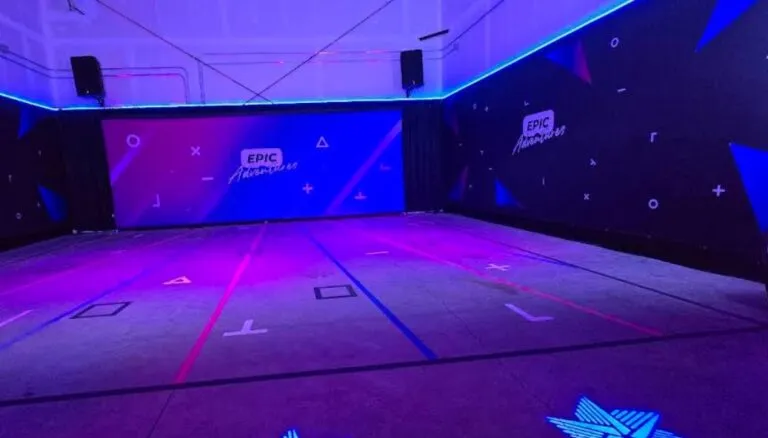
Epic Adventures is located in East Vancouver, Washington, in the Portland/Vancouver metropolitan area, just minutes from Portland, Oregon.


The venue is a free-roam virtual reality arena where up to six players physically walk and interact together in the same virtual world, with more than 40 multiplayer games spanning zombie shooters, family party games, horror, puzzles, and PVP. It also offers a growing collection of VR escape adventures set in space stations, haunted mansions, and ancient temples. Every session is private and guided by a dedicated game host who curates games to the group’s ages and skill level.


Beyond the arena, Epic Adventures is a full party venue with a retro Nintendo 64 area, spectator seating, dining space, a kitchenette, and dance-club lighting. It hosts birthdays, bachelor and bachelorette parties, graduations, family reunions, date nights, and corporate team-building events for groups up to 25, with a mobile VR arena available for off-site events. Guests bring their own food and decorations, and the whole venue is exclusively yours for the duration of your event.

Indoors
img
from $80
VR

Cipher Solver Escape Games is located in East Vancouver, Washington, at 11011 NE Fourth Plain Blvd, Suite 120, in the Vancouver Mall area of the city.


The venue offers 100% private traditional escape rooms — including the horror-themed “Experimentation of Dr. West,” the archaeology mystery “Mystery of the Mystical Mask,” and the playful “Candy Caper” — plus a seated tabletop experience called “The Inheritance.” A free-roam VR Arena lets up to five players explore digital worlds together in a 20′ x 20′ wireless space, with titles ranging from space stations to dragon towers.


Beyond the games, the club hosts birthdays, bachelor and bachelorette parties, graduations, retirements, and corporate team-building events. A dedicated party space with professionally made cake and balloons can be rented after a game, and the team handles decor and details. The venue is owned by Julie Hills, with event planners available for special requests, and parking is conveniently available on site.

Indoors
img
from $250
VR

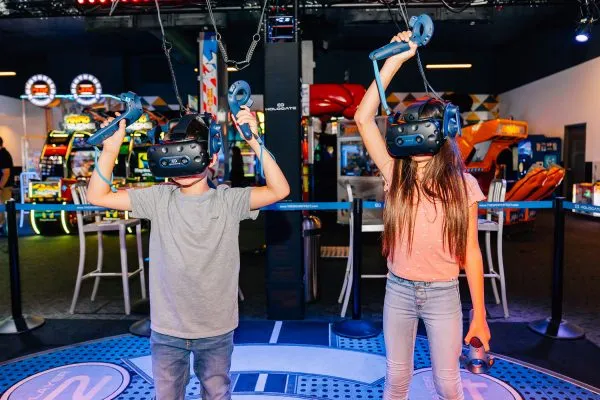
KingPins Family Entertainment Center sits in the Lents neighborhood of Southeast Portland, at 3550 SE 92nd Ave, and serves as the eastside home of the KingPins brand. The venue centers on 32 state-of-the-art bowling lanes plus eight lounge-style TapHouse lanes, a roughly 4,000-square-foot arcade with more than 50 games, and virtual reality experiences like Virtual Rabbids and King Kong of Skull Island. Guests can enjoy cosmic bowling, league play, and a pro shop, while the TapHouse Bar & Grill provides lane-side dining and 24 rotating local craft beers.


The venue is well set up for birthdays for kids and teens, with full-service packages that include a party host, reserved space, pizza, and unlimited soft drinks. It also handles corporate events, team builders, graduations, and holiday parties, accommodating groups from 10 up to 500 guests with on-site catering and customizable entertainment. A dedicated events team and attentive party staff make it a comfortable spot for family nights, date nights, and group gatherings alike.

Indoors
img
from $5
Laser tagVR

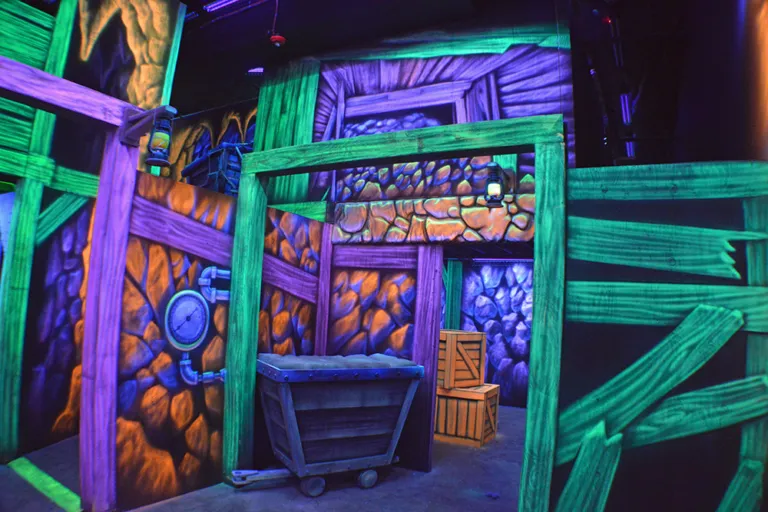
Gresham Cinema & Wunderland sits in the Rockwood area of Gresham, Oregon, along NW Burnside Road, a short drive east of Portland. It is a family-run entertainment center that combines a discount movie theater, a classic nickel arcade with roughly 100 games, and a two-level, 5,500-square-foot laser tag arena themed as an old western town and lost mine. Guests can also enjoy Hologate VR, an XD Dark Ride, a black-light mini golf course, go-karts, and escape rooms, all under one roof.


Beyond the attractions, the venue offers a dedicated party area and an online booking system, making it a natural fit for birthdays, school groups, and corporate team-building events. The staff are known for being patient with younger players, and a comfortable game room and lounge area lets guests relax and grab a snack between activities. With everyday low pricing and a movie admission that includes general admission to the rest of the venue, it is an affordable outing for families of all ages.

Indoors

Best of the best Free-roam VR in Oregon


The Rise of Free‑Roam VR Arenas: A Deep Dive into the Future of Immersive Entertainment


What Is a Free‑Roam VR Arena?

A free‑roam VR arena is a purpose‑built, physical space where participants can move untethered while wearing a headset that tracks their position in three dimensions. Unlike seated or tabletop VR, which relies on a stationary play area and hand‑held controllers, free‑roam venues combine high‑precision optical tracking, wireless power solutions, and specially designed safety zones to let users walk, run, jump, and even crouch without tripping over cables or bumping into obstacles.


Core Components

Component What It Does Typical Specs
Head‑Mounted Display (HMD) Delivers stereoscopic visuals and head tracking 4K per eye, >90 Hz, inside‑out or external tracking
Wireless Power Keeps the headset on for 2–4 hours without a battery pack 60 W RF or resonant magnetic charging
Positional Tracking System Captures the user’s location in real‑time 30–60 Hz camera arrays or lidar grids
Safety Infrastructure Prevents collisions with walls, props, or other players Soft padding, motion‑sensor mats, “virtual walls”
Interactive Props Physical objects that react to VR actions Haptic‑enabled guns, swords, steering wheels

Together, these technologies create a “real‑world sandbox” where the line between the digital and physical blurs, allowing participants to feel as though they are truly inside the virtual world.


Free‑Roam VR Scenarios: From Fantasy Quests to Corporate Training

Because the arena is a blank canvas, developers can craft a staggering variety of experiences. Below are some of the most popular—and innovative—scenarios you’ll find today.


1. Epic Adventure Quest

Imagine a sprawling cavern, lit by bioluminescent fungi, where a team of four must locate a relic before a ticking lava flow engulfs them.

  • Gameplay mechanics: cooperative puzzle solving, combat with motion‑tracked weapons, and time‑pressured navigation.
  • Why it shines in free‑roam: Players physically dodge simulated lava bursts, duck under stalactites, and feel the weight of a massive hammer they wield.


2. Zero‑Gravity Sports

Space stations have never been more accessible. Float through a zero‑gravity arena and compete in “Astro‑Dodgeball” or “Orbit‑Racing.”

  • Hardware twist: Low‑friction flooring and harnesses simulate weightlessness while keeping participants safe.
  • Social hook: Spectators watch on massive LED walls, turning the arena into a mini‑stadium.


3. Historical Time‑Travel Tours

Step onto a recreated 1920s speakeasy or walk the streets of ancient Rome—complete with ambient smells and tactile textures.

  • Educational edge: Guided narratives are overlayed on physical set pieces.
  • Immersion factor: Smell emitters release coffee aromas in a Parisian café scene, while haptic feedback replicates the rumble of horse‑drawn carriages.


4. Medical & Emergency Simulations

Paramedics practice triage in a virtual disaster zone, or surgeons rehearse a complex procedure with a patient‑specific 3D model.

  • Outcome: Faster skill acquisition and reduced training costs.
  • Safety: No risk of real injuries; mistakes are logged for debriefing.


5. Corporate Collaboration Games

Teams solve “mission‑critical” puzzles that require cross‑department communication, mirroring real‑world project workflows.

  • Benefit: Breaks down silos, builds trust, and provides a measurable “collaboration score.”


Who Plays on Free‑Roam VR Arenas?

Free‑roam VR isn’t a niche hobby for the tech‑savvy elite; it’s a multigenerational playground that attracts a surprisingly broad audience.


1. Gamers & Esports Enthusiasts

Hard‑core players love the physicality. Many professional teams now train in free‑roam arenas to improve reaction times and spatial awareness.


2. Families & Kids

Parents see it as a safer alternative to traditional playgrounds. The built‑in safety nets and controlled environment mean children can explore high‑energy activities without the usual bruises.


3. Corporate Groups

From team‑building retreats to product demos, companies leverage the novelty factor to create memorable experiences that reinforce brand identity.


4. Tourists & Event‑Goers

Cities such as Tokyo, Berlin, and San Francisco have turned free‑roam spaces into tourist attractions, offering “VR city tours” that showcase iconic landmarks in a wholly new light.


5. Researchers & Educators

Universities partner with arena operators to study human movement, cognition, and ergonomics within immersive environments.


VR for Kids: Fun, Safe, and Educational

Children are natural explorers, and free‑roam VR satisfies that curiosity while keeping them physically active—a rare win in a world dominated by screen‑bound gaming.


Health Benefits

Benefit How Free‑Roam VR Contributes
Cardiovascular activity Running, ducking, and reaching raise heart rate to moderate levels.
Motor skill development Hand‑eye coordination improves through object manipulation.
Spatial reasoning Navigating 3D mazes hones mental mapping abilities.


Educational Content

  • STEM Adventures: Kids can disassemble a virtual engine and see each component in motion, then reassemble it using hand gestures.
  • Language Immersion: A “Lost in Paris” scenario forces learners to speak French to progress, with real‑time subtitle feedback.
  • History Hunts: Scouts search for artifacts in a virtual Maya temple, learning facts displayed on interactive plaques.


Safety Protocols for Young Players

  1. Age‑gated experiences – Content is curated for ages 5‑12, with no violent or frightening elements.
  2. Guardian oversight – A live video feed shows a supervisor a bird‑eye view of the arena.
  3. Physical barriers – Soft, low‑height walls prevent accidental exits while preserving immersion.

The result? A playground where imagination, learning, and exercise intersect—something parents are eager to endorse.


Free‑Roam VR for Special Events: Birthdays, Graduations, Corporate Parties

Because the arena can be custom‑decorated and programmed on the fly, it has become the go‑to venue for unforgettable celebrations.


1. Birthday Parties

  • Theme‑Driven Worlds: From “Superhero Academy” where kids train with motion‑tracked capes, to “Dinosaur Safari” where they dodge animatronic T‑rexes.
  • Personalized Avatars: The birthday child’s likeness is scanned and turned into a hero avatar that appears throughout the game.
  • Party Packages: Include a photo booth that captures players in‑game, a “VR cake” that collapses in a spectacular visual effect, and a post‑event highlight reel.


2. Graduation Ceremonies

  • Virtual Campus Tour: Alumni can walk a hyper‑realistic recreation of the campus as it looked during their freshman year, complete with nostalgic music.
  • Future‑Vision Pods: Graduates enter a simulation that predicts potential career paths based on their interests, providing both inspiration and a fun “fortune‑telling” experience.
  • Group Challenges: Teams compete in a “Cap‑and‑Gown Relay,” racing through obstacle courses that symbolize the challenges ahead.


3. Corporate Parties & Product Launches

  • Brand‑Custom Scenarios: A tech firm can showcase its latest AI assistant by embedding it as a guide throughout a futuristic cityscape.
  • Live Data Integration: Real‑time sales numbers appear on giant holographic billboards within the VR world, turning a product launch into an interactive scoreboard.
  • Networking Zones: Virtual “coffee tables” allow attendees to mingle in smaller sub‑spaces, each with its own themed backdrop.

Bottom line: Free‑roam VR transforms ordinary gatherings into multi‑sensory, story‑driven spectacles that participants will talk about for years.


Scientists and Industry Experts View on Free‑Roam VR

The rapid growth of free‑roam arenas has attracted attention from academics, technologists, and policy makers alike. Below is a snapshot of the current discourse.


1. Cognitive and Neuroscientific Perspectives

“Immersive locomotion in a VR environment recruits the same hippocampal circuitry used for real‑world navigation,” notes Dr. Maya Patel, a neuroscientist at Stanford University. She and her team published a 2025 study showing 30 % higher spatial memory retention in participants who trained in a free‑roam arena versus those who used a seated simulator.


2. Human‑Factors Engineering

Prof. Lars Henriksen, Chair of Ergonomics at KTH Royal Institute of Technology, emphasizes the importance of physical safety design. In a 2024 whitepaper he argues:

“The key to successful free‑roam VR lies in a seamless blend of software latency under 15 ms and hardware safety nets that are invisible to the user but prevent impact injuries.”

His recommendations have become industry standards for arena construction.


3. Market Analysts and Business Outlook

Gartner predicts that global free‑roam VR revenue will exceed $12 billion by 2028, driven by corporate adoption and the rise of experiential tourism. Analyst Sophie Chen (Bloomberg) adds:

“The shift from traditional arcade attractions to narrative‑driven, data‑rich experiences is creating a new revenue model—‘experience‑as‑a‑service.’”

This model includes subscription‑based access for schools, recurring corporate bookings, and “pay‑per‑play” for casual visitors.


4. Ethical and Accessibility Concerns

  • Digital Equity: Critics argue that high‑cost hardware may widen the entertainment gap. Organizations like AccessVR lobby for subsidies to bring free‑roam experiences to under‑served communities.
  • Motion Sickness: Dr. Eli Navarro, a vestibular specialist, warns that up to 15 % of users still experience discomfort, urging developers to implement adaptive locomotion algorithms that adjust motion cues in real time.


5. Future Research Directions

Research Area Current Focus Anticipated Breakthrough
Haptic Feedback Low‑latency vibration suits Full‑body force feedback exoskeletons
AI‑Driven Narrative Branching storylines Real‑time, player‑driven plot generation
Mixed Reality Fusion Overlaying virtual objects on physical sets Seamless integration where physical props become “alive” in VR
Health Monitoring Heart‑rate and posture tracking Closed‑loop bio‑feedback that adapts difficulty for wellness

Collectively, the scientific community sees free‑roam VR as a living laboratory—a place where entertainment, education, health, and research intersect.


The Next Frontier of Shared Immersion

Free‑roam VR arenas have moved from novel curiosities to catalysts for cultural, educational, and commercial transformation. Whether you’re a kid hunting digital dragons, a corporate team solving a cyber‑security crisis, or a researcher dissecting the brain’s navigation system, the arena offers a physically active, emotionally resonant platform that static VR simply cannot match.

As tracking precision sharpens, wireless power becomes ubiquitous, and AI weaves ever‑more intricate stories, the only limit will be our imagination. The next time you walk through a lobby and see a sleek doorway framed by glowing panels, remember: beyond those doors lies a world where your body is the controller, and the adventure is limited only by the boundaries you choose to cross.


Ready to step inside? Check your local free‑roam VR venue and book a session—you might just discover a new side of reality.