Log in
Main Event Indoor Laser Tag arena is located in Chesterfield, MO.
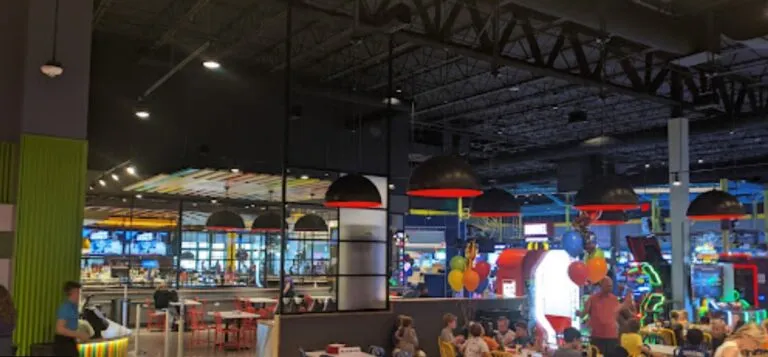
Main Event is a huge entertainment hub where you can spend your weekend or throw a birthday party. These laser-tag battles take place in a multi-story arena with fantasy-like decorations, neon lights, and laborious obstacles. Climb up the towers and rain fire on unsuspecting enemies.
There is also a large recreation area with snacks and drinks to chill after the game. There’s also bowling, pool, VR, mini-golf, a story room, and a ropes course – all available at one single place!
IndoorsThe Alley Indoor Center is located in Washington, MO.
The Alley in Washington, MO is a popular entertainment venue that offers bowling, arcade games, laser tag, and miniature golf. With 16 state-of-the-art bowling lanes, this family-friendly spot is perfect for both kids and adults. The arcade features a variety of games such as air hockey, basketball hoops, and racing simulators. The laser tag arena offers a thrilling experience for those seeking adventure, while the miniature golf course provides a fun outing for the whole family. To satisfy hunger cravings, The Alley has a full-service restaurant and bar that serves delicious food and drinks.
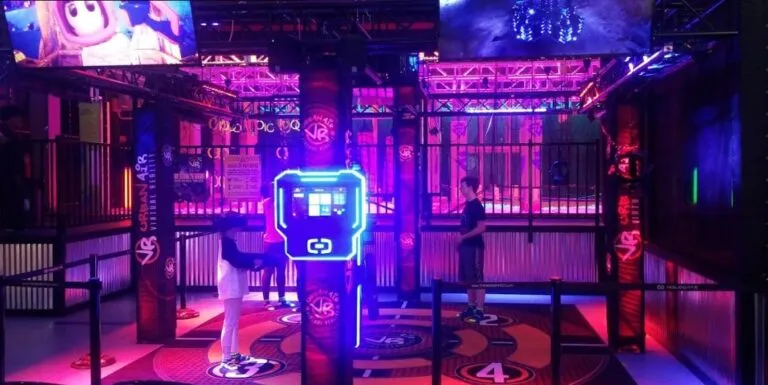
IndoorsUrban Air Trampoline and Adventure Indoor Park is located in Sunset Hills, MO.
Urban Air Trampoline and Adventure Park in St. Louis, MO is an exciting destination for thrill-seekers of all ages. This indoor park features a variety of attractions, including trampolines, dodgeball courts, obstacle courses, and a virtual reality experience. Visitors can also enjoy a rock climbing wall, a ropes course, and a warrior course. Birthday party and group event packages are available, as well as special events like Toddler Time and Teen Night. With so many activities to choose from, Urban Air is the perfect place for a fun-filled day of adventure in St. Louis.
IndoorsSandbox VR Indoor Center is located in St. Louis, MO.
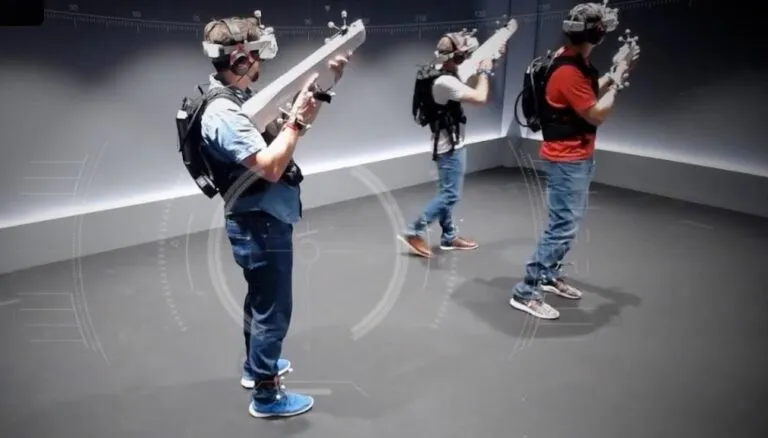
Sandbox VR has arrived in St. Louis, MO, offering an immersive virtual reality experience that is team-based. Players can explore new worlds and take the role of heroes, all while collaborating with their peers in real-time. The company’s proprietary technology and motion-capture system give players a sense of realism not found in other VR experiences. Sandbox VR is available for bookings, making it perfect for corporate events, team-building exercises, and birthday parties. Experience the future of gaming in St. Louis with Sandbox VR.
Indoors
For decades, “virtual reality” was an isolated experience. You sat in a swivel chair, strapped on a headset, and hoped you wouldn’t bump into your coffee table. But a new evolution in digital entertainment has arrived, shattering the boundaries of the living room and turning vast empty warehouses into boundless digital empires. This is the era of Free-Roam VR.
A Free-Roam VR arena—often called “Location-Based VR”—is a dedicated physical space where players can move around freely without the constraints of tethered cables or stationary play zones. Unlike home VR, which relies on static sensors, these arenas use advanced motion-tracking technology, haptic feedback suits, and high-precision spatial mapping to translate your real-world movements into a digital environment.
In a free-roam arena, the “world” moves with you. If you walk ten feet to the left in reality, you move ten feet to the left in the game. By combining physical props (like walls you can touch or floors that vibrate) with high-fidelity visuals, the brain is tricked into full presence. You aren’t just playing a game; you are physically occupying a digital frontier.
The beauty of free-roam VR lies in its narrative versatility. Because the space is programmable, a single arena can change its “skin” in a matter of seconds.
While the technology feels futuristic, the audience is surprisingly broad. Enthusiastic gamers are the early adopters, naturally, but the primary growth is coming from social groups looking for an “experience” rather than just a movie or dinner.
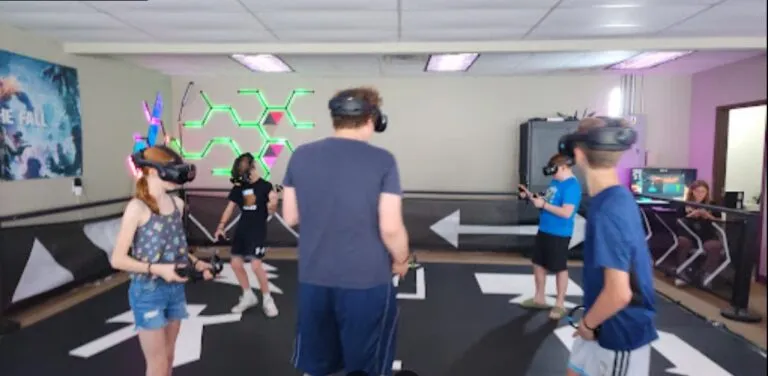
For kids and teens, free-roam VR is a revelation. It effectively turns sedentary screen time into active, physical engagement. It’s a literal “get up and move” activity that requires teamwork, communication, and spatial awareness. Parents appreciate that it’s a controlled, safe environment that fosters cooperation—kids aren’t just staring at a console; they are physically navigating a digital adventure together as a team.
The “Events” sector has adopted free-roam VR as the gold standard for memorable gatherings.
The consensus among neuroscientists and tech experts is that Free-Roam VR offers the most “honest” interaction between human biology and digital simulation.
Dr. Elena Vance, a specialist in spatial cognition, notes: “The brain processes physical movement and visual input differently when they are synchronized. Free-roam VR reduces ‘simulator sickness’ because the body’s inner ear—the vestibular system—actually feels the motion the eyes are seeing. It creates a state of ‘presence’ that is unattainable in a home-based, seated experience.”
Industry analysts agree that this is the path toward the “real” Metaverse. While the tech industry is still debating the longevity of headsets in the home, the consensus is that the social and physical nature of free-roam arenas makes them an essential pillar of future entertainment. We are moving toward a world where physical boundaries no longer limit our ability to travel, explore, or compete—all thanks to the expansive, liberating power of the free-roam arena.