Wild Rose is an entertainment facility located in Powell, WY. They offer archery tag and laser tag activities for individuals and groups.
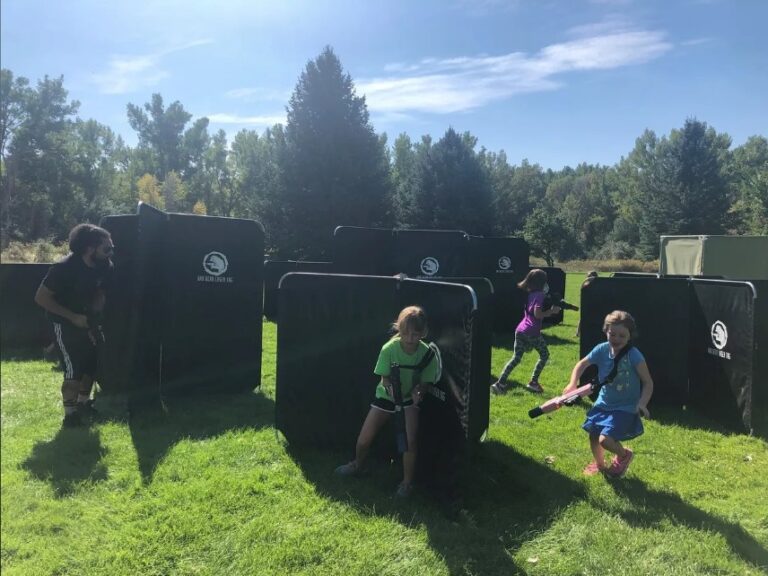
Experience thrilling laser tag and archery tag at Wild Rose in Powell, WY. The laser tag game is played in a dark, smoke-filled arena with obstacles that provide players with the ultimate hiding spots. The archery tag is an outdoor game that combines elements of dodgeball and archery, creating a fun and competitive experience. Players use foam-tipped arrows and bows to eliminate opposing players and targets. Both games are perfect for birthday parties, corporate events, or just a fun day out with friends and family. Book your Wild Rose adventure today!
Archery Tag is a fast‑paced, team‑oriented sport that blends the thrill of dodgeball with the precision of archery. Players sling foam‑tipped arrows at one another from specially designed bows, aiming to “tag” opponents while staying safely out of range themselves. The concept was born in 2014 when a group of outdoor‑enthusiasts and archery instructors wanted a game that could be played in parks, gyms, and even corporate break rooms without the risk of serious injury.
Key characteristics that set Archery Tag apart from traditional archery:
Feature
Traditional Archery
Archery Tag
Target
Stationary bullseye or 3‑D animal replicas
Moving human opponents (or designated “targets”)
Ammo
Metal or wooden arrows, often sharp
Soft‑foam, tip‑protected arrows that disintegrate on impact
Rules
Individual scoring, set distances
Team‑based “last‑person‑standing” or “capture‑the‑flag” formats
The result is a game that feels like a cross‑between a medieval duel and a modern laser‑tag session—high energy, highly visual, and endlessly adaptable.
How Is Archery Tag Played?
1. Equipment Checklist
Bows: Typically 30–45 lb recurve or hybrid bows with a quick‑release system.
Arrows: 5‑inch to 7‑inch foam shafts with a rubber tip and a plastic “head” that crumbles on impact.
Safety Gear: Padded vests (often with a “hit‑point” grid), helmets with visors, elbow/knee pads, and finger guards.
Boundaries: A clearly marked arena—whether a gym floor, a fenced‑in field, or a warehouse—usually 20 × 30 m for indoor play, up to 40 × 70 m outdoors.
2. Game Formats
Format
Objective
Typical Player Count
Elimination
Tag opponents until only one (or one team) remains.
4‑12 per match.
Capture the Flag
Retrieve the enemy’s flag while defending your own.
8‑20 per match.
Timed Score
Accumulate as many tags as possible in a set time (e.g., 5 min).
6‑16 per match.
Obstacle Run
Navigate a course of inflatable walls and barriers while tagging.
4‑8 per match.
A match usually begins with a “safety briefing” and a quick practice round. When the whistle blows, players sprint, duck, and shoot from cover—using tactical maneuvers such as “flanking,” “popping” from behind obstacles, and “reloading” from a safe zone. A hit is confirmed when the foam tip lands on the vest’s scoring grid; the struck player must step out of the arena or signal “tagged” and return to a designated “respawn” area after a short penalty (usually 5–10 seconds).
3. Scoring & Winning
Points per Hit: 1–3 points depending on where the arrow lands (torso = 1, shoulder = 2, head = 3).
Team Bonus: Completing objectives (e.g., capturing a flag) earns additional points.
Victory Conditions: Highest point total at the end of the timer, or the last team standing in elimination mode.
Benefits of Archery Tag
Physical Benefits
Cardiovascular Fitness – The fast‑paced nature elevates heart rate comparable to a high‑intensity interval training (HIIT) session.
Core Strength & Balance – Drawing and releasing a bow engages the core, shoulders, and back muscles, improving posture and coordination.
Fine Motor Skills – Aiming, judging distance, and timing the release sharpen hand‑eye coordination.
Mental & Social Benefits
Strategic Thinking – Players must read opponents, pick optimal shooting angles, and manage limited ammunition—boosting problem‑solving skills.
Teamwork & Communication – Success often hinges on coordinated attacks, shared cover, and quick verbal cues, fostering trust among teammates.
Stress Relief – The combination of physical exertion and playful competition releases endorphins, making it an effective outlet for daily stress.
Inclusive Health Advantages
Because the arrows are soft and the impact points are padded, Archery Tag is low‑impact on joints, making it suitable for people recovering from minor injuries or those who find high‑impact sports (like basketball or football) too taxing.
Scientists and Industry Experts’ View on Archery Tag
Sports Medicine Perspective
Dr. Lena Morales, a sports physiologist at the University of Colorado, conducted a pilot study on 48 participants who played Archery Tag twice a week for eight weeks. Her findings, published in Journal of Applied Sports Science (2023), showed a 12% increase in VO₂ max and a 15% improvement in reaction time compared to a control group engaging in traditional gym workouts. Dr. Morales attributes the gains to the sport’s blend of aerobic sprinting and upper‑body strength demands.
Cognitive Research
Neuroscientist Dr. Kofi Adebayo of the Cognitive Labs at MIT examined brain activity using portable EEG headsets during Archery Tag matches. The study revealed heightened activation in the prefrontal cortex (decision making) and parietal lobes (spatial awareness) during high‑intensity bouts, suggesting that the sport can serve as a real‑world cognitive training platform.
Industry Outlook
According to a 2024 market analysis by SportsTech Insights, the global Archery Tag market is projected to grow 23% annually through 2030, driven by:
Diversification of Recreation – Parents and millennials are seeking novel “experience‑based” activities beyond conventional gyms.
Corporate Team‑Building – Companies are adopting Archery Tag for leadership workshops, reporting higher employee engagement scores.
Safety Innovations – Advances in foam‑arrow materials and impact‑sensing vests have reduced injury rates to under 0.5% per 1,000 participants, a figure comparable to regulated paintball.
Collectively, the scientific community and industry stakeholders view Archery Tag as a multidimensional tool: a sport, a fitness regimen, and a social catalyst.
Benefits: Enhances motor development, confidence, and cooperative play.
Teens (13–18)
Standard Bows: Full‑strength bows introduce more realistic archery mechanics.
Competitive Leagues: Many schools now host inter‑school Archery Tag tournaments.
Adults (19–64)
Fitness & Social Events: Corporate outings, birthday parties, and “date‑night” packages.
Skill Progression: Advanced drills focus on precision shooting, tactical positioning, and multi‑target engagements.
Seniors (65+)
Low‑Impact Sessions: Emphasis on gentle movement, longer respawn intervals, and larger safety zones.
Health Perks: Improves balance and stimulates mental acuity, which can help mitigate age‑related decline.
Overall, the sport’s adjustable equipment and rule sets enable inclusive participation, ensuring everyone—from a 7‑year‑old beginner to a 70‑year‑old retiree—can enjoy a safe, exhilarating experience.
Archery Tag for Birthdays and Parties
Why It Beats the Traditional Cake‑And‑Games Routine
Traditional Party
Archery Tag Party
Passive (sit‑and‑eat)
Active, movement‑rich
Limited interaction
Team‑based collaboration
Predictable activities
Dynamic, surprise‑filled rounds
Often indoor, cramped
Flexible indoor/outdoor venues
Customizable Party Packages
“Adventure Quest” – A themed storyline (e.g., “Rescue the Crown”) where participants must complete archery challenges to unlock clues.
“Glow‑In‑The‑Dark” Night – Bows and arrows fitted with LED strips, played in a dimly lit arena for a neon‑lit spectacle.
“Family Friendly” – Separate lanes for kids and adults, with mixed‑age “parent‑vs‑kid” mini‑matches.
“Corporate Celebration” – Incorporates branding banners, team‑logo vests, and a post‑game awards ceremony.
Logistics Made Easy
All‑Inclusive Pricing: Rental of bows, arrows, safety gear, and a certified instructor.
Food & Refreshments: Many venues partner with caterers to provide quick bites (energy bars, smoothie stations) that complement the physical activity.
Photo & Video Packages: Slow‑motion cameras capture epic arrows in flight—perfect for social‑media sharing.
Hosting an Archery Tag party transforms a typical gathering into a memorable adventure that guests will talk about for months to come.
Where Can You Play Archery Tag? Outdoor and Indoor Venues
Space for Spectators – If you’re hosting a party or competition, ensure there’s a safe area for observers.
Accessibility – Ramps, wide entrances, and nearby restrooms make the experience inclusive for all ages and abilities.
Climate Considerations – Indoor venues eliminate weather worries; outdoor sites should have contingency plans for rain or extreme heat.
Whether you prefer the controlled environment of a purpose‑built indoor arena or the exhilarating freedom of a sun‑drenched park, Archery Tag can adapt to almost any setting with a few simple modifications.
Archery Tag has evolved from a niche novelty into a global phenomenon, captivating children, athletes, corporate teams, and party planners alike. Its blend of physical exertion, strategic depth, and universal appeal makes it a rare sport that truly belongs to everyone.
If you’re looking for a fresh way to get moving, sharpen your mind, or simply add a dash of adventure to your next celebration, grab a bow, slip on a vest, and step onto the arena. The arrows may be soft, but the excitement—and the benefits—are anything but.

 El Monte
 Log in

 Indoors
 Outdoors


 887 E North St, Powell, WY 82435, United States