
 El Monte
 Log in
Log in
Log in

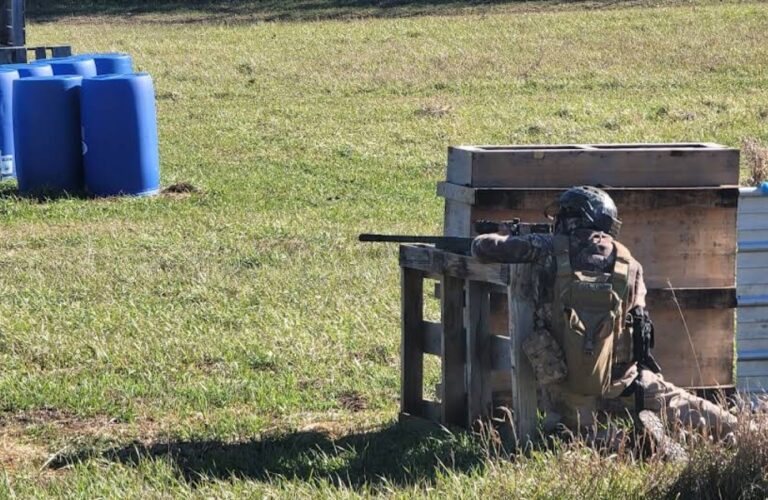
Top City Airsoft is located in Topeka, KS.
Top City Airsoft is located in a premier outdoor setting near the city, offering an exciting and immersive airsoft experience for players of all ages and skill levels. With thoughtfully designed battlefields that take advantage of natural terrain, wooded areas, and purpose-built obstacles, Top City Airsoft creates an action-packed environment where strategy, teamwork, and adrenaline come together for unforgettable gameplay.
The club offers full equipment rental, including airsoft markers, protective gear, and safety equipment, making it easy for first-time participants to join in without the need for personal gear.
Top City Airsoft is also an ideal venue for hosting a variety of group events and celebrations.
 Outdoors
Drop Zone Paintball is located in Overbrook, KS
Drop Zone Paintball features over 80 acres of game zone with all kinds of bunkers, towers, trees, and creeks. This location resides in a shadowy valley, so you don’t have to worry about the blazing sun in the middle of the day. You can choose from 5 game zones.
At Drop Zone Paintball, visitors can participate in a wide range of paintball games and experiences tailored to all skill levels. The park features multiple themed fields with diverse terrain, including wooded areas, open spaces, fortified barricades, tactical bunkers, and creative obstacles that add challenge and excitement to every match. Whether players are looking for fast-paced elimination rounds, strategic team battles, or mission-style scenarios, the variety of play zones ensures fresh and exhilarating gameplay for everyone.
The facility provides full equipment rental, including professional paintball markers, masks, protective vests, and other essential gear, making it easy for beginners and casual players to jump right into the action.
Drop Zone Paintball is also a popular choice for hosting a wide variety of special events and celebrations.
OutdoorsEvery calendar year presents a familiar dilemma: where should the next birthday be celebrated? The decision is rarely limited to a simple cake‑and‑balloons routine. Families, friends, and colleagues increasingly look for experiences that match the celebrant’s personality, age group, and energy level. An emerging trend is to replace traditional party venues with action‑packed arenas and immersive virtual‑reality (VR) spaces. These settings turn a birthday into a kinetic adventure, offering participants the chance to compete, collaborate, and create vivid memories that last far beyond the final slice of cake.
When the goal is to inject excitement into a birthday, action games and free‑roam VR stand out as unconventional yet highly effective options. Both formats thrive on movement, teamwork, and a healthy dose of friendly competition. They also cater to a wide spectrum of ages, allowing hosts to tailor the experience to the celebrant’s preferences and the guest list’s composition.
Action games such as laser tag, paintball, and airsoft share several appealing qualities. First, they demand physical activity, which helps burn off the extra calories from birthday treats while keeping guests engaged. Second, each game supplies a clear set of objectives—hit the opponent, capture the flag, or complete a mission—giving participants a sense of purpose that extends beyond idle mingling. Finally, these games are easily scalable: arenas can accommodate small gatherings or larger groups, and difficulty levels can be adjusted to suit beginners or seasoned players.
Free‑roam VR clubs have taken the concept of active entertainment to a new dimension. Instead of navigating a physical arena, participants don headsets and step into digitally rendered worlds that respond to their movements in real time. Modern VR venues often combine spacious, obstacle‑free rooms with cutting‑edge motion‑tracking technology, allowing users to swing swords, solve puzzles, or explore sprawling sci‑fi landscapes. Because the virtual environment can be customized, the same space can host a whimsical cartoon adventure for younger children or an adrenaline‑pumping shooter for adults—all in a single day.
Laser tag remains a perennial favorite for children’s birthday parties. The game’s core mechanics are simple: participants wear lightweight vests equipped with infrared sensors and wield hand‑held guns that emit harmless laser beams. When a beam contacts a sensor, the vest registers a hit and displays the score.
To maximize enjoyment, hosts should consider a few logistical details. Choose a venue that offers private party packages, which typically include a dedicated game area, a brief orientation session, and a short cooldown period for cake and gifts. Schedule multiple short rounds rather than a single marathon match; this keeps energy levels high and ensures that each child experiences the thrill of both offense and defense. Finally, provide comfortable, washable clothing for the participants, as the game can be physically demanding and may lead to sweat.
Paintball introduces a higher level of intensity, making it an ideal choice for birthdays that target teenagers and adults seeking a more robust challenge. Players use pneumatic or CO₂‑powered markers to launch paint‑filled capsules at opponents, with each hit leaving a brightly colored mark on clothing or skin.
Safety is paramount. Choose a reputable paintball field that enforces strict protective gear policies—full‑face masks, goggles, padded vests, and appropriate clothing are non‑negotiable. The venue should also provide a well‑maintained field with clear boundaries, natural cover (such as berms and trees), and clearly marked safe zones.
When organizing the event, allocate time for a thorough safety briefing and a short practice round. This ensures that all participants, especially those new to the sport, understand the rules and handling of the markers. A balanced schedule that alternates between high‑intensity matches and downtime for refreshments helps maintain energy without overwhelming guests.
Airsoft occupies a niche between paintball’s vivid visual impact and laser tag’s low‑tech simplicity. Using replica firearms that fire 6 mm plastic BBs at moderate velocities, airsoft offers a realistic shooting experience without the mess of paint.
Selecting the right venue is critical. Look for fields that provide a variety of terrain—urban mock‑ups, wooded sections, and open fields—to accommodate diverse game styles. The field should also enforce strict safety protocols, including mandatory eye protection, clear engagement distances, and clearly defined “no‑fire” zones.
A successful adult airsoft party often includes a pre‑game briefing that covers safety rules, basic weapon handling, and the chosen scenario’s storyline. Consider hiring a game master or facilitator who can guide participants through complex missions and keep the pace engaging. Providing a post‑game debrief where players can discuss tactics and share highlights adds a reflective element that many adults appreciate.
Free‑roam VR clubs represent the most versatile option on the birthday‑party spectrum. By merging physical movement with digital immersion, they can cater to almost any age group, interest, or skill level. Modern VR venues feature expansive rooms equipped with motion‑capture cameras, haptic feedback devices, and multi‑player platforms that allow groups to interact within a shared virtual environment.
When the guest list spans a broad age range, careful selection of games is essential. Begin with a short demo session that introduces the basic controls and safety guidelines. After the orientation, split the group into smaller pods based on skill level or interest—one pod might explore a whimsical platformer while another tackles a collaborative space‑exploration mission.
To keep the experience cohesive, consider a “party quest” format where each pod contributes to a larger narrative. For instance, younger players could collect virtual artifacts that later assist older participants in completing a strategic objective. This design promotes intergenerational teamwork and ensures that everyone feels integral to the overall adventure.
Choosing the right action‑game or VR experience hinges on several factors: the age distribution of guests, the desired level of physical intensity, budget constraints, and any venue accessibility requirements.
Budget considerations often influence the final choice. Laser tag and paintball typically involve equipment rental and field fees per participant, whereas VR clubs may charge a flat rate for a private room and a set number of play sessions. When the budget is limited, a single‑day laser tag or a short VR session can still provide an unforgettable birthday without breaking the bank.
The annual birthday decision no longer has to revolve around conventional settings. By embracing action games and free‑roam VR, hosts can transform a simple celebration into a dynamic adventure that resonates with participants of any age. Laser tag offers a safe, colorful playground for children; paintball energizes teenagers and adults with competitive thrills; airsoft provides adults with realistic tactical experiences; and VR clubs bridge the gap, delivering customizable immersive worlds for mixed‑age groups.
When the venue aligns with the celebrant’s interests and the group’s energy level, the birthday becomes more than a date on a calendar—it becomes a story of teamwork, triumph, and lasting memories. With thoughtful planning and an eye toward safety, the next birthday can be an unforgettable quest that participants will recount long after the final scoreboard resets.


 2704 SW 49th St, Topeka, KS 66609, United States
