El Monte
 Log in
Log in
Log in

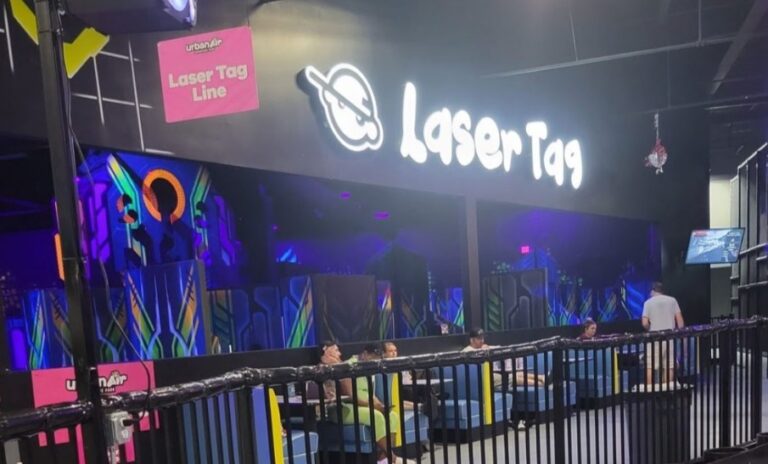
Urban Air Trampoline and Adventure Park sits inside the Walden Galleria mall complex in Cheektowaga, a short drive from downtown Buffalo, New York, and stays open year-round.
The park is much more than a trampoline center, offering interconnected trampolines, a Warrior Course, climbing walls, a Ropes Course, a Sky Rider zipline, bumper cars, dodgeball, and a laser tag arena with obstacles and hiding spots. Younger kids have their own dedicated area, and guests can choose from Deluxe and Ultimate day tickets or an unlimited monthly membership.
For celebrations, the venue offers Basic, Deluxe, Ultimate, and Platinum birthday packages with a dedicated party host, plus Private Room and VIP Suite add-ons with pizzas and HDTV. The Adventure 4 All bundle combines tickets, socks, pizza, and drinks for families, and the park also suits corporate team-building and school group events.
 Indoors
Grand Island Fun Center sits on Grand Island, NY, a short drive from both Buffalo and Niagara Falls, right along Grand Island Boulevard. It’s an indoor/outdoor family entertainment spot that has been bringing fun to Western New York for over 30 years.
The centerpiece is a 6,500-square-foot outdoor tactical laser tag arena — the only one of its kind in the Buffalo area — where up to 20 players can enjoy a 30-minute session. Beyond laser tag, the park offers a modern arcade, an 18-hole mini golf course, the longest go-kart track in Buffalo, batting cages, and water wars. Birthday parties come with a dedicated host, reserved tables, food, and full setup and cleanup, while group packages offer special pricing for schools, businesses, camps, and clubs.
The staff are consistently praised as friendly and helpful, and the pricing is noted as affordable. Food options include pizza, chicken fingers, and platters, with indoor party areas for gathering between activities. Extra touches include gift bags, game cards, add-on attractions, and gift cards, with online waivers to speed up entry. It’s a welcoming, family-oriented spot suited to birthdays, team building, corporate outings, and casual afternoons.
IndoorsBuffalo Battleground is located in Tonawanda, New York, in the Buffalo Niagara region of Western New York — not in New York City. It is a large indoor entertainment center built around tactical play, featuring a 22,000-square-foot airsoft arena and a tactical laser tag arena, both staffed by referees and battleguards who rotate groups through different game modes. Sessions are structured for maximum play time, and private events come with a dedicated host who guides the group through scenarios.
Beyond the arenas, the venue offers an arcade with over 40 games, neon-lit mini-bowling, and axe-throwing lanes, plus an on-site kitchen serving food and drinks. It is a popular spot for birthdays, corporate events, sports team days, and adult celebrations, with packages for airsoft, laser tag, mini-bowling, arcade, and Nerf that include a party host, reserved table, soft drinks, and goodie bags.
IndoorsLASERTRON is located in the Amherst neighborhood of Buffalo, New York, at 5101 North Bailey Avenue, and it’s the longest-running laser tag arena in the United States — operating for more than 33 years as a company-owned flagship of the LASERTRON manufacturer.
The centerpiece is a massive, multi-level, 100% LED-illuminated arena spanning over 9,000 square feet with 15 programmable sectors, LT-12.9 PRO gear, and room for up to 46 players. Instead of single rounds, guests book 30-minute sessions with six to seven games back-to-back across five core formats — Base, Headquarters, Battle Royale Squads, Domination, and King of the Hill — with automated team rebalancing keeping the competition fair. Over 60% of players are 18 or older, and the venue runs adult events, youth events, and team-building programs.
Beyond laser tag, the venue offers axe throwing, Krazy Darts, billiards, mini golf, and an arcade, plus a café and bar serving Buffalo-style food like pizza and wings. Food packages range from a pizza buffet to a full hot buffet, with drink ticket and arcade card add-ons available. The friendly, knowledgeable staff and relaxed bar environment make it a great spot for birthday parties, corporate gatherings, and casual nights out with friends and family.
IndoorsSince its emergence in the late 20th century, laser tag has evolved from a niche hobby into a global entertainment phenomenon. Combining high-tech hardware with physical exertion and tactical strategy, it offers a unique immersive experience that bridges the gap between digital gaming and traditional sports. This article explores the intricate world of laser tag, examining how it functions, the variety of ways it is played, and why it has become a staple for social gatherings and professional development.
At its core, laser tag is a recreational shooting sport where participants use infrared-emitting light devices to target electronic sensors worn by their opponents. Despite the name, most modern systems do not use actual lasers for the “tagging” mechanism due to safety regulations; instead, they utilize focused infrared beams, similar to those found in television remote controls. These beams are invisible to the naked eye but are detected by high-sensitivity optical sensors integrated into vests, headbands, or the tagging devices themselves.
When a sensor is struck by an infrared beam, the system registers a “tag.” This data is processed in real-time by an onboard computer or a centralized server, which tracks scores, remaining health, and ammunition counts. Modern equipment often features haptic feedback, such as vibrations or sound effects, to notify the player they have been hit. The complexity of the equipment can range from simple toys designed for backyard use to heavy-duty, tactical-grade hardware used in professional arenas that can accurately register hits from hundreds of feet away.
One of the primary reasons for laser tag’s enduring popularity is the sheer variety of game modes that can be implemented. Beyond the basic “every player for themselves” format, professional venues utilize sophisticated software to create complex, objective-based scenarios that mirror popular video games.
The most common scenario is Team Deathmatch, where two or more groups compete to accumulate the highest number of tags within a set time limit. However, more advanced players often prefer Capture the Flag, which requires offensive coordination to infiltrate the enemy base and defensive vigilance to protect one’s own. Another popular mode is King of the Hill, where teams must maintain control over a specific “hot zone” in the arena to rack up points.
For those seeking a more cinematic experience, many venues offer “Infection” or “Zombie” modes. In these scenarios, a small group of players starts as the infected and must tag humans to turn them into zombies, while the humans must survive until the timer runs out. There are also “VIP Protection” modes, where one team must escort a designated player to a safe zone while the opposing team tries to eliminate them. These varied scenarios ensure that the game remains intellectually stimulating and requires different strategic approaches every time.
The benefits of laser tag extend far beyond simple entertainment. On a physical level, a single session can be an intense cardiovascular workout. Players are constantly moving—sprinting between cover, crouching to avoid detection, and navigating through complex labyrinths. This helps improve endurance, agility, and reflexes without the monotony of a gym environment.
Mentally, laser tag acts as a significant stress-reliever. The immersion of the game allows participants to disconnect from daily anxieties and focus entirely on the present moment. It also sharpens spatial awareness and critical thinking. Players must keep track of their surroundings, predict opponent movements, and make split-second decisions under pressure.
Socially, the sport is a powerhouse for developing communication skills. Success in laser tag is rarely the result of a single individual’s skill; rather, it depends on a team’s ability to coordinate, share information, and execute a collective plan. This fosters a sense of camaraderie and belonging among participants, making it an excellent tool for building social bonds.
From a scientific perspective, laser tag is often studied for its psychological and physiological impacts. Sports psychologists point to the concept of “flow”—a state of deep immersion where a person becomes fully absorbed in an activity. Laser tag is an ideal generator of this state, as it provides clear goals and immediate feedback. Furthermore, researchers in the field of “exergaming” view laser tag as a pioneer in the movement to combine physical activity with digital engagement, noting that the competitive and social elements provide stronger motivation for exercise than solitary activities.
Industry experts focus on the technological trajectory of the sport. The integration of the Internet of Things (IoT) and Augmented Reality (AR) is the latest frontier. Experts suggest that the next generation of laser tag will involve “smart” arenas where the environment reacts to the players—walls that change color based on team control or holographic obstacles that appear in the middle of a corridor. The business side of the industry has seen a shift toward “tactical laser tag,” which uses more realistic-looking equipment and complex mission-based gameplay to appeal to an older demographic, moving the sport away from its reputation as a purely juvenile activity.
While laser tag is enjoyed by all ages, it holds a special place in the lives of children. It serves as a safe and accessible entry point into competitive sports. Unlike paintball or airsoft, which can be painful and leave bruises, laser tag is entirely non-contact and painless. This makes it inclusive for children of various physical ability levels and temperaments.
For kids, laser tag is more than just a game; it is a vital exercise in cognitive development. It teaches them how to follow rules, respect opponents, and handle both victory and defeat with grace. It also encourages teamwork in a way that feel-good classroom activities sometimes cannot, as the stakes of the “game” provide a tangible reason to cooperate. Many parents prefer laser tag because it satisfies a child’s interest in action-oriented play while ensuring a high level of safety and supervision.
The versatility of laser tag makes it an ideal centerpiece for various milestones. For a birthday party, it provides a high-energy environment where children or adults can burn off energy in a structured setting. Most venues provide private rooms and dedicated staff, making it a low-stress option for hosts who want a turnkey event solution.
Graduation parties often use laser tag as a symbolic way to celebrate a “rite of passage.” It allows friends to come together for one last shared adventure before moving on to new chapters of their lives. The nostalgic element for young adults, combined with the competitive thrill, creates lasting memories.
In the professional world, corporate parties and team-building retreats have increasingly adopted laser tag. It serves as a powerful “leveler” where management hierarchies are temporarily suspended. A junior employee might find themselves leading a squad that includes the CEO, fostering a unique dynamic of mutual respect. Companies use these sessions to identify natural leaders, improve internal communication, and boost employee morale. It is a refreshing departure from traditional trust-falls or boardroom workshops.
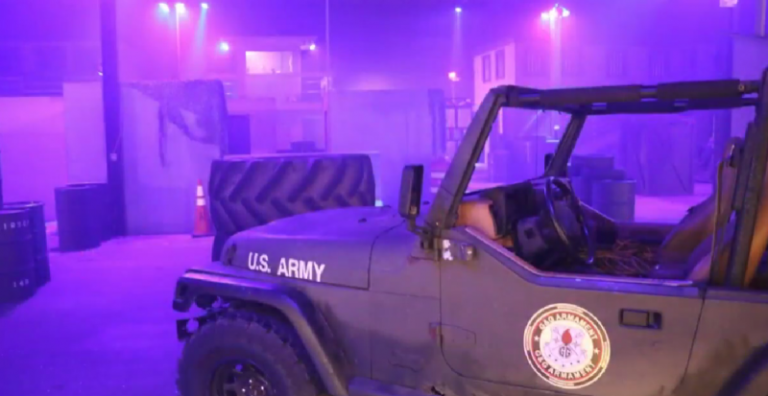
The experience of laser tag is heavily influenced by the venue. Indoor arenas are the traditional choice and are typically characterized by neon lights, thick fog, and pounding music. These environments are designed to be sensory-rich and claustrophobic, favoring fast-paced, close-quarters combat. The main advantage of indoor play is climate control; games can proceed regardless of rain, heat, or snow, and the use of UV lighting creates a futuristic, otherworldly atmosphere.
Outdoor laser tag, on the other hand, offers a drastically different experience often referred to as “Tactical Laser Tag.” These venues utilize natural terrain, such as woods, hills, or urban-style “kill houses” built from wood and shipping containers. Outdoor equipment is typically more powerful, featuring telescopic sights and longer effective ranges to accommodate the open space. This version of the game relies more on stealth, camouflage, and long-range strategy. It appeals to those who enjoy a more “military-sim” feel and the benefits of being in the fresh air.
Ultimately, the choice between indoor and outdoor venues depends on the desired intensity and the specific goals of the group. Indoor play is often better for younger kids and high-speed action, while outdoor play offers a more grounded, strategic, and physically expansive adventure.
In conclusion, laser tag is a multifaceted activity that combines technology, physical fitness, and social strategy. Whether it is being used to celebrate a child’s birthday, strengthen a corporate team, or provide a high-tech workout, the sport continues to adapt and thrive. As technology continues to advance, the line between the physical and digital worlds will only continue to blur, ensuring that laser tag remains a relevant and exciting pastime for generations to come.


 1 Walden Galleria, Buffalo, NY 14225, United States