
 El Monte
 Log in
Log in
Log in

Stars and Strikes Family Entertainment Center sits in the Oakbrook area of Summerville, South Carolina, on Ladson Road just off the highways that connect the greater Charleston region.
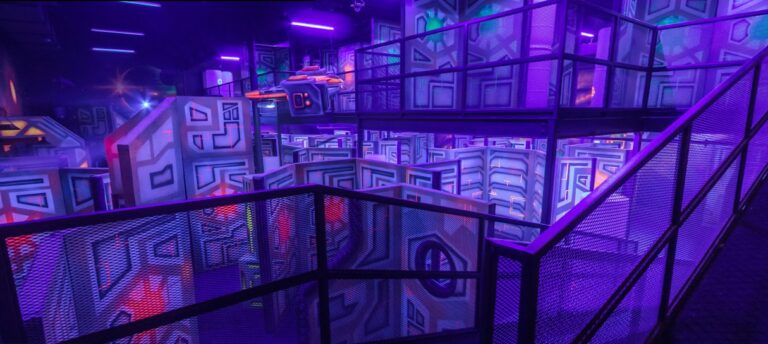
The 55,000-square-foot complex centers on a two-story laser tag arena packed with ramps, glowing hideouts, fog, and music, alongside 24 bowling lanes (eight VIP lanes in the Main St Lounge), a 7,300-square-foot arcade with a prize store, bumper cars, virtual reality, and an on-site Escapology escape room. Kids’ birthday packages come with dedicated party hosts, while adult parties, corporate events, and team-building outings are all welcome in private rooms, including an upscale corporate event room seating 150-plus with a full private bar.
The 7/10 Grille serves chef-inspired cuisine from burgers to seafood, with a full-service bar and big-screen TVs for sports viewing. Seating is spread throughout so parents can watch their kids while dining. Regular specials—happy hour bowling, discounted game days, and food-and-arcade combos—make it easy to enjoy everything without overspending, and the attentive staff keeps the space clean, welcoming, and well-maintained.
 Indoors
In an era increasingly dominated by digital screens and solitary gaming experiences, laser tag has emerged as a powerhouse of social, active, and immersive entertainment. It is more than just a game of “tag” with high-tech equipment; it is a sophisticated blend of athleticism, strategy, and adrenaline that has captured the imaginations of millions globally. Whether you are a curious parent, an event planner, or a corporate leader looking to foster team cohesion, understanding the mechanics and culture of laser tag is the first step toward unlocking its immense potential.
At its core, laser tag is a recreational shooting sport in which players use infrared-emitting light guns to tag designated targets on their opponents’ vests or sensors. Unlike traditional paintball or airsoft, which involve projectiles, laser tag is entirely non-contact and “pain-free,” utilizing invisible infrared light beams that are safe for the eyes and the environment.
Modern laser tag systems are highly computerized. Each piece of equipment—the phaser and the sensor vest—is programmed to track hits, manage ammunition, track health points, and register the identities of shooters. When a player is “tagged,” their vest typically vibrates, flashes, or emits a sound to signal that they have been hit. Because there is no physical projectile, the game is accessible to virtually any age group, removing the barriers associated with safety gear, bruising, or environmental cleanup.
The magic of laser tag lies in its versatility. While “Team Deathmatch” is the default mode for many, the industry has evolved to offer complex, narrative-driven scenarios that elevate the experience:
Laser tag offers a unique intersection of physical health and cognitive development. Physically, an hour of active laser tag is a high-intensity interval training (HIIT) workout. Players spend the entire match ducking, weaving, sprinting, and navigating obstacles, which improves cardiovascular health, agility, and motor coordination.
Mentally, the game is a masterclass in strategic thinking. Players must constantly communicate with teammates, assess the battlefield, adapt to shifting objectives, and maintain focus under pressure. This promotes rapid decision-making and spatial awareness. Furthermore, the sport is a powerful social connector. It forces individuals to strip away their social anxieties and work collaboratively toward a shared victory, building trust and camaraderie in a way that static team-building exercises often fail to do.
Research into play-based learning and recreational sports suggests that laser tag occupies a “sweet spot” in developmental psychology. Experts note that because the game relies on simulated consequences rather than actual pain, players are more likely to take risks and experiment with different roles—such as scouts, snipers, or support roles—without the fear of failure.
Industry experts emphasize the technological sophistication of the modern arena. With the advent of IoT (Internet of Things) integration, some venues now offer “smart” arenas where the environment itself reacts to the game. Walls might open to reveal new paths, or hidden “boss” targets might activate based on team performance. Experts view this as the future of active gaming, predicting that augmented reality (AR) will soon blend further with laser tag, overlaying digital interfaces onto physical arenas to create an even more immersive “real-life video game” environment.
While the game is often marketed toward younger audiences, it has transcended age demographics completely. For children, laser tag is an incredible tool for building self-confidence. It provides a structured environment where children learn to follow rules, respect authority through referees, and practice sportsmanship. Unlike solo screen games, laser tag forces kids to look each other in the eye, communicate, and solve problems together. The inclusion of lightweight, ergonomically designed gear has made the game accessible to children as young as five or six, fostering early-stage socialization and physical fitness.
The adaptability of laser tag makes it a premier choice for event hosting:
The playing environment dictates the pace of the game.
Indoor Arenas: These are the most common and offer the most controlled environment. Indoor venues often feature elaborate, multi-level mazes, blacklights, neon laser effects, fog machines, and booming soundtracks. The atmosphere is dense and fast-paced, often resembling a sci-fi movie set. Because they are climate-controlled, indoor arenas are perfect for year-round events.
Outdoor Venues: Outdoor laser tag, often played in forests, fields, or purpose-built tactical parks, offers a more natural “military simulation” experience. Outdoor gear is generally more rugged and features longer-range sensors. Players must contend with wind, sunlight, and natural terrain, which adds a layer of realism and difficulty that seasoned veterans often prefer. The vast space allowed by outdoor venues also permits larger player counts, making them ideal for massive club gatherings or tournament-style events.
Ultimately, laser tag serves as a vital bridge between the digital world of gaming and the physical world of sports. It remains one of the most effective ways to combine social interaction, physical movement, and sheer fun, ensuring its place as a staple of modern entertainment for years to come.


 4570 Ladson Rd, Summerville, SC 29485, United States