Log in
Block Party Social is located in Fremont, NH.
Nestled in the heart of Fremont, New Hampshire, Block Party Social has quickly emerged as a premier destination for immersive entertainment and high-energy social experiences.
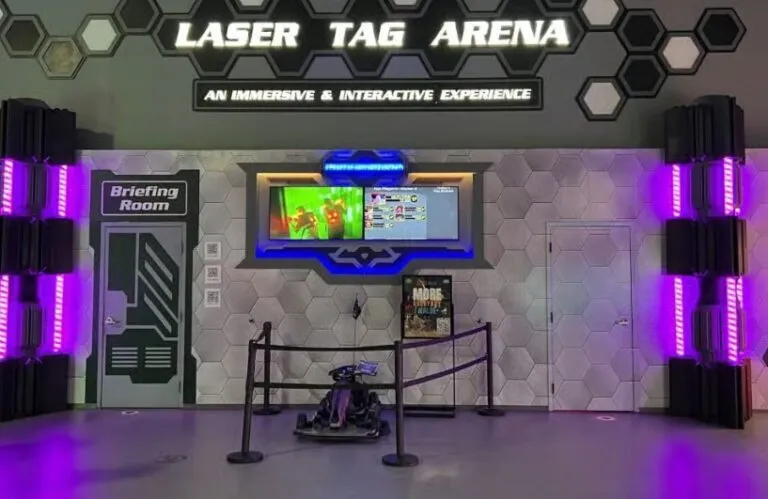
At the core of Block Party Social’s appeal are its standout attractions: laser tag and virtual reality (VR). The venue features a multi-level laser tag arena designed with strategic obstacles, glowing tunnels, and pulsing lights that transform the space into a futuristic battlefield.
Beyond its high-tech attractions, Block Party Social fosters a vibrant community atmosphere. The lounge-style common area, complete with modern seating and ambient lighting, invites guests to relax between games. Complimentary Wi-Fi, snack offerings, and digital leaderboards tracking scores from both laser tag and VR challenges add to the social appeal. The venue also hosts themed nights, birthday parties, and private events, positioning itself as a go-to hub for celebrations and gatherings.
IndoorsMel’s Funway Park is located in Litchfield, NH.
Outdoor Playground – The heart of Mel’s Funway remains its expansive playground, featuring a modern climbing structure, zip lines, and a splash pad that comes alive during the summer months.
Picnic & Event Spaces – Scattered throughout the park are shaded pavilions equipped with BBQ grills, Wi‑Fi, and ample seating. Local schools and community groups frequently book these areas for birthday parties, scouting events, and seasonal festivals.
Lasertag Arena – The arena spans roughly 4,000 square feet and is built with black‑out walls, reflective surfaces, and a sophisticated laser tracking system.
Indoors
Outdoors
In its most basic form, laser tag represents the intersection of technology, physical activity, and strategic competition. Since its commercial debut in the late 1970s and early 1980s, inspired by the high-tech aesthetics of science fiction, the game has evolved from a niche hobby into a global industry. Today, it serves as a primary recreational choice for families, a rigorous training tool for professionals, and a high-energy centerpiece for celebrations. Understanding the mechanics, the psychology, and the logistical versatility of laser tag reveals why this sport continues to grow in popularity in an age of digital entertainment.
At its core, laser tag is a tag-based sport where participants use equipment that emits infrared signals to mark opponents. Despite the name, modern systems rarely use actual lasers to register hits due to safety regulations; instead, they utilize infrared light, the same technology found in television remote controls. Each player typically wears a vest or a headband equipped with optical sensors designated to receive these signals. When a player successfully aims their emitter, often called a phaser or tagger, at an opponent’s sensor, the system records a “tag.”
The technical sophistication of laser tag equipment has advanced significantly over the decades. Modern gear includes integrated LCD screens on the taggers that provide real-time feedback on health, ammunition levels, and score rankings. Furthermore, radio-frequency (RF) technology allows the equipment to communicate with a central computer, enabling real-time scoring updates and complex game mechanics that were once only possible in video games. This digital backbone allows for an objective, cheat-proof environment where every move is tracked and logged.
One of the primary draws of laser tag is its immense variety in gameplay. Gone are the days of simply running around and shooting at anything that moves. Today’s venues offer structured scenarios that require high levels of tactical planning. The most common format is the “Team Deathmatch,” where two groups compete to rack up the highest number of tags within a set timeframe. While simple, it serves as the foundation for learning the mechanics of the game.
For more experienced players, objective-based scenarios provide a deeper challenge. “Capture the Flag” is a staple, requiring teams to balance offense and defense to retrieve a physical or digital token from the enemy base. “King of the Hill” tasks players with holding a specific geographical point on the field for as long as possible, forcing them to adapt to static defensive positions. More immersive facilities offer “Zombie Infection” modes, where one player begins as the “alpha” and must tag others to turn them into members of the horde, or “VIP Escort,” where one team must protect a designated player while moving from one end of the arena to the other. These scenarios transform the game into a live-action role-playing experience that keeps the gameplay fresh and engaging.
The benefits of participating in laser tag extend far beyond simple entertainment. From a physical perspective, it is a high-intensity cardiovascular workout. Players spend the duration of a match sprinting, crouching, and navigating obstacles, which improves agility, endurance, and coordination. Unlike many other sports, the adrenaline-pumping nature of the game often masks the physical exertion, allowing players to burn calories and improve their fitness levels without the monotony of a traditional gym environment.
Mentally and socially, laser tag is a powerhouse for personal development. It requires rapid problem-solving and split-second decision-making. Because most scenarios are team-oriented, it necessitates clear communication and the ability to trust others. Players must learn to delegate roles, such as scouts, snipers, and front-line attackers, fostering a sense of leadership and cooperation. Furthermore, the sport provides an excellent outlet for stress relief. The immersive nature of the game allows participants to disconnect from daily pressures and engage in a safe, controlled form of competitive play.
Scientists and industry experts have long analyzed laser tag through various lenses, including psychology, technology, and physical health. Psychologists often point to the game as a prime example of “active play,” which is essential for cognitive development. Experts suggest that the non-violent nature of the infrared technology—where there is no physical projectile or pain involved—makes it an ideal outlet for natural competitive instincts. It allows participants to experience the “fight or flight” response in a healthy, safe environment, which can help in developing emotional regulation.
Industry analysts highlight the technological trajectory of the sport as a gateway to broader augmented reality (AR) applications. As the industry moves forward, experts are seeing more integration between physical arenas and digital overlays. Developers are working on ways to incorporate haptic feedback vests that vibrate when a player is tagged and software that tracks player statistics globally. From a safety standpoint, industrial designers favor laser tag over similar sports like paintball or airsoft because it eliminates the risk of bruising and physical impact, making it more accessible to a wider demographic and lowering insurance liabilities for facility owners.
While laser tag is enjoyed by people of all ages, it holds a special place in the world of youth recreation. It is one of the few high-energy sports that is truly inclusive. Unlike contact sports, size and strength do not dictate success in laser tag; instead, stealth, strategy, and teamwork are the primary drivers. This levels the playing field, allowing children of different sizes and athletic abilities to compete as equals.
For kids, laser tag serves as a bridge between the digital world and the physical one. Many children are accustomed to first-person shooter video games, and laser tag allows them to live out those experiences in three dimensions. It encourages them to get off the couch and engage in physical movement. Most facilities have equipment specifically designed for smaller frames, ensuring that the vests and taggers are lightweight and comfortable for children as young as six or seven. Because there is no “ouch factor” involved, kids can play with confidence, focusing on the fun of the game rather than the fear of being hit by a projectile.
The versatility of laser tag makes it an ideal choice for a wide variety of milestone events. For birthday parties, it offers a “turn-key” solution for parents. Many facilities provide dedicated party rooms, referees to coordinate the games, and a structured environment that keeps children occupied and energetic. The nature of the game ensures that everyone is included, and the automated scoring systems provide an exciting way to crown a winner at the end of the celebration.
Graduation parties also benefit from the high-energy atmosphere of a laser tag arena. It provides a safe, “sober” environment for young adults to celebrate their achievements. It serves as a final bonding experience for classmates before they head off to different colleges or careers. For the corporate world, laser tag has emerged as a premier team-building exercise. It strips away office hierarchies and encourages managers and subordinates to work together as peers. Corporate parties often use laser tag to improve office morale, break down communication barriers, and foster a healthy sense of internal competition that translates back to the workplace environment.
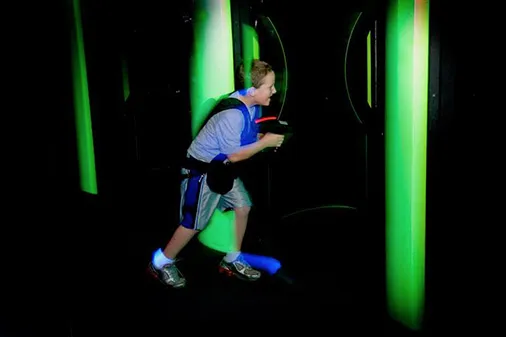
The environment in which laser tag is played significantly alters the experience, and players can generally choose between indoor and outdoor venues. Indoor arenas are the most traditional setting. These are typically climate-controlled environments filled with neon lights, blacklights, artificial fog, and multi-level structures. Indoor play is fast-paced and geared toward close-quarters combat. The controlled environment allows for high-tech sensory effects, such as pounding music and digital sound effects, which enhance the futuristic feel of the game. Indoor venues are also immune to weather conditions, making them a reliable choice year-round.
Outdoor laser tag, often referred to as “tactical laser tag,” provides an entirely different sensation. These venues usually utilize larger fields that may include natural terrain, bunkers, and military-style obstacles. Outdoor equipment is often more specialized, with taggers designed to work over long distances—sometimes up to several hundred feet—even in direct sunlight. This version of the game feels more like a military simulation. It requires different strategies, such as camouflage and long-distance sniping. Outdoor venues are particularly popular for those who enjoy the “milsim” (military simulation) aspect of tactical games and for large-scale events that require more space than a building can provide.
Regardless of the venue or the specific scenario, laser tag remains a cornerstone of modern entertainment. It successfully blends the thrill of competition with the safety of modern technology, ensuring its place as a favorite activity for generations to come. Whether one is looking for a way to bond with coworkers, celebrate a child’s birthday, or simply get a vigorous workout, laser tag offers a dynamic and inclusive solution.