
 El Monte
 Log in
Log in
Log in

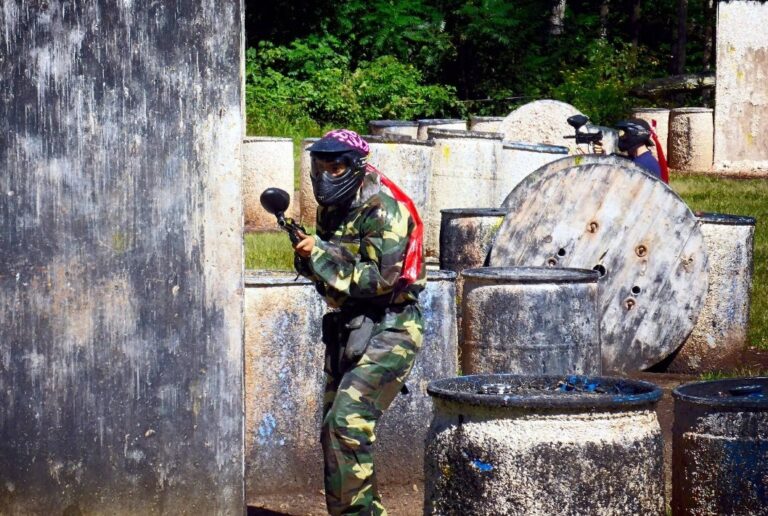
AG Paintball is located in Weare, NH.
Tucked in the scenic woods of Weare, New Hampshire, AG Paintball offers a fresh and family-friendly take on outdoor adventure gaming. Known for its vibrant atmosphere and innovative approach, AG Paintball caters to players of all ages and skill levels, making it a go-to destination for birthday parties, corporate team-building, and weekend fun.
The most popular option is low-impact paintball, which uses smaller, lighter paintballs fired at reduced velocities. Another standout feature is AG Paintball’s adoption of Gellyball—a newer, gentler alternative gaining traction across the U.S. For those who prefer a tech-forward twist, AG Paintball also offers laser tag.
AG Paintball operates both outdoor and indoor fields, ensuring year-round play regardless of New England’s unpredictable weather.
 Outdoors
Mel’s Funway Park is located in Litchfield, NH.
Outdoor Playground – The heart of Mel’s Funway remains its expansive playground, featuring a modern climbing structure, zip lines, and a splash pad that comes alive during the summer months.
Picnic & Event Spaces – Scattered throughout the park are shaded pavilions equipped with BBQ grills, Wi‑Fi, and ample seating. Local schools and community groups frequently book these areas for birthday parties, scouting events, and seasonal festivals.
Lasertag Arena – The arena spans roughly 4,000 square feet and is built with black‑out walls, reflective surfaces, and a sophisticated laser tracking system.
 Indoors Outdoors
Block Party Social is located in Fremont, NH.
Nestled in the heart of Fremont, New Hampshire, Block Party Social has quickly emerged as a premier destination for immersive entertainment and high-energy social experiences.
At the core of Block Party Social’s appeal are its standout attractions: laser tag and virtual reality (VR). The venue features a multi-level laser tag arena designed with strategic obstacles, glowing tunnels, and pulsing lights that transform the space into a futuristic battlefield.
Beyond its high-tech attractions, Block Party Social fosters a vibrant community atmosphere. The lounge-style common area, complete with modern seating and ambient lighting, invites guests to relax between games. Complimentary Wi-Fi, snack offerings, and digital leaderboards tracking scores from both laser tag and VR challenges add to the social appeal. The venue also hosts themed nights, birthday parties, and private events, positioning itself as a go-to hub for celebrations and gatherings.
IndoorsHilltop Fun Center is located in Somersworth, NH.
At Hilltop Fun Center, laser tag isn’t just a game—it’s an immersive experience. Equipped with state-of-the-art gear and a multi-level, maze-like arena, the attraction transforms participants into elite operatives navigating through fog machines, pulsing lights, and futuristic sound effects. The course is strategically designed with obstacle zones, tunnels, and hidden vantage points, encouraging teamwork, strategy, and quick reflexes. Whether visitors are launching a stealthy flank or defending a key position, every game is different, offering endless replay value.
The venue also boasts a variety of other attractions, including arcade games with ticket redemption, miniature golf, and seasonal offerings like outdoor go-karts and bumper boats when the weather permits. This diverse lineup ensures that even those who prefer friendly competition over tactical missions will find something exciting to enjoy.
With operating hours that accommodate both weekday afternoons and weekend crowds, the center is a flexible option for spontaneous outings or planned events.
IndoorsLaser tag is a fast‑paced, team‑oriented game that combines the excitement of a video‑game battle with the physicality of a sport. Players wear lightweight vests marked with infrared sensors and carry hand‑held phasers that emit invisible laser beams. When a beam strikes a sensor, the system registers a “hit,” deducts points, or records a “kill,” depending on the game mode. The technology is safe—there are no projectiles, no paint, and no physical contact—making it suitable for participants of almost any age and fitness level. Modern laser‑tag arenas are equipped with automated scoring systems, ambient lighting, and sound effects that create an immersive battlefield, whether the setting mimics a futuristic sci‑fi complex, an abandoned warehouse, or an outdoor woodland.
The versatility of laser‑tag stems from its ability to adapt to countless scenarios, each designed to test different skills and keep the experience fresh.
Team Deathmatch – Two squads compete to achieve the highest number of hits within a set time limit. This classic mode emphasizes teamwork, communication, and positioning.
Capture the Flag – Each side protects its own flag while attempting to infiltrate the opponent’s base and retrieve their flag. Success hinges on coordinated assaults, strategic retreats, and quick decision‑making.
Zombie Survival – A small group of “survivors” must evade an ever‑growing horde of “zombies.” Players earn points by rescuing teammates and staying alive, creating a tense, horror‑themed experience that rewards stealth and resourcefulness.
Mission‑Based Objectives – Players receive a series of tasks such as deactivating “virtual bombs,” protecting a VIP, or securing data terminals. These missions often incorporate timed puzzles or hidden objectives that encourage exploration and role‑playing.
Free‑For‑All – Every player fights solo, aiming for the highest individual score. This mode highlights personal skill and situational awareness, offering a break from team dynamics.
Hybrid Scenarios – Some venues blend elements from multiple modes—mixing capture‑the‑flag with timed objectives, for example—to create unique, story‑driven adventures that keep repeat players engaged.
By rotating these scenarios, laser‑tag centers can cater to casual visitors, competitive leagues, and special events alike, ensuring that no two games feel the same.
Beyond sheer fun, laser tag delivers several measurable advantages that appeal to parents, educators, and corporate organizers.
| Benefit | How It Manifests |
|---|---|
| Physical Activity | Players run, crouch, duck, and sprint, providing a cardio workout comparable to a moderate‑intensity sport. |
| Strategic Thinking | Success depends on tactical planning, real‑time problem solving, and adapting to opponents’ moves. |
| Teamwork & Communication | Coordinated attacks and defensive maneuvers require clear, concise communication and trust among teammates. |
| Stress Relief | The immersive environment allows participants to channel energy into a controlled, non‑violent outlet, reducing cortisol levels. |
| Hand‑Eye Coordination | Aiming the phaser while moving improves fine motor skills and reaction time. |
| Inclusivity | The non‑contact nature and adjustable difficulty settings make the game accessible to people with varying physical abilities. |
Collectively, these benefits make laser tag an attractive option for families seeking active recreation, schools looking to supplement physical education, and businesses aiming to foster collaboration in a memorable setting.
Laser tag’s broad appeal means that the player base spans several demographic groups.
Children are perhaps the most enthusiastic participants. The bright arena lighting, futuristic gear, and gamified scoring system resonate with younger imaginations. For kids, laser tag offers a safe environment to burn off excess energy while learning valuable social skills. Many venues provide “junior” packages that feature simplified rules, reduced phaser power, and shorter game durations to accommodate shorter attention spans and develop confidence in new players.
Adolescents gravitate toward the competitive side of laser tag. High‑school clubs often organize league play, fostering a sense of community and encouraging leadership roles such as team captain or strategist. For college students, laser tag can serve as a low‑cost alternative to traditional intramural sports, offering a novel outlet for stress relief during exam periods.
Adults of all ages enjoy the blend of nostalgia and modern technology that laser tag provides. Corporate teams use the activity for team‑building exercises, while couples may try it as a date night that adds an element of playful competition. Senior participants appreciate the low‑impact nature of the game, which allows them to stay active without risking joint strain.
The adaptable format of laser tag lends itself to a wide range of celebrations and events.
A laser‑tag birthday party transforms a typical gathering into an adventure. Many facilities offer private arena bookings, complete with themed decorations, custom game scenarios, and optional add‑ons like photo booths or trophy presentations. Parents appreciate the structured environment that keeps children engaged while providing supervision through arena staff.
Graduating seniors often seek a memorable way to mark the transition from school to the next chapter. Laser tag can be incorporated as a “final mission” where graduates team up to complete a series of challenges, symbolizing teamwork and perseverance. The achievement of high scores or “best player” accolades can serve as a fun, informal award ceremony.
Businesses increasingly turn to experiential activities to strengthen internal bonds. Laser tag fits this objective perfectly: it encourages cross‑departmental collaboration, highlights leadership potential, and creates a shared narrative that extends beyond the office. Companies can customize scenarios to reflect corporate values, such as “protect the brand” missions or problem‑solving challenges that mirror real‑world projects.
Laser tag is accessible in both indoor and outdoor venues, each offering distinct advantages.
Indoor facilities dominate the market because they provide a controlled environment unaffected by weather. These arenas typically feature multi‑level platforms, fog machines, strobe lighting, and acoustic effects that heighten immersion. The enclosed space allows for precise sensor placement, ensuring accurate scoring. Additionally, indoor locations often include party rooms, snack bars, and retail shops where participants can purchase merchandise or refreshments.
Outdoor laser‑tag sites capitalize on natural terrain—forests, open fields, and urban rooftops—to simulate realistic combat scenarios. The expansive area encourages strategic long‑range tactics and offers a refreshing alternative to the confined feel of indoor arenas. Portable equipment and battery‑powered vests make setup flexible, allowing organizers to host temporary events at festivals, schools, or corporate campuses.
Some businesses combine indoor and outdoor elements, creating “mixed‑terrain” complexes where players transition between a high‑tech indoor arena and an adjoining outdoor obstacle course. This hybrid approach maximizes variety and can accommodate larger groups, making it ideal for large-scale celebrations or multi‑team tournaments.
When selecting a laser‑tag location, several factors should guide the decision:
By evaluating these criteria, organizers can select a location that enhances the overall experience and ensures that every participant—whether a child celebrating a birthday or a corporate team seeking tighter collaboration—leaves with a lasting sense of accomplishment.
Laser tag has evolved from a niche arcade attraction into a versatile, globally recognized activity that blends technology, sport, and storytelling. Its wide array of scenarios keeps gameplay fresh, while its physical and cognitive benefits appeal to audiences across the age spectrum. From children’s birthday parties to corporate team‑building retreats, laser tag offers a dynamic platform for celebration, competition, and connection. Whether played under the glow of neon lights in an indoor arena or amidst the natural obstacles of an outdoor field, the experience remains rooted in one core principle: collaborative fun that encourages participants to move, think, and strategize together. For anyone seeking an engaging, low‑impact adventure that can be tailored to any occasion, laser tag stands out as a compelling choice.


 158 Deering Center Road Weare, New Hampshire 03281


