Log in
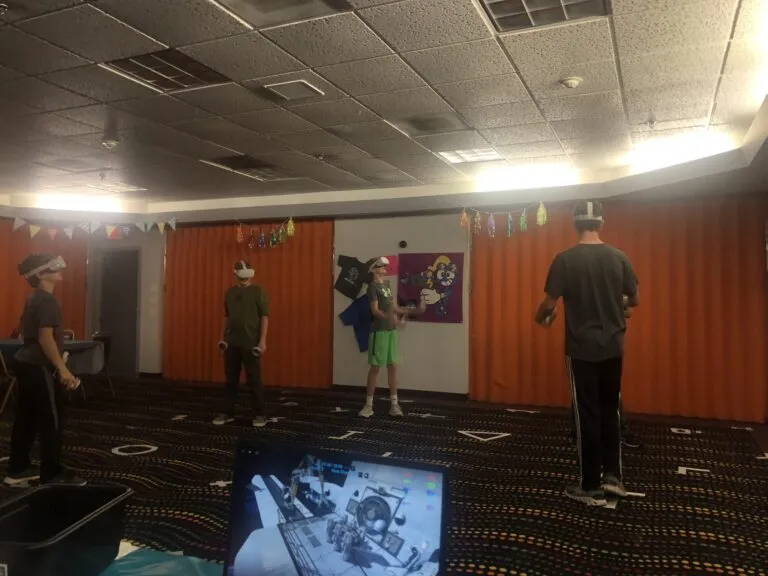
V-Rex VR Escape Rooms and Games operates out of the Wild Rose Action Center’s indoor facility in Billings, Montana, alongside laser tag, gel battles, and paintball. It offers free-roam virtual reality where players physically walk through the space, with a rotating lineup of VR games and a broad selection of themed escape quests ranging from quick 30-minute challenges to full one-hour adventures. Commercially licensed games not available on home systems, and no minimum group size is required.
The venue is well suited to birthdays, corporate events, and team building, with structured party packages that bundle VR play with pizzas, drinks, and gifts for the guest of honor. Spectators are welcome, snacks and beverages are available for purchase, and the facility supports venue rental and mobile event services. Staff are consistently praised for being helpful and patient, making it a comfortable choice for families and first-time VR players alike.
IndoorsWild Rose Paintball & Airsoft sits on the rims above Billings in Acton, Montana, roughly ten minutes west of Zimmerman Trail, with an indoor arena in Billings as its year-round companion. The outdoor site spans 91 acres with seven themed fields — including the Rosewood ghost town, tire, pallet, blow-up, and Alien fields — for .50 and .68 caliber paintball, airsoft, archery wars, gellyball, and laser tag. Rental gear and walk-in play are available, with safety orientations and chrono checks handled on site. The indoor Splat Attack Battle Arena adds VR games and escape rooms, sword battles, and active arcade-style games.
Beyond the fields, the Action Center offers axe throwing, a battle cage, mini golf, and a pro shop, plus party packages with attendants, food, and gifts for the VIP. Venue rental, mobile event services, and special weekday pricing for schools and daycares round out the offerings, making it a natural fit for birthdays, corporate team building, and large group outings.
OutdoorsBad Bear Laser Tag is part of the Wild Rose Action Center family in Billings, Montana, with an indoor arena on 24th Street West, an outdoor field on Mainwaring Road, and a mobile unit for events.
The club runs a multi-level neon arena with no-impact, no-sting gear for all ages, including special equipment for kids six and under. Game modes range from low-intensity Cub Scouts play to competitive Grizzly War missions and Bear Force One team-building challenges. Play is available by walk-in or appointment, with party packages from one-hour Basic to two-hour Super Epic options.
Beyond laser tag, the same facility offers Splat Attack, paintball, airsoft, archery tag, sword battles, VR games and escape rooms, and mobile mini golf. Snacks and drinks are sold on site, outside food is welcome for a small fee, and mobile event services bring the experience to schools and community events. It’s a solid choice for birthdays, corporate gatherings, and family reunions.
IndoorsKaboom sits in the northern part of Great Falls, Montana, in the large building on 9th Street North that also houses the Golden Triangle Gym, and it opened its doors in 2021.
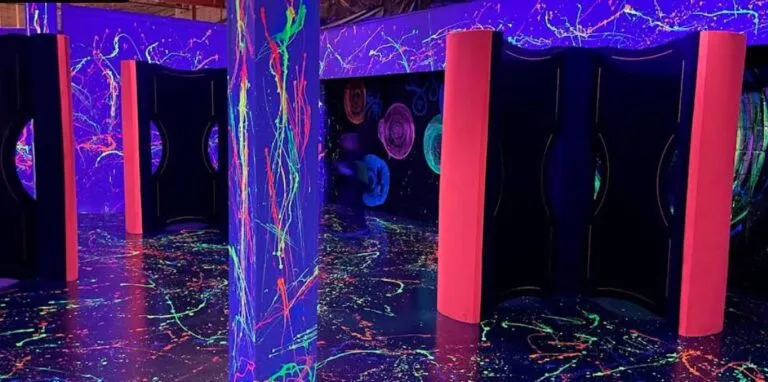
The centerpiece is a 3,000-square-foot neon laser tag arena lit by black light, with dividers and cubicles for strategic play and a viewing area above. Beyond that, there’s a 2,500-square-foot Ninja Park with more than 18 obstacles, an open-air inflatable course, a 16-foot giant slide, an arcade with over 25 games, and axe throwing for those 14 and older.
Kaboom is well set up for birthdays and group events with dedicated party packages that bundle play time, pizza, and arcade cards, plus a tropical-themed party area. A full concession area keeps families fueled, and special nights like Family Night and Date Night offer admission deals. The friendly staff help first-timers get comfortable, making it a welcoming spot for family outings and casual celebrations.
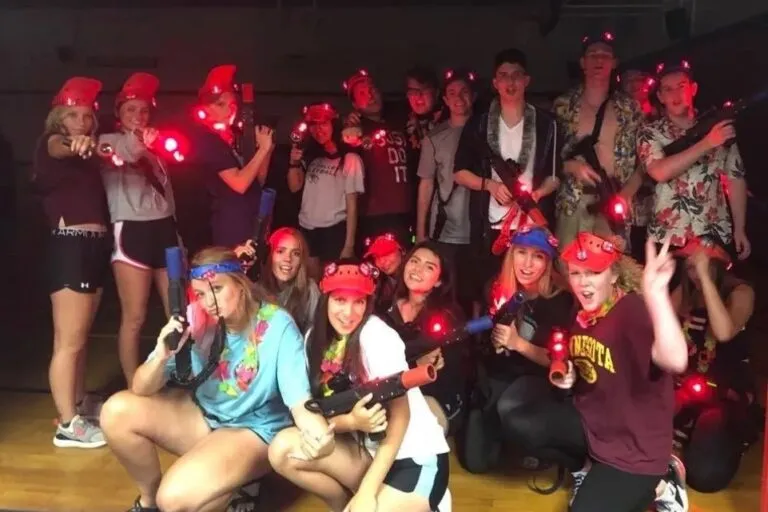
IndoorsLaserTag is a fast‑paced, team‑oriented game that uses infrared technology to simulate a futuristic combat experience. Players wear lightweight vests equipped with sensors and carry hand‑held phasers that emit invisible infrared beams. When a beam strikes a sensor, the vest registers a hit and deducts points or “lives” from the player’s score. The equipment is battery‑powered, safe for all ages, and requires no physical projectiles, making the activity ideal for indoor arenas, outdoor fields, and even temporary pop‑up setups.
The rules are flexible. Some venues adopt a classic “last‑team‑standing” format, while others employ timed missions, capture‑the‑flag objectives, or story‑driven quests. The underlying concept, however, remains the same: a blend of physical movement, strategic planning, and technology that turns a simple arena into an interactive playground for anyone willing to duck, weave, and fire their phaser.
The versatility of LaserTag stems from its ability to accommodate a wide array of scenarios, each designed to keep the experience fresh and engaging.
| Scenario | Core Objective | Typical Setting |
|---|---|---|
| Team Deathmatch | Eliminate as many opponents as possible within a set time limit. | Symmetrical arena with multiple hiding spots. |
| Capture the Core | Retrieve a glowing “core” placed in the enemy base and return it to your own side while defending against attacks. | Two opposing bases linked by a central battlefield. |
| Zombie Survival | One or more players start as “zombies” whose hits convert survivors into additional zombies. The goal is to survive until the timer expires. | Darkened, maze‑like layout that encourages ambushes. |
| Mission‑Based Quest | Players follow a storyline, completing objectives such as disabling virtual “turrets” or rescuing a “hostage” represented by a sensor‑tagged prop. | Themed arenas with props, sound effects, and lighting cues. |
| Free‑For‑All | Every player competes individually, aiming for the highest personal score. | Open arena with no team divisions. |
These scenarios can be mixed or customized on the fly. A corporate training event might combine “Mission‑Based Quest” with problem‑solving challenges, while a birthday party could focus on “Free‑For‑All” to let each child shine.
Beyond pure entertainment, LaserTag offers a suite of physical, cognitive, and social advantages that make it a valuable activity for a broad demographic.
Physical Activity – Players are constantly moving: sprinting, ducking, and navigating obstacles. A typical 15‑minute round can burn as many calories as a short jog, promoting cardiovascular health without feeling like a workout.
Coordination and Reflexes – The need to aim accurately while on the move sharpens hand‑eye coordination and improves reaction times. Regular play can translate to better performance in other sports and daily tasks that require quick decision‑making.
Strategic Thinking – Successful teams plan routes, assign roles (e.g., scout, defender, attacker), and adapt tactics based on opponent behavior. This cultivates problem‑solving skills and encourages players to think several steps ahead.
Teamwork and Communication – Most scenarios require coordinated action. Players learn to convey information concisely, listen to teammates, and trust one another’s abilities—skills directly applicable to school projects and workplace collaborations.
Stress Relief and Mood Boost – The immersive, game‑like environment offers a safe outlet for releasing tension. The combination of physical exertion and playful competition triggers endorphins, leaving participants feeling refreshed and happier after a session.
Inclusivity – Because the equipment is non‑impact and adjustable for height and skill level, people with varying physical abilities can participate together. The technology eliminates concerns about injuries, making the game accessible to children, seniors, and individuals with limited mobility.
Children are among the most enthusiastic participants. The bright phasers, flashing vests, and imaginative scenarios tap into kids’ natural love for pretend play and adventure. Parents appreciate that the activity is safe, supervised, and screen‑free, offering a constructive alternative to passive entertainment. Schools also use LaserTag as a reward‑based learning tool, integrating it into physical education curricula to teach fundamentals of teamwork and spatial awareness.
Birthday Parties – A LaserTag arena can become the centerpiece of a birthday celebration, providing a structured yet flexible program that lasts the entire party. Organizers often add themed decorations, custom scoreboards, and photo booths to capture the excitement.
Graduations – Whether marking the end of a school year or a university milestone, graduates can enjoy a high‑energy activity that reinforces camaraderie built over the years of study. The competitive yet friendly nature of LaserTag mirrors the spirit of moving forward together.
Corporate Parties and Team‑Building – Companies increasingly turn to LaserTag for off‑site retreats and internal events. The game’s emphasis on coordination, communication, and quick decision‑making mirrors real‑world workplace challenges. Facilitators can incorporate debrief sessions after each round, translating in‑game actions into discussions about leadership styles, conflict resolution, and collaborative problem‑solving.
Across these demographics, LaserTag’s adaptability allows event planners to tailor the experience to the group’s size, age range, and desired level of competition, ensuring that everyone—from toddlers to executives—feels engaged.
Indoor LaserTag facilities are purpose‑built spaces, typically ranging from 2,000 to 8,000 square feet. They feature blackout lighting, fog machines, themed obstacles, and multi‑level platforms that create a futuristic battlefield. Because the environment is controlled, these venues operate year‑round, regardless of weather. Many urban centers host franchise locations that offer membership packages, private room rentals, and on‑site catering for corporate or celebration groups.
Key advantages of indoor play:
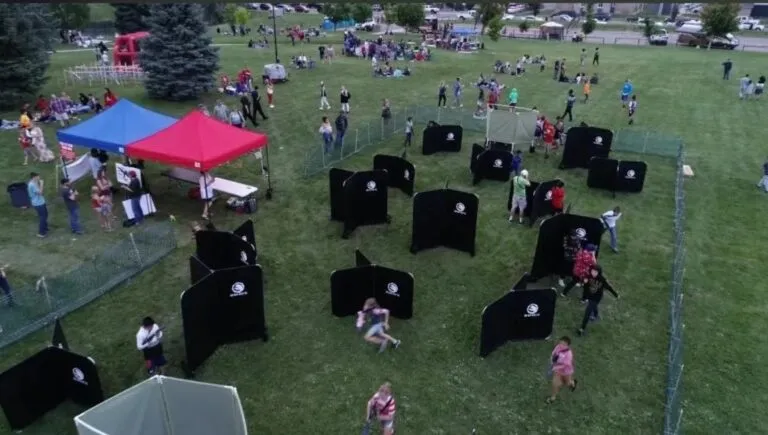
Outdoor LaserTag takes the game to parks, forests, and even abandoned industrial sites, expanding the arena to several acres. Natural terrain—trees, hills, abandoned structures—adds an extra layer of tactical depth. Players must adapt to varying ground conditions, wind, and ambient light, which makes the experience feel more like a real‑world tactical exercise.
Some venues combine outdoor play with augmented‑reality (AR) enhancements, where mobile devices display digital overlays, mission objectives, or virtual enemies that blend with the physical environment.
Benefits of outdoor setups:
A growing number of providers offer mobile LaserTag kits that can be set up in community centers, school gyms, or private backyards. These kits include portable sensor vests, handheld phasers, and modular barricades, allowing hosts to create a semi‑controlled arena wherever space permits. This hybrid model bridges the gap between professional venues and DIY experiences, expanding accessibility to rural or underserved areas.
LaserTag has evolved from a niche arcade novelty into a multifaceted activity that blends technology, physical movement, and strategic gameplay. Its variety of scenarios—from classic deathmatches to narrative‑driven missions—keeps participants coming back for fresh challenges. The benefits extend far beyond fleeting excitement: players improve fitness, sharpen reflexes, hone teamwork, and experience stress relief in a safe, inclusive environment.
Whether it is children racing through a brightly lit arena for a birthday party, recent graduates celebrating a milestone, or corporate teams building trust and communication, LaserTag adapts to the needs of each group. With options ranging from climate‑controlled indoor complexes to expansive outdoor fields and portable hybrid kits, the sport is accessible to virtually any community.
As the technology continues to integrate augmented reality and richer storytelling, the future of LaserTag promises even deeper immersion and broader appeal. For anyone seeking an engaging, health‑promoting, and socially enriching experience, stepping into a LaserTag arena remains one of the most compelling ways to combine play and purpose.