El Monte
 Log in
Log in
Log in

Tilt Studio Dakota Square Indoor Center is located in Minot, ND.
Tilt Studio Dakota Square, located in the heart of downtown Minot, offers a unique and immersive entertainment experience for all ages. With state-of-the-art virtual reality games, classic arcade machines, and a variety of bowling lanes, there’s something for everyone at this modern entertainment center. Guests can also enjoy delicious food and drinks at the on-site restaurant and bar, making it the perfect destination for a fun night out with friends or family. Whether you’re looking to test your skills in virtual reality, compete against others in classic arcade games, or just enjoy a night of bowling and good company, Tilt Studio Dakota Square is the ultimate destination for entertainment in Minot.
 Indoors
Tilt Studio Kirkwood Indoor Center is located in Bismarck, ND.
Tilt Studio Kirkwood, located in Bismarck, ND, offers a unique and immersive entertainment experience for all ages. With state-of-the-art virtual reality technology, visitors can step into a variety of thrilling and interactive environments, from outer space adventures to underwater explorations. The studio also features traditional arcade games, laser tag, and a full-service bar and restaurant. Whether you’re looking for a fun night out with friends or a family-friendly activity, Tilt Studio Kirkwood is the perfect destination for an unforgettable entertainment experience.
Indoors
Laser tag is a team‑oriented, mock‑combat sport in which participants wear infrared‑sensitive vests and wield handheld “laser guns” that emit low‑power infrared beams. When a beam strikes a sensor on an opponent’s vest, the hit is recorded and displayed on a personal score screen or a central console. Unlike traditional paintball, laser tag leaves no physical residue, requires no protective gear beyond the vest, and can be played in darkness, under black‑light, or in fully illuminated environments. The technology behind modern laser‑tag systems—micro‑controllers, wireless networking, and battery‑efficient diodes—allows for intricate game modes, real‑time statistics, and even integration with mobile apps.
The flexibility of the equipment makes laser tag adaptable to a wide range of scenarios, each designed to keep the experience fresh and challenging.
Scenario selection can be tailored to the venue’s layout, the age of participants, and the desired intensity level, ensuring that every session feels unique.
Beyond pure entertainment, laser tag delivers measurable benefits across physical, cognitive, and social dimensions.
Researchers in sport science and human factors engineering have examined laser tag as a prototype for “exergaming”—games that combine exercise with digital interaction. Studies indicate that participants can achieve heart‑rate zones associated with moderate‑intensity physical activity while reporting higher enjoyment scores than traditional workouts. Moreover, the low‑impact nature of laser tag reduces joint stress compared with contact sports, decreasing the risk of acute injury.
Industry experts highlight the technology’s rapid evolution. Advances in infrared sensor precision, battery longevity, and Bluetooth‑enabled data collection have enabled real‑time analytics such as shot accuracy, movement heat maps, and fatigue monitoring. These metrics are valuable not only for players seeking performance improvement but also for venue operators aiming to refine game balance and safety protocols.
From a safety perspective, the consensus among scientists is that laser tag poses negligible health risks. The infrared beams operate well below thresholds for skin or eye damage, and the absence of projectiles eliminates the chance of impact injuries. Consequently, laser tag is endorsed as a low‑risk, high‑reward activity suitable for schools, community centers, and corporate wellness programs.
Laser tag’s appeal cuts across age groups, gender, and cultural boundaries. In North America and Europe, participation rates among adolescents (12‑18) remain high, driven by school clubs and after‑school programs. Younger children (5‑11) are increasingly attracted by themed arenas that incorporate bright colors, cartoon mascots, and simplified rule sets.
Adult participation is robust within two primary segments:
The sport’s portability also fuels its popularity among military and law‑enforcement training units, where realistic, low‑risk simulations can supplement live‑fire drills.
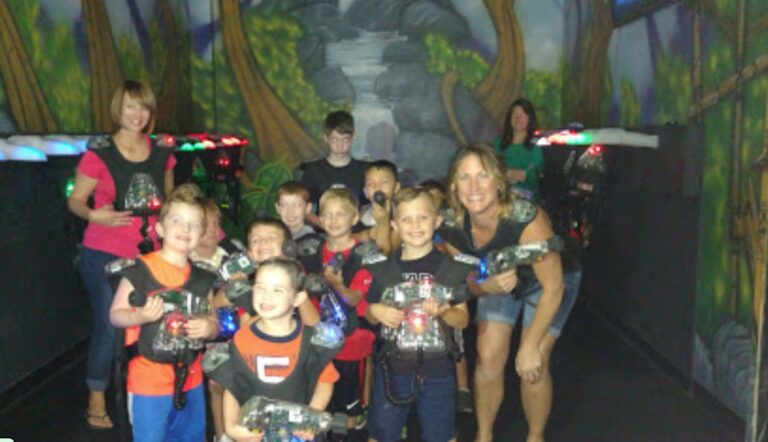
When designing laser‑tag experiences for children, safety and imagination are paramount. Kid‑focused arenas often feature lower‑sensitivity sensors, reduced beam range, and brightly colored, child‑sized equipment. Game scenarios are simplified—often revolving around treasure hunts, superhero missions, or animal‑themed quests—allowing younger participants to grasp objectives quickly.
Parents appreciate that laser tag offers a constructive alternative to screen‑time, encouraging physical activity without the mess of paintball or the noise of traditional sports. Additionally, the immediate feedback from score displays fosters a sense of achievement and reinforces positive reinforcement loops that can boost confidence in shy or socially anxious children.
The adaptable nature of laser tag makes it an attractive centerpiece for a variety of celebrations:
By offering scalable packages—ranging from small groups of eight participants to large corporate cohorts of fifty or more—laser‑tag venues cater to diverse event sizes while maintaining a high level of engagement.
Choosing the right venue depends on weather, group size, and the desired atmosphere.
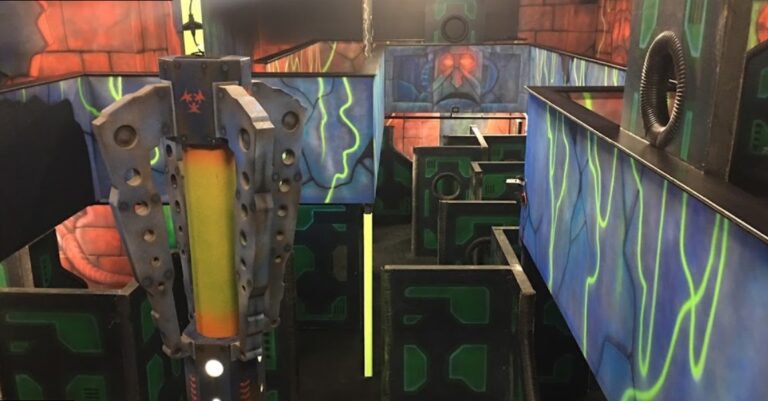
Indoor facilities dominate the market because they provide controlled lighting, climate, and safety conditions. Typical features include:
Because the environment is insulated from external variables, indoor arenas can operate year‑round, making them ideal for schools and corporate programs with fixed schedules.
Outdoor laser‑tag fields capitalize on natural terrain—forests, open fields, or urban rooftops—to deliver a different tactical experience. Advantages include:
However, outdoor play requires considerations for weather protection, daylight visibility (often mitigated with night‑vision goggles or infrared‑enhanced sensors), and portable power sources for the equipment.
Innovative providers now offer mobile laser‑tag kits that can be installed temporarily in community centers, school gymnasiums, or corporate conference rooms. These modular systems include collapsible barriers, battery‑operated lighting, and wireless networking, allowing organizers to bring the laser‑tag experience directly to their event location without the need for a permanent arena.
Laser tag has evolved from a niche novelty into a multifaceted activity that blends physical exercise, strategic gaming, and social interaction. Its adaptable scenarios—ranging from free‑for‑all battles to intricately scripted missions—keep the experience fresh for repeat players. The documented benefits, supported by scientific research, underscore its value as a low‑impact, high‑engagement form of active recreation.
Whether it is kids chasing glittering targets at a birthday party, recent graduates competing for a trophy, or corporate teams sharpening communication skills, laser tag offers a versatile platform for celebration and development. With a growing network of indoor arenas, outdoor fields, and mobile setups, enthusiasts can find a venue that matches their logistical needs and creative ambitions. As technology continues to refine sensor accuracy and data analytics, laser tag is poised to remain a dynamic, inclusive sport that encourages people of all ages to run, aim, and strategize—one laser pulse at a time.


 2400 10th St SW Building E, Minot, ND 58701, United States