Action Indoor Laser Tag is located in Bedford, NS.
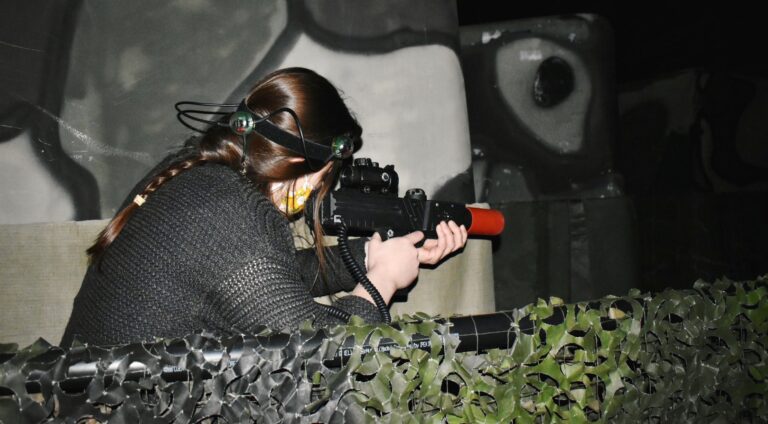
Action Laser Tag is the premier destination for those seeking thrilling, combat-style entertainment in Bedford, NS. This family-owned facility offers an action-packed adventure that is suitable for all ages. Whether you’re a novice or an experienced laser tag enthusiast, you’ll find plenty to enjoy in their expansive 4,000-square-foot indoor battlefield. With over 130 camouflaged barricades, the setting is ideal for a variety of exhilarating games that test both your strategic thinking and physical agility.
For those looking to host an unforgettable event, Action Laser Tag’s private play option is second to none. Ideal for birthdays, corporate outings, or any special occasion, our private events offer an immersive experience that is both fun and memorable. They provide multiple game scenarios tailored to your group’s interests and skill levels, making sure that everyone, from kids aged 8 and up to adults, has an incredible time. Additionally, their spacious party tents offer a comfortable space for celebration and socializing, ensuring that your event is seamless from start to finish.
The Ultimate Guide to Laser Tag: From Playgrounds to Boardrooms
Laser tag has leapt from the science‑fiction pages of the 1970s to become one of the most versatile, adrenaline‑pumping activities on the planet. Whether you’re a parent scouting a birthday‑party idea, a corporate trainer looking for a fresh team‑building tool, or simply a curious teen wondering what the hype is about, this deep‑dive will answer all your questions.
What Is Laser Tag?
At its core, laser tag is a competitive, team‑oriented game that uses infrared (IR) technology to simulate “shooting” opponents. Players wear a lightweight vest (or sometimes a wrist‑mounted sensor) that houses a series of IR receivers. Hand‑held “laser guns” emit coded IR pulses that, when aimed at a sensor, register a hit and deduct points or “health.”
Key elements that set laser tag apart from other action sports:
Element
Description
Non‑lethal
No physical projectiles; safety is built into the equipment.
Real‑time scoring
Most arenas have digital scoreboards that update instantly.
Theme‑ready
Settings can be futuristic, post‑apocalyptic, spy‑mission, or even fantasy.
Portability
Modern systems are battery‑powered and can be set up indoors or outdoors.
Because the game relies on light, not bullets, it’s legal in almost every public space, making it a go‑to activity for schools, community centers, and corporations alike.
Laser Tag Scenarios: From Classic Battles to Narrative Adventures
Laser tag isn’t just “run and shoot.” Game designers have crafted dozens of scenarios that add story, strategy, and surprise. Below are the most popular templates, plus a few inventive twists you can request from a venue or create on your own.
1. Team Deathmatch – The Classic
Two (or more) teams face off, aiming to rack up the highest kill count within a set time limit. Simple, fast‑paced, perfect for newcomers.
2. Capture the Flag (CTF)
Each side hides a “flag” (often a small RFID token). Players must infiltrate the enemy base, grab the flag, and return it to their own zone without being tagged. CTF forces stealth and coordinated assaults.
3. Rescue Mission
One team protects a “hostage” (a dummy or a player wearing a special sensor). The opposing squad must locate and “rescue” the hostage while defending themselves. Great for role‑play and empathy training.
4. Zombie Apocalypse
A handful of “infected” players start with limited health and can “infect” others by hitting them. The goal for survivors is to last a predetermined duration or reach an extraction point. This scenario is a hit at Halloween parties.
5. Spy vs. Spy (Stealth Ops)
Players are equipped with mission‑specific objectives, such as “disable the laser grid” (pressing a hidden button) or “collect intel” (scanning QR codes). Success depends on quiet movement and tactical deception.
6. Treasure Hunt
Scattered across the arena are RFID‑tagged “treasures” worth varying points. Players earn points both by tagging opponents and by locating treasure. This hybrid blends physical activity with puzzle solving.
7. Themed Storylines
Space Station Defense: Fight off alien invaders in a dimly lit, star‑filled arena.
Medieval Siege: Use foam‑covered “laser crossbows” to breach castle walls.
Superhero Showdown: Teams represent different hero factions, each with a unique power‑up (e.g., temporary invulnerability).
Many modern venues let you program custom scenarios using software dashboards, allowing you to tailor difficulty levels, respawn rules, and narrative arcs to the audience’s age and skill set.
Laser Tag Benefits: More Than Just Fun
While the screams and giggles are obvious, laser tag delivers measurable physical, mental, and social gains.
Physical Health
Cardiovascular Exercise: A typical 15‑minute round can burn 150–200 calories, comparable to a brisk jog.
Improved Coordination: Players develop hand‑eye coordination as they aim and dodge in real time.
Agility & Reflexes: Quick pivots, ducking, and sprinting enhance proprioception and reaction time.
Cognitive Development
Strategic Thinking: Teams must devise tactics—flanking, ambushes, and resource allocation.
Spatial Awareness: Navigating a multi‑level arena hones mental mapping skills.
Problem Solving Under Pressure: Timed objectives force rapid decision‑making, useful in academic and workplace settings.
Emotional & Social Growth
Teamwork & Communication: Success hinges on clear, concise orders and trust.
Conflict Resolution: Friendly competition offers a safe space to practice handling wins and losses gracefully.
Confidence Building: Mastering a challenging scenario boosts self‑esteem, especially for shy or introverted participants.
Educational Applications
A growing body of research shows laser tag can be integrated into curricula:
STEM Projects: Students program Arduino‑based IR sensors to understand electronics.
History Lessons: Reenact historic battles (e.g., “Battle of Gettysburg”) to solidify timelines.
Physical Education: Use laser tag as an alternative to traditional sports for students with motor challenges.
Scientists and Industry Experts View on Laser Tag
Neuroscientists
Dr. Maya Patel, a neuroscientist at the University of Colorado, recently published a study in Frontiers in Human Neuroscience that measured brain activity during laser‑tag matches. The findings indicated spikes in dopamine (reward pathways) and acetylcholine (attention regulation) during high‑intensity engagements, confirming that the game offers both pleasurable and cognitively stimulating experiences.
“The blend of physical exertion and rapid decision‑making triggers neural circuits similar to those activated in traditional sports, but with an added layer of sensory feedback,” Dr. Patel noted.
Ergonomics and Safety Experts
The International Association of Playground Professionals (IAPP) has listed laser‑tag equipment as low‑risk when adhering to standard safety protocols (e.g., eye‑protection, clear field of fire, regular equipment inspections). Their 2023 safety guideline emphasizes:
Minimum distance of 1.5 m between the laser emitter and the sensor to avoid accidental eye exposure.
Temperature monitoring of battery packs to prevent overheating.
Industry Analysts
According to a 2024 market analysis by Grand View Research, the global laser‑tag market is projected to reach US $4.5 billion by 2032, driven by:
Rising demand for immersive entertainment post‑COVID‑19.
Increased adoption in corporate wellness programs.
These expert perspectives confirm that laser tag is not a fleeting fad but a multifaceted platform intersecting health, technology, and social interaction.
Who Plays Laser Tag?
Laser tag appeals to a broad demographic spectrum. Below is a breakdown of the most common player groups and what they seek.
Demographic
Typical Age Range
Primary Motivation
Kids & Tweens
6‑14
Fun, adventure, peer bonding
Teens
15‑19
Competitive bragging rights, skill mastery
Young Adults (College)
18‑24
Social outings, campus events
Families
All ages
Shared experiences, safe indoor activity
Corporate Teams
25‑55
Team‑building, stress relief
Retirees & Senior Groups
60+
Low‑impact exercise, social engagement
Laser Tag for Kids
Safety First
Protective Gear: Soft helmets and padded vests reduce the risk of bumps.
Simplified Rules: Shorter rounds (5–7 minutes) and larger hit zones keep the experience accessible.
Learning Benefits
Cooperative Play: Kids practice negotiation and compromise when selecting roles (e.g., “Scout” vs. “Defender”).
Motor Skill Development: Dodging, aiming, and sprinting refine fine and gross motor abilities.
Parental Tips
Pre‑Game Briefing: Explain the “no‑tag‑behind‑the‑back” rule to prevent accidental hits.
Hydration Breaks: Even though it’s a “light” sport, the adrenaline can cause rapid sweating.
Post‑Game Debrief: Ask kids what strategies they liked and what they’d change—great for reflective thinking.
Laser Tag for Special Events
Birthday Parties
Laser tag creates memorable, action‑packed birthdays without the mess of paintball or the danger of fire‑crackers.
Package Options: Most venues offer “party bundles” that include a private arena, themed decorations (e.g., space, ninja), and a photo‑ops station.
Customizable Length: Choose a 30‑minute session for younger kids or a full‑hour tournament for older groups.
Add‑Ons: Pizza, cupcakes, and a “trophy ceremony” where winners receive LED medals enhance the celebration.
Graduation Celebrations
Graduates love a high‑energy send‑off that reflects the transition from school to the real world.
Team vs. Team Competition: Split the graduating class into “Class of 2026” vs. “Faculty” for a light‑hearted rivalry.
Memory Wall: Project photos of the class onto a screen while players battle, merging nostalgia with action.
Recognition: Use laser‑tag stats (e.g., “Most Accurate Shooter”) as fun awards during the ceremony.
Corporate Parties & Team‑Building
In a corporate setting, laser tag offers unique advantages over typical ice‑breakers.
Skill Transfer: Strategies like flanking and resource allocation mirror business concepts such as market positioning and risk management.
Data Analytics: Some advanced systems export scoring data, allowing facilitators to run post‑game debriefs on communication patterns.
Inclusivity: The non‑contact nature makes it accessible for employees with varying fitness levels.
Sample Corporate Program
Phase
Duration
Goal
Warm‑up (5 min)
Light jogging, stretching
Prepare muscles, reduce injury risk
Scenario Brief (5 min)
Explain mission objectives
Align team on shared goal
Gameplay (20 min)
Laser‑tag match
Execute strategies, observe dynamics
Debrief (10 min)
Review scores, discuss what worked
Translate lessons to workplace practices
Wrap‑up (5 min)
Award ceremony, feedback survey
Reinforce positives, collect data
Where to Play Laser Tag? Outdoor and Indoor Venues
Choosing the right venue depends on group size, weather, desired theme, and budget. Below is a guide to the most common settings.
Indoor Arenas
Pros
Controlled Environment: No rain, wind, or temperature fluctuations.
Lighting Effects: Black lights, fog machines, and projection mapping create immersive atmospheres.
Year‑Round Availability: Ideal for corporate events during holiday seasons.
Top Indoor Formats
Arena‑Style (Multi‑Level Maze) – Black‑wall tunnels, staircases, and platforms. Perfect for CTF and zombie scenarios.
Laser‑Tag Pods (Mobile Units) – Small, self‑contained modules that can be set up in community halls or schools.
Mixed Reality Labs – Combine IR sensors with AR headsets (e.g., Microsoft HoloLens) for holographic enemies.
Notable Chains (U.S.)
Laser Quest (30+ locations) – Classic arena with glow‑in‑the‑dark aesthetics.
BattleZone – Offers “Laser Battle Scenarios” with adjustable difficulty.
Outdoor Fields
Pros
Expansive Play Area: Larger maps allow for long‑range engagements and vehicle integration (e.g., foam‑covered “laser tanks”).
Natural Obstacles: Trees, hills, and structures add tactical depth.
Event Flexibility: Ideal for festivals, summer camps, and large corporate retreats.
Key Outdoor Configurations
Forest‑Run: Players navigate wooded trails, using camouflage and natural cover.
Urban‑Scape: Temporary walls and shipping containers simulate a city block.
Waterfront Battles: Waterproof IR sensors enable play near lakes or pools (with safety floats).
Safety Considerations
Weather Monitoring: Suspend play during thunderstorms or high winds.
Visibility: Use high‑visibility vests for low‑light conditions; avoid dense fog that obscures hits.
Battery Protection: Keep equipment in shaded, dry areas to prevent overheating.
Hybrid / Pop‑Up Experiences
The rise of pop‑up laser‑tag – temporary setups at malls, amusement parks, or corporate campuses – brings flexibility to the market. Companies rent modular sensor walls, portable power packs, and wireless scoring apps that can be assembled in a day.
Budget‑Friendly Option:
DIY Backyard Laser Tag – Purchase a DIY kit (IR emitters, receivers, and a central smartphone‑based scoring app). This is perfect for birthday parties in a private garden.
Why Laser Tag Is Here to Stay
Laser tag sits at the intersection of technology, physical activity, and storytelling. Its ability to morph from a kid’s birthday game into a sophisticated corporate training platform proves its adaptability.
Health‑wise, it delivers cardio, coordination, and cognitive challenges without the injury risk of contact sports.
Socially, it unites people across ages, cultures, and professional backgrounds.
Technologically, ongoing advances in AR, AI‑driven analytics, and wireless power promise even richer experiences.
So whether you’re planning a birthday bash, a graduation celebration, or a leadership retreat, laser tag offers a dynamic, immersive, and data‑backed solution that leaves participants buzzing with adrenaline—and perhaps a little extra confidence for the challenges ahead.
Ready to gear up?
Find a venue that matches your scenario (indoor arena vs. outdoor field).
Choose a theme that resonates with your audience.
Set clear objectives, whether that’s fun, skill‑building, or strategic insight.
Play, debrief, and celebrate the victories—both on the scoreboard and off.
Laser tag isn’t just a game. It’s a platform for learning, connection, and unforgettable memories—and the laser is only getting brighter.

 El Monte
 Log in

 Indoors


 217 Bluewater Rd
Bedford, NS, B4B 1H1
217 Bluewater Rd
Bedford, NS, B4B 1H1