El Monte
 Log in
Log in
Log in

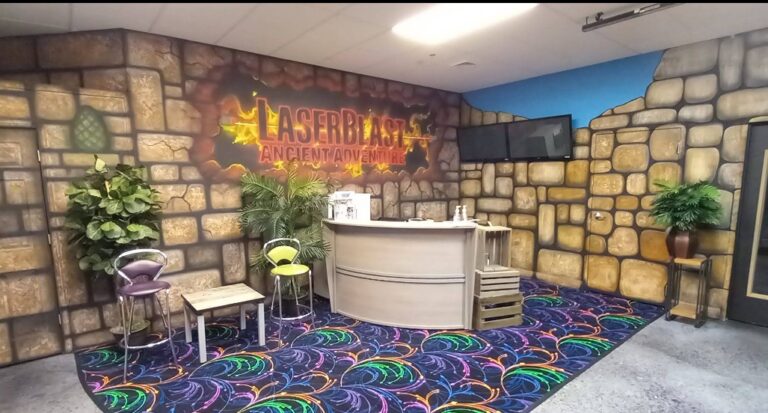
Laser Blast is located inside the Hampshire Mall in Hadley, Massachusetts, operating as part of the Interskate 91 North complex.
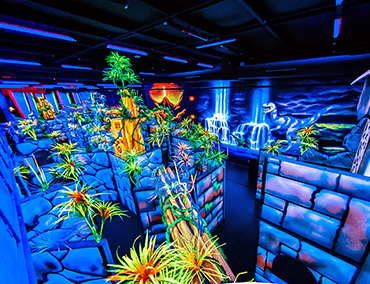
The venue features a 4,200-square-foot “Ancient Adventure” themed laser tag arena equipped with a modern CyberBlast system, accommodating up to 24 players per session. The immersive environment includes a maze of obstacles and strategic hiding spots, with detailed score printouts and VIP player privileges. Laser Blast has been hosting birthday parties for over 44 years and offers dedicated party packages that combine arena time with food service.
Beyond laser tag, the facility is part of a larger entertainment hub that includes roller skating, arcade games, and a lounge area for relaxing between rounds. The experienced staff handles everything from first-time players to large corporate groups, making it suitable for birthdays, team-building events, school outings, and casual gatherings. The arena has its own dedicated entrance within the Hampshire Mall, near Cafe Square.
 Indoors
Spare Time Windsor Locks is located at 129 Ella Grasso Turnpike in Windsor Locks, Connecticut.
This family entertainment center brings together luxury bowling, a massive laser tag arena with fog and LED effects, two immersive escape rooms (Bunker 57 and Gold Rush), and an arcade with over 80 games under one roof. Birthday parties start at $22.99 per child with pizza, drinks, and a dedicated host included. The facility also offers half-price specials on Tuesdays and a full restaurant and bar for dining on-site.
For larger gatherings, the venue features private event spaces including a VIP Suite with 7 bowling lanes and a private bar, plus full-facility rentals for up to 900 guests. Corporate events, fundraisers, field trips, and social celebrations are all welcome, with customizable catering options ranging from appetizers to plated dinners. The knowledgeable staff handles setup, cleanup, and coordination so hosts can focus on enjoying the occasion.
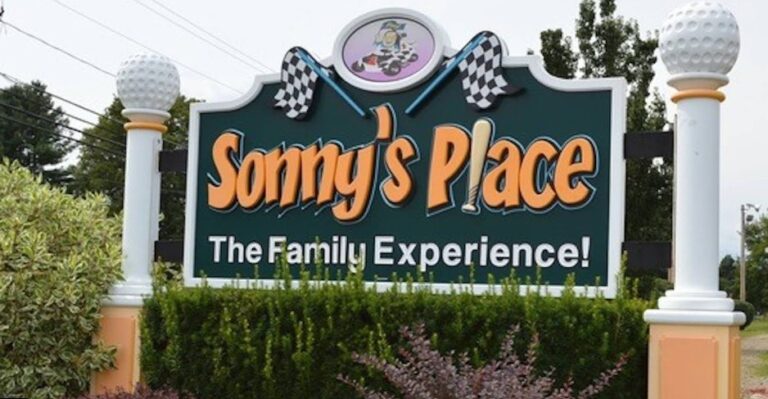
IndoorsSonny’s Place sits along Main Street in Somers, Connecticut, a family-owned amusement complex that opened in 2008 and has grown steadily ever since. The park features a two-story Zap Zone Laser Tag Arena by Lasertron with multiple game modes, outdoor go-karts, two mini-golf courses, a zipline, batting cages, a 7,000-square-foot arcade, climbing wall, bumper boats, and a soft indoor playground. Birthday parties come with private rooms and dedicated hosts, while the Sonny’s Pavilion accommodates groups of over 500 for corporate events, school trips, reunions, and social gatherings.
Beyond the attractions, the park offers several dining options including a smokehouse, bar, and ice cream counter, plus live music on summer weekends and special adult-only late-night events. The staff is known for being friendly and professional, and the park runs community appreciation programs for teachers, first responders, and military personnel. With family night bundles, date night specials, and seasonal events like character days and the North Pole Experience, Sonny’s Place functions as a genuine community gathering spot rather than just a collection of rides.
Indoors Outdoors
Spare Time Vernon is located in the Talcottville area of Vernon, Connecticut, just off I-84. This entertainment complex combines a 4,000-square-foot, three-level laser tag arena with 25 luxury bowling lanes, a 20,000-square-foot Game Zone arcade, and immersive escape rooms. Guests can choose from structured birthday party packages (Bowling, Bash, Laser Tag, or Gamer) that include pizza, drinks, a dedicated party host, and activity credits, or book custom corporate events and team-building sessions in the laser tag arena or escape rooms.
Beyond the games, the venue features the City Sports Grille restaurant and bar with a full menu and catering options for groups of all sizes, plus a 5-lane VIP Suite for private celebrations and meetings. The facility can accommodate up to 600 guests for larger gatherings, and the staff — from party hosts to event specialists — are consistently noted for their friendly, attentive service. With lounge areas, weekly specials like Half Off Day on Tuesdays, and late-night bowling events, Spare Time Vernon offers a complete destination for play, dining, and celebration under one roof.
IndoorsIn an era dominated by hyper-realistic video games and digital isolation, the physical world still offers a thrill that a controller cannot replicate. Laser tag stands as the bridge between virtual imagination and visceral reality. It is a high-energy sport where strategy, reflexes, and teamwork converge in a dark, neon-lit arena or a sprawling outdoor field. By blending the tactical intensity of military simulations with the safe, accessible nature of recreational play, laser tag has cemented itself as a staple of modern entertainment.
At its core, laser tag is a recreational shooting sport in which players use infrared-emitting light guns to tag designated targets. Unlike paintball or airsoft, which involve physical projectiles, laser tag is entirely painless. Players wear vests or headbands equipped with sensors that detect the infrared beams fired from the phasers. When a sensor is “hit,” the equipment typically registers the event through visual lights, haptic feedback (vibrations), or sound effects.
The technology has evolved significantly since its inception in the late 1970s. Modern systems feature sophisticated computer tracking that logs every shot, hit, and game duration in real-time. This digital integration allows for complex scoring mechanisms, eliminating the “honesty-based” disputes common in other combat games. Whether played in a professional competitive circuit or a casual weekend outing, the objective remains largely consistent: outmaneuver the opposition, protect one’s own sensors, and complete team objectives.
The versatility of laser tag lies in its ability to adapt to various narratives. While basic “Team Deathmatch” games are popular, advanced venues utilize scenarios to deepen the experience.
“Capture the Flag” remains a classic, requiring teams to coordinate offensive strikes and defensive rotations to secure an object and return it to their base. “VIP Protection” scenarios force players to prioritize the safety of a team member who may have reduced health or offensive capabilities, mirroring real-world tactical operations. For those seeking a horror-themed experience, “Zombie” scenarios are increasingly popular; in these games, a small team of survivors must hold off an ever-growing horde of “infected” players. These scenarios transform a simple game of tag into an immersive theatrical experience, forcing players to think critically under pressure rather than simply running and firing.
While laser tag is undeniably fun, it provides a surprising array of developmental and health benefits. Physically, it is a high-intensity cardio workout that improves agility, balance, and hand-eye coordination. Players spend the majority of a match sprinting, crouching, and dodging, which burns calories far more effectively than sedentary entertainment.
Beyond the physical, laser tag is a masterclass in social and cognitive development. It necessitates immediate communication and the formation of rapid-fire strategies. Players learn to trust their teammates, distribute roles based on individual strengths, and adapt to changing conditions in the heat of the moment. It is an exercise in de-escalation of tension and the cultivation of sportsmanship, as players must navigate competitive environments while adhering to clear safety rules.
Research into human behavior and play therapy often highlights the value of structured, high-stakes environments. Industry experts view laser tag as a unique mechanism for “flow state” stimulation—a mental state where an individual becomes fully immersed in a task. Because the game requires constant mental focus to track enemies and maneuver through terrain, it effectively shuts out external stressors, providing a form of active mindfulness.
Furthermore, sports psychologists frequently point to the “team cohesion” aspect of laser tag. By forcing strangers or colleagues to rely on one another to achieve a objective, the game acts as an organic icebreaker. Experts note that because the activity requires no prior athletic skill or specialized training, it removes the barrier to entry, allowing people of varying physical abilities to participate on an even playing field. This inclusivity is a primary reason why it remains a preferred method for team building across diverse demographics.
Laser tag is remarkably universal, though it holds a special place in the development of children. For younger players, the game provides a safe environment to burn off kinetic energy while learning the basics of teamwork and fair play. It rewards strategic thinking over raw aggression, teaching children that a well-planned ambush is often more effective than blindly rushing into danger.
Moreover, the non-contact nature of the game makes it one of the few physical activities that children of different ages and sizes can play together without the fear of injury or intimidation. It serves as a great confidence builder, particularly for children who may not flourish in traditional team sports like soccer or basketball, where the pressure to perform at a high athletic level is constant.
The appeal of laser tag extends perfectly into life’s major celebrations. For birthday parties, it offers a high-octane alternative to traditional venues, ensuring that guests are fully engaged rather than standing around. It provides the excitement of an adventure without the mess or exhaustion of a full-day outdoor excursion.
Graduation parties also benefit from the incorporation of laser tag as a bonding activity. It serves as a final, memorable “bonding session” for peer groups before transition periods. In the corporate world, laser tag is a staple of professional development. It forces managers and staff to set aside office hierarchies and work together to solve problems in a frantic, simulated environment. It cuts through the formality of office life, revealing the leadership styles and communication skills of employees in a way that boardrooms never could.
The experience of laser tag is fundamentally altered by the environment, and choosing between indoor and outdoor venues depends on the intended atmosphere.
Indoor arenas are typically “black-lit,” featuring multi-level structures, fog machines, and futuristic obstacle courses. These venues are designed for high-density, fast-paced play where spatial awareness and quick reactions are paramount. They provide a cinematic, immersive experience that feels like stepping inside a science-fiction film.
Outdoor venues, conversely, offer a “tactical” experience. Set in forests, abandoned fields, or constructed mock-towns, these games emphasize stealth, camouflage, and long-range engagement. The natural terrain adds a layer of complexity; players must contend with wind, sunlight, and unpredictable ground, making it a favorite for those who prefer a more military-simulated approach. Whether one prefers the neon intensity of an indoor facility or the rugged, sprawling nature of the outdoors, the core appeal remains the same: a chance to step out of the everyday and into an arena of action, strategy, and camaraderie.


 Interskate 91, North 367 Russell Street, Hampshire Mall, Hadley, MA 01035