El Monte
 Log in
Log in
Log in

Bill’s Xtreme Adventure is located in Marionville, Missouri, roughly 25 miles outside Springfield in the southwest corner of the state.
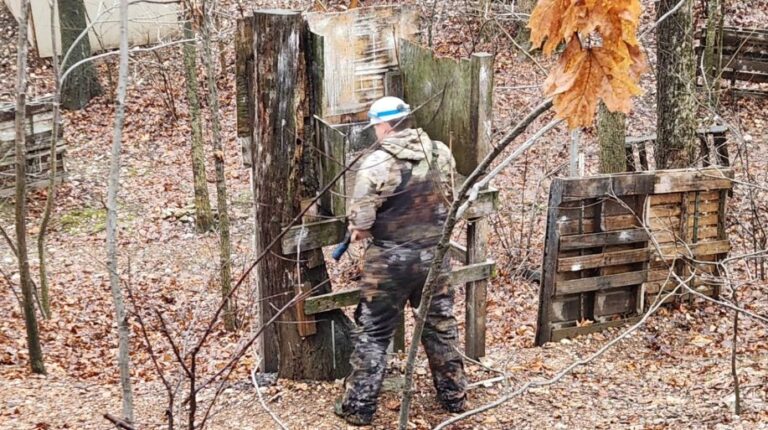
The club is a family-owned operation running since 2006, offering private paintball, outdoor tactical laser tag, and battle bows on a secluded 5-acre woods course complete with sniper towers, a castle, town fronts, and the Hillbilly Hideout. Laser tag uses military-style taggers with scenarios like SWAT, capture the flag, and domination, while paintball includes rental markers, thermal-lens masks, and referees who run the games. Everything is booked as a private party so your group gets the field to itself.
Beyond the battlefield, the club brings a mobile video game trailer seating up to 20 players, plus combo packages pairing laser tag with gaming. A pavilion with picnic tables is available for refreshments, and mobile services can come to your yard, gym, church, or business. The staff handle setup, refereeing, and teardown, making it a strong fit for birthdays, bachelor parties, after-prom, youth groups, and corporate team building.
 Outdoors
Andy B’s Bowl Social sits in Springfield, Missouri, in the heart of the Ozarks region.
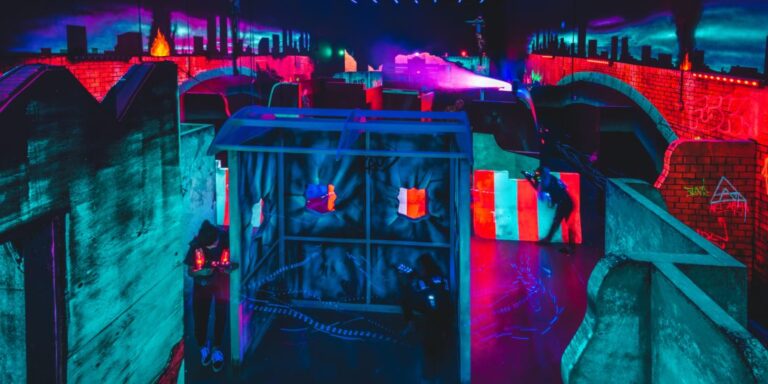
The venue centers on an underground laser tag arena with winding hallways, fog, glow effects, and music, where players can capture bases or hold cover for the win. Beyond laser tag, it offers luxury interactive VIB bowling, 21 traditional lanes, and a large cashless arcade, all run through a single game card system. Structured programs include kid and teen birthday packages, school and youth bundles, and customizable company and group events.
A full-service restaurant and bar, chef-driven catering, and flexible private and semi-private event spaces round out the experience. Dedicated party hosts and professional event planners handle the details, while a Rewards Club and weekly specials add extra value. It’s a fitting choice for birthdays, corporate team building, school field trips, youth groups, and date nights.
 Indoors
In an era dominated by screens and sedentary entertainment, laser tag has emerged as a powerhouse of physical activity, social bonding, and tactical adrenaline. It is more than just a game of “tag with lasers”—it is a sophisticated simulated sport that pits human intuition against strategic precision. Whether you are a weekend warrior or a birthday party attendee, understanding the nuances of the game can elevate your experience from a chaotic scramble to a tactical triumph.
At its core, laser tag is a recreational shooting sport where players use infrared-emitting light guns to tag designated targets on an opponent’s vest or headband. Unlike paintball or airsoft, laser tag is entirely painless, mess-free, and relies on advanced electronics to track hits and scores in real-time.
Modern systems have evolved far beyond the clunky gear of the 90s. Today’s equipment features haptic feedback, OLED displays, and Bluetooth connectivity, allowing players to track their accuracy, kill-to-death ratios, and objective completions instantly. It is essentially a live-action version of a first-person shooter (FPS) video game, brought into the physical world.
The beauty of laser tag lies in its versatility. While “Team Deathmatch” remains the classic standard, venue operators now curate complex scenarios designed to force cooperation and strategic thinking:
While it looks like pure entertainment, the physiological and psychological benefits of laser tag are significant.
For the average adult, a one-hour session can result in burning between 300 to 500 calories. Because the game encourages constant running, squatting to avoid fire, and sprinting to cover, it provides a high-intensity interval training (HIIT) workout without the monotony of a treadmill. Mentally, the game sharpens decision-making under pressure, improves spatial awareness, and fosters communication skills that are essential in both the arena and the boardroom.
Educational psychologists and sports scientists have increasingly taken interest in competitive team gaming. Experts note that laser tag is an excellent medium for “flow state” induction—a mental state where a person performing an activity is fully immersed in a feeling of energized focus.
Furthermore, industry experts in gamification point to laser tag as an ideal model for social learning. Because the game relies on instant feedback (lights, sounds, and scoring), players learn to adapt their strategies in real-time, teaching them resilience and the ability to pivot when a plan fails—a skill known in modern pedagogy as “iterative problem solving.”
Laser tag is fundamentally inclusive. For children, the game serves as a safe environment to explore physical activity, build confidence, and learn the value of teamwork. Unlike contact sports, size and physical strength are rarely the deciding factor in laser tag; agility, cleverness, and the ability to listen to teammates are far more important. For parents, it is a low-risk way to help children develop social dexterity and coordination.
Laser tag is currently enjoying a resurgence as a premier event destination.
The experience shifts dramatically depending on the setting:
Indoor Venues are typically characterized by “blacklight” environments, fog machines, and complex mazes. These are ideal for fast-paced, close-quarters combat and are consistent regardless of the weather. They provide a high-tech, futuristic aesthetic perfect for parties.
Outdoor Venues offer expansive terrain, often utilizing bunkers, natural forests, or urban-simulated settings. Outdoor games feel more like “tactical simulation.” With natural light and larger distances, they allow for long-range sniping and more elaborate outdoor maneuvers, making them the preferred choice for those looking for a grittier, more realistic experience.
Whether you choose the neon-lit maze of an indoor center or the sprawling tactical field of an outdoor arena, laser tag remains one of the few activities that successfully blends physical fitness with the thrill of strategic play. Grab a vest, calibrate your sensor, and step into the arena—the game is waiting.


 20107 Lawrence 1247, Marionville, MO 65705, United States