Log in
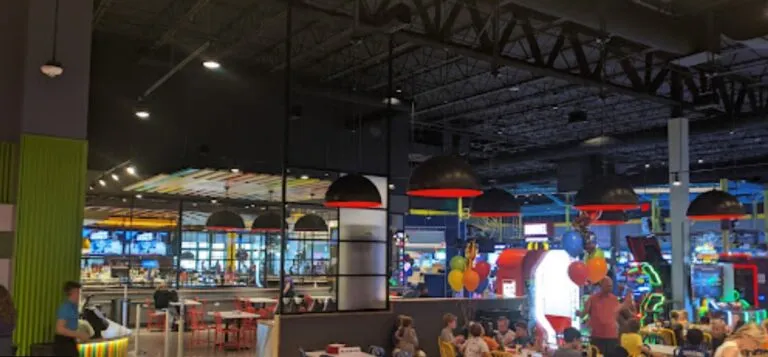
Main Event Chesterfield sits in The District, a lively development in Chesterfield, Missouri, a western suburb of St. Louis, sharing the neighborhood with Topgolf and The Factory concert venue.
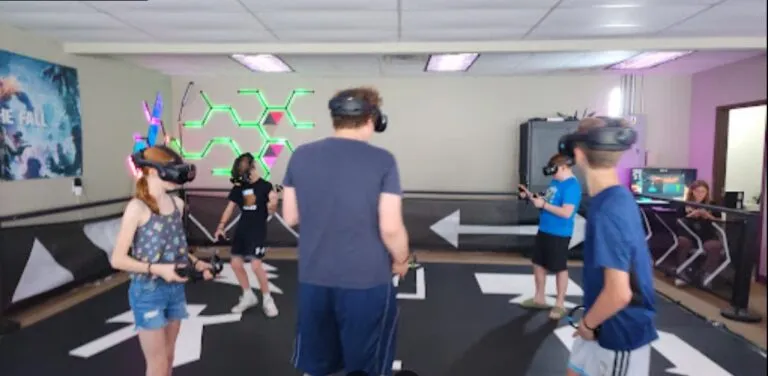
The venue is a 50,000-square-foot family entertainment center with a multi-story neon-lit laser tag arena, 22 lanes of bowling, a gravity ropes course, billiards, Hologate VR, and a video-game gallery with more than 100 arcade games. Dedicated party hosts, private rooms, and full-service catering make it a popular spot for birthdays, school outings, and team-building events.
Beyond the games, guests can refuel at a full-service restaurant and bar with pizza, wings, burgers, and custom cocktails, or relax in a comfortable recreation area between rounds. The attentive staff and clean, welcoming atmosphere help families and groups connect and build lasting memories, with season passes available for regular visitors.
IndoorsThe Alley sits in the heart of downtown Washington, Missouri, in Franklin County, a family entertainment center that has become a favorite gathering spot for locals and visitors. Under one roof, guests find a 50+ game arcade with a redemption store, an immersive Apocalyptic Wasteland laser tag arena, virtual reality gaming with escape rooms and zombie battles, and a multi-level kids’ playscape with an interactive learning room. A full kitchen serves elevated bar food, and the venue hosts a lively calendar of trivia, karaoke, music bingo, and live music.
The Alley also shines as a party and event venue, with free reservations and fully customizable packages for birthdays, corporate team-building, and celebrations of all kinds. Guests can bring their own cake and decorations, add VR or laser tag to any gathering, and enjoy the self-pour beer wall with rotating taps. With memberships, a food truck, catering, and a welcoming community atmosphere, it’s a versatile destination that keeps families and groups coming back.
IndoorsIn a world increasingly dominated by sedentary screen time, laser tag stands as a beacon of kinetic energy and tactical excitement. It is more than just a game; it is an immersive experience that blends technology, athleticism, and strategic thinking. But what exactly is the draw, and why is this “high-tech game of tag” taking the world by storm?
At its core, laser tag is a recreational shooting sport where players use infrared-emitting light guns to tag designated targets—usually sensors worn by other players or integrated into arena obstacles. Unlike paintball, there are no projectiles or messy cleanup; it is a clean, “no-contact” sport that relies on sophisticated electronics to track hits, health points, and team scores in real-time. Whether played in a dimly lit, neon-soaked indoor arena or amidst the natural cover of an outdoor forest, the goal remains the same: outmaneuver your opponents through strategy and precision.
Modern laser tag has evolved far beyond simple team deathmatches. Today, operators use advanced software to run complex, objective-based scenarios:
Laser tag is a “stealth workout.” Players often cover miles of ground without even realizing it, sprinting, crouching, and dodging. This high-intensity interval training (HIIT) fosters cardiovascular endurance, agility, and balance. Beyond the physical, the game is a masterclass in cognitive development. It forces players to exercise split-second decision-making, spatial awareness, and non-verbal communication, as teammates must learn to signal each other without shouting their tactical plans to the opposition.
Human factors researchers and gaming experts often cite laser tag as a prime example of “gamified physical education.” Studies on flow state—the mental zone where a person is fully immersed in an activity—show that laser tag provides an ideal environment for building resilience and teamwork. Industry experts note that as VR and AR technologies advance, laser tag is bridging the gap between digital gaming and real-world physical activity, proving that “tech-savviness” can actually lead to better health outcomes rather than just sedentary habits.
While often associated with childhood, the demographic for laser tag is surprisingly broad. For kids, it is a rite of passage—a chance to channel their imagination, act out their favorite sci-fi tropes, and develop social ties in a safe, controlled environment. However, the rise of “Tactical Laser Tag”—which uses hyper-realistic equipment and military-grade simulation software—has attracted a mature audience of paintball veterans and corporate teams looking for a sophisticated, adrenaline-fueled challenge.
Laser tag is the ultimate “event equalizer.”
The setting fundamentally changes the game.
Whether you prefer the neon labyrinth of an indoor arena or the sprawling silence of a woodland glade, laser tag offers a unique intersection of heart-pumping action and strategic brilliance. It is a game that welcomes everyone to switch off their phones, pick up a phaser, and step into the action.