El Monte
 Log in
Log in
Log in

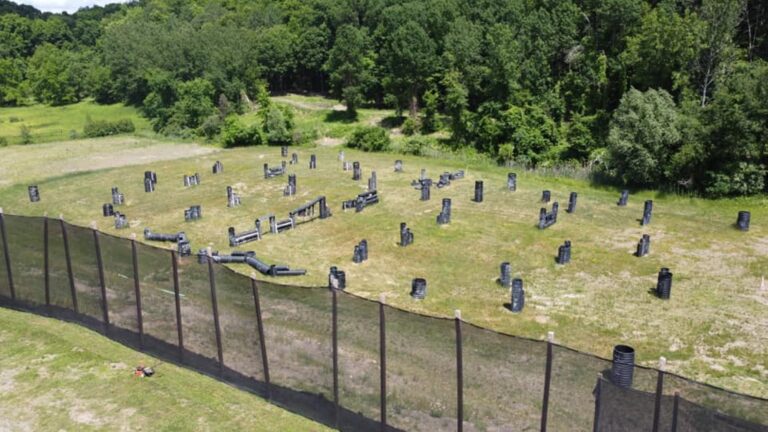
Capital Combat Zone sits on Farrell Road in Brunswick, just outside Troy, New York, in the heart of Rensselaer County, and has grown into one of the most popular outdoor paintball and airsoft fields in the Capital Region.
The park spans roughly fifteen acres of urban-style combat zones, wooded trails, structures, and a dedicated PSP speedball court. Open play runs on weekends with a mix of game modes like team death match, king of the hill, and attack-and-defend, plus larger scenario events such as Zero Hour. Full rental packages for paintball and airsoft include a marker, mask, and ammo, and the on-site pro shop carries gear at fair prices.
The staff and refs are friendly and safety-focused, welcoming first-timers and regulars alike. The park is a popular choice for birthday parties, corporate outings, and family groups, with private rental parties available. Amenities are simple — a shade tent, a snack stand, and portable restrooms — and the Field of Horrors haunted house season in October adds a seasonal draw.
 Outdoors
Albany Paintball Experience sits on Route 20 in Nassau, New York, less than 20 minutes from downtown Albany and just 5 miles off I-90, spread across more than 140 acres of fields, forest, buildings, and hills.
The park offers paintball in woodsball, speedball, MagFed, mechanical, and pump styles, plus a brand-new Hyperball field, a unique Mounds Hybrid field, a SupAir airball field for tournament play, and a dedicated airsoft field with urban and wooded terrain. Open play runs on scheduled Sundays and Saturdays, with large scenario games nearly every month, MagFed-only events, tournaments, and fundraisers throughout the year. Private groups of 10 or more get their own field with four hours of play, including all equipment and 200 paintballs per person to start.
The venue also hosts corporate outings, team-building events, birthday parties, and bachelor or bachelorette gatherings, with private field rentals and offsite events available. A friendly staff with decades of industry experience welcomes everyone from beginners to pros, and the park even supports police, fire, military, and security training. Recreation and lounge areas, parking, restrooms, and nearby hotel information round out the experience.
OutdoorsPaintball is a high-energy, tactical sport that combines the physical demands of a sprint with the strategic depth of a chess match. Since its inception in the early 1980s, it has evolved from a simple game played by foresters into a multi-million-dollar global industry featuring professional leagues, cutting-edge technology, and a dedicated international community. As both a recreational pastime and a competitive discipline, paintball offers a unique fusion of adrenaline and teamwork that few other activities can replicate.
At its core, paintball is a competitive team shooting sport in which players eliminate opponents from play by hitting them with dye-filled, breakable gelatin capsules, commonly called paintballs. These capsules are launched from specialized air guns known as paintball markers. The markers use compressed air, nitrogen, or carbon dioxide to propel the projectiles at high velocities, typically capped at 300 feet per second to ensure safety.
The paintball itself is a marvel of food-grade engineering. It consists of a spherical gelatin shell—similar to a large vitamin capsule—filled with a liquid mixture of polyethylene glycol, other non-toxic and water-soluble substances, and vivid food coloring dyes. When a paintball strikes a surface, the shell ruptures, leaving a distinct “splat” or mark. This visual evidence is the primary means of determining whether a player has been eliminated. Because the fill is biodegradable and water-soluble, it is designed to wash off clothing and disappear from the environment naturally over time.
Safety and integrity are the twin pillars of paintball regulations. The most critical rule, which is strictly enforced at every sanctioned venue worldwide, is the mandatory use of safety goggles and masks. These must be worn at all times when a player is on the field or at the firing range to protect the eyes and face from impact. Outside the field, markers must have a “barrel sock” or “barrel plug” inserted to prevent accidental discharges.
In terms of gameplay, a player is considered “out” if they are hit by a paintball and it leaves a solid mark of any size on their body or equipment. This is often referred to as a “paint break.” If a paintball hits a player but bounces off without breaking, the player is usually allowed to remain in the game. Once marked, a player must raise their marker above their head to signal their elimination and exit the field toward the designated “dead box” or safe zone.
Sportsmanship is also heavily emphasized. “Wiping”—the act of illegally rubbing off a paint mark to stay in the game—is considered one of the most serious offenses in the sport and can lead to immediate disqualification. Additionally, many fields implement a “mercy rule” or “minimum distance rule,” encouraging players to ask an opponent to surrender if they are within a close range to avoid causing unnecessary pain or bruising.
One of the reasons for the enduring popularity of the sport is the sheer variety of ways it can be played. Paintball scenarios range from quick, five-minute skirmishes to elaborate, multi-day historical reenactments.
The most common recreational format is “Elimination,” where two teams start at opposite ends of a field and play until one side is completely removed. “Capture the Flag” is another staple, requiring teams to infiltrate the opponent’s territory, seize a physical flag, and return it to their own base. For those seeking more complexity, “Center Flag” focuses both teams on a single objective in the middle of the field, creating a high-intensity focal point for combat.
At the professional level, “Speedball” is the dominant format. This is played on a flat, rectangular field with inflatable bunkers arranged in a symmetrical pattern. Speedball is fast-paced, often lasting only a few minutes, and emphasizes communication and rapid movement. Conversely, “Woodsball” or “Scenario Paintball” takes place in natural environments and can involve hundreds of players. These events often feature complex storylines, specialized roles like medics or engineers, and even “tanks” made from modified golf carts.
Beyond the obvious thrill of the game, paintball offers significant physical and psychological benefits. From a fitness perspective, it is a full-body workout. A single day of play involves short bursts of sprinting, crawling, squatting, and hauling equipment. This intermittent high-intensity training improves cardiovascular health, builds core strength, and increases endurance.
Mentally, paintball serves as a powerful tool for stress relief. The intense focus required during a match forces players into a “flow state,” where the worries of daily life are replaced by immediate tactical concerns. It also hones quick decision-making skills and situational awareness.
Perhaps most importantly, paintball is an exceptional team-building exercise. Success on the field is rarely the result of one individual’s skill; it requires constant communication, trust, and the coordination of moving parts. This is why many corporations use paintball as a retreat activity to foster better relationships and leadership skills among their employees. It strips away office hierarchies and encourages people to work together toward a common, tangible goal.
The demographic profile of a paintball player is surprisingly broad. While the initial image might be one of young adrenaline seekers, the sport attracts people from all walks of life. Age groups typically range from ten-year-olds at birthday parties to enthusiasts in their sixties and seventies who enjoy the strategic “woodsball” format.
Paintball remains a popular choice for social gatherings, including bachelor parties and family reunions. However, it also serves a professional purpose. Military and law enforcement agencies use specialized paintball equipment—often referred to as “force-on-force” training—to simulate real-world tactical encounters in a safe environment.
In the competitive sphere, dedicated athletes spend thousands of hours practicing to compete in leagues like the NXL (National Xball League). These players view paintball as a serious sport requiring rigorous conditioning and technical mastery of their equipment. Essentially, anyone who enjoys competition, movement, and strategy can find a place within the paintball community.
From a scientific perspective, paintball is a fascinating study in ballistics and material science. Industry experts and engineers have spent decades refining the aerodynamics of the projectile and the consistency of the markers. Scientists who study the sport’s safety profile often point out that, when played with proper equipment and according to the rules, paintball has a lower injury rate than many common contact sports like football or soccer. This is attributed to the strict “goggles-on” culture and the controlled nature of the playing environment.
Psychologists have also taken an interest in the “gamification” of combat that paintball represents. They note that the sport provides a safe outlet for the “fight or flight” response, allowing the brain to process high-stress situations without real-world danger. This can lead to increased resilience and better emotional regulation in high-pressure social or professional settings.
Industry experts also highlight the environmental evolution of the sport. Modern paintballs are designed to be non-toxic and non-staining, and manufacturers are constantly researching ways to make the gelatin shells even more sustainable. The equipment has also shifted toward greater efficiency, with high-pressure air (HPA) systems replacing older CO2 tanks, providing more consistent shots and reducing the environmental footprint of the gas used.
The venue of a paintball match significantly dictates the style of play. Outdoor venues are the traditional home of the sport. These fields typically span several acres and utilize natural terrain such as forests, hills, and creeks. Outdoor venues allow for long-distance engagements and stealth-based gameplay. They are often divided into different “themed” maps, featuring man-made structures like wooden forts, abandoned vehicles, or trenches. The unpredictability of the weather and the terrain adds an extra layer of challenge to an outdoor match.
Indoor venues, on the other hand, offer a more controlled and fast-paced experience. These facilities are usually located in large warehouses and feature synthetic turf floors to prevent slipping. Indoor fields often use inflatable bunkers or modular walls, and because the environment is sheltered from the wind, the accuracy of the markers is much higher. Indoor play is ideal for those who prefer the Speedball format or for players living in regions with harsh winters or frequent rain.
Both types of venues usually provide full equipment rentals, including markers, masks, and coveralls, making the sport accessible to beginners who are not yet ready to invest in their own gear. Whether under the lights of an indoor arena or beneath the canopy of a dense forest, the thrill of the “splat” remains the same.


 100 Farrell Rd, Troy, NY