
 El Monte
 Log in
Log in
Log in

Fort Campbell Paintball is located in Fort Campbell, KY.
Fort Campbell Paintball: The Ultimate Battlefield Simulation in Fort Campbell, KY
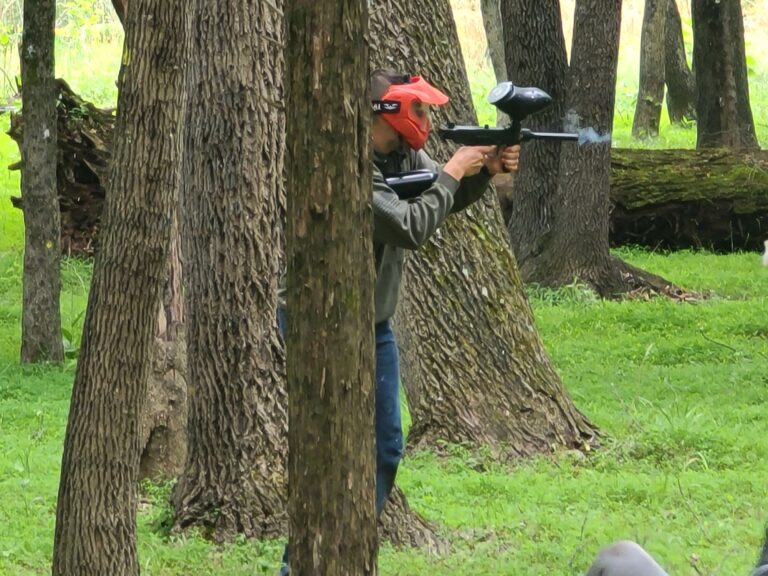
Fort Campbell Paintball, located in Fort Campbell, KY, offers an immersive experience for those seeking to simulate battlefield conditions.
Open Play on Saturdays is a regular offering for individuals and groups.
They simulate the battlefield experience on Outdoor Recreation’s Paintball field. Troops can engage in a unique, hands-on learning experience of moving under direct fire, quick decision-making, and forming field combat strategy. Sergeant’s Time Training is scheduled during weekdays with at least one week’s advance notice. Interested parties should call to schedule their training.
 Outdoors
The evolution of recreational combat sports has seen various trends come and go, but few have maintained the enduring popularity and technical advancement of paintball. What began as a tool for forestry and ranching has transformed into a global phenomenon that spans from casual backyard games to multi-million dollar professional leagues. This sport offers a unique blend of physical exertion, strategic thinking, and adrenaline-fueled excitement, making it a staple of modern competitive recreation.
To understand the sport, one must first understand the primary component from which it takes its name. A paintball is a spherical projectile composed of a thin, pressurized gelatin shell containing a non-toxic, water-soluble, and biodegradable dye. Contrary to popular belief, the contents are not actual “paint” in the industrial sense, but rather a mixture of polyethylene glycol, other food-grade ingredients, and coloring. This ensures that the marking remains temporary and environmentally friendly.
The mechanics of the sport revolve around the paintball marker, a device that utilizes compressed air or carbon dioxide to propel the sphere through a barrel. When a paintball strikes an object or a person, the shell is designed to rupture upon impact, leaving a distinct “splat” of color. Standard paintballs are .68 caliber, though smaller .50 caliber “low-impact” versions have become increasingly popular for younger players and beginners. The precision engineering of these spheres is vital; they must be brittle enough to break on a human target but durable enough to withstand the high-velocity launch from the marker’s chamber.
Safety and fair play form the cornerstone of the paintball experience. The most critical rule, enforced universally at every professional and recreational field, is the mandatory use of safety goggles and masks. Because paintballs travel at speeds of up to 300 feet per second, eye protection is non-negotiable. Players are strictly forbidden from removing their masks while inside a designated “hot” zone or playing field.
The basic objective of the game is to eliminate members of the opposing team by marking them with paint. A player is generally considered “out” if a paintball breaks on them or any piece of their equipment, leaving a mark roughly the size of a quarter. Rules regarding “splatter”—where a ball breaks on a nearby tree and sprays a player without a direct hit—vary by venue, but most competitive formats require a direct strike.
Other standard regulations include the “chronograph” requirement, where every marker is tested before play to ensure it does not exceed the field’s speed limit. Furthermore, many fields employ a “surrender rule” or “minimum distance rule,” encouraging players to ask an opponent to surrender rather than shooting them from point-blank range, which minimizes the risk of bruising or discomfort. When a player is hit, they must signal their elimination by raising their marker or hand and yelling “Out!” or “Hit!” before walking off the field.
One of the factors that keeps the sport fresh and engaging is the variety of scenarios and game modes available. The most traditional format is “Capture the Flag,” where teams must navigate the field to retrieve a flag from the opposition’s base and return it to their own without being eliminated. This requires a balanced approach of offensive rushing and defensive positioning.
Another popular variation is “Elimination” or “Team Deathmatch,” where the goal is simply to be the last team standing. For those who enjoy a more structured narrative, “Attack and Defend” scenarios place one team inside a fortified position—such as a bunkered village or a fort—while the other team must find a way to breach the perimeter within a set time limit.
In recent years, “Milsim” (Military Simulation) and large-scale “Scenario Games” have grown in popularity. These events can last for twenty-four hours or more and involve hundreds of players participating in complex missions based on historical battles or fictional storylines. These scenarios often incorporate specialized roles, such as medics, engineers, and commanders, adding a layer of role-playing and high-level logistics to the physical game.
Beyond the immediate thrill of competition, paintball offers significant physical and psychological benefits. From a fitness perspective, it serves as an intense form of cardiovascular exercise. A typical day on the field involves short bursts of sprinting, crawling, hauling equipment, and maintaining crouched positions, making it an excellent example of high-intensity interval training (HIIT). It helps improve endurance, agility, and overall core strength.
Mentally, the sport is a powerful tool for developing rapid decision-making skills. Players must process an overwhelming amount of information—where the enemy is, how much ammunition they have left, and when to move—under high-pressure conditions. This fosters a unique kind of mental resilience and focuses the mind away from daily stressors, providing a form of “active meditation” through total engagement.
Furthermore, paintball is one of the most effective team-building activities in existence. Success in the game is rarely the result of a single individual’s skill; it requires constant communication, trust, and the coordination of movements. Organizations frequently use paintball retreats to break down social barriers between employees and encourage collaborative problem-solving in a neutral environment.
The demographic profile of a paintball player has shifted significantly over the decades. While once viewed as a niche activity for survivalist enthusiasts, it is now a mainstream hobby enjoyed by a diverse cross-section of society. It is common to see families playing together, as many fields offer “junior” kits designed for children as young as eight or nine.
The sport also attracts high-level athletes who enjoy the competitive rigor of professional speedball leagues, where the pace is lightning-fast and the physical demands are equivalent to those of traditional field sports. On the other end of the spectrum, corporate groups, bachelor parties, and university clubs frequent fields for social outings. Because the equipment levels the playing field to some extent, people of varying ages and fitness levels can participate together, making it an inclusive social catalyst.
From a scientific perspective, paintball is a fascinating study in physics and human biology. Ballistics experts analyze the aerodynamics of the paintball to improve its flight stability, while chemists work on perfecting the “fill” to ensure it remains visible but doesn’t stain clothing permanently. The industry has invested heavily in material science to create masks that are both anti-fog and impact-resistant, utilizing high-grade polymers that can withstand extreme temperatures and forces.
Psychologists often point to the “controlled adrenaline” aspect of the sport. It allows participants to experience the “fight or flight” response in a safe, simulated environment. This creates a healthy outlet for stress and can help individuals learn to manage anxiety by staying calm under simulated “fire.” Industry experts also highlight the environmental evolution of the sport. The move toward 100% biodegradable paint and the revitalization of overgrown land for outdoor “woodsball” courses are seen as ways the industry is aligning with modern ecological standards.
The environment in which the game is played fundamentally changes the experience. Outdoor venues are the traditional home of the sport. These fields often consist of “Woodsball” courses, featuring natural terrain like trees, hills, and creeks, or “Scenario” fields with man-made structures like abandoned vehicles, wooden shacks, and trenches. Outdoor play offers more room for stealth and long-range tactics, and players must contend with the elements, which adds an extra layer of challenge.
Indoor venues, conversely, offer a more controlled and fast-paced experience. These are typically smaller “Speedball” or “Airball” arenas that use inflatable bunkers. The ground is often covered in artificial turf to allow for sliding and diving. Indoor facilities are ideal for year-round play, regardless of weather conditions, and usually feature high-intensity lighting and music to enhance the atmosphere. Because the distances between players are shorter, the games are quicker and require much more rapid reflexes.
Whether one chooses the rugged, unpredictable nature of an outdoor forest or the sleek, high-octane environment of an indoor arena, the sport remains a testament to the human desire for strategy, movement, and camaraderie. Paintball continues to grow as both a serious sport and a beloved pastime, offering a unique way to disconnect from the digital world and engage in a high-stakes, colorful reality.


 BLDG, 6644 Jordan Springs Rd, Fort Campbell, KY 42223, United States