El Monte
 Log in
Log in
Log in

Paintball Action Outdoor & Outdoor Games in Edmonton, AB.
For those seeking an adrenaline-packed adventure in Edmonton, Alberta, look no further than Paintball Action Games. Offering more than just paintball, this venue provides a range of exhilarating activities including Pursuit Archery and Gotcha Ball. The packages range from $30 to $50, accommodating players with paintball ammo options from 100 up to 500 paintballs.
The facility opens its doors at 10am daily. A minimum group size of six players is required to make a booking. This makes it an ideal spot for group outings, whether they be for friends, family, or corporate team-building events.
Safety and inclusivity are paramount here, which is why all players must be at least 10 years old to participate.
For dedicated paintball enthusiasts, Paintball Action Games offers yearly memberships that provide excellent value.
 Indoors
 Outdoors
SPG PAINTBALL is located in Edmonton, AB
Located just 1 mile north of Morinville, east on Twp R, SPG Paintball in Edmonton, Alberta, is the most affordable paintball field in the province. This expansive and well-organized facility offers both paintball and airsoft games, making it a thrilling destination for enthusiasts of all ages. Though they operate solely on a booking basis, the quality of the experience is undeniably worth the prior arrangement.
One of the major draws of SPG Paintball is its competitive pricing. The basic rental package, which costs $32 per person, includes everything one needs to dive straight into the action. This package covers the rental of a paintball gun, mask, chest protector, and a pod pack, along with 200 paintballs to get you started.
Safety and accessibility are key aspects of the SPG Paintball experience. The facility maintains a minimum age requirement of 10 years for both paintball and airsoft participants, ensuring that younger players have a safe and enjoyable experience.
With its reasonable pricing, comprehensive rental packages, commitment to safety, and engaging game setups, it promises a memorable outing for friends, family, or corporate groups.
OutdoorsRampage Outdoor Paintball & AIRSOFT is located in Edmonton, AB.
Rampage Adventure Park is a premier destination for paintball and airsoft enthusiasts, located in Edmonton, Alberta. Spanning an impressive 79 acres of diverse terrain, the park offers a perfect blend of natural obstacles and constructed environments, making it an unparalleled venue for both novice and experienced players.The park boasts eight distinct fields, each meticulously designed to test and enhance your skills.
Rampage Paintball Edmonton also caters to younger players with their “PeeWee Paintball” option, designed for children aged seven and above.
In summary, Rampage Paintball & AIRSOFT in Edmonton, Alberta, offers a comprehensive and unforgettable paintball experience. With its expansive terrain, diverse fields, high-quality equipment, and professional staff, the park is dedicated to providing the best possible environment for paintball and airsoft enthusiasts. Whether you’re a seasoned player or new to the game, Rampage Adventure Park promises an unparalleled adventure that will test your skills and provide endless excitement.
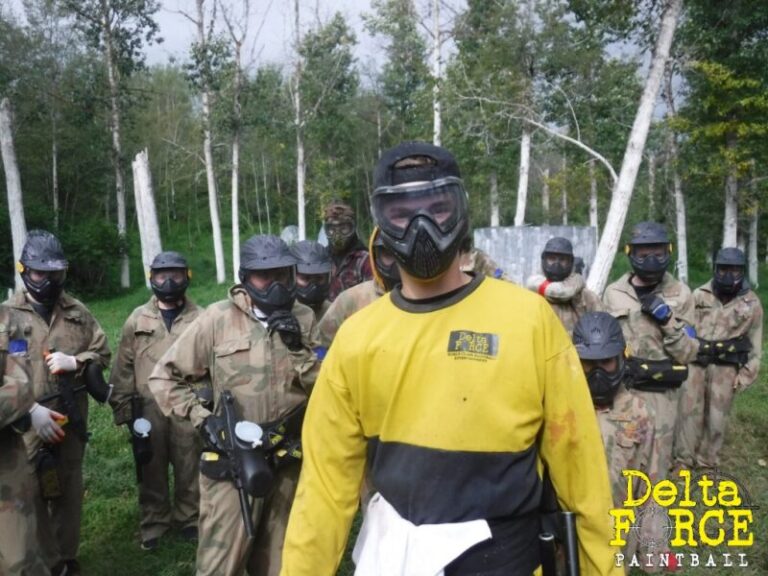
OutdoorsDelta Force Edmonton paintball field is located less than 25 minutes from downtown Edmonton, AB.
This incredible outdoor activity has taken paintball to a new level, promising an experience that can’t be matched. It features professional staff and impeccable facilities, plus game zones that will keep any player on the edge of their seat.
At Delta Force Sherwood Park, you can brave the ‘Armoured Invasion’, storm the ‘Castle’ and hold it for the advancing allied troops or take on the ‘Resident Evil’ in the graveyard! These and other scenarios offer a jam-packed day of paintballing fun. This centre also includes warming technologies, so it can remain open later into the season. Not to mention, the spectacular movie-set game zones are sure to take your breath away – with their amazing attention to detail and themed bunkers and mission objectives, you can expect to feel completely immersed in the most realistic paintball experience possible.
OutdoorsPaintball is a fast‑paced, team‑oriented sport that pits players against one another using compressed‑air or CO₂‑powered markers that fire spherical gelatin capsules filled with non‑toxic, water‑based paint. When a marker releases a paintball, it travels at velocities typically ranging from 250 to 300 feet per second. Upon impact, the paintball bursts, leaving a vivid, easily visible mark that signals a “hit.” The basic premise is deceptively simple: stay alive while attempting to eliminate opponents by tagging them with paint. Yet beneath this straightforward concept lies a rich blend of strategy, physical fitness, and technology that has attracted millions of enthusiasts worldwide.
The sport traces its modern origins to the early 1980s, when hobbyists in the United States began experimenting with pneumatic guns and paint‑filled projectiles. Over the ensuing decades, paintball has evolved from a niche pastime into a global industry with professional leagues, high‑tech equipment, and a diverse array of playing fields that range from dense forests to purpose‑built indoor arenas.
Although variations exist across different leagues and venues, a core set of rules governs most paintball games. These rules are designed to ensure safety, fairness, and a consistent experience for all participants.
Safety Equipment – Every player must wear a full‑face mask that meets industry safety standards, along with appropriate protective clothing. The mask must remain on at all times while on the field, and it may be removed only in designated safe zones.
Marker Power Limits – Paintball markers are limited by velocity, typically capped at 300 feet per second (fps) at the muzzle. This limit reduces the risk of serious injury and provides a level playing field.
Hit Confirmation – A player is considered “out” when a paintball leaves a visible paint mark on any part of the body or equipment that is not covered by protective gear. Some fields require a referee to verify hits, while others rely on a “call‑out” system where the hit player acknowledges the elimination.
Boundary Enforcement – Fields are outlined with clearly marked boundaries. Crossing these lines results in an automatic out, as stepping outside the play area can compromise safety and game integrity.
Reload and Ammunition Rules – Players must carry a limited amount of paintballs, often dictated by the scenario or league. Reloading is permitted only at designated stations or during specific game phases, preventing players from stockpiling ammunition and gaining an unfair advantage.
Sportsmanship and Conduct – Unsportsmanlike behavior, such as deliberately aiming for the face, using prohibited modifications to markers, or engaging in physical altercations, is strictly prohibited. Violations can lead to immediate disqualification or bans from the venue.
Adherence to these rules creates an environment where skill, teamwork, and tactical thinking take precedence over brute force. Most paintball facilities provide a briefing before each session to reinforce these standards and to address any venue‑specific variations.
Paintball is more than a simple “last man standing” showdown. Organized scenarios transform the field into a narrative tableau, offering participants a variety of objectives, storylines, and tactical challenges. Some of the most popular scenarios include:
Capture the Flag – Two teams vie to retrieve the opponent’s flag and return it to their own base while defending their own flag. This classic mode emphasizes speed, coordination, and feints.
King of the Hill – A designated area, often called “the hill,” is contested. Teams must occupy and defend the hill for a cumulative amount of time to score points. Control shifts quickly, encouraging aggressive pushes and rapid retreats.
Objective‑Based Missions – Scenarios such as “Bomb Defusal,” “Hostage Rescue,” or “Search and Destroy” assign specific tasks to each side, mirroring military or law‑enforcement operations. These games often incorporate multiple phases, requiring players to adapt tactics on the fly.
Scenario Paintball (Scenario Ops) – Large‑scale events that can span multiple acres and involve hundreds of participants. Themes may range from post‑apocalyptic wastelands to historical battles, with elaborate props, role‑playing elements, and complex win conditions. Players may assume distinct roles (e.g., sniper, medic, engineer) that grant unique abilities or responsibilities.
Speedball – A fast‑paced, arena‑style format featuring symmetrical inflatable bunkers, tight field dimensions, and a focus on rapid engagements. Speedball is the standard format for competitive leagues and tournaments.
Each scenario requires a different balance of physical endurance, strategic planning, and communication. The diversity of gameplay options ensures that paintball can cater to both casual players seeking a quick adrenaline rush and dedicated enthusiasts craving immersive, story‑driven experiences.
Beyond the immediate thrill of competition, paintball offers a suite of benefits that extend into personal development, health, and even professional realms.
Running, dodging, and diving across uneven terrain provide a high‑intensity cardio workout. The sport also promotes agility, hand‑eye coordination, and core strength as players maneuver around obstacles and handle their markers with precision.
Successful paintball hinges on coordinated strategies, clear communication, and mutual trust. Players learn to assign roles, relay information under stress, and adapt collective tactics as the game evolves—skills directly transferable to workplace environments and group projects.
From planning ambushes to managing limited ammunition, paintball forces participants to think several moves ahead. Analyzing terrain, anticipating opponent behavior, and making rapid decisions nurture analytical and problem‑solving abilities.
The immersive, adrenaline‑rich nature of a paintball match offers a healthy outlet for stress. Physical exertion releases endorphins, while the focus required to stay safe and effective provides a mental break from everyday concerns.
Painting the town together creates strong bonds. Whether among friends, family, or strangers turned teammates, shared experiences on the field often lead to lasting friendships and a sense of community.
In short, paintball serves as both a recreational pastime and a multifaceted development tool, delivering tangible benefits that reach far beyond the confines of the playing field.
Paintball’s appeal cuts across age groups, professions, and cultural backgrounds, making it a truly inclusive sport.
Youth and Students – Many high schools and universities sponsor paintball clubs, providing an organized outlet for energetic students seeking team‑building experiences.
Corporate Teams – Companies increasingly use paintball as a team‑building exercise. The collaborative nature of the game helps employees develop trust, enhance communication, and break down hierarchical barriers.
Military and Law‑Enforcement Personnel – Tactical training programs incorporate paintball to simulate combat scenarios in a low‑risk environment, allowing soldiers and officers to practice maneuvering, cover usage, and decision‑making under fire.
Competitive Athletes – Professional paintball leagues attract dedicated players who train year‑round, travel internationally, and earn sponsorships. These athletes often possess backgrounds in other high‑performance sports, such as lacrosse, soccer, or martial arts.
Families and Recreational Groups – Weekend outings to local fields draw families looking for an active, family‑friendly activity that can be enjoyed by participants of varying skill levels.
Adventure Seekers – Individuals drawn to extreme or outdoor activities frequently explore paintball as an accessible, adrenaline‑filled option that can be tailored to any skill level.
The sport’s flexibility—ranging from casual weekend games to intensely competitive tournaments—allows it to accommodate a broad spectrum of participants, each finding value in the unique blend of physicality and strategy that paintball offers.
Academic research and industry analysis have examined paintball from several perspectives, highlighting both its benefits and areas of concern.
Biomechanical studies confirm that, when proper protective equipment is used, the risk of serious injury in paintball is minimal. Researchers emphasize the importance of mask integrity, marker velocity control, and field safety protocols. These findings have guided the development of standards set by organizations such as the National Paintball Association (NPA) and the International Paintball Federation (IPF).
Psychologists note that paintball can serve as a safe platform for stress inoculation, allowing participants to experience controlled high‑stress situations without real danger. The sport’s requirement for rapid decision‑making and teamwork has been linked to improvements in situational awareness and crisis response capabilities.
Industry analysts estimate that the global paintball market generates billions of dollars annually, encompassing equipment manufacturing, field operations, and ancillary services such as apparel and training. Growth projections indicate continued expansion, especially in emerging markets where outdoor recreation is gaining popularity.
Scientists studying the environmental footprint of paintball have highlighted the biodegradable nature of modern paintball shells, which break down within weeks under typical field conditions. However, they also caution that high‑traffic fields can suffer soil compaction and vegetation damage. As a response, many venues now implement field rotation, habitat restoration, and environmentally friendly cleaning practices.
Overall, the consensus among experts is that paintball, when managed responsibly, presents a net positive contribution to health, social cohesion, and local economies, while posing relatively low safety and environmental risks compared with other high‑intensity recreational activities.
Paintball can be enjoyed in a wide variety of settings, each offering distinct experiences that cater to different preferences and weather conditions.
Natural terrain fields are typically spread across several acres of woods, fields, or desert landscapes. These venues emphasize realism, using trees, rock formations, and natural cover to create immersive battlefields. Outdoor fields are ideal for scenario paintball, long‑range engagements, and tactics that rely on stealth and maneuverability. Many facilities also provide “terrain packs,” where specific setups (e.g., urban ruins or jungle environments) are assembled for themed events.
Speedball is primarily an indoor or semi‑indoor format that utilizes inflatable bunkers arranged in symmetric patterns. The tight, fast‑paced nature of speedball makes it the preferred choice for competitive leagues and tournaments. Indoor speedball venues often feature climate control, lighting effects, and audio systems that enhance the high‑energy atmosphere.
Urban‑style indoor centers mimic city streets, warehouses, and industrial complexes. These venues are built with modular walls, staircases, and moving platforms, allowing operators to reconfigure the layout quickly. Indoor tactical centers are particularly popular for corporate team‑building events and law‑enforcement training because they provide a controlled environment that can be accessed year‑round, regardless of weather.
Some modern paintball complexes combine outdoor fields with adjacent indoor arenas, providing a seamless transition between terrain‑heavy scenarios and speedball matches. This hybrid approach offers players the flexibility to switch game modes on the same day, maximizing the value of a single visit.
Choosing the right venue depends on the desired experience. For players seeking a rugged, immersive adventure, expansive outdoor fields are the natural choice. Those interested in rapid, high‑skill competition may prefer the precision and intensity of speedball arenas. Meanwhile, corporate groups or training units often opt for indoor tactical centers where environmental variables can be tightly regulated.
Paintball stands at the intersection of sport, strategy, and social interaction. From its humble beginnings as a backyard hobby to its current status as a multi‑billion‑dollar industry, the game has proven its capacity to entertain, educate, and unite a diverse audience. Its core components—well‑defined rules, a variety of scenarios, and a blend of physical and mental challenges—create a dynamic environment where participants can develop fitness, teamwork, and tactical acumen. Scientific research underscores the sport’s safety when proper precautions are observed, while industry experts point to its growing economic and recreational significance.
Whether played in a dense forest, an inflatable‑bunker arena, or a purpose‑built indoor tactical center, paintball offers something for everyone: the thrill of competition, the satisfaction of strategic triumph, and the camaraderie that comes from shared, high‑energy experiences. As the sport continues to evolve—embracing new technologies, expanding into untapped markets, and refining safety standards—it is poised to remain a vibrant, accessible pastime for generations to come.


 4804 90th Ave. NW Edmonton, Alberta T6B 3J7