
 El Monte
 Log in
Log in
Log in

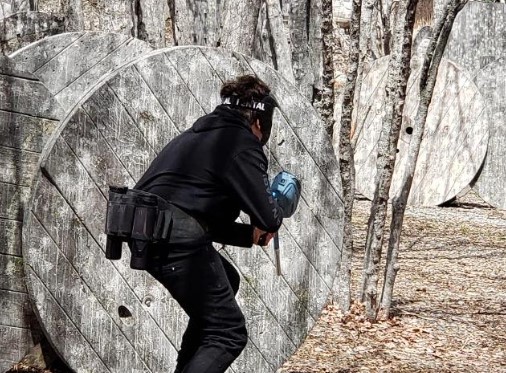
Hypersportz Outdoor Paintball is located in Mount Uniacke, NS.
Nestled just eight minutes outside of Lower Sackville in the picturesque Mount Uniacke, Nova Scotia, Hypersportz Paintball offers a premier destination for paintball enthusiasts of all stripes. The primary mission of Hypersportz is to deliver the most thrilling, adrenaline-packed paintball experience across the Maritimes.
At Hypersportz, extensive renovation projects have transformed the site into a top-tier paintball venue. Prominent among these improvements is the stunning new Black Ops container field, which is equipped with party huts for post-game celebrations. This particular field offers a unique setting reminiscent of military operations, adding an extra layer of excitement to the paintball experience.
Hypersportz is the perfect venue for a wide range of group gatherings. Whether you’re planning a bachelor or bachelorette party, celebrating a birthday, arranging a workplace outing, bonding with sports teammates, or conducting a team-building event, Hypersportz delivers. Immerse your group in an authentic battlefield complete with huts and forts, elevating your experience to new highs of excitement and camaraderie.
 Outdoors
Paintball is a competitive sport in which participants, called players or markers, use specially designed air‑powered guns—known as paintball markers—to shoot spherical gelatin capsules filled with non‑toxic, water‑based dye. When a capsule strikes a target, it bursts on impact, leaving a visible mark that indicates a hit. The equipment typically consists of a marker, a hopper or loader that holds the paintballs, a compressed‑air system (CO₂ or high‑pressure air), protective gear such as masks and padded clothing, and a variety of accessories that can modify performance. Originating as a training tool for military and law‑enforcement units in the early 1980s, paintball quickly evolved into a recreational and competitive pastime enjoyed by millions worldwide.
Although individual venues may adjust regulations to suit local conditions, a core set of rules governs most paintball games. First, players must wear an approved eye‑protection mask at all times; removing it in the playing field is strictly prohibited. Second, markers are limited to a maximum velocity—usually around 300 feet per second— to reduce the risk of injury. Third, a player is considered “out” when a paint capsule breaks on any part of the body, clothing, or equipment, and the mark is clearly visible. Some formats allow a “hit acknowledgment” system where the struck player must signal the hit; others rely on referees or teammates to enforce the rule.
Game‑specific guidelines also apply. Objective‑based matches, such as capture the flag, may require players to complete tasks before being eliminated. Elimination games—often called “Last Man Standing” or “Center Flag”—typically have a strict “one life” rule, whereas “Regeneration” formats let players re‑enter the field after a set delay. Time limits, respawn zones, and safe‑call procedures (where a player calls a pause for medical attention) are standard features that keep play fair and safe.
Paintball’s versatility stems from the broad range of scenarios that can be designed for any skill level or group size. Classic “Capture the Flag” pits two teams against each other as they try to retrieve the opponent’s flag while defending their own. “Elimination” (or “Deathmatch”) reduces the field until only one player remains, emphasizing accurate shooting and tactical movement. “Scenario” games blend storytelling with objectives; participants might reenact historical battles, rescue missions, or zombie apocalypses, often spread across multiple fields and lasting several hours.
Hybrid formats have also gained popularity. “Speedball” is played on a small, symmetrical field with inflatable bunkers, focusing on fast‑paced action and rapid decision‑making—ideal for tournament play. “MilSim” (military simulation) uses larger, forested or urban terrains, encouraging strategic planning, communication, and role‑playing. Some venues offer “Paintball League” structures, where teams compete in scheduled matches throughout a season, accumulating points toward playoffs and championships. The variety of scenarios ensures that paintball can accommodate casual weekend outings, corporate team‑building events, and highly competitive esports‑style tournaments alike.
Beyond the immediate thrill of tracking a bright splatter across a teammate’s shirt, paintball delivers several tangible benefits. Physically, the sport provides a full‑body workout: players run, sprint, crouch, and maneuver through obstacles, improving cardiovascular health, agility, and muscular endurance. The unpredictable nature of the game also enhances hand‑eye coordination and fine motor skills, as players must quickly adjust aim while navigating changing terrain.
Mentally, paintball sharpens strategic thinking and decision‑making under pressure. Players constantly assess threats, plan routes, and allocate resources such as ammunition and time—skills directly transferable to professional environments that demand rapid problem solving. The sport also promotes teamwork and communication; successful squads develop clear hierarchies, share tactical information, and support each other’s movements, fostering trust and cooperation.
Socially, paintball offers a communal experience that bridges age, gender, and cultural gaps. Shared adrenaline and the collective pursuit of objectives create strong bonds among participants, making it a popular choice for group outings, birthday parties, and corporate retreats. Finally, the competitive aspect provides an outlet for stress relief, allowing players to channel aggression into a controlled, rule‑bound environment.
The paintball community is remarkably diverse. Young adults are the largest demographic, drawn by the sport’s blend of physical challenge and tactical depth. However, participants range from teenagers seeking an active weekend diversion to senior enthusiasts who appreciate the strategic aspects without the need for extreme speed. Gender representation has steadily improved; many venues now host women‑only leagues and events to encourage female participation.
Corporate teams regularly use paintball for team‑building exercises, capitalizing on its ability to simulate high‑stakes decision making in a safe setting. Military and law‑enforcement agencies still incorporate paintball into training curricula, valuing its cost‑effectiveness for simulating combat scenarios. Moreover, competitive players pursue paintball at a professional level, traveling to national and international tournaments, securing sponsorships, and earning prize money.
The sport also attracts hobbyists who enjoy customizing markers, creating elaborate field designs, or developing new game formats. Online communities and forums support a thriving ecosystem where enthusiasts exchange tactics, equipment reviews, and event information, further expanding paintball’s appeal across geographic and cultural boundaries.
Scientific research on paintball focuses primarily on safety, biomechanics, and psychological impact. Studies have demonstrated that, when proper protective equipment is used, the incidence of serious injury is exceedingly low. The gelatin capsules dissolve quickly, reducing the risk of prolonged exposure to dye, and the regulated marker velocity keeps impact forces within harmless limits for skin and soft tissue.
Biomechanical analyses reveal that the rapid bursts of movement required in paintball improve proprioception and dynamic balance, especially when players navigate uneven terrain or negotiate obstacles. From a psychological perspective, the sport has been shown to elevate cortisol levels during competition—an expected stress response—followed by a post‑match reduction that correlates with feelings of achievement and camaraderie. These findings support the notion that paintball can serve as an effective outlet for stress management and confidence building.
Industry experts emphasize the importance of continuous innovation in marker technology, air‑compressor efficiency, and biodegradable paintball shells to address environmental concerns. Advances such as low‑noise markers, integrated electronic firing systems, and recyclable gelatin capsules are reshaping the market, making the sport more sustainable and accessible. Moreover, experts advocate for expanded safety education programs to ensure new players understand proper handling of equipment and adherence to field protocols.
Paintball venues fall into two primary categories: outdoor fields and indoor arenas, each offering distinct experiences. Outdoor locations capitalize on natural landscapes—forests, hills, abandoned structures—and typically span several acres. These expansive settings are ideal for MilSim scenarios, large‑scale battles, and multi‑objective games that require extended movement and strategic planning. Many outdoor fields feature themed zones, such as zombie towns or historical battlefields, enhancing immersion for participants.
Indoor facilities, often referred to as speedball arenas, provide a controlled environment with inflatable bunkers, low‑profile obstacles, and artificial lighting. The compact layout—usually around 0.5 to 1 acre—creates fast‑paced, high‑intensity matches that prioritize precision shooting and quick decision making. Indoor venues benefit from year‑round operation regardless of weather, making them popular in regions with harsh climates.
Hybrid venues combine both elements, offering indoor speedball courts alongside adjacent outdoor fields. This flexibility allows groups to tailor a session to their preferences, switching from a rapid elimination match to a longer tactical scenario without changing locations. In addition to stand‑alone fields, many amusement parks, adventure centers, and corporate training campuses incorporate paintball as part of a broader activity roster, providing convenient access for casual players and tourists.
When selecting a venue, players should consider factors such as field size, terrain variety, equipment rental options, safety certifications, and the availability of referees or staff trained in first‑aid procedures. Many reputable facilities also host leagues and tournaments, offering a structured path for newcomers to progress from casual play to competitive involvement.
Paintball has evolved from a niche training tool into a globally embraced sport that blends physical exertion, strategic depth, and social interaction. Its core mechanics—shooting biodegradable dye‑filled capsules with regulated markers—remain simple, yet the myriad of game formats, scenarios, and venues provide limitless variety. The sport’s benefits span health, mental acuity, teamwork, and stress relief, attracting participants across ages, professions, and skill levels.
Scientific studies affirm paintball’s safety when proper gear and field rules are observed, while industry leaders continue to innovate toward more sustainable and user‑friendly equipment. Whether on a forested outdoor battlefield, an inflatable indoor arena, or a hybrid complex, paintball offers an engaging platform for recreation, competition, and personal development. As the community grows and technology advances, paintball is poised to remain a vibrant, adaptable pastime for years to come.


 A Division of Hyper Promotions 41 Etter Rd, Mount Uniacke, NS B0N 1Z0