
 El Monte
 Log in
Log in
Log in

Battlefront Lasertag and Paintball is a popular recreational facility located in Memphis, TN. The facility offers a range of exciting activities for individuals and groups of all ages.
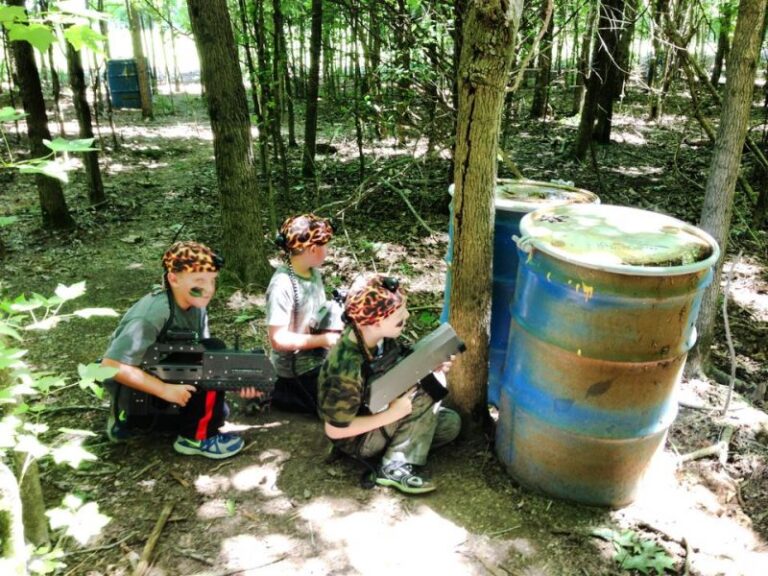
At Battlefront, guests can choose between two exhilarating experiences — Paintball and Laser Tag — each designed to suit different ages, preferences, and comfort levels. The paintball fields are expansive and professionally designed, featuring bunkers, barriers, and open zones that challenge players’ tactics and coordination. Whether you prefer fast-paced speedball matches or more strategic, scenario-style games, the outdoor setups deliver immersive excitement from start to finish.
Whether you’re planning a high-energy birthday, an unforgettable company outing, or just a weekend adventure with friends, Battlefront Lasertag and Paintball in Memphis promises a thrilling blend of strategy, excitement, and camaraderie. It’s more than just a battlefield — it’s a place where memories are made, laughter echoes across the fields, and every round brings you back for more.
 Outdoors
Paintball has evolved from a niche hobby into a global phenomenon that blends physical exertion, tactical strategy, and team camaraderie. Whether played in a professional tournament setting or a casual weekend gathering, it offers a unique escape from the digital world. This article explores the multifaceted nature of paintball, from the physics of the projectiles to the social benefits that keep players coming back for more.
At its core, a paintball is a spherical, gelatin-based capsule filled with a water-soluble, non-toxic pigment. Often compared to bath oil beads in their construction, these projectiles are designed to burst upon impact, marking the target with a vibrant splash of color. The shell is typically made of biodegradable materials, ensuring that while the game is intense, it leaves a minimal footprint on the environment.
The mechanics of the sport rely on the “marker,” a pneumatic device that uses compressed air or CO2 to propel the paintball at velocities typically ranging from 250 to 300 feet per second. When the trigger is pulled, a valve releases a burst of gas that pushes the ball through the barrel. Because the payload is liquid, the impact—while noticeable—is managed by protective gear and the specific physics of the capsule’s shell, which is engineered to break only on hard targets rather than on the player’s clothing.
While rules can vary depending on whether the match is a professional speedball event or a local woodsball game, the fundamental integrity of paintball relies on universal standards of safety and fair play. The most critical rule in any venue is the mandatory use of safety goggles or a full-face mask. Paintballs can travel at high speeds, and eyewear provides the necessary protection for the most vulnerable area of the head.
The primary objective in most games is to eliminate opposing players by tagging them with a paintball. A player is considered “out” if a paintball marks them with a “splat” roughly the size of a quarter. In standard play, if a paintball hits a player but does not burst, they are usually considered safe. Players are prohibited from “wiping,” which is the act of cleaning paint off their gear to stay in the game. Furthermore, venues maintain strict “barrel blocking” protocols, requiring players to use barrel socks or plugs when off the field to prevent accidental discharges.
The versatility of paintball lies in its ability to simulate diverse environments and objectives. Scenarios are often categorized into two main styles: Speedball and Woodsball.
Speedball takes place on a flat, symmetrical field covered in inflatable plastic bunkers. It is a game of high intensity, focusing on athleticism, communication, and rapid-fire accuracy. Matches are short, often lasting only a few minutes, making it the preferred format for competitive leagues.
Woodsball, by contrast, takes place in natural environments—forests, abandoned buildings, or purpose-built tactical zones. This style emphasizes stealth, long-range planning, and environmental awareness. Scenarios in woodsball can range from “Capture the Flag” and “VIP Protection” to complex “Milsim” (military simulation) games where players replicate infantry tactics and supply chain management. These immersive scenarios turn a simple game into a high-stakes narrative adventure.
Paintball stands out as a unique form of physical exercise that feels more like play than a workout. It effectively combines cardiovascular training with anaerobic bursts of energy. Dashing between bunkers, crawling through brush, and maintaining focus while under pressure demand a high level of physical coordination and stamina.
Beyond physical fitness, paintball is a masterclass in soft-skill development. It forces participants to make split-second decisions under stress, fostering resilience and mental agility. Teamwork is non-negotiable; because individual glory is rarely enough to win a match, players must learn to communicate clearly, delegate roles, and trust their teammates. For many, the game serves as an incredible stress reliever, providing a “flow state” experience where the pressures of work and life fade away in favor of immediate strategic challenges.
The demographic of paintball is surprisingly diverse. While it is often associated with competitive youth, the sport has a massive following among corporate teams, bachelor parties, and outdoor enthusiasts of all ages.
Professional athletes often use paintball to train for reaction timing, while corporate leaders find that the collaborative nature of the game makes it an ideal team-building exercise. Because the game is categorized more by skill level than by physical size or strength, it is a rare sport where people from various walks of life can compete on an equal playing field. It is not uncommon to see a group of teenagers playing alongside middle-aged professionals, all united by the common goal of outmaneuvering the competition.
From a scientific perspective, paintball is often studied through the lens of human kinetics and decision-making psychology. Experts in sports science point to the game’s unique requirement for “distributed cognition”—where players must constantly synthesize information from their surroundings and their team to execute a plan.
Industry professionals emphasize the evolution of safety technology in the sport. Over the last three decades, advancements in paintball markers, high-pressure air systems, and refined mask materials have made the sport significantly safer than traditional contact sports like football or rugby. Engineers who specialize in paintball technology focus heavily on creating “non-lethal” ballistic markers that provide the sensation of action without the risks associated with actual projectile sports. Industry experts generally view paintball as one of the most successful examples of an “immersive hobby,” noting that its ability to provide a high-adrenaline experience in a controlled environment is why it remains a staple of the experiential entertainment sector.
The choice between indoor and outdoor venues depends largely on the player’s goals and the local weather.
Outdoor venues are the traditional home of paintball. They offer expansive terrain that allows for wide-flanking maneuvers, natural camouflage, and a sense of scale that cannot be replicated indoors. These venues are perfect for those who enjoy the “Woodsball” experience, complete with trenches, wooden forts, and natural foliage.
Indoor venues, often called “CQB” (Close Quarters Battle) arenas, maximize intensity. Located in converted warehouses or custom-built facilities, they provide a sterile, weather-proof environment. Because the space is confined, these venues focus on fast-paced movement and rapid reaction times. Indoor arenas are often the go-to choice for nighttime games or for players who want to avoid the mess and variables associated with mud and rain.
Ultimately, whether you choose the sprawling forest or the compact agility of an indoor arena, paintball remains a powerful tool for building community and challenging one’s own limits. It is a sport that demands respect for the rules and appreciation for the thrill of the chase, ensuring its place as a cornerstone of active, competitive recreation for years to come.


 6791 Walnut Grove Rd Memphis, TN 38120