El Monte
 Log in
Log in
Log in

BattlegroundZ is located in Lincoln, RI.
BattleGroundz: Family Fun & Thrilling Experiences in Yacolt, WA
Choose BattleGroundz for a family fun day out, party, or corporate event. They offer a diverse range of activities including:
Arcade
Airsoft
Paintball
Gel Blaster
Lazer Wars
Archery Tag
Dodgeball
Dart Wars
 Indoors
Providence Indoor Paintball is located in Providence, RI.
Providence Indoor Paintball: A Safe and Fun Paintball Experience in Providence, RI
Providence Indoor Paintball, located in Providence, RI, aims to provide customers with a safe, clean, helpful, and fun environment.
The main concern of this venue is user satisfaction during the gameplay process.
Knowledgeable referees ensure player safety and assist with equipment problems that may arise, including minor repairs. A top-notch cleaning crew ensures the cleanest field possible.
This venue strives to have the best field for players ranging from beginners to seasoned pros as the facility understands the value of diverse client base.
The optimal field for all player types is an Ultimate Airball Field. They are very confident that THESE FIELDS ROCK.
IndoorsPaintball is more than just a weekend hobby; it is a high-octane intersection of strategy, physical fitness, and camaraderie. Since its inception in the early 1980s, the sport has evolved from a niche tactical exercise into a global phenomenon played by millions. Whether you are a curious beginner or looking to understand the mechanics behind the sport, this guide explores everything you need to know about the world of paintball.
At its most fundamental level, a paintball is a projectile designed to mark a target upon impact. It consists of a thin, gelatinous shell—similar to a vitamin capsule—filled with non-toxic, water-soluble polyethylene glycol, colorants, and sometimes mineral oil. When a paintball strikes a solid surface or a player, the shell ruptures, leaving a distinct splash of color that confirms a “hit.”
The technology behind the paintball has advanced significantly over the decades. Modern paintballs are engineered to be “brittle,” ensuring they break on impact with a player but withstand the forces inside the marker’s barrel. They are biodegradable and environmentally friendly, typically washing away with rain or a simple hose-down, making them safe for use in wooded environments.
While paintball is often perceived as chaotic, the sport is governed by a strict set of safety and gameplay regulations designed to ensure fairness and injury prevention. The single most important rule in any paintball environment is the mandatory use of ASTM-certified goggles or masks at all times while on the field. Because paintballs travel at speeds upward of 280-300 feet per second, eye protection is non-negotiable.
Gameplay rules are generally defined by the “elimination” principle. A player is considered “out” if a paintball strikes them and leaves a mark of a specific size (usually the size of a quarter). If the ball strikes a player but fails to break, that player is technically still “in.” Other common rules include the prohibition of “blind firing” (shooting without looking), the requirement to keep the barrel covered with a barrel sock or plug when off the field, and the strict mandate against physical contact. Honesty is also a pillar of the game; players are expected to “call themselves out” when hit, fostering a culture of integrity.
The versatility of paintball lies in its ability to adapt to various narratives. While speedball—a fast-paced game played on a flat field with inflatable bunkers—is popular for competitive tournaments, “scenario” paintball is where the sport truly feels like a tactical playground.
Scenario games often last for several hours or even entire days. Players might be tasked with “capturing the flag,” defending a “fortress” (a multi-story wooden structure), or escorting a VIP through a dense forest. Some scenarios are based on historical battles or popular cinema themes, such as zombie survival or sci-fi incursions. By using props, smoke grenades, and coordinated squads, these scenarios transform a simple game of tag into an immersive role-playing experience that tests a team’s ability to communicate under pressure.
Beyond the thrill of the chase, paintball serves as a highly effective tool for personal and professional development. Physically, it is a demanding cardiovascular workout. Players constantly shift between sprinting, crawling, and crouching, which builds significant agility, core strength, and endurance.
Mentally, the sport acts as a pressure cooker for decision-making. Players must process spatial information, anticipate enemy movements, and manage their ammunition—all while their heart rate is elevated. This makes paintball an excellent team-building activity for corporate groups. It forces colleagues to abandon hierarchy and collaborate on a level playing field, revealing hidden leadership qualities and improving group communication skills in a way that traditional boardroom seminars cannot match.
The demographic of paintball is surprisingly broad. While it is often associated with young thrill-seekers, the sport caters to a wide spectrum of ages and backgrounds. It is not uncommon to see three generations of a family on the field during a public open-play session.
From dedicated amateur athletes who train weekly to casual players who only pick up a marker during bachelor parties or birthdays, the paintball community is inclusive. Many recreational players are attracted to the tactical aspect, treating the hobby as a chess game played in real-time, while others are drawn to the social aspect—the ability to hang out with friends, disconnect from technology, and engage in a high-energy sport outdoors.
Industry experts and sports scientists often view paintball as a classic example of “flow state” induction. When a player is deep in a match, the intensity of the environment forces a state of hyper-focus where all external stressors are filtered out. This therapeutic benefit is frequently cited by enthusiasts who claim the game acts as a perfect stress-reliever.
Physiologically, experts point to the anaerobic benefits of the game. Because paintball involves high-intensity bursts followed by moments of observation, it mimics “high-intensity interval training” (HIIT), which is highly beneficial for metabolic health. Furthermore, safety experts emphasize that when proper protocols are followed, paintball is statistically safer than many recreational sports, such as soccer or football, due to the lack of physical contact and the emphasis on protective gear.
Choosing where to play depends largely on the experience you want to have.
Outdoor venues are the traditional home of paintball. These ranges usually feature vast wooded areas, trenches, bunkers, and man-made structures. The primary advantage of outdoor play is the scale; players have more room to maneuver, flank opponents, and utilize natural cover like trees and hills. It is the preferred choice for scenario games and large group events.
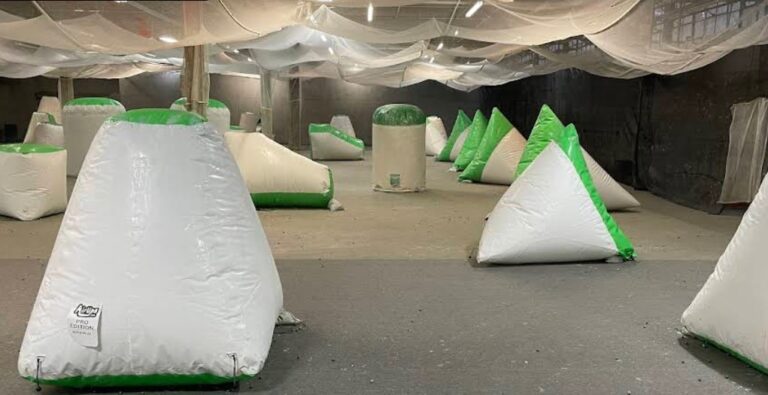
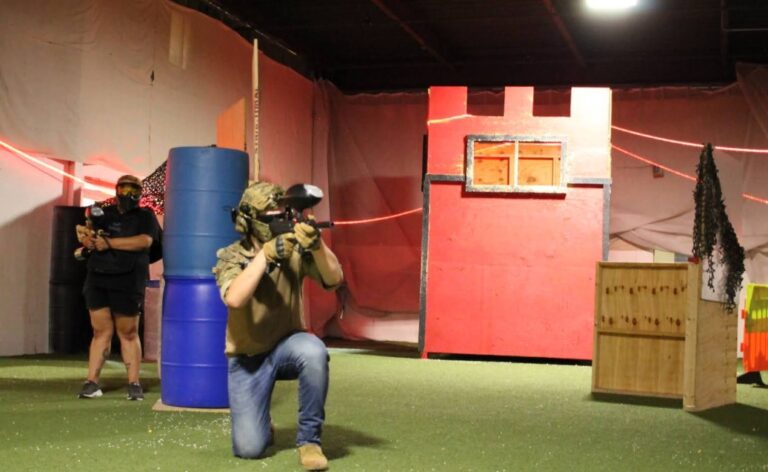
Indoor venues, often referred to as “arena” or “reball” fields, are usually located in converted warehouses or sports centers. These facilities utilize artificial turf and inflatable bunkers known as “air bunkers.” Indoor paintball provides a climate-controlled environment, ensuring the game can proceed regardless of rain, snow, or extreme heat. Because the fields are smaller and the lighting is consistent, indoor play is much faster-paced and relies heavily on muscle memory and quick reflexes.
Regardless of if you are dodging paint in a forest or outmaneuvering a rival behind an inflatable wall, paintball offers a rare escape from the digital world. It is a sport that requires you to be fully present, physically capable, and mentally sharp—a combination that keeps players coming back, one round at a time.


 100 Higginson Ave, Lincoln, RI 02865, United States