El Monte
 Log in
Log in
Log in

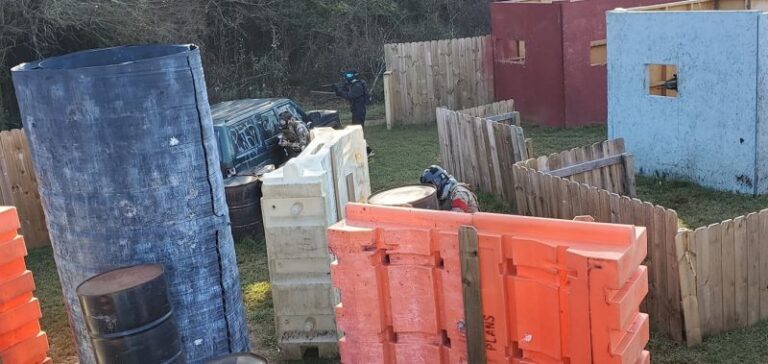
Arkenstone Paintball & Airsoft is located in Acworth, Georgia, off Cedarcrest Road, about a 30-minute drive northwest of downtown Atlanta.
The park features five custom-built playing fields — Dodge City, Castle, Chaos, Warzone, and Bunker Hill — spread across 15 acres of wooded terrain. Paintball is available for open play on weekends and as private parties, while airsoft is offered exclusively through private group bookings. Rental packages include markers, masks, air tanks, and ammunition, with a dedicated staff member assigned to private sessions to handle safety briefings, equipment orientation, and game coordination.
On-site amenities include a shaded picnic area with concessions (hot dogs, meatball subs, chicken sandwiches), a practice range, and rental upgrades for those who want a higher-end marker. The park is a popular choice for birthdays, corporate team-building events, and group celebrations. All paintballs and BBs must be purchased on location, and only biodegradable ammunition is permitted. The minimum age for participation is 10.
 Outdoors
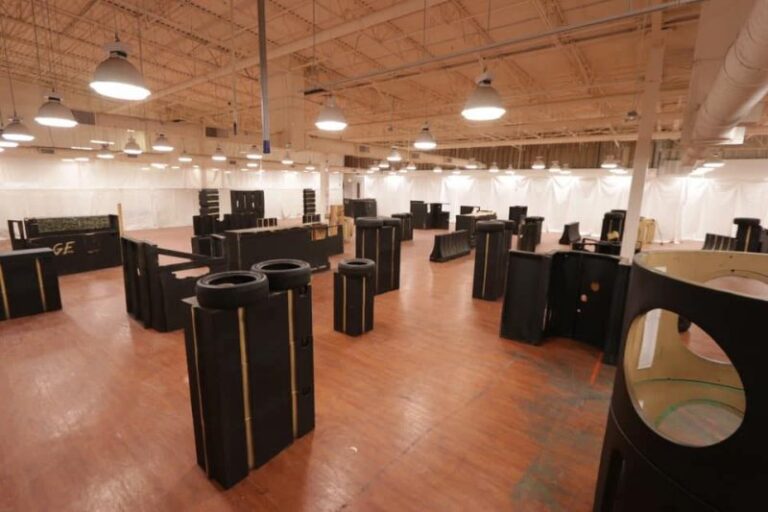
GE Airsoft is located inside the Sugarloaf Mills mall in Lawrenceville, GA.
This indoor airsoft field spans 23,000 square feet and is built for fast-paced CQB and speedsoft action. The arena features original fortifications with shacks, houses, and plenty of cover. Open play sessions run regularly, and the field hosts tournaments, special events, and themed game days. A full pro shop on site sells guns, gear, and accessories.
The venue is well-suited for birthday parties, corporate team-building, and group outings. The staff handles game coordination and safety, making it easy for groups to jump in and play. Located inside a major shopping mall, there are dining and entertainment options nearby. The club fosters a friendly, community-oriented atmosphere where both new and experienced players feel at home.
 Indoors
Power Ops Airsoft is located on a large wooded property near Madison, Georgia, roughly an hour east of Atlanta. The field features a sprawling outdoor MILSIM layout with hills, forested zones, two-story buildings, military vehicles, and a decommissioned airplane. Walk-on play is available every weekend with standard pickup games and objective-based rounds, while special event days bring large-scale coordinated MILSIM operations, night games, and on-site camping. Full rental packages are available for newcomers, and the on-site shop stocks BIO BBs, batteries, masks, and other gear with free HPA refills included.
The venue is well-suited for birthday parties, corporate team-building, bachelor parties, graduations, and family gatherings, with a staging area featuring picnic tables for spectators and a concessions stand for snacks and drinks. The staff is known for being approachable and thorough with safety briefings, making the field accessible to first-time players while still offering enough depth and scale to challenge experienced airsoft enthusiasts. Private field reservations and dedicated referees are available for groups who want a more exclusive experience.
OutdoorsIt’s time to get real. Airsoft is the most realistic military tactical game of them all. Starting with the detailed copies of the guns, everything here looks and feels real. Immerse yourself in the battlefield and see it all for yourself!
The only difference between a real firefight and airsoft is the lack of actual bullets. Airsoft uses plastic, and in some cases, metal pellets that are shot with pneumatic guns. Don’t worry, it only hurts a little bit to get hit. You may even never notice it sometimes, until you spot a couple of bruises while already at home.
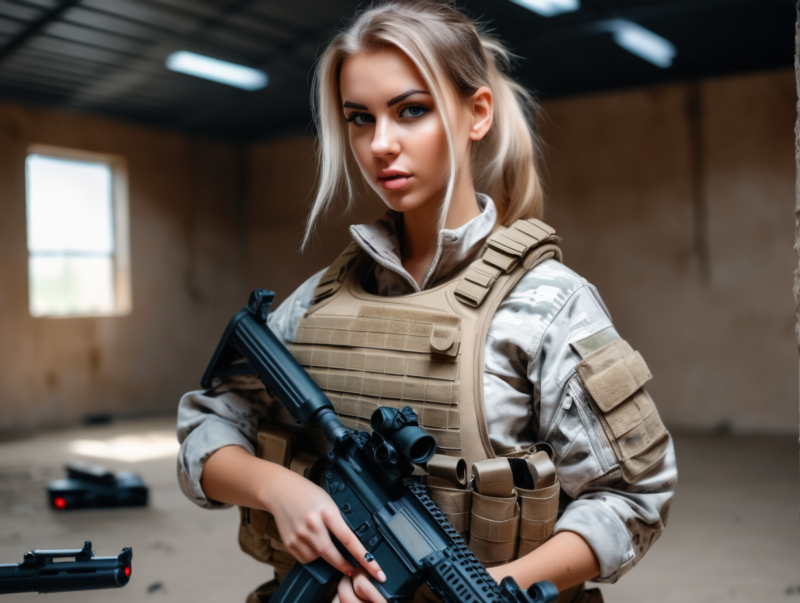
Airsoft is a rapidly growing sport that blends the excitement of tactical combat with the safety of non‑lethal projectiles. Players use replica firearms—called airsoft guns—to shoot 6 mm plastic BBs at velocities that are high enough to feel realistic but low enough to avoid serious injury. The activity can be enjoyed in a variety of settings, from indoor warehouses filled with inflatable cover to sprawling outdoor fields that mimic real‑world battlefields. At its core, airsoft is a game of realism, teamwork, and strategy, offering participants a chance to rehearse military‑style tactics while fostering camaraderie and personal skill development.
A defining characteristic of airsoft is its emphasis on realism. Modern airsoft guns are manufactured to replicate the weight, ergonomics, and even the sound of their real‑world counterparts. This authenticity encourages players to think like soldiers, applying proper fire discipline, using cover effectively, and communicating clearly with teammates. The collaborative nature of most scenarios forces participants to coordinate movements, assign roles such as rifleman, medic, or squad leader, and adapt tactics on the fly. The strategic depth rivals that of traditional paintball, but with a greater focus on authentic military doctrine and the nuances of small‑unit maneuver.
Airsoft’s appeal is broadened by an extensive catalogue of game modes. Classic “Capture the Flag” and “Team Deathmatch” provide straightforward objectives, while more elaborate setups—such as “Hostage Rescue,” “Bomb Defusal,” and full‑scale “MilSim” (military simulation) campaigns—introduce layered missions, time‑based goals, and role‑playing elements. Some fields even host historical reenactments or fictional scenarios, allowing players to immerse themselves in World War II, modern counter‑terrorism, or futuristic combat. This variety ensures that both newcomers and seasoned veterans can find a format that matches their skill level and interests.
One of the sport’s most enticing aspects is the ability to personalize equipment. Airsoft guns can be upgraded with tighter barrels, stronger springs, upgraded hop‑up units, and electronic trigger systems. External accessories such as rails, foregrips, scopes, and tactical lights let players tailor their weapons for specific roles. Beyond the gun itself, players often dress in military‑style uniforms, tactical vests, and modular pouches, creating a look that reflects personal taste and operational requirements. The customization culture encourages continual learning, as enthusiasts research new parts, test performance changes, and share findings within the community.
Airsoft thrives on a vibrant, globally connected community. Online forums, social media groups, and local clubs provide platforms for knowledge exchange, gear trade, and event organization. The “honour system” that underpins the sport—where players self‑report hits and respect each other’s safety—creates a culture of trust and mutual respect. Seasonal tournaments, charity matches, and collaborative build‑sessions further strengthen bonds, making airsoft as much a social hobby as a competitive sport.
Entering the world of airsoft can be overwhelming due to the sheer amount of equipment on the market. For newcomers, safety and comfort should dictate the initial purchase list. The following items form a solid foundation that protects the player while allowing full participation in most game modes.
Mandatory in virtually every jurisdiction, protective eyewear is the single most important piece of gear. High‑impact polycarbonate lenses capable of withstanding a 6 mm BB at typical velocities (up to 350 ft/s) are essential. Many players opt for full‑face masks, but at minimum a secure pair of goggles with a reliable strap must be worn at all times.
Durable tactical gloves protect hands from BB impacts, splinters, and cold weather. Reinforced knuckles, grip‑enhancing palm pads, and breathable fabrics keep hands functional during prolonged engagements. Gloves also improve handling of the gun’s controls, reducing the likelihood of accidental discharges.
Footwear must offer ankle support, slip resistance, and protection from rough terrain. Military‑style boots with reinforced toe caps and puncture‑resistant soles prevent injuries when crawling over debris or stepping on hidden objects. Properly broken‑in boots also reduce fatigue during long “MilSim” events.
Low‑crawl and cover‑seeking are common tactics; without padding, knees and elbows take the brunt of impact. Lightweight, flexible pads with adjustable straps allow players to move quickly while cushioning falls or slides onto hard ground.
A tactical helmet provides head protection against stray BBs, falling branches, and low‑lying obstacles. Modern helmets often feature modular rail systems for attaching night‑vision devices, communication headsets, or face shields, aligning with the sport’s customization ethos.
For added safety, especially in close‑quarters combat, a lower‑face guard or full mask shields the mouth and nose. While not universally required, many fields encourage its use during “close‑range” scenarios to prevent dental injuries and soft‑tissue damage.
Airsoft’s longevity hinges on a universally accepted code of conduct that balances competitive intensity with communal responsibility.
Every field mandates a strict safety protocol: mandatory eye protection, barrel checks before entering the play area, and a “no shooting within a certain distance of non‑players” rule. Many venues enforce a maximum muzzle velocity (often 350 ft/s for indoor play, 400 ft/s for outdoor) to keep impacts within safe limits. Players are expected to cease fire when a teammate or official signals a safety pause, and to maintain a clear line of sight before pulling the trigger.
Because airsoft BBs are silent and leave no obvious mark, the sport relies on players self‑reporting hits. When a BB contacts a protected area—head, torso, or limbs—the player should immediately call “hit” and signal surrender, typically by raising a hand or dropping the weapon. This system cultivates honesty; violations result in removal from the field or bans from the community.
Respect extends beyond the honour system. Players must treat opponents, referees, and field staff with courtesy, avoid aggressive language, and refrain from sabotaging equipment. Respect for the environment—leaving the field clean, minimizing litter, and preserving natural cover—is also emphasized, particularly on outdoor courses that double as wildlife habitats.
Airsoft firearms fall into three primary categories, each with distinct operating principles, performance characteristics, and maintenance demands.
AEGs dominate the market due to their reliability and realistic firing modes. Powered by rechargeable lithium‑ion or NiMH batteries, they drive a motor that cycles a gearbox, compressing a spring to launch BBs. Most AEGs offer selectable fire rates (semi‑auto, burst, full‑auto) and can be upgraded with higher‑torque motors, tighter barrels, or adjustable hop‑up units. Their consistent performance makes them ideal for both casual skirmishes and intensive MilSim campaigns.
Gas‑powered guns use compressed propellant—either green gas (propane‑based) or CO₂—to propel BBs. They excel in delivering realistic blowback action, which mimics the recoil of real firearms. Gas pistols and rifles often provide superior range and a satisfying “bang” sound, appealing to players who value authenticity. However, they are temperature‑sensitive (cold weather can reduce performance) and require periodic refills of gas or CO₂ cartridges.
Spring guns are the simplest mechanically, relying on a manually cocked spring to launch a single BB per trigger pull. While they lack automatic fire, they are inexpensive, maintenance‑free, and highly durable. Spring‑powered rifles, such as sniper platforms, are popular for long‑range engagements, whereas spring pistols serve as reliable backup weapons. Their simplicity makes them an excellent entry point for newcomers seeking a low‑cost option.
Researchers in ballistics and injury prevention have examined airsoft from a public‑health perspective. Studies consistently show that, when proper protective gear is used, the risk of serious injury is minimal. The kinetic energy of a standard 0.20 g BB traveling at 350 ft/s translates to roughly 0.03 J—a level comparable to a gentle tap. Consequently, airsoft is classified alongside archery and paintball as a low‑risk recreational activity.
Industry experts emphasize the sport’s educational value. Military consultants note that airsoft provides a safe environment for practicing tactical decision‑making, communication, and stress management—skills transferable to emergency response and law‑enforcement training. Additionally, psychologists point out the social benefits of teamwork and community belonging, which can improve mental health outcomes for participants.
The demographic landscape of airsoft is remarkably diverse. Young adults (ages 18‑35) constitute the majority, drawn by the adrenaline and tactical aspects of the game. However, veterans, law‑enforcement officers, and military retirees also participate, often using the sport as a low‑intensity rehearsal of skills. Families with teenage children join together for “family days,” and hobbyists with engineering backgrounds engage in the technical side of gun modification. The inclusive nature of the community—combined with the sport’s adaptability to various physical abilities—ensures that airsoft attracts players across gender, ethnicity, and socioeconomic lines.
Finding the right venue is crucial for a rewarding airsoft experience. Options range from regulated commercial sites to grassroots gatherings.
Most regions host licensed fields that adhere to national safety standards, enforce velocity limits, and provide on‑site referees. These venues typically feature a mix of indoor arenas, wooded zones, and built‑up urban environments. First‑time players benefit from structured briefings, equipment rentals, and a controlled environment that minimizes the risk of rule violations.
Community clubs organize regular meet‑ups, training sessions, and casual skirmishes. Membership often includes access to shared gear, group discounts, and mentorship from experienced players. Clubs may focus on specific game styles—such as fast‑paced “Speedsoft” or tactical “CQB”—allowing participants to specialize.
MilSim (military simulation) events are large‑scale, multi‑day affairs that replicate real military missions. Participants are assigned roles, receive mission briefings, and must manage logistics such as ammunition resupply, casualty evacuation, and command‑and‑control communications. These events are usually hosted on expansive rural properties and can attract hundreds of players from across the country. For those seeking immersion, MilSim offers the deepest blend of realism, strategy, and teamwork.
Airsoft stands at the intersection of sport, hobby, and tactical simulation. Its core pillars—realism, teamwork, and strategic depth—are supported by a wide array of game modes, extensive customization possibilities, and a global community built on mutual respect and the honour system. Newcomers can confidently step onto the field equipped with essential protective gear, a reliable AEG or spring gun, and an understanding of the fundamental safety rules. Scientists affirm the sport’s low injury risk when proper precautions are taken, while industry professionals highlight its educational and social benefits.
Whether a teenager seeking an adrenaline‑filled pastime, a veteran looking to stay sharp, or a hobbyist eager to tinker with gear, airsoft offers a versatile platform for personal growth and camaraderie. By choosing the appropriate venue—be it a sanctioned field, a local club, or a sprawling MilSim event—players can tailor their experience to match skill level, desired realism, and social preferences.
Ultimately, airsoft is more than a game of plastic BBs; it is a dynamic, community‑driven pursuit that encourages disciplined teamwork, strategic thinking, and continuous innovation. As the sport continues to evolve, it will undoubtedly attract new participants, inspire fresh equipment designs, and reinforce the values of safety, honour, and respect that have kept it thriving for decades.



 3198 Cedarcrest Rd, Acworth, GA 30101