Big Sky Arcadia is a popular arcade and entertainment center located in Bozeman, Montana. It offers a wide range of games and activities for individuals and groups of all ages.
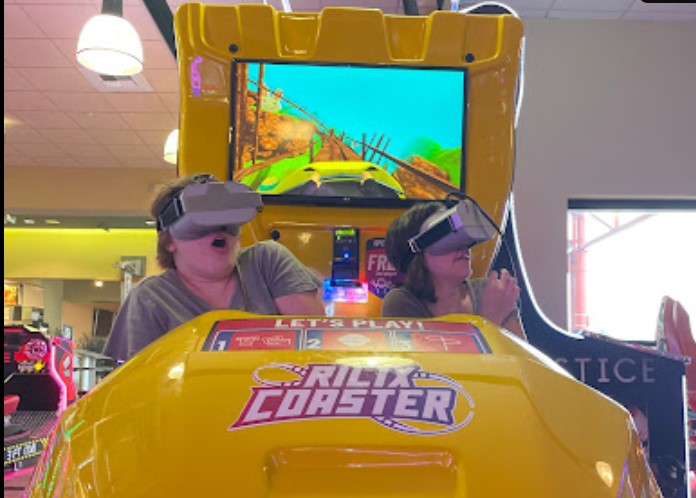
The arcade at Big Sky Arcadia features a variety of classic and modern video games, including racing games, shooting games, and redemption games. Players can enjoy the nostalgic feel of old-school arcade machines or try their hand at the latest virtual reality experiences.
Big Sky Arcadia is a great place to host parties and events. The facility has party rooms available for rent, where guests can celebrate special occasions with friends and family. The staff at Big Sky Arcadia can help plan and organize the event, ensuring a memorable and enjoyable experience for all.
The Future of Play: Unlocking the Immersive Power of Free-Roam VR Arenas
We are living in the transition period between passive media—where we watch stories unfold on a screen—and active immersion, where we become the story. At the absolute forefront of this shift is the Free-Roam VR Arena. No longer tethered to a chair by bulky cables or limited by the dimensions of a living room, free-roam VR is redefining how we interact with digital spaces.
But what exactly is it, and why is it currently the hottest trend in entertainment? Let’s step into the arena and find out.
What is a Free-Roam VR Arena?
At its core, a free-roam VR arena (often called “Warehouse-Scale VR”) is a specially designed physical space equipped with high-fidelity motion-tracking technology. Unlike home VR, which often requires you to stand in one spot to avoid tripping over the coffee table, free-roam arenas allow you to walk, run, crouch, and navigate a large, open floor plan.
Players don a lightweight VR headset and, in many cases, a haptic vest or specialized controllers. As you move through the physical room, your avatar moves in the digital world in a 1:1 ratio. Because the space is cleared of obstacles and tracked by high-precision sensors, your brain is easily tricked into believing you are walking through a sprawling alien landscape or a haunted mansion, even though you are technically in a climate-controlled warehouse.
Free-Roam VR Scenarios: Beyond the Screen
The beauty of a free-roam arena is the variety of “realities” it can manifest. Because the environment is software-driven, the same room can host a dozen different lives in a single day. Some of the most popular scenarios include:
The Sci-Fi Survival: Teams are tasked with defending a space station against waves of extraterrestrial threats. The floor vibrates when explosions occur, and the sound design places enemies behind you, forcing you to communicate with teammates.
The Narrative Escape: Often based on the “escape room” model, these scenarios prioritize puzzle-solving over action. Players trigger mechanisms, combine digital objects, and decipher codes to unlock doors that lead to new, stunning virtual chambers.
The Competitive Arena: Think of this as the evolution of laser tag. Players face off in digital arenas, using a variety of virtual weapons and tools to outsmart and outmaneuver the opposing team.
Who Plays on Free-Roam VR Arenas? VR for Kids
While early VR was often perceived as a tech-focused hobby for hardcore gamers, the “free-roam” model has democratized the experience. It is highly intuitive—if you can walk, you can play.
VR for kids has become a massive draw. Because the arenas are physically monitored and the VR headsets are increasingly comfortable, children as young as 7 or 8 are finding these spaces to be the ultimate playground. Unlike video games, which can be isolating, free-roam VR forces children to look at each other, talk, and coordinate. It’s an exercise in social skill-building disguised as a high-tech adventure.
The Ultimate Venue: Parties and Corporate Events
The days of the standard bowling alley or banquet hall birthday are being challenged by the rising popularity of VR event hosting.
Birthday Parties: Kids and teens are trading cake-and-punch for “saving the world.” It’s an unforgettable, high-energy activity that ensures the birthday group is active rather than glued to their phones.
Graduations: For older students, a VR arena offers a “last hurrah” that feels sophisticated and modern, providing a perfect backdrop for lasting memories.
Corporate Parties: This is where free-roam VR truly shines for teambuilding. The scenarios are designed to reward communication, leadership, and group problem-solving. When a CEO is forced to rely on an intern to cover their back from a digital zombie horde, the hierarchy of the office is leveled, and trust is built in ways that a typical seminar could never achieve.
Scientists and Industry Experts View on Free-Roam VR
The consensus among neuroscientists and tech analysts is that we have only scratched the surface of what free-roam VR can achieve.
Cognitive Benefits: Experts note that full-body immersion engages the “proprioceptive” senses—the brain’s awareness of the body in space. This heightened sensory input creates “flashbulb memories,” meaning the experiences felt in a VR arena are etched into a person’s memory much more deeply than passive media consumption.
Future Industry Outlook: Industry analysts view free-roam VR as a foundational technology for more than just games. They point toward “Digital Twins”—using these arenas to train firefighters, surgeons, or military personnel in high-stakes scenarios that would be too dangerous or expensive to replicate in real life.
From the perspective of entertainment, the future is clear: we are moving toward “Location-Based Entertainment” (LBE). As headset technology gets lighter and tracking becomes more seamless, the line between “playing a game” and “living an experience” will continue to blur, making the free-roam VR arena the essential stage for the next generation of social interaction.

 El Monte
 Log in

 Indoors


 2825 W Main St g1, Bozeman, MT 59718, United States