El Monte
 Log in
Log in
Log in

Frankie’s of Charlotte sits in Huntersville, North Carolina, in the Lake Norman suburbs just north of Charlotte, along Bryton Corporate Center Drive.
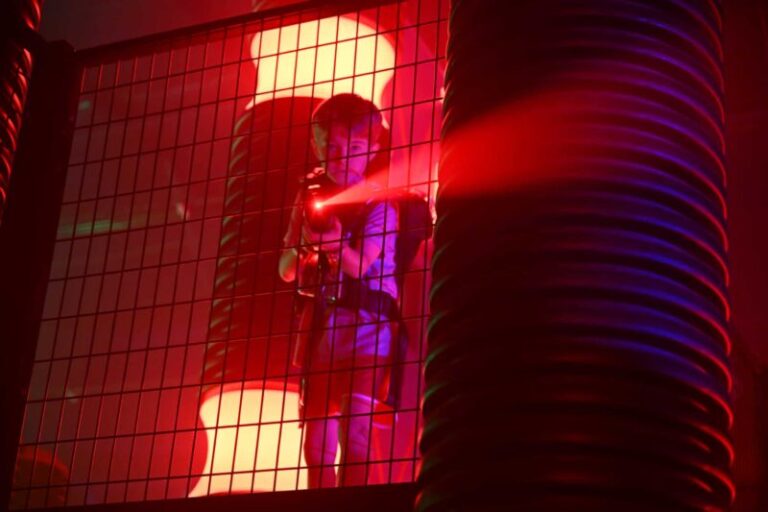
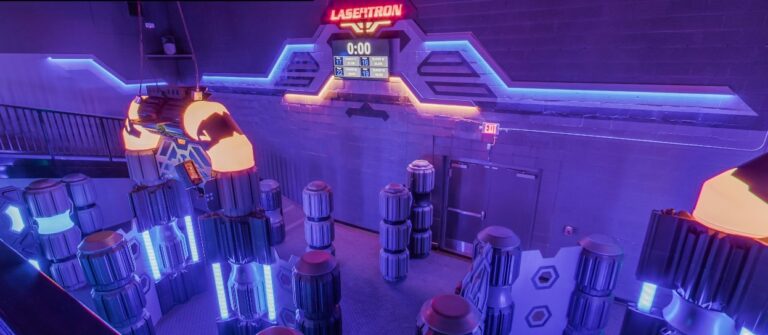
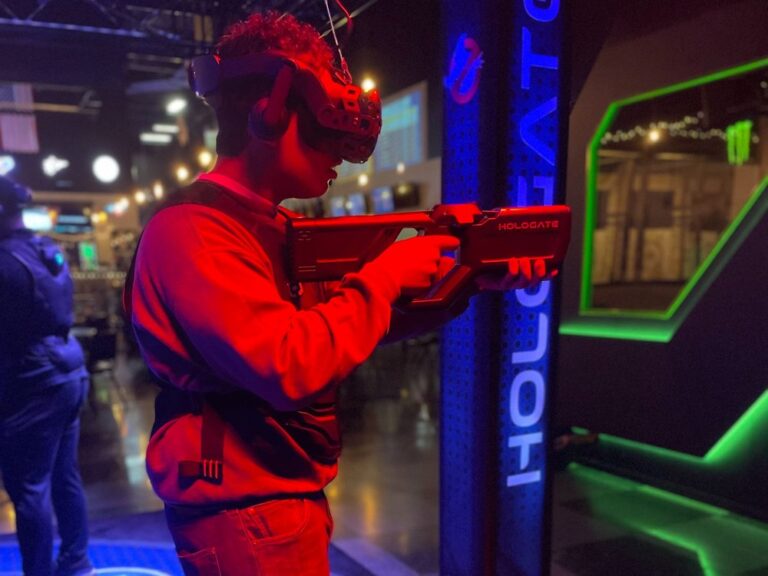
It’s a sprawling indoor-outdoor entertainment mega-venue anchored by a two-level, post-apocalyptic-themed laser tag arena where teams battle with phasers. Beyond laser tag, guests find three go-kart tracks, three mini-golf courses with 54 holes, a 24-lane black-lit bowling alley, bumper cars, a Hologate VR attraction, an XD dark ride, amusement rides, and an arcade with hundreds of games.
The park is built for birthdays, corporate team-building events, school trips, and group outings, with customizable fun card packages and food options. The Lounge, Frankie’s Café, a covered Patio, and a private Event Room provide space to relax and celebrate, while an experienced staff and on-site security keep everything running smoothly.
 Indoors
Sports Connection is a family entertainment center in the Ballantyne district of south Charlotte, with additional locations on Granite Street and in the Northlake area.
The venue brings together laser tag, bowling, arcade games, a ropes course, golf simulators and a Jump-N-Play area, making it a natural fit for birthdays, corporate outings and family days out. Laser tag sessions include three games in a high-tech arena with fog, UV lights and special effects, accommodating up to 44 players per session.
Beyond the attractions, Sports Connection hosts summer and holiday camps, runs adult and youth sports leagues including pickleball and volleyball, and offers custom party packages and group rates. An on-site cafe and comfortable seating let guests relax between games, and bowling lanes can be reserved online in advance.
IndoorsStars and Strikes Family Entertainment Center is located in Concord, North Carolina, along Concord Parkway North near Poplar Tent Road, in the former Kmart building within the Cabarrus County area just outside Charlotte.
The 50,000-square-foot venue centers on 24 bowling lanes (eight VIP lanes with SPARK augmented-reality bowling), a 7,500-square-foot arcade with a prize store, a two-story laser tag arena, bumper cars, an escape room, axe throwing, virtual reality, and karaoke. Birthday party packages start at $21.99 per person with a minimum of ten kids and can include bowling, arcade cards, and laser tag, along with food, drinks, balloons, a dedicated party host, and a Ticket Tornado experience.
The on-site CJ’s Tavern restaurant and bar serves chef-inspired cuisine, and the facility includes multiple private party rooms, including an upscale corporate event room seating more than 100 with a private bar. The center hosts corporate events, team building, fundraisers, sports team parties, church and school gatherings, and reunions, and it partners with local charities, including the American Cancer Society and Foster Family Christmas parties.
IndoorsVictory Lane Indoor Karting sits in the North Charlotte industrial district, just off the I-77 and I-85 interchange, inside a sprawling 100,000-square-foot complex on Tipton Drive.
The heart of the venue is gas-powered indoor kart racing on two technical circuits — the Sprite Track and the Coke Zero Track — using French-built Sodi karts with Honda engines that reach 35 to 40 mph, plus a separate youth kart program. Races run eight minutes, a $10 annual membership is required, and the facility also hosts structured team-building formats like the Le Mans Team Challenge, Mini Prix, and Super Prix, along with racing leagues and youth programs.
Beyond the track, the complex offers axe throwing, interactive Krazy Darts, three themed escape rooms, virtual reality zombie shooters, and an arcade with over 60 cabinets. The on-site Pit Road Bar & Grill handles dining and catering, while Tipton Hall and a private conference room provide banquet and meeting space for up to 300 people. It’s a versatile destination for youth birthday parties, corporate outings, family reunions, and private celebrations, with event coordinators on staff to tailor each gathering.
IndoorsVirtual reality has traveled a long road from the tethered, stationary headsets of the early 2010s to the expansive, untethered experiences we see today. At the pinnacle of this technological evolution sits the “free-roam” VR arena. Unlike home-based VR, which often chains players to a specific spot in their living room, an arena-scale setup removes the walls, allowing individuals to physically walk, run, and interact within a massive digital landscape. This leap in immersion has transformed virtual reality from a sedentary hobby into a full-body social event.
A free-roam VR arena is a purpose-built physical space—often a large warehouse or studio—outfitted with advanced tracking technology. While the player wears a lightweight headset and often carries haptic gear or physical props, the magic happens through a sophisticated “inside-out” or “outside-in” tracking system. These systems monitor the position of the player within the room with millimeter-level precision, mapping their real-world movement directly into the virtual environment.
What defines the “free-roam” experience is the lack of artificial locomotion. In standard VR, players might use a joystick on a controller to “walk” while standing still, which frequently causes motion sickness. In a free-roam arena, if a player wants to move forward, they physically walk forward. If they want to peek around a corner, they crane their neck and lean their body. This seamless synchronization between physical movement and visual feedback creates a sense of “presence”—the psychological feeling that one is truly inside the virtual world. By removing the wires and the joystick movement, these arenas offer the most natural and realistic simulation available to the general public.
The variety of scenarios available in these arenas is limited only by software developers’ imaginations. Because the physical arena serves as a blank canvas, a single room can transform into anything from a dystopian space station to an enchanted forest within seconds.
Common scenarios include cooperative zombie-survival games, where groups must secure a perimeter and fend off waves of undead enemies. In these setups, players often stand back-to-back, communicating in real-time as they watch their teammates’ avatars move through the space. Other scenarios focus on puzzle-solving and exploration, such as navigating a haunted tomb or repairing a damaged submarine at the bottom of the ocean.
Advanced arenas are also integrating “haptic floors” and environmental effects. Some spaces incorporate fans to simulate wind, heaters to simulate fire, or vibrating floor panels to mimic the rumble of an explosion. By engaging the senses of touch, sound, and sight simultaneously, free-roam VR turns a simple game into a visceral, cinematic experience that feels more like starring in a movie than playing a video game.
While early VR adopters were primarily tech enthusiasts and gamers, the demographics of free-roam arenas have shifted dramatically. Today, these venues cater to a wide range of ages, including children, provided they meet the safety requirements.
For children, free-roam VR is often their first introduction to the potential of immersive technology. It is highly engaging for school-aged children and teenagers because it is inherently active. Unlike traditional gaming, which is criticized for encouraging sedentary behavior, free-roam VR requires players to move, crouch, reach, and coordinate with their peers. Many venues offer age-appropriate content—gentle exploration games or educational interactive history lessons—that ensure the experience is fun without being overwhelming or frightening. The social nature of the activity also makes it a popular choice for youth groups and field trips, fostering teamwork and spatial awareness in a controlled, supervised setting.
The rise of the “experience economy” has made free-roam VR a highly sought-after destination for celebrations and professional gatherings. Instead of traditional outings like bowling or dining, organizers are increasingly turning to VR arenas to provide a memorable, high-tech twist on the standard party.
For a birthday party, an arena offers an exclusive, high-energy environment where guests can physically engage with each other. The shared excitement of surviving a virtual gauntlet builds instant camaraderie. For graduation parties, it acts as a bonding experience, allowing groups of friends to create lasting memories in a unique digital frontier.
Perhaps the most significant expansion has been into the corporate sector. Companies utilize free-roam VR for team-building exercises that are far removed from stereotypical “trust falls.” In a virtual arena, teams are forced to communicate clearly, delegate roles, and manage stress in a high-stakes environment. Because the virtual scenario is so consuming, employees often drop their professional “masks” and engage with coworkers in a more authentic, collaborative way. It provides a unique sandbox for testing leadership, communication, and conflict resolution, making it a powerful tool for modern corporate development.
From an academic and professional standpoint, the growth of free-roam VR is viewed as a significant milestone in human-computer interaction. Scientists who study virtual reality often point to the phenomenon of “proprioception”—the body’s ability to sense its own position in space. By allowing users to move naturally, free-roam systems significantly lower the cognitive load required to navigate virtual worlds, which in turn reduces the likelihood of motion sickness and increases the speed at which users learn new skills.
Industry experts believe we are only seeing the tip of the iceberg. As the hardware becomes lighter, cheaper, and more precise, the applications of free-roam VR are expected to bleed into professional training far beyond gaming. Surgeons are already beginning to use similar technology to rehearse complex procedures; firefighters use it to practice navigating smoke-filled buildings without the risk of real-world injury.
The consensus among experts is that free-roam VR is shifting our understanding of “reality” itself. By creating a space where the digital and physical worlds perfectly overlap, these arenas are proving that VR is not just a tool for entertainment—it is a sophisticated platform for human interaction, collaborative learning, and scientific exploration. As the technology matures, the boundary between the virtual and the material world will continue to blur, making the free-roam arena a centerpiece of the future of digital engagement.


 10621 Bryton Corporate Center Dr, Huntersville, NC 28078, United States