El Monte
 Log in
Log in
Log in

Sports Connection is a family entertainment center in the Ballantyne district of south Charlotte, with additional locations on Granite Street and in the Northlake area.
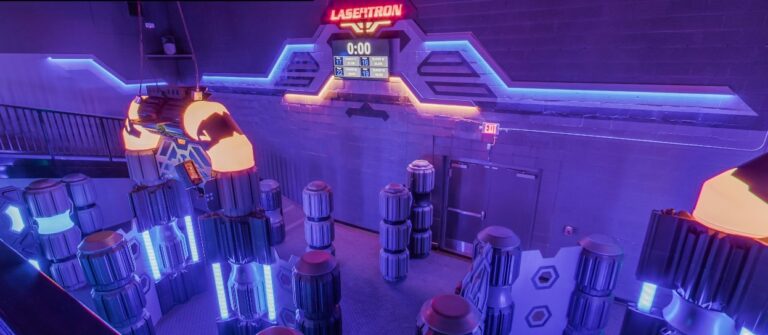
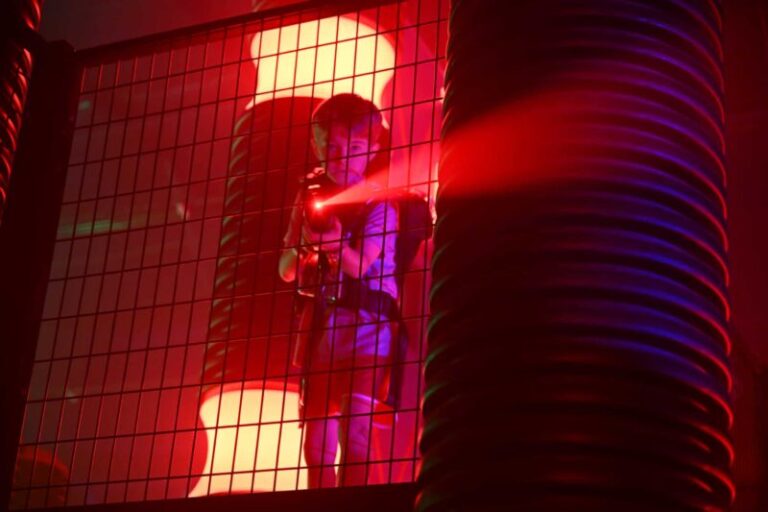
The venue brings together laser tag, bowling, arcade games, a ropes course, golf simulators and a Jump-N-Play area, making it a natural fit for birthdays, corporate outings and family days out. Laser tag sessions include three games in a high-tech arena with fog, UV lights and special effects, accommodating up to 44 players per session.
Beyond the attractions, Sports Connection hosts summer and holiday camps, runs adult and youth sports leagues including pickleball and volleyball, and offers custom party packages and group rates. An on-site cafe and comfortable seating let guests relax between games, and bowling lanes can be reserved online in advance.
 Indoors
Victory Lane Indoor Karting sits in the North Charlotte industrial district, just off the I-77 and I-85 interchange, inside a sprawling 100,000-square-foot complex on Tipton Drive.
The heart of the venue is gas-powered indoor kart racing on two technical circuits — the Sprite Track and the Coke Zero Track — using French-built Sodi karts with Honda engines that reach 35 to 40 mph, plus a separate youth kart program. Races run eight minutes, a $10 annual membership is required, and the facility also hosts structured team-building formats like the Le Mans Team Challenge, Mini Prix, and Super Prix, along with racing leagues and youth programs.
Beyond the track, the complex offers axe throwing, interactive Krazy Darts, three themed escape rooms, virtual reality zombie shooters, and an arcade with over 60 cabinets. The on-site Pit Road Bar & Grill handles dining and catering, while Tipton Hall and a private conference room provide banquet and meeting space for up to 300 people. It’s a versatile destination for youth birthday parties, corporate outings, family reunions, and private celebrations, with event coordinators on staff to tailor each gathering.
IndoorsUrban Air Trampoline and Adventure Park sits in Morrisville, North Carolina, in the Raleigh–Durham (RDU) corridor along WCC Lane, a short drive from downtown Raleigh and the airport.
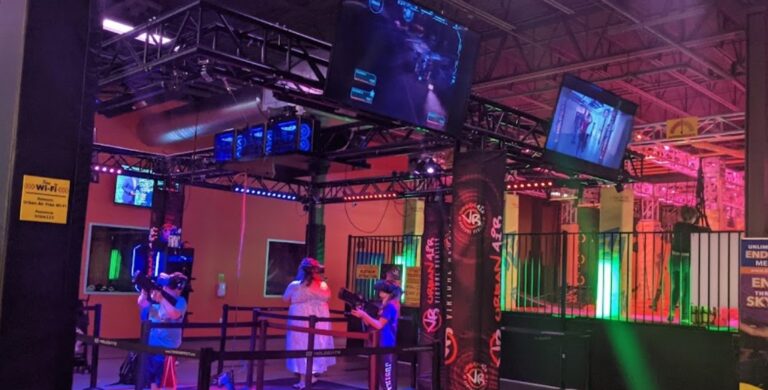
The park is a full indoor playground with APEX trampolines, a ropes course, climbing walls, a Warrior Course, a Tubes playground, launch and racer slides, a Battle Beam, and a Leap of Faith. It also features the Raleigh area’s only indoor skydiving tunnel, a Sky Rider zipline, Spin Zone and Flip Zone bumper cars, and virtual reality stations. Birthday parties come with a dedicated host, reserved tables, and all the essentials, while the park also welcomes corporate team building and group outings.
Between activities, guests can refuel at the cafe with pizza, ICEEs, and snacks, or book the Glamour Salon for princess-themed parties with manicures. Reserved party areas give families a comfortable spot to relax with cake and presents. A friendly, safety-focused staff keeps an eye on the climbing areas and guides younger guests, making it a comfortable destination for families across the Triangle.
IndoorsUrban Air Trampoline and Adventure Park sits in the northern part of Winston-Salem, North Carolina, on Summit Square Boulevard, drawing families from Clemmons, Kernersville, Lewisville, High Point, and the wider Triad area.
The park is a full indoor adventure campus under one roof, offering trampoline zones, a dodgeball court, Battle Beam, a Sky Rider indoor zipline, climbing walls, a ropes course, go-karts, bumper cars, virtual reality, and laser tag. Younger visitors have the Tubes indoor playground, while thrill-seekers can tackle the Wipeout, Warrior Course, Leap of Faith, and Stairway to Heaven.
Birthday parties are a specialty, with tiered packages, a dedicated party host, setup and cleanup handled by staff, and options for shared tables or private rooms. A snack bar serves pizza, fries, and ICEEs, and party areas double as comfortable spots for adults to relax. Memberships offer unlimited play for a low monthly rate, with parent passes available at a discount. The park suits birthday parties, family outings, group events, and rainy-day escapes for all ages.
IndoorsStars and Strikes Family Entertainment Center is located in Concord, North Carolina, along Concord Parkway North near Poplar Tent Road, in the former Kmart building within the Cabarrus County area just outside Charlotte.
The 50,000-square-foot venue centers on 24 bowling lanes (eight VIP lanes with SPARK augmented-reality bowling), a 7,500-square-foot arcade with a prize store, a two-story laser tag arena, bumper cars, an escape room, axe throwing, virtual reality, and karaoke. Birthday party packages start at $21.99 per person with a minimum of ten kids and can include bowling, arcade cards, and laser tag, along with food, drinks, balloons, a dedicated party host, and a Ticket Tornado experience.
The on-site CJ’s Tavern restaurant and bar serves chef-inspired cuisine, and the facility includes multiple private party rooms, including an upscale corporate event room seating more than 100 with a private bar. The center hosts corporate events, team building, fundraisers, sports team parties, church and school gatherings, and reunions, and it partners with local charities, including the American Cancer Society and Foster Family Christmas parties.
IndoorsStars and Strikes Family Entertainment Center sits in the Capital Boulevard corridor of northeast Raleigh, a 62,000-square-foot venue that’s been a neighborhood fixture since opening in December 2019.
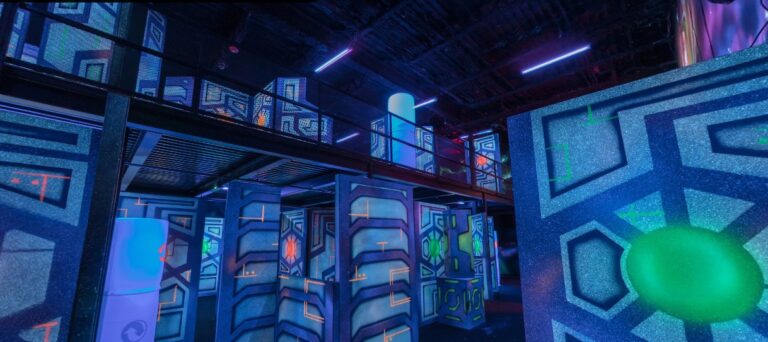
The heart of the action is a two-story laser tag arena packed with ramps, obstacles, and glowing hideouts, backed by top-of-the-line equipment and a briefing room for safety. Beyond laser tag, guests can bowl on 24 lanes (eight VIP), ride bumper cars, explore a 9,000-square-foot arcade with a prize store, and try virtual reality. Combo passes and multi-activity deals let visitors stack several attractions into one visit.
The venue also shines for events, with dedicated party hosts, kids’ birthday packages that bundle bowling, arcade, and laser tag, and an upscale corporate room seating 100-plus with a full private bar. On-site restaurant CJ’s Tavern serves chef-crafted food and drinks, and the staff handles everything from birthday celebrations to team-building days, making it a versatile spot for families, groups, and coworkers alike.
IndoorsFrankie’s of Charlotte sits in Huntersville, North Carolina, in the Lake Norman suburbs just north of Charlotte, along Bryton Corporate Center Drive.
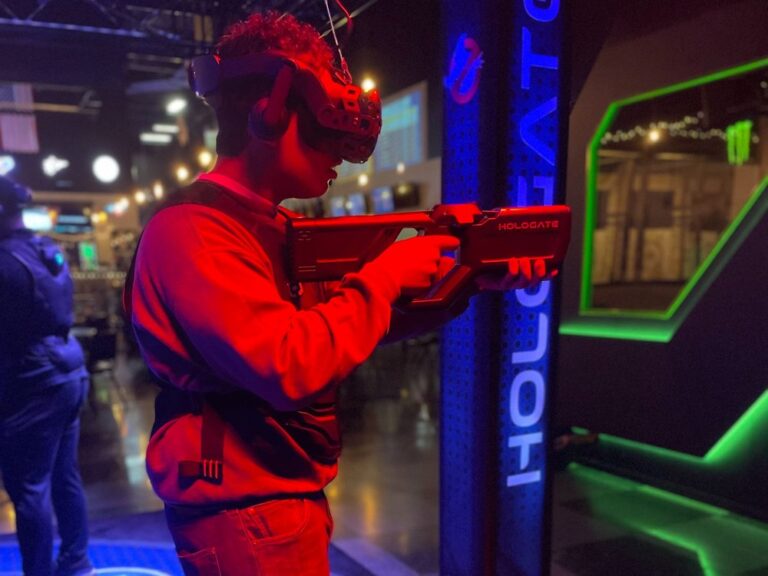
It’s a sprawling indoor-outdoor entertainment mega-venue anchored by a two-level, post-apocalyptic-themed laser tag arena where teams battle with phasers. Beyond laser tag, guests find three go-kart tracks, three mini-golf courses with 54 holes, a 24-lane black-lit bowling alley, bumper cars, a Hologate VR attraction, an XD dark ride, amusement rides, and an arcade with hundreds of games.
The park is built for birthdays, corporate team-building events, school trips, and group outings, with customizable fun card packages and food options. The Lounge, Frankie’s Café, a covered Patio, and a private Event Room provide space to relax and celebrate, while an experienced staff and on-site security keep everything running smoothly.
IndoorsGalaxy Fun Park is located in the Falls of Neuse area of north Raleigh, North Carolina, along Falls of Neuse Road, and it is one of the largest indoor family entertainment centers in the region.
The park is built around a full day of active play, with a two-story black-lit laser tag arena known as Galactic Laser Battle, a full-sized trampoline park with dodgeball and foam pits, indoor go-karts, a ropes course, spinning bumper cars, black-light mini-golf, a soft play area, a drop tower, and a large arcade. It is a popular destination for birthday parties, school field trips, youth groups, and corporate team-building events, with dedicated party rooms, party captains, and packages that combine attractions with food.
Beyond the attractions, the on-site Cosmic Cafe serves pizza, burgers, wings, and snacks with plenty of seating for parents, and adult beverages are available. The friendly staff and focus on cleanliness and safety make it a comfortable choice for families and groups of all ages, with special group pricing available for parties of fifteen or more.
IndoorsFrankie’s of Raleigh sits in the Brier Creek area of northwest Raleigh, North Carolina, on Fun Park Drive. It is a full-scale family entertainment center built around a two-level, apocalypse-themed laser tag arena, with go-kart tracks for every skill level, three miniature golf courses, bumper cars and boats, batting cages, a drop tower, an XD dark ride, a spinning coaster, and an arcade floor with hundreds of games. Laser tag is priced per game with a minimum age of six, and the park also offers a Hologate virtual reality experience.
Beyond the attractions, the park is a strong choice for birthdays, school outings, and corporate team building, with five levels of group fun packages and dedicated event spaces including semi-private lounges, café areas, and a covered patio. The in-house café serves its own pizza dough and sauce, and chef-crafted catering menus range from casual snack spreads to upscale options like a Carolina supper or a Lowcountry oyster roast. Open seating lets parents keep an eye on kids while they play, making it easy to turn a quick visit into a full afternoon.
IndoorsUrban Air Adventure Park sits in the northeast part of Raleigh, North Carolina, on Poyner Pond Circle near Triangle Town Center.
The park is a full indoor adventure center rather than a plain trampoline venue, with interconnected and performance trampolines, a Warrior Course, a Ropes Course, a Sky Rider indoor zipline, climbing walls, a Leap of Faith, a Drop Zone, a Battle Beam, and a Tubes playground for younger kids. Virtual reality stations and two styles of bumper cars add variety, and the All Day Play Promise means one ticket covers the whole day with no time limits.
Birthday parties are a specialty, with Basic through Platinum packages, a Small Squad option for groups of five, and party hosts who handle setup and cleanup. Memberships offer unlimited monthly visits with perks like free snacks and food discounts, while the Adventure 4 All bundle packages four tickets with socks, pizza, and drinks. A café serves pizza, ICEEs, and snacks, and party spaces range from standard tables to a private room with an HDTV and pizzas.
Indoors
Free‑roam virtual‑reality arenas are physical spaces that fuse the immersive power of head‑mounted displays with a large, unobstructed play area. Unlike seated or room‑scale setups that keep the user confined to a few square metres, a free‑roam arena can span from modest 10 × 10‑metre rooms to industrial‑grade warehouses measuring dozens of metres on each side. The key technological ingredients are a robust motion‑tracking system—often a combination of infrared cameras, lidar sensors, or ultra‑wide‑angle optical trackers—and wireless, high‑bandwidth headsets that allow participants to move without cables or latency‑inducing tethers.
The architecture of a free‑roam arena is deliberately modular. Flooring is typically a low‑friction, non‑slip surface that can accommodate rapid turns, jumps, and even crouches, while ceiling‑mounted trackers ensure that vertical movement is captured as accurately as horizontal locomotion. Safety barriers, either soft foam padding or transparent polycarbonate panels, are strategically placed to prevent collisions with walls or equipment. The result is an environment where a user’s physical motions map one‑for‑one onto a digital world, delivering a sense of presence that is impossible to achieve on a couch or a cramped play mat.
From a business perspective, free‑roam arenas are often operated as experience centers, similar to escape rooms or laser‑tag facilities. Operators invest in custom‑designed content pipelines that let them swap out scenarios on demand, ensuring that repeat visitors encounter fresh challenges. The technology stack may also include haptic vests, handheld controllers, and even full‑body exoskeletons for specialized simulations, but the core promise remains the same: a space where the body can truly roam while the mind explores a virtual universe.
The versatility of a free‑roam arena is best illustrated by the variety of scenarios it can host. Because the physical space is decoupled from the digital environment, developers can design experiences that range from low‑key exploration to high‑intensity combat, all while preserving user safety.
Adventure Exploration – Imagine trekking through an ancient rainforest, climbing a virtual cliff, or sailing a pirate ship that appears to glide over a sea of mist. The arena’s boundaries are hidden behind cleverly placed visual cues, allowing the participant to feel as if they are truly traversing expansive landscapes.
Action‑Oriented Games – Competitive shooters, sword‑fighting duels, and futuristic mech battles thrive in free‑roam settings. Because players can physically dodge, roll, and sprint, the intensity of the gameplay feels palpable, turning a typical “kill‑streak” into a full‑body workout.
Co‑operative Puzzles – Teams can solve physics‑based riddles that require synchronized movement, such as aligning giant virtual gears by stepping on pressure plates, or manipulating holographic objects that react to real‑world gestures. These puzzles foster communication and teamwork in a manner that stationary VR cannot replicate.
Educational Simulations – Scientific visualizations—like walking inside a human heart or navigating a molecular structure—gain a visceral dimension when learners can literally step around organ walls or orbit atomic bonds. The open space eliminates the need for constrained “teleport” mechanics, making the learning experience more natural.
Fitness and Wellness Programs – Aerobic routines, yoga flows, and guided meditations are increasingly being delivered through free‑roam arenas. By pairing motion tracking with biometric feedback, instructors can tailor workouts to individual performance and monitor progress in real time.
The modular nature of the arena’s software pipeline means that new scenarios can be uploaded within hours, allowing operators to rotate themes seasonally or respond to trending pop‑culture events. The result is a dynamic catalogue that keeps the venue fresh for both casual visitors and hardcore VR enthusiasts.
The demographic profile of free‑roam VR participants is surprisingly broad. While early adopters were predominantly adult gamers and technology enthusiasts, today the audience expands to families, educational institutions, and corporate groups. One of the fastest‑growing segments is children and pre‑teens, who are drawn to the tactile, movement‑rich nature of the experience.
Parents appreciate that free‑roam VR offers a controlled, supervised environment where kids can expend energy while engaging their imagination. Unlike conventional video games that often encourage sedentary behavior, a free‑roam session can involve running, jumping, and crouching. Operators typically enforce age‑appropriate content filters, ensuring that younger users are exposed only to scenarios with appropriate difficulty levels and thematic content. For instance, a “dinosaur adventure” may involve exploring a prehistoric valley, while a “space rescue” could let kids pilot a rescue shuttle without any graphic violence.
Schools and after‑school programs have begun integrating free‑roam VR into curricula, especially for subjects that benefit from experiential learning—biology, geography, physics, and history. By physically placing students inside a virtual ecosystem or historical setting, educators observe higher retention rates and increased enthusiasm. Moreover, the multiplayer capability allows entire classes to collaborate on problem‑solving missions, turning lessons into interactive team challenges.
However, safety considerations remain paramount. Operators enforce strict hygiene protocols, such as sanitizing headsets between sessions, and provide adjustable harnesses or wrist straps to prevent the equipment from slipping during vigorous activity. In addition, most arenas limit session lengths for younger participants to avoid motion fatigue, typically offering 10‑ to 15‑minute intervals followed by a brief cooldown period.
Overall, the inclusive design of free‑roam VR—its emphasis on physical movement, adaptable content, and safety measures—makes it an attractive option for children, parents, and educators alike.
Beyond individual or educational use, free‑roam VR has carved out a niche as a premium venue for celebrations and corporate events. Its ability to host multiple participants simultaneously, coupled with customizable scenarios, translates into memorable experiences that traditional party venues struggle to match.
For a birthday celebration, the arena can be transformed into a themed quest. A “pirate treasure hunt” may see each child equipped with a virtual map, encouraging them to explore the space, locate hidden clues, and unlock a treasure chest. The physical act of searching the arena adds excitement, while the narrative structure gives the party a clear sense of progression. Packages often include a dedicated party host, photo‑capture stations that merge real‑world images with virtual backdrops, and take‑home memorabilia such as custom avatars or digital certificates.
Universities and high schools have begun incorporating free‑roam VR into graduation celebrations, especially when campus facilities are limited. Graduates can don headsets to walk through a virtual representation of the campus, revisiting iconic landmarks in a nostalgic yet futuristic fashion. Some institutions organize “future‑career” simulations where graduates experience a day in the life of their chosen profession—be it a surgeon navigating an operating theater or an astronaut conducting a spacewalk—offering both entertainment and inspiration.
Corporate clients leverage free‑roam VR for both celebratory gatherings and structured team‑building exercises. A “mission‑critical” scenario can simulate a high‑stakes environment where cross‑functional teams must coordinate to defuse a virtual bomb or rescue a lost colleague. Because the activity demands clear communication, role assignment, and rapid decision‑making, it serves as a practical drill for real‑world collaboration. After the gameplay, facilitators often conduct debrief sessions, extracting insights about leadership styles, conflict resolution, and group dynamics.
Additionally, companies use the arena for product launches and brand activations. By creating a virtual showcase that attendees can physically explore, brands convey a sense of innovation and immersion that static booths cannot replicate. The flexibility to re‑skin the environment with corporate branding ensures that the experience aligns with marketing goals while delivering entertainment value.
In all these use cases, the free‑roam arena functions as a “blank canvas” that can be painted with any narrative the client desires, making it a versatile platform for milestone events.
The scientific community has taken note of free‑roam VR’s potential beyond entertainment, citing its relevance to research in human cognition, motor control, and even clinical therapy. Neuroscientists observe that the high degree of sensory congruence—where visual, vestibular, and proprioceptive cues align—produces a stronger sense of presence than traditional seated VR. This heightened immersion makes free‑roam environments ideal testbeds for studying spatial navigation and memory encoding. By tracking participants’ movements in three dimensions, researchers can map neural activation patterns associated with wayfinding, decision‑making, and social interaction.
From a physiological standpoint, exercise scientists have measured increased heart‑rate variability and caloric expenditure during free‑roam sessions, suggesting that the technology can serve as a viable component of active‑gaming fitness regimens. The “exergame” model, which blends gaming incentives with physical exertion, benefits from the arena’s capacity to accommodate full‑body motion without the constraints of a stationary treadmill or balance board.
In the medical arena, rehabilitation specialists are experimenting with free‑roam VR for post‑stroke motor recovery and balance training. The ability to place patients in a safe, controlled yet richly stimulating environment encourages repetitive movement patterns crucial for neuroplasticity. Moreover, therapists can program progressive difficulty levels, customizing the virtual tasks to the patient’s current capabilities and tracking improvement over time.
Industry analysts predict that as sensor technology continues to shrink and wireless bandwidth expands, the cost barrier for establishing free‑roam arenas will diminish, leading to wider adoption in urban centers, shopping malls, and even university campuses. They also anticipate convergence with emerging technologies such as haptic suits, eye‑tracking headsets, and AI‑driven adaptive narratives, which will further personalize the experience and unlock new use cases in training, simulation, and mental‑health interventions.
Overall, the consensus among scientists and experts is that free‑roam VR represents a convergence point where entertainment, education, and therapeutic applications intersect, offering a platform that can be rigorously studied, safely deployed, and continually evolved.
Free‑roam virtual‑reality arenas have evolved from niche novelty attractions into multifaceted spaces that blend physical movement with digital immersion. By providing expansive, sensor‑rich environments, they enable a spectrum of scenarios—from daring adventures and competitive games to educational simulations and corporate challenges. The technology appeals to a wide audience: adult enthusiasts, families, schoolchildren, and professionals alike. Its adaptability makes it a compelling venue for birthdays, graduations, and team‑building events, while the scientific community recognizes its value for research, fitness, and rehabilitation. As hardware costs decline and complementary technologies mature, free‑roam VR is poised to become an integral part of the broader VR ecosystem, reshaping how people play, learn, and interact with virtual worlds.


 11611 Ardrey Kell Charlotte NC 28277