TOP 10 best of the best Free-roam VR in Detroit, Mi – Battleonix
El Monte
Log in
0

Advanced Search:

City

Rating

Playground


Price:

Main / Catalog / VR / Michigan, US / Detroit, Mi

The best Free-roam VR near me in Detroit, Mi

img
from $12
VR

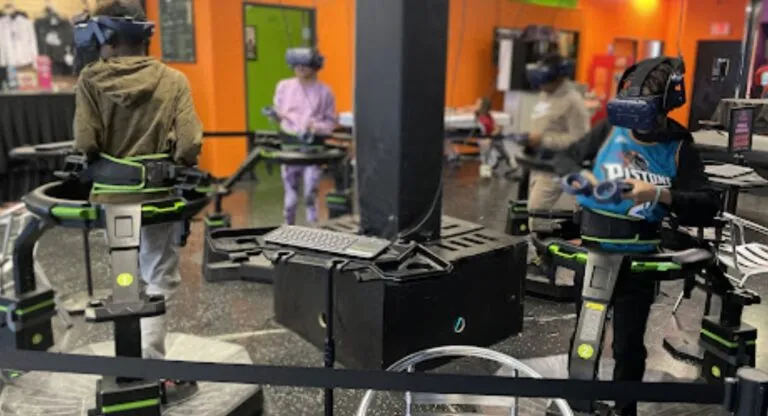
VR Life Arcade is located in the Oakland Pointe Plaza along North Telegraph Road in Pontiac, Michigan. It is a virtual reality arcade and gaming center offering over 80 immersive experiences, including room-scale VR adventures, active gameplay in the Omni Arena (a 360-degree motion platform), a Virtual Reality Playground, and classic arcade cabinets. The facility provides party packages for up to 21 gamers with dedicated hosts, decorated party rooms, air hockey, pool tables, darts, and a selfie photo station, as well as corporate team-building events and private venue rentals for up to 75 guests.


Beyond gaming, VR Life Arcade offers venue rental for private celebrations with optional catering, DJ, linen, and bar services. The space includes a lounge area, a party room, and light refreshments for purchase. The same team also runs a STEM education initiative using VR for after-school programs and workshops. The venue suits birthdays, corporate events, date nights, fundraisers, and family outings for ages 6 and up.
Indoors
img
from $10
VR

Full Throttle Adrenaline Park is located in Sterling Heights, Michigan, just off M-53 and minutes from downtown Detroit. This 54,134-square-foot indoor facility offers high-speed electric go-karting for pros and gas-powered karts for juniors, along with axe throwing on 20+ digital targets, immersive virtual reality sessions, and a rage room where guests can smash glass packages. The park also features a new Detonate challenge, Learn2Drive training sessions, league racing, and summer Adrenaline Camps for kids ages 7 to 15.


Beyond the activities, the venue provides three event spaces capable of hosting groups up to 300 people, a full bar, catering services through local partners, and a cafe overlooking the race track. It is well-suited for corporate team building, birthday parties, bachelor and bachelorette celebrations, and holiday gatherings. An $8 annual membership includes a free Adrenaline Pass during the member’s birthday month and karting liability coverage. The facility is open seven days a week with online reservations strongly encouraged.

Indoors
img
from $5
VR

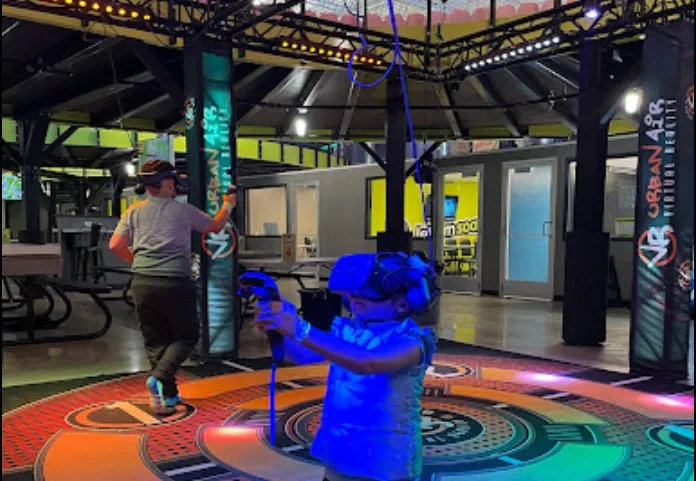
Urban Air Trampoline and Adventure Park is located at 12050 Hall Road in Sterling Heights, Michigan. This indoor adventure park offers a wide range of attractions including Go-Karts, a Sky Rider indoor zipline, Ropes Course, climbing walls, bumper cars, virtual reality, a Warrior Course, trampoline zones, dodgeball, and a dedicated indoor playground for younger children. The park serves as a year-round destination for families, with ticket options ranging from Deluxe ($26.99) to Platinum ($39.99), and monthly memberships starting at $12.99 that include unlimited visits and café perks.


Birthday party packages start at $349.99 and include a party host, reserved space, food, and all-day attraction access. The venue also accommodates school field trips, corporate team-building events, and private park rentals. An on-site Urban Café provides pizza, snacks, and beverages for refueling between activities. The park has been recognized as the Best Gym in America for Kids by Shape Magazine and is locally owned by entrepreneurs who continue to invest in new attractions and community programming.

Indoors
img
from $12
Laser tagVR

Universal Nonstop is located in the Universal Shopping Center at 28300 Dequindre Rd in Warren, Michigan.


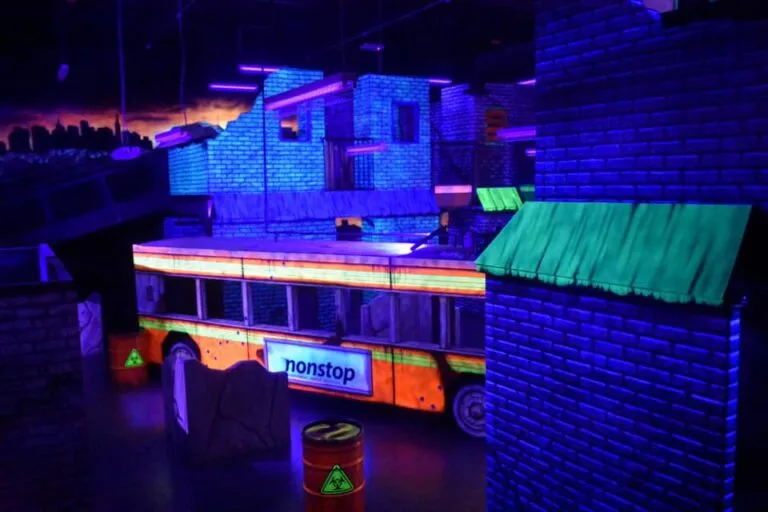
This 100,000-square-foot family entertainment center offers a wide range of attractions including go-karts, laser tag, bowling, black-light mini golf, virtual reality, escape rooms, bumper cars, a climbing wall, an arcade with over 100 games, and a dedicated toddler area. Entry is free, and guests use a reloadable Play Card to access all activities. The center specializes in birthday parties, corporate events, team building, and field trips, with private party rooms and event coordinators available to assist with planning.


On-site dining includes a cafe serving pizza, wings, salads, and more, plus a full bar with rotating drink specials for adults. A lounge area and recreation zone provide spaces to relax between activities. The facility regularly hosts themed seasonal events such as Easter and St. Patrick’s Day celebrations, and offers bonus play incentives when loading Play Cards with higher amounts. Safety is prioritized with metal detectors and security personnel on site.

Indoors
img
from $25
VR

Anvio VR Detroit is located in the heart of downtown Detroit, on Randolph Street.


The club features a 100-square-meter wireless free-roam VR arena where up to six players can move naturally through over 25 exclusive in-house developed games. Popular scenarios include the zombie survival series City Z, the alien shooter Station Zarya, the Aztec puzzle adventure Lost Sanctuary, and the competitive multiplayer shooter Revolta. Each session runs for 30 minutes, and the staff provides a full orientation before every game.


Beyond the arenas, Anvio Detroit offers birthday party packages with a 20% discount for the birthday person, corporate team-building events with tailored cooperative missions, and themed parties with animation programs and live mascots. Guests can relax in retro-lounge pods between sessions, check the leaderboard wall, and bring their own catering. The venue also provides balloon decoration, custom cakes, and hosts monthly tournaments and school field trips.

Indoors

The Next Frontier of Immersion: Exploring the World of Free-Roam VR Arenas

In the rapidly evolving landscape of digital entertainment, few innovations have captured the public imagination quite like the free-roam virtual reality (VR) arena. Moving far beyond the static experience of a headset tethered to a gaming PC in a bedroom, free-roam VR represents the pinnacle of location-based entertainment. It strips away the cables, the walls, and the boundaries, allowing users to step into a digital world where their physical movements directly translate into the virtual environment. This immersive experience is transforming how we interact with technology, turning passive observation into active, sprawling exploration.


What is a Free-Roam VR Arena?

At its core, a free-roam VR arena is a physically designated space—often a warehouse or a specially designed studio—equipped with advanced motion-tracking technology. Unlike home setups that rely on localized sensors or boundary markers, a professional-grade arena utilizes a sophisticated array of overhead infrared cameras and sensors to track high-precision hardware in real-time.

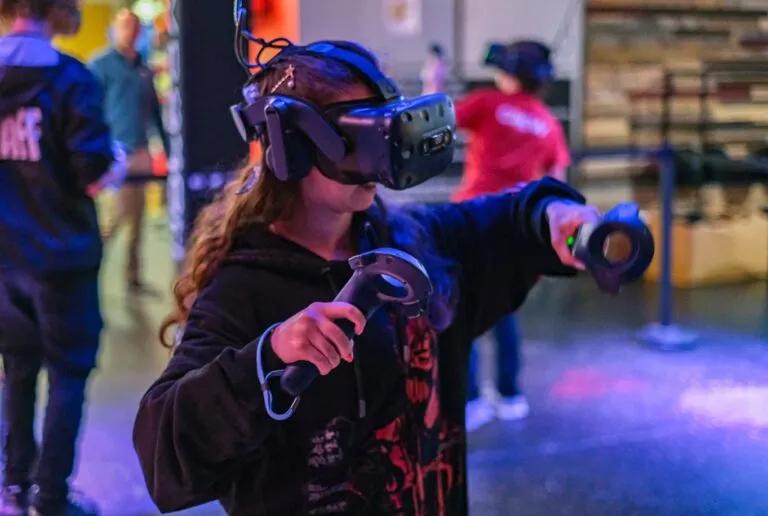
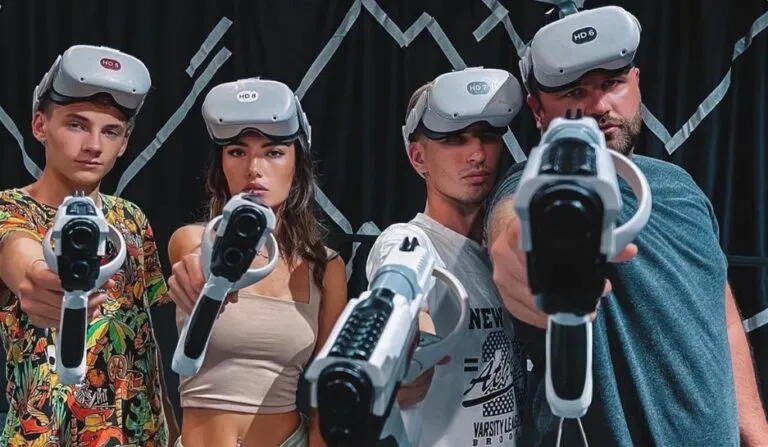
Participants wear lightweight VR headsets, backpacks containing high-performance hardware, and sometimes haptic vests or specialized controllers. Because the arena is “free-roam,” there are no controller-based “teleporting” mechanics; players walk, run, duck, and crawl throughout the physical space, and the software replicates those movements perfectly within the game world. The result is total physical freedom, which tricks the brain into a state of deep immersion, commonly referred to as “presence.” It is the closest humanity has come to the “Holodeck” fantasy presented in science fiction, where the digital and physical become indistinguishable.


Free-Roam VR Scenarios

The versatility of free-roam VR lies in the diversity of its scenarios. Because the arena is essentially a blank canvas, developers can build any reality imaginable.

In the horror genre, players might find themselves navigating an abandoned space station or a haunted mansion, where the ability to physically walk through corridors heightens the sense of vulnerability and impending dread. The tactile nature of the environment—reaching out to open a door or physically hiding behind a wall—makes the jump-scares significantly more impactful than any traditional cinematic medium.

On the other hand, competitive tactical shooters offer adrenaline-fueled experiences. Players work in squads, utilizing real-world cover and communication strategies, similar to high-stakes paintball or laser tag, but with the high-fidelity visuals of a AAA video game. Other scenarios prioritize discovery and cooperation, such as escape room-style challenges where players must physically manipulate objects, solve complex puzzles, and navigate intricate landscapes, requiring true teamwork and spatial awareness.


Who Plays on Free-Roam VR Arenas? VR for Kids

The demographic for free-roam VR is as broad as the technology itself. While it was once considered a niche interest for tech enthusiasts, it has become a staple of modern outings for families, friends, and professionals.

Children and teenagers represent a massive segment of the user base. For this generation, digital landscapes are as familiar as the physical playground. VR for kids is particularly effective because it bridges the gap between active play and digital consumption. It encourages physical movement, spatial reasoning, and social interaction in a world where many children spend significant time behind screens. Parents often prefer this form of digital entertainment because it is active rather than sedentary; children are running, dodging, and collaborating rather than sitting on a sofa. Safety protocols, such as padded environments and strictly supervised sessions, ensure that the high-energy nature of these games remains secure for younger participants.


Free-Roam VR for a Birthday Party, Graduation, and Corporate Events

The appeal of free-roam VR as a social event venue has surged in recent years. It is increasingly replacing the traditional bowling alley or movie night for special occasions.

For a birthday party, it offers an unforgettable “wow” factor. It provides a unique bonding experience where guests are thrust into a shared adventure, creating memories that are far more visceral than a typical gathering. Graduates are also flocking to these venues, finding that the shared intensity of a VR mission serves as an excellent way to celebrate milestones with friends.

Corporate parties have seen perhaps the most interesting shift. Companies are increasingly using free-roam VR as a tool for team building. Unlike traditional corporate seminars, VR requires genuine cooperation, communication, and crisis management. When a group of colleagues must coordinate their movements to defeat a common threat or solve a complex puzzle in a virtual world, the hierarchy of the office is stripped away. It uncovers leadership styles, reveals communication bottlenecks, and fosters a unique form of camaraderie that office-bound activities simply cannot replicate.


Scientists and Industry Experts View on Free-Roam VR

From the perspective of scientists and technology researchers, free-roam VR is not merely a toy; it is an incredible vehicle for cognitive and psychological study. Neuroscientists are fascinated by how the human brain processes “presence”—the subjective feeling of being in a location other than where the body actually is. Free-roam VR is the gold standard for testing this, as it reduces sensory conflict (the nausea sometimes caused by gaming where your eyes see movement but your body feels static).

Industry experts in ergonomics and human-computer interaction (HCI) use these arenas to study how humans navigate 3D environments, how we intuit physical distances, and how we respond to stimuli under stress. They see the technology as a precursor to future training modules for high-stress professions, including surgeons, first responders, and military personnel. By simulating high-pressure environments, experts believe we can train individuals to manage their physiological responses to panic and complex problem-solving in a way that is vastly more efficient than classroom training.

Furthermore, developers and creative technologists argue that we are only in the “silent film” era of this medium. As haptic technology—the science of touch—continues to evolve, the distinction between the virtual and real will continue to shrink. Experts suggest that the future of the industry lies in integrating full-body sensory suits that allow players to feel the wind, the texture of walls, and the impact of objects.

In conclusion, the free-roam VR arena has evolved from a futuristic concept into a tangible, thriving industry. By synthesizing physical activity with immersive digital artistry, it has carved out a unique space in the modern social landscape. Whether it is used for a birthday celebration, a corporate training session, or simply a weekend of discovery, the arena serves as a powerful reminder that our desire to explore new worlds is an inherent part of the human experience. As technology continues to blur the lines between reality and simulation, these arenas stand as the gateway to the next chapter of human entertainment and cognitive development.