El Monte
 Log in
Log in
Log in

Monkey Rock Indoor Center is located in El Paso, TX.
Monkey Rock, nestled in the heart of El Paso, TX, is a natural wonder that captivates visitors with its unique geological formation. This iconic landmark, which resembles the head of a monkey with its distinctive rock formations, has become a beloved symbol of the city’s rich cultural heritage. The rock formations, created over millions of years by wind and water erosion, offer breathtaking views and serve as a testament to the region’s natural beauty. Whether you’re a seasoned hiker or simply looking to explore the city’s hidden gems, Monkey Rock is a must-see destination that will leave you in awe.
 Indoors
Adventure Zone El Paso Indoor Center is located in El Paso, TX.
Bob-O’s Family Fun Center in El Paso, TX offers a thrilling and entertaining experience for all ages. With a variety of attractions such as go-karts, mini-golf, laser tag, arcade games, and bumper boats, there’s something for everyone. The center also features a snack bar and party rooms for birthday celebrations and private events. Whether you’re looking for a fun day out with the family or a place to host a special occasion, Bob-O’s is the perfect destination for non-stop excitement.
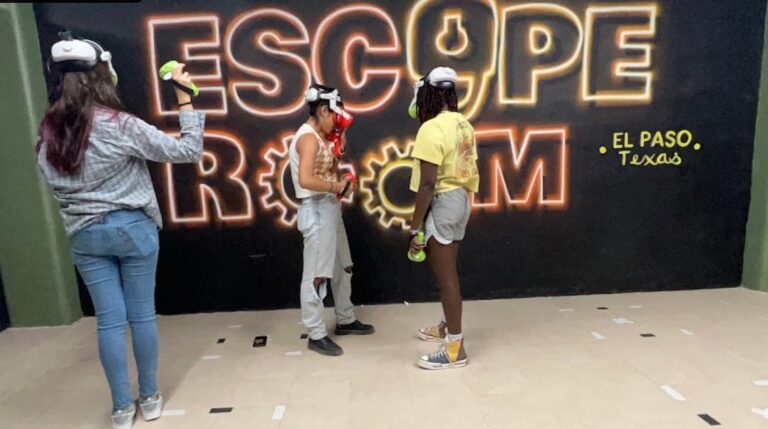
IndoorsEscape the Suncity Indoor Center is located in El Paso, TX.
Step out of the bustling Suncity in El Paso, TX, and immerse yourself in the city’s natural beauty. Take a leisurely stroll along the Rio Grande Riverwalk, where you can enjoy the serene views of the river and the surrounding mountains. Alternatively, head to Franklin Mountains State Park, which offers over 100 miles of hiking trails for all skill levels. The park’s highest point, Rea Peak, provides breathtaking panoramic views of the city and the desert landscape beyond. For a more relaxed experience, visit the Chihuahuan Desert Gardens, a botanical garden featuring native plants and wildlife. Whatever your preference, there’s no shortage of ways to escape the Suncity and connect with nature in El Paso.
Indoors
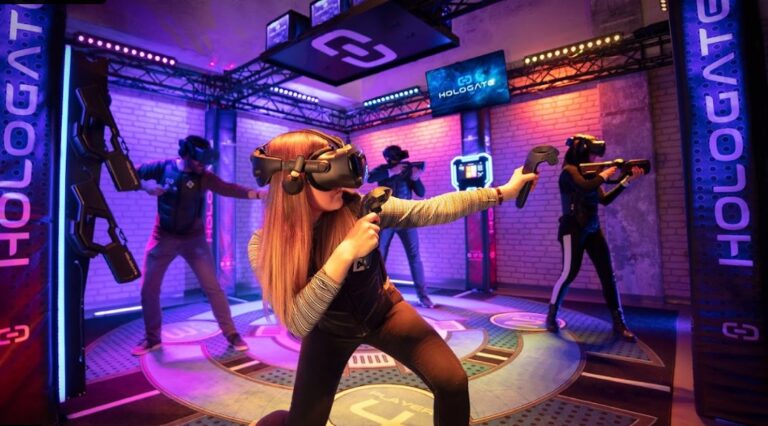
A free‑roam virtual‑reality (VR) arena is a purpose‑built physical space that allows participants to move freely while wearing a head‑mounted display (HMD). Unlike seated or tethered experiences, the arena is equipped with external tracking systems—often a combination of infrared cameras, lidar scanners, or inside‑out sensors—that monitor the wearer’s exact position and orientation in three dimensions. The result is an immersive playground where users can walk, run, duck, and even jump without worrying about colliding with furniture or tripping over cables.
These arenas typically cover an area ranging from a modest 500‑square‑foot room to a sprawling warehouse‑sized field. The floor is usually padded or covered with low‑friction material to ensure safety during rapid movements. Walls may be lined with soft panels or netting, and ceiling‑mounted safety nets are sometimes added for added protection. All of these design choices are meant to preserve the illusion of an endless digital landscape while keeping the real‑world environment secure.
The flexibility of a free‑roam setup lends itself to a wide variety of scenarios, each taking advantage of the ability to move unhindered. Some of the most popular categories include:
Adventure Exploration – Participants can wander through hyper‑realistic recreations of ancient ruins, alien planets, or underwater cities. The sense of scale is amplified when users can physically walk the distance they would otherwise need to travel virtually.
Action and Combat – Laser‑tag‑style shooters, medieval sword‑play, and futuristic mech battles thrive in free‑roam arenas. Because the system tracks the user’s whole body, gestures such as swinging a sword or ducking behind cover feel natural and responsive.
Puzzle and Escape Rooms – Designers craft multi‑room challenges that require players to interact with physical objects that are mirrored in the virtual world. Moving a virtual lever might involve actually reaching for a physical prop, creating a tactile feedback loop that heightens immersion.
Sports Simulations – From VR basketball courts where the ball’s trajectory follows real‑world physics to virtual rock‑climbing walls that map a climber’s handholds onto a digital cliff, the ability to physically reposition oneself makes sports simulations far more convincing.
Training and Education – Emergency responders can rehearse disaster scenarios, surgeons can practice delicate procedures, and engineers can walk through a virtual model of a plant before a real‑world build. The free‑roam element adds realism that static simulators lack.
Each scenario is built on a foundation of precise motion capture and low‑latency rendering, ensuring that the virtual world reacts in real time to the user’s movements. This tight feedback loop is essential for preventing motion sickness and maintaining the illusion of presence.
The demographic reach of free‑roam VR has broadened considerably since its commercial debut. Initially, the technology attracted early adopters and gaming enthusiasts seeking a step beyond couch‑bound experiences. Over time, the audience has diversified into several distinct groups:
Gamers and Esports Teams – Competitive leagues now host free‑roam tournaments for titles like “VR Combat League” or “Zero‑G Racers,” where teams practice coordination and spatial awareness in a shared arena.
Families and Casual Visitors – Many amusement centers and malls feature free‑roam pods as a family‑friendly attraction. Parents appreciate the hands‑on nature of the experience, while children enjoy the physicality.
Corporate Clients – Companies use the arenas for team‑building exercises, product demos, and immersive marketing campaigns. The collaborative nature of many free‑roam games reinforces communication skills.
Educational Institutions – Schools, universities, and museums incorporate free‑roam modules into curricula ranging from history (walking through ancient Rome) to physics (visualizing electromagnetic fields in three dimensions).
Therapeutic and Rehabilitation Professionals – Physical therapists harness the technology to create motivating, low‑impact exercise regimens that encourage patients to move through space in a controlled environment.
The appeal cuts across age, gender, and professional background because free‑roam VR blends entertainment with tangible, physical interaction—a rare combination in the digital realm.
When designed with younger audiences in mind, free‑roam VR can become a powerful educational and developmental tool. Child‑focused arenas employ several safeguards and design philosophies:
Scaled Environments – Virtual spaces are proportionally reduced so that a child’s stride covers a meaningful distance without needing a massive real‑world footprint. This keeps experiences lively while fitting within a safe physical area.
Simplified Controls – Hand‑held controllers are replaced with lightweight, ergonomically shaped gloves or even motion‑only input, reducing the learning curve for kids unfamiliar with gamepads.
Safety Protocols – Soft padding, low‑height obstacles, and continuous staff supervision ensure that children can explore freely without risk of injury. Automatic “soft‑stop” features pause the experience if a user approaches a boundary too quickly.
Curriculum Integration – Educational content is woven into adventures, such as a dinosaur expedition that teaches taxonomy, or a solar‑system tour that reinforces orbital mechanics through interactive challenges.
The result is an experience that feels like play but also reinforces motor skills, spatial reasoning, and collaborative problem‑solving. Parents and educators alike see free‑roam VR as a bridge between screen time and physical activity.
Traditional birthday celebrations often revolve around cake, gifts, and board games. Adding a free‑roam VR session transforms the party into an adventure that all guests can share. Packages typically include a curated set of mini‑games—such as a treasure hunt across a pirate island or a cooperative puzzle quest—lasting 15‑minute intervals. Because the arena can accommodate multiple participants simultaneously, the group can split into teams, fostering friendly competition while keeping the party’s pacing dynamic.
Graduates seek memorable experiences that mark the transition to a new chapter. Free‑roam VR offers a symbolic journey: a virtual “walk across a bridge” that represents moving from student life to adulthood, or a collaborative building exercise where participants construct a digital monument that mirrors their shared achievements. The immersive nature of the medium also creates lasting visual content for social media, extending the celebration beyond the physical venue.
In the corporate world, free‑roam VR is valued for its capacity to dissolve hierarchical barriers. Employees of all levels stand side‑by‑side on a shared battlefield or cooperative puzzle, requiring clear communication and mutual trust. Companies can tailor scenarios to reflect brand narratives, allowing participants to “step inside” a product prototype or explore a virtual representation of a future office layout. Post‑event analytics—such as time spent on tasks or teamwork efficiency—provide measurable insights that HR departments can use to refine future training programs.
Across all these event types, the key advantage lies in the combination of novelty, physical engagement, and shared experience. Free‑roam VR turns a routine gathering into a story participants can recount for years.
Researchers across multiple disciplines have examined free‑roam VR for its potential to reshape human‑computer interaction, learning, and even health care. Their assessments converge on several core observations:
Enhanced Presence and Spatial Cognition – Studies using functional MRI and behavioral testing indicate that when users can physically navigate a virtual space, the brain regions responsible for spatial memory and navigation (hippocampus, parietal cortex) are more actively engaged than in seated VR. This leads to improved retention of information presented within the environment.
Reduced Motion Sickness – Because the visual system receives consistent proprioceptive feedback—your eyes see movement that matches your body’s motion—free‑roam setups significantly lower the incidence of cybersickness. Researchers attribute this to the alignment of vestibular cues with visual flow.
Physical Activity Benefits – Kinetic analyses reveal that a 30‑minute free‑roam session can expend calories comparable to moderate aerobic exercise. This has prompted interest from physiologists exploring gamified rehabilitation protocols.
Data Collection Opportunities – The rich sensor suite (position tracking, hand gestures, physiological monitors) provides a trove of high‑resolution data. Industry analysts see this as a foundation for next‑generation analytics, where user behavior can be modeled in real time for adaptive gameplay or training feedback.
Scalability Challenges – Experts also caution that the infrastructure required—high‑precision tracking, robust networking, and safety engineering—poses a barrier to widespread adoption. Cost reduction through modular hardware and advances in computer vision is identified as a critical research direction.
Overall, the scientific consensus positions free‑roam VR as a mature technology with the capacity to influence fields ranging from education to occupational health. Its distinctive blend of physical movement and digital immersion makes it uniquely suited to applications where presence, engagement, and embodied interaction are paramount.
The trajectory of free‑roam VR points toward greater integration with other emerging technologies. Anticipated developments include:
Hybrid Mixed‑Reality Arenas – Combining AR overlays with the fully virtual environment could allow participants to see real‑world objects (like physical props) while still being immersed in a digital world, extending the range of possible scenarios.
AI‑Driven Content Generation – Procedurally generated worlds that adapt to the group’s skill level or narrative preferences would keep experiences fresh without requiring extensive manual design.
Portable Modular Units – Companies are prototyping collapsible arena kits that can be set up in schools, community centers, or corporate lobbies, lowering the entry barrier for institutions that lack dedicated space.
Biometric Feedback Loops – Real‑time heart‑rate, respiration, and galvanic skin response data could be fed back into the virtual environment, adjusting difficulty or pacing to maintain optimal engagement and safety.
As these innovations mature, free‑roam VR is poised to become a staple of entertainment, education, and professional training. Its capacity to turn physical movement into meaningful digital interaction ensures that the medium will continue to attract a broad audience—gamers, families, scholars, and corporate teams alike—who seek experiences that are as lively as they are immersive.
Free‑roam VR arenas have evolved from niche curiosities into versatile platforms that blend physical freedom with digital imagination. By tracking users’ full-body movements, these spaces enable a diverse array of scenarios—from adrenaline‑pumping combat to thoughtful educational journeys. The technology appeals to a wide demographic, including children, adults, professionals, and scientists, each finding unique value in the embodied experience.
Whether celebrating a birthday, marking a graduation, or fostering teamwork at a corporate event, free‑roam VR adds a layer of interactivity that traditional media cannot match. Scientific research underscores its benefits for cognition, health, and data analytics, while industry experts acknowledge both its transformative potential and the logistical hurdles that remain.
As hardware becomes more affordable and software more adaptive, free‑roam VR is set to expand its footprint across entertainment venues, classrooms, and workplaces. The promise of walking through a virtual world while staying firmly rooted in the real one continues to captivate imaginations, heralding a future where the boundaries between the physical and digital blur in ever‑more exciting ways.


 750 Sunland Park Dr Unit 100C, El Paso, TX 79912, United States