El Monte
 Log in
Log in
Log in

Link Start VR Indoor gaming room is located in Mississauga, ON
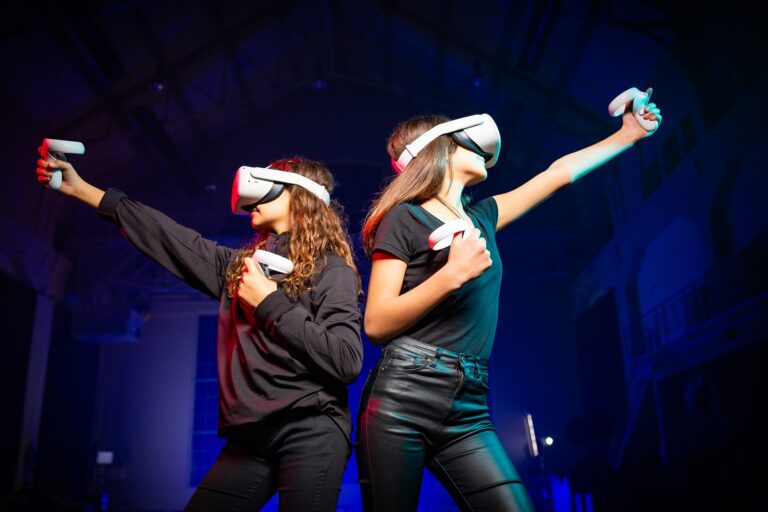
Link Start VR in Mississauga, ON, is the premier virtual reality gaming room that promises an unparalleled immersive experience. Located in the heart of Mississauga, this cutting-edge VR arcade is designed to transport you to another world, offering a thrilling adventure that’s sure to exhilarate both seasoned gamers and first-time VR users alike.
At Link Start VR, you’ll find the VR Arcade Room, a fantastic setup where up to three people can share one device and play together. The options at Link Start VR are diverse and exciting. From challenging VR escape rooms that test your problem-solving skills to free roam VR games allowing you to explore vast virtual environments, there’s something for everyone.
Whether you’re looking for a fun day out with friends, a unique date night, or just a fantastic gaming experience, Link Start VR offers it all. Discover why it’s the ultimate destination for VR gaming enthusiasts in Mississauga. Get ready to dive into a world of endless possibilities and exciting virtual reality adventures!
 Indoors
VR NOBLE Indoor Arcade is located in Mississauga, ON
VR NOBLE is synonymous with cutting-edge technology and unforgettable experiences. Unlike traditional gaming arcades, VR NOBLE leverages the latest advancements in virtual reality to provide patrons with a vast array of mind-altering immersive experiences.
One of the standout features of VR NOBLE is its collection of free-roaming games, which allows players to move freely in a virtual environment without the constraints of cables or limited play areas.
VR NOBLE isn’t just about individual gaming experiences; it’s also a fantastic venue for special events. Recently, the arcade introduced a piñata party feature, adding a whimsical touch to celebrations. Whether it’s a birthday party, a corporate event, or a casual get-together, the piñata provides a fun and interactive element that guests of all ages will enjoy. The venue also offers team-building activities, perfectly suited for companies looking to foster collaboration and camaraderie among their employees.
In conclusion, VR NOBLE in Mississauga, ON, offers a unique blend of cutting-edge technology, immersive experiences, and versatile event solutions. Whether you’re a seasoned VR enthusiast or a curious newcomer, VR NOBLE promises an adventure you won’t soon forget. Open every day, this premier virtual reality arcade is ready to welcome you into a world where the only limit is your imagination. Come and explore the myriad of breathtaking virtual reality games and experiences that await you at VR NOBLE.
IndoorsMIRAGE VR Indoor Games is located in Mississauga, ON
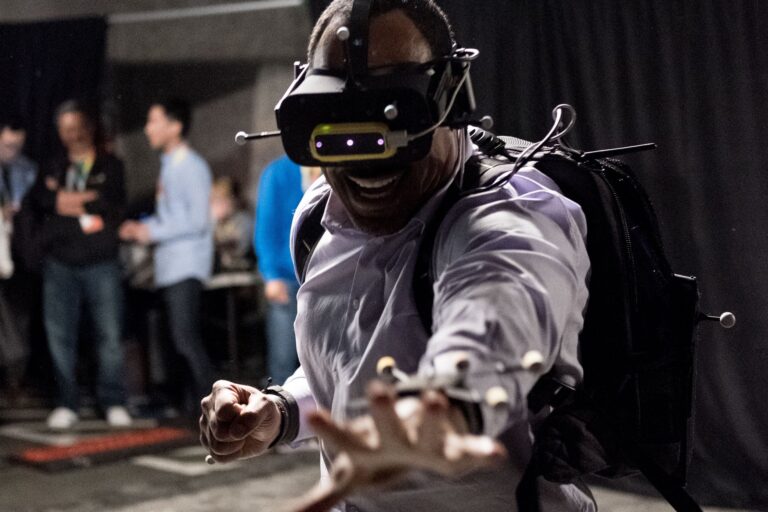
Mirage VR has etched its name in history as Canada’s first provider of full-body, free-roam, multiplayer VR experiences. This revolutionary platform allows players to transcend the passive experience of simply playing a game, enabling them to truly live it. Groups of friends, families, or colleagues can step into enchanting fantasy worlds where they harness unique magical powers and rely on teamwork to overcome various challenges and obstacles. The sense of camaraderie and cooperation adds a deeply social dimension to the immersive entertainment provided by Mirage VR, making it an ideal destination for group activities.
In a market brimming with VR arcades and experiences, Mirage VR distinguishes itself through several key attributes that elevate the player experience to new heights:
Beyond its regular offerings, Mirage VR is also a prime venue for hosting a variety of events and special occasions. Whether it’s a birthday party, corporate team-building event, or a social gathering, Mirage VR provides a unique and memorable setting. Customizable experiences can be arranged to suit the theme and preferences of the event, ensuring that guests have an extraordinary time that they will talk about for years to come.
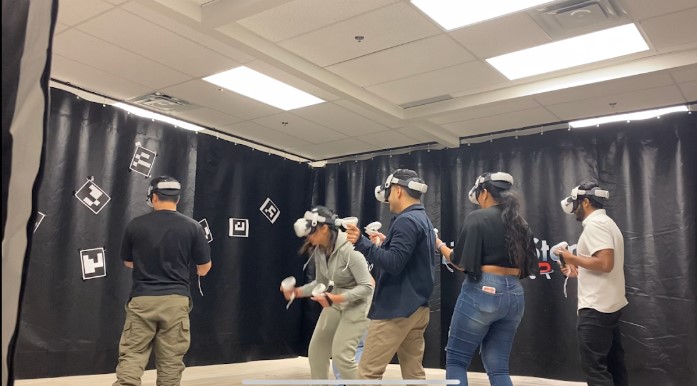
IndoorsA free‑roam virtual‑reality arena is a purpose‑built physical space where users can move freely while their motions are captured and translated into a digital world. Unlike tabletop or seated VR experiences that confine the player to a small play area, free‑roam arenas are typically several hundred square feet in size and are equipped with a network of high‑precision motion‑tracking sensors, ceiling‑mounted cameras, or infrared beacons. Participants wear a lightweight head‑mounted display (HMD) and often carry wireless controllers or haptic gloves that let them interact with the virtual environment in a natural, three‑dimensional manner.
The arena’s infrastructure does most of the heavy lifting: it supplies a powerful rendering server that streams high‑resolution imagery to the headset with sub‑10‑millisecond latency, and it continuously recalibrates the tracking system to eliminate drift. The result is a seamless blend of physical freedom and digital immersion, allowing users to walk, duck, jump, or even climb without the risk of colliding with unseen walls.
Because the technology removes the spatial constraints that plague traditional VR, designers can craft experiences that would be impossible in a static setup. Some of the most popular free‑roam scenarios include:
Adventure Quest – Players embark on a treasure‑hunt across a sprawling, procedurally generated landscape. They solve puzzles, dodge obstacles, and cooperate with teammates to unlock hidden chambers, all while physically traversing the arena’s floor.
Spacewalk Simulation – By projecting a zero‑gravity environment, the arena lets participants experience the sensation of floating in orbit. Specialized rigs may add haptic feedback to simulate thruster bursts, providing an educational yet exhilarating glimpse of astronaut training.
Post‑Apocalyptic Survival – Gamers scavenge for supplies, build shelters, and fend off virtual threats. The physical act of crouching behind a prop or sprinting across the floor adds a visceral layer to the survival narrative.
Historical Reenactment – Users walk through a meticulously recreated ancient city or battlefield, interacting with virtual citizens, trading goods, or participating in historic events. Museums and cultural institutions increasingly adopt this format to bring history to life.
Team‑Based Sports – From futuristic laser tag to VR adaptations of basketball or soccer, the arena can host competitive matches that combine physical exertion with digital scoring systems, creating a hybrid sport that appeals to both athletes and gamers.
These scenarios showcase the flexibility of free‑roam VR: developers can meld storytelling, education, fitness, and pure fun into a single, physically engaging package.
The demographic spectrum of free‑roam VR participants is surprisingly wide. While early adopters were predominantly adult gamers and tech enthusiasts, today the market extends to families, schools, and corporate clients. Children, in particular, have become a focal point for many operators.
Safety‑First Design – Kids’ arenas are fitted with padded walls, soft flooring, and low‑height obstacles to mitigate injuries. The tracking system can also enforce virtual boundaries, gently nudging a player back when they approach a physical edge.
Age‑Appropriate Content – Developers craft experiences that blend learning with adventure. For example, a “Dinosaur Dig” scenario teaches paleontology fundamentals while allowing children to swing a virtual pickaxe and uncover fossilized bones in a sandbox environment.
Social Interaction – Free‑roam VR encourages collaborative play. Children can team up to solve riddles, compete in obstacle courses, or simply explore a whimsical world together, fostering communication and teamwork skills that traditional screen‑based gaming often neglects.
Physical Activity – Because the experience requires genuine movement, kids burn calories and develop motor coordination. Parents increasingly view free‑roam VR as a healthier alternative to sedentary gaming, especially when the content is designed around active challenges.
Overall, the combination of safety measures, educational value, and physical engagement makes free‑roam VR an attractive proposition for families seeking immersive yet responsible entertainment for their children.
Event planners have discovered that free‑roam VR adds a memorable, interactive twist to celebrations of all kinds. The adaptability of the arena allows it to be tailored to the theme and scale of any gathering.
A birthday can become a quest‑driven adventure where the guest of honor leads a band of friends through a custom storyline—perhaps rescuing a mythical creature or navigating a pirate‑themed island. The arena can be decorated with physical props that match the virtual world, creating a cohesive narrative that makes the birthday child feel like the hero of the day. Because the experience is inherently social, children remain engaged with each other rather than isolated behind individual headsets.
Graduation ceremonies often struggle to blend formality with fun. A free‑roam VR segment can serve as a celebratory interlude: graduates step into a virtual auditorium that projects their names onto a glowing stage, then transition to a “Future City” scenario where they explore career pathways, travel to imagined destinations, or simply enjoy a spectacular light show. The physical movement also encourages graduates to mingle, taking group photos in both the real and virtual realms.
Companies looking to impress employees or clients can use free‑roam VR for team‑building exercises, product showcases, or brand‑immersive experiences. A tech firm might let participants test a prototype in a simulated environment, while a marketing agency could craft a branded adventure that weaves the company’s story into the gameplay. Because the arena tracks individual performance metrics, organizers can incorporate friendly competition, awarding points for speed, accuracy, or creativity—perfect for end‑of‑year celebrations or product launch parties.
In each case, the key advantage is the ability to blend physical presence with digital storytelling, delivering an experience that feels both personal and spectacular.
The scientific community and industry thought leaders have taken a keen interest in free‑roam VR, recognizing its potential to push the boundaries of human‑computer interaction, neuroscience, and occupational training.
Cognitive Research – Psychologists note that the embodied nature of free‑roam VR provides richer data on spatial memory, decision‑making, and attention. Because participants navigate real‑world space while receiving virtual cues, researchers can study how the brain integrates multimodal sensory information, yielding insights applicable to rehabilitation and neuroplasticity.
Ergonomics and Human Factors – Engineers emphasize the importance of designing arenas that minimize motion sickness and physical strain. Advances in low‑latency streaming, high‑refresh‑rate headsets, and adaptive locomotion algorithms have significantly reduced the incidence of VR‑induced discomfort, making prolonged sessions feasible for training simulations.
Training and Simulation – Military and aerospace organizations have piloted free‑roam VR for mission rehearsal. The ability to practice complex procedures—such as aircraft maintenance or emergency response—in a safe, repeatable environment reduces costs and improves skill retention compared to traditional mock‑ups.
Healthcare Applications – Physical therapists are experimenting with free‑roam VR to motivate patients during gait training and balance exercises. The immersive feedback encourages adherence to therapy regimens, while objective motion capture data allows clinicians to track progress with unprecedented precision.
Industry Forecasts – Market analysts project that the free‑roam VR sector will experience double‑digit growth over the next five years, driven by falling hardware costs, increasing content libraries, and expanding use cases in education, entertainment, and enterprise training. They anticipate a convergence of AR and free‑roam VR, where real‑world objects are augmented rather than fully replaced, further broadening the technology’s applicability.
Collectively, these perspectives underscore that free‑roam VR is not merely a novelty; it is an emerging platform with the capacity to transform how people learn, work, and play.
Free‑roam VR arenas have evolved from niche amusement‑park attractions to versatile venues that cater to children’s birthdays, corporate celebrations, educational institutions, and scientific research labs. Their hallmark—unrestricted physical movement within a meticulously tracked digital world—opens creative possibilities that static VR cannot match. As hardware becomes lighter, tracking more precise, and content pipelines more robust, the barrier to entry will continue to fall, inviting even broader participation.
Future developments may see hybrid spaces where physical props are dynamically reconfigured by robotic systems, or where biometric data such as heart rate and eye tracking inform adaptive storytelling. Regardless of the direction, the core promise remains the same: to give users the freedom to explore, interact, and connect in ways that feel both genuinely physical and vividly virtual.
In the meantime, anyone seeking an experience that blends the thrill of gaming, the camaraderie of group play, and the wonder of stepping into another world need look no further than the nearest free‑roam VR arena. Whether it’s a child’s first virtual adventure, a graduate’s leap into the future, or a scientist’s laboratory for testing human perception, the arena stands ready to turn imagination into motion.


 1100 Burnhamthorpe Rd W, Unit 31, Mississauga, ON L5C 4G4