
 El Monte
 Log in
Log in
Log in

VR Adventure Zone is located on the second floor of the yellow triangle building at the Marina on Pensacola Beach. The club offers massive 650 sq ft free-roam VR arenas where players can battle zombies, orcs, and dragons, compete in VR laser tag, or solve immersive escape rooms with over 20 different scenarios. Individual PC VR stations, racing simulators (including a full-motion rig), and a 4D Dino Blaster experience round out the high-tech offerings.
Beyond VR, the venue features a retro arcade with over 300 classic games, massage chairs, and a private party room. Birthday party packages (2-4 hours) include the entire venue, personal VR ambassadors, and food and drink are permitted. Corporate team-building events and mobile VR services for off-site events are also available. The club uses Pico 4 Ultra headsets and optional B-Haptic vests for added immersion, and walk-ins are always welcome.
 Indoors
Pensacola, FL is home to some of the most cutting edge virtual reality arenas in the country. With state-of-the-art technology, these arenas provide an amazing entertainment experience filled with immersive and interactive virtual worlds. Whether you’re looking for the latest racing game or an escape room-style adventure, Pensacola’s VR arenas are sure to have something to keep you engaged.
The VR arenas offer a variety of experiences for groups of all sizes. From private birthday parties to corporate team-building events, the arenas offer the perfect setting for an unforgettable experience. Some of the experiences on offer include an array of gaming, escape rooms, free-roam VR experiences, and more. Whether you’re looking for a way to blow off steam or a unique experience for a special event, you’re sure to find something to suit your needs at one of Pensacola’s many VR arenas.
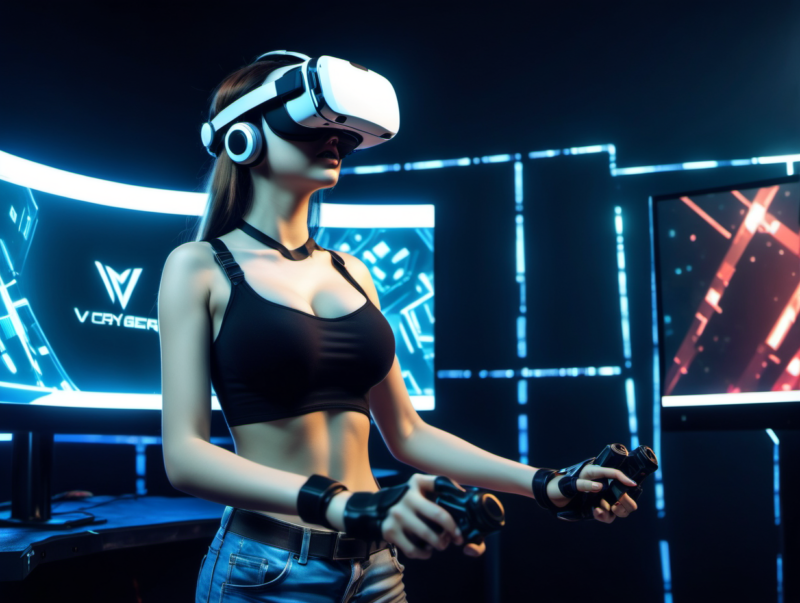
A free‑roam virtual‑reality arena is a purpose‑built physical space where participants can move unhindered while wearing a head‑mounted display (HMD). Unlike seated or tethered setups, the arena is cleared of obstacles, and the tracking system—usually a combination of infrared cameras, lidar sensors, or inside‑out cameras—captures the user’s position and orientation in real time. This data is fed to the VR engine, which updates the digital world to match the participant’s every step, turn, and gesture.
The hallmark of a free‑roam arena is its scale. While a living‑room or arcade cabinet can host a single player, a dedicated arena can accommodate multiple users simultaneously, sometimes up to a dozen or more. The environment is often padded or equipped with safety nets to prevent injuries, and the HMDs are wired to portable power packs or use high‑capacity batteries to ensure several minutes of uninterrupted play. The result is a fully immersive experience that feels more like stepping into another world than watching it on a screen.
Developers have taken advantage of the unrestricted movement to create a breadth of scenarios that would be impossible in a stationary setup. Some of the most popular categories include:
Adventure Exploration – Players trek through sprawling fantasy forests, alien planets, or ancient ruins, solving puzzles and uncovering hidden lore. The ability to physically walk around obstacles adds a tactile layer to exploration that heightens curiosity and encourages natural curiosity.
Sports and Physical Challenges – From virtual rock‑climbing walls to futuristic dodgeball arenas, free‑roam spaces translate real‑world kinetic effort into the digital realm. The movement‑to‑action mapping encourages participants to sprint, duck, and leap, delivering a genuine workout while keeping the gameplay engaging.
Co‑operative Missions – Teams of two to six users collaborate to complete objectives such as defusing a virtual bomb, navigating a maze under time pressure, or surviving a wave of attackers. Because each player can move independently, strategies become more dynamic, resembling real‑life teamwork.
Narrative Storytelling – Immersive theater productions place audiences inside interactive stories where they can walk to different scenes, speak with virtual characters, and influence plot outcomes. The sense of presence magnifies emotional impact, making the narrative feel personal.
Educational Simulations – Learners can walk through a reconstructed Roman forum, dissect a virtual anatomy model, or practice hazardous procedures in a safe environment. The kinesthetic component solidifies memory retention and deepens understanding.
These scenarios are designed not only for entertainment but also for physical, cognitive, and social benefits, making free‑roam VR a versatile platform for diverse audiences.
The demographic landscape of free‑roam VR is surprisingly broad. Early adopters tended to be tech enthusiasts and gamers, but the rapid expansion of content has drawn in new groups:
Teenagers and Young Adults – For this age bracket, free‑roam VR is a modern playground. The novelty of moving freely while battling virtual foes or solving intricate puzzles resonates strongly with a generation raised on interactive media.
Families – Parents often bring children to try age‑appropriate experiences, viewing the arena as a safe, supervised space for shared fun. The collaborative nature of many games encourages family bonding and communication.
Corporate Teams – Companies use the arenas for team‑building exercises, leadership training, and creative brainstorming. The immersive environment forces participants out of their comfort zones, prompting fresh perspectives and stronger group cohesion.
Researchers and Educators – Universities and research institutes book arenas for studies on spatial cognition, motion sickness, and human‑computer interaction. Instructors also integrate free‑roam modules into curricula for subjects ranging from engineering to art history.
Fitness Enthusiasts – Gyms and wellness centers have begun incorporating free‑roam VR sessions into their class schedules, capitalizing on the platform’s ability to turn cardio and strength training into a gamified adventure.
Overall, the arena’s appeal lies in its ability to blend physical activity with digital storytelling, attracting anyone who values immersive, active entertainment.
Children experience free‑roam VR differently from adults, and operators tailor content and safety protocols accordingly. Key considerations include:
Age‑Appropriate Content – Scenarios are simplified, with bright visuals, gentle pacing, and non‑violent challenges. Popular themes involve friendly animals, treasure hunts, and mythic quests that spark imagination without overwhelming younger minds.
Safety Measures – The arena floor is typically carpeted or padded, and motion‑tracking boundaries are set to a tighter radius to prevent accidental collisions. Staff members, often wearing bright vests, monitor each session and intervene if a child appears disoriented.
Shorter Session Lengths – Because children have lower tolerance for motion sickness and fatigue, playtimes are often limited to 5‑10 minutes per round, with short breaks between cycles to rest the eyes and recalibrate.
Learning Integration – Many kids‑focused experiences embed educational objectives, such as identifying colors, counting objects, or learning basic coding logic through interactive puzzles. This approach transforms playtime into a subtle learning opportunity.
The combination of robust safety standards and thoughtfully crafted experiences makes free‑roam VR a compelling recreational option for children, parents, and educators alike.
The adaptable nature of free‑roam arenas makes them an attractive venue for celebrations and corporate events. Organizers can customize the experience to match the occasion’s tone and objectives.
A birthday celebration in a VR arena becomes a high‑energy adventure. Packages often include a themed scenario—such as a pirate treasure hunt or a superhero training camp—followed by a photo‑capture session where participants wear their helmets while posing with virtual props. Birthday cakes and refreshments are served in a designated lounge area, allowing guests to mingle between rounds.
Graduates looking for a memorable send‑off can opt for a collaborative mission that symbolizes transition and teamwork. For example, a “future city” build‑out where participants collectively construct a virtual skyline can serve as a metaphor for shaping one’s own destiny. Post‑session, a ceremony with speeches and awards can be held on‑site, leveraging the arena’s high‑tech ambiance.
Businesses seeking to impress clients or reward employees find free‑roam VR a perfect blend of entertainment and brand alignment. Custom scenarios can incorporate company logos, product demos, or industry‑specific challenges. After the VR portion, an adjoining space can host networking drinks, presentations, or awards ceremonies, all under the futuristic glow of the arena’s lighting.
In each case, the key to success is careful scheduling—allowing enough time for sanitization, equipment checks, and participant transitions—while providing a seamless flow from the immersive experience back to the social component of the event.
Academic and industry leaders recognize free‑roam VR as a transformative technology with implications far beyond recreation. Their assessments focus on three overarching themes: human perception, health impacts, and commercial potential.
Researchers in neuroscience and psychology study how unrestricted locomotion in virtual environments influences spatial memory and navigation skills. Early findings suggest that the proprioceptive feedback from walking, combined with visual cues, enhances the brain’s internal map, leading to stronger retention of virtual layouts compared to seated VR. This insight fuels the design of training simulations for pilots, surgeons, and first responders, where accurate mental mapping is crucial.
Medical experts evaluate the physiological effects of prolonged free‑roam sessions. While the active nature of the experience promotes cardiovascular activity and improves balance, concerns remain about motion sickness, eye strain, and musculoskeletal fatigue. Ongoing studies examine optimal session lengths, headset weight distribution, and adaptive rendering techniques that minimize latency—key factors in reducing discomfort.
Industry analysts highlight free‑roam VR as a catalyst for the next wave of location‑based entertainment. The capital investment required for arena construction is offset by higher per‑person revenue, especially when operators diversify offerings across entertainment, education, and corporate services. Experts also predict convergence with emerging technologies such as haptic suits, eye‑tracking displays, and AI‑driven adaptive narratives, which will deepen immersion and personalize experiences.
Collectively, the scientific community’s endorsement underscores free‑roam VR’s role as a multidisciplinary platform where entertainment, education, health, and business intersect.
Free‑roam virtual‑reality arenas have evolved from niche novelty installations to multifunctional hubs that cater to a wide spectrum of users. By allowing participants to move naturally within a meticulously tracked space, these arenas unlock scenarios that blend physical activity with digital storytelling. Whether adolescents chasing high scores, families sharing a whimsical quest, children learning through play, or professionals engaging in team‑building, the technology adapts to meet diverse needs.
The growing adoption of free‑roam VR for celebrations—birthdays, graduations, corporate gatherings—demonstrates its capacity to transform ordinary events into unforgettable experiences. Simultaneously, scientists and industry experts validate its cognitive, health, and economic benefits, positioning it as a cornerstone of future immersive ecosystems.
As hardware becomes lighter, tracking more precise, and content increasingly sophisticated, free‑roam VR is poised to become a mainstream avenue for interactive learning, entertainment, and social connection. The arena, once a futuristic concept, now stands as a vibrant arena of possibilities where the line between the real and the virtual continues to blur in the most exhilarating way.


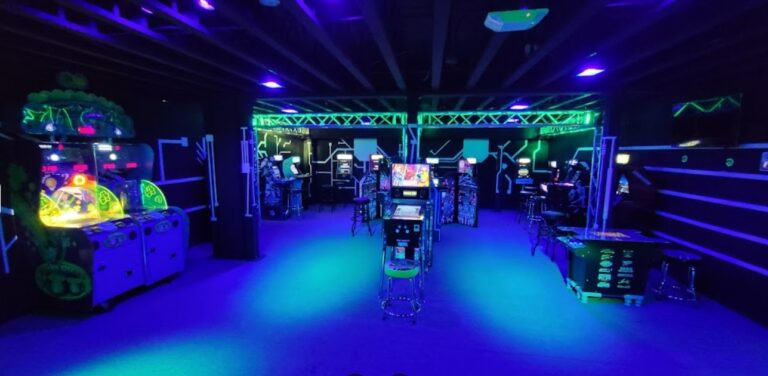
 5100 N 9th Ave Suite 84, Pensacola, FL 32504, United States