El Monte
 Log in
Log in
Log in

Urban Air Adventure Park is located off US Highway 19 in Port Richey, Florida, serving the Tampa, Clearwater, and Trinity areas.
The park offers a wide range of attractions including trampolines (APEX, ProZone, Slam Dunk Zone), a Sky Rider indoor zipline, ropes course, climbing walls, Leap of Faith, Trapeze, Warrior Course, Battle Beam, Tubes Playground, and a dedicated Kid’s Area for children 7 and under. Guests can also enjoy indoor Mini Go-Karts, Spin Zone Bumper Cars, and an immersive laser tag arena. The park provides multiple ticket tiers — Deluxe and Ultimate — with the Ultimate pass granting access to all attractions including the premium experiences.
Urban Air specializes in birthday parties with packages ranging from Deluxe ($229) to Platinum ($329), each including setup, cleanup, a dedicated host, and all-day play. Party spaces include standard tables, private rooms, and VIP suites with pizza and HDTV. The park also accommodates group events, field trips, team-building sessions, and private rentals. The Urban Café offers pizza, ICEEs, snacks, and specialty options like cauliflower crust pizza. A lounge area provides a comfortable space to rest between activities, and the indoor setting makes it a reliable year-round destination regardless of weather.
 Indoors
Zero Latency VR Tampa is located inside the Westshore Plaza mall in Tampa, Florida.
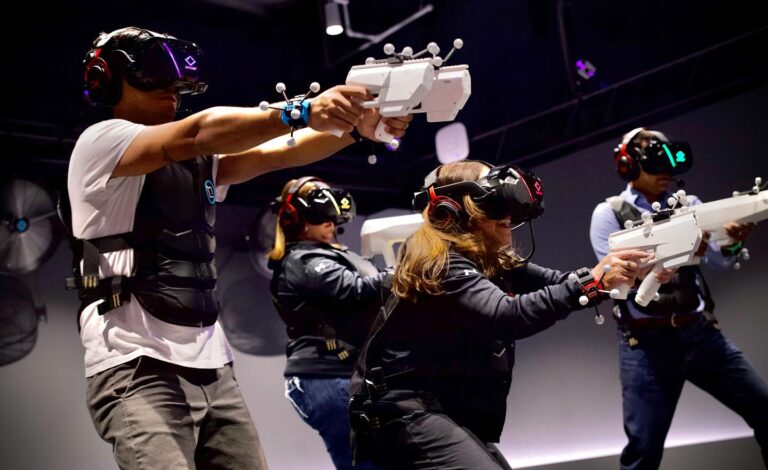
This free-roam virtual reality venue offers an arena-sized space where up to eight players move naturally without wires or backpacks. The game library includes cooperative zombie shooters like Outbreak and Undead Arena, tactical experiences like Far Cry VR and Space Marine VR, and puzzle adventures like Engineerium. Each session is guided by a dedicated game master, making it accessible for first-time VR users while still engaging for experienced players.
Beyond the core VR experiences, the venue features a complimentary golf simulator, ARVI VR escape rooms for larger packages, and a lounge area with viewing windows. It is veteran-owned and suitable for birthday parties, corporate team building, bachelor parties, and family outings. Private room and full-venue bookings are available for groups of various sizes.
IndoorsVR Galaxy Lounge is located in the New Tampa neighborhood of Tampa, Florida. The venue offers a Wireless Free-Roam Arena for up to four players with over a dozen game modes, six VR Booths with more than 100 single-player and multiplayer titles, Virtual Escape Rooms for two to six players, and two VR Simulators with over 120 experiences. It is a destination built for gamers by gamers, with a focus on immersive, interactive fun.
Beyond the core gaming experiences, VR Galaxy Lounge provides all-inclusive party packages for birthdays, private events, and corporate team building, complete with pizza and drinks. The lounge also offers mobile VR services that come to you, health and wellness VR sessions, and a welcoming atmosphere for guests of all ages and abilities. The friendly, attentive staff and comfortable lounge area make it a place where both players and spectators can feel at home.
IndoorsSandbox VR St. Petersburg is located in the Grand Central District (EDGE District) of St. Petersburg, Florida.
This is a full-body, free-roam virtual reality venue where groups of up to six players enter private “holodecks” equipped with motion capture sensors and haptic feedback vests. The venue offers over a dozen in-house developed experiences including Stranger Things: Catalyst, Squid Game Virtuals, Age of Dinosaurs, Deadwood PHOBIA, and more. Each 30-minute session includes a free personalized cinematic highlight reel. The space is designed for social play and teamwork.
Beyond the games, Sandbox VR St. Petersburg features a modern bar and lounge serving beer, wine, and snacks, plus a dedicated party room for birthdays and corporate events. The staff is known for being welcoming and patient with first-timers. The venue is surrounded by restaurants and breweries in the EDGE District, making it easy to extend the evening. Back-to-back bookings are available for those who want to play two games at a discounted rate.
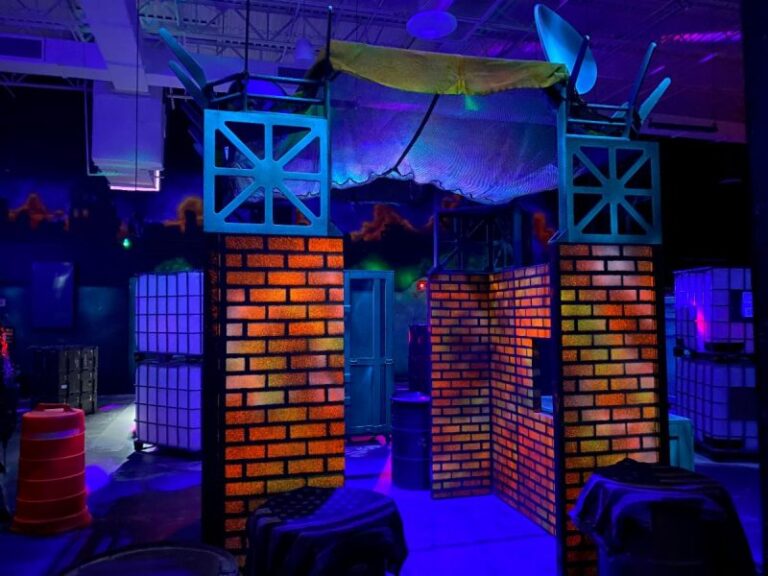
IndoorsMain Event Wesley Chapel is located in the Cypress Creek Town Center in Lutz, FL, near I-75 and northeast of Tampa. It is a large family entertainment center offering a multi-level laser tag arena with neon-lit, fantasy-themed obstacles and towers, state-of-the-art bowling lanes, an arcade with over 100 games, a 20-foot gravity ropes course, billiards, and virtual reality experiences. The venue specializes in hassle-free birthday parties with dedicated hosts, customizable packages, and food options like pizza, burgers, and wings.
Beyond the activities, Main Event features a full-service restaurant and bar with craft cocktails and big-screen sports viewing, plus comfortable lounge areas for relaxing between games. The center is well-suited for corporate events, school gatherings, team-building exercises, and fundraisers, with private meeting spaces available. Free on-site parking and a staff known for attentive, guest-focused service round out the experience, making it a convenient one-stop destination for groups of all ages and sizes.
IndoorsLaser Ops Extreme Gaming Arcade is located in the Town ‘N’ Country area of Tampa, just off West Waters Avenue.
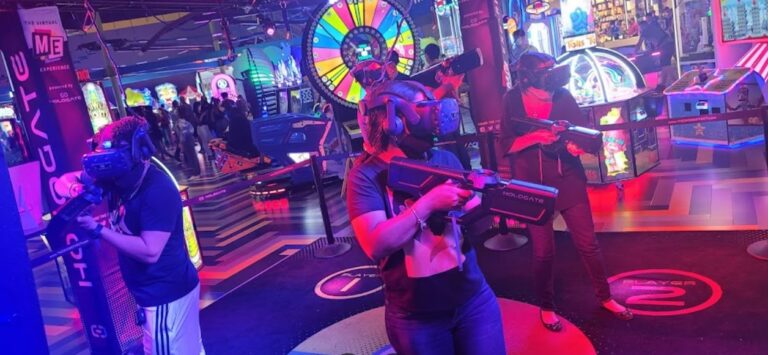
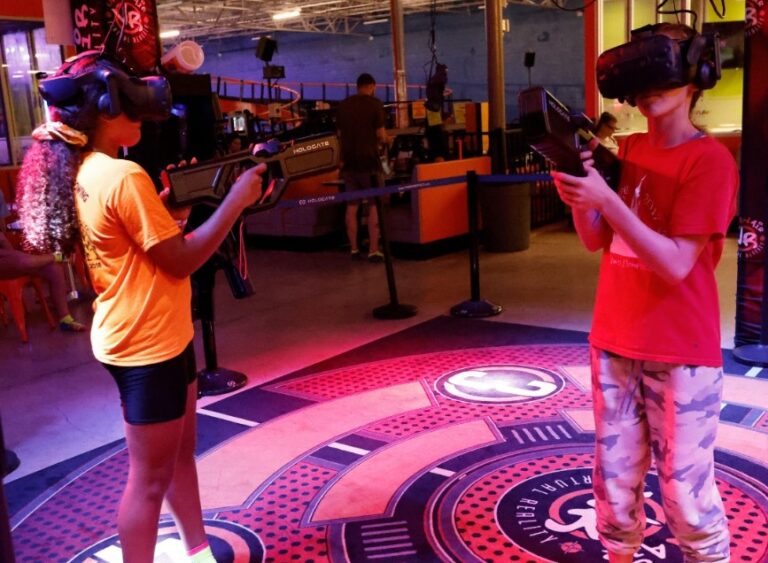
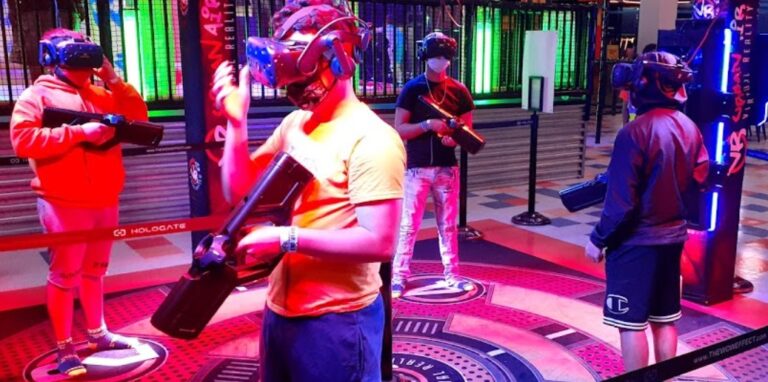
The venue is anchored by Earth 2165, Florida’s largest indoor laser tag arena at 8,000 square feet, featuring a post-apocalyptic setting with a real Humvee, fog, and mission-based gameplay. Beyond laser tag, guests can enjoy a dedicated Nerf Arena, cutting-edge Hyperdeck and Hologate virtual reality experiences, Archery Tag, and over 70 arcade games ranging from modern racing simulators to classics like Pac-Man and Galaga. Flexible walk-in packages like Play 3 and Play 4 allow guests to mix and match activities, with sessions that can be used across multiple visits.
The facility also offers comprehensive birthday party packages with private rooms and catering, corporate team-building options with food and unlimited gaming, and private event spaces for groups of all sizes. An on-site Bar & Grille serves pizza, burgers, and a full menu alongside a full liquor bar with local craft beers. The 24,000-square-foot space is climate-controlled and clean, with a staff consistently praised for being friendly and attentive. The venue also offers mobile gaming services, bringing laser tag, video game trucks, foam parties, and inflatables directly to outside events.
IndoorsUrban Air Adventure Park is located in the Bloomingdale area of Brandon, FL. This 32,000-square-foot indoor park offers a wide range of attractions including trampolines, a laser tag arena, spin-zone bumper cars, a Sky Rider zip line, climbing walls, a Leap of Faith, ropes course, Warrior Course, Wipeout, and a dedicated play area for younger children. The park is well-suited for birthday parties, family outings, field trips, and team-building events.
Beyond the attractions, Urban Air provides a cafe serving pizza, snacks, and drinks, a lounge area for parents, and locker rentals. The park offers monthly memberships for unlimited play with food and friend discounts, as well as seasonal passes. Party packages include setup, cleanup, a host, and all necessary supplies, with the option to book a private room. The facility is fully indoor, making it a reliable choice for year-round entertainment regardless of weather.
Indoors
The world of Virtual Reality (VR) is rapidly changing. It is becoming increasingly popular among consumers and businesses alike. With the increasing popularity of VR, many businesses are looking to capitalize on this trend by providing unique services to their customers. One such business is VR arenas in Tampa, Florida.
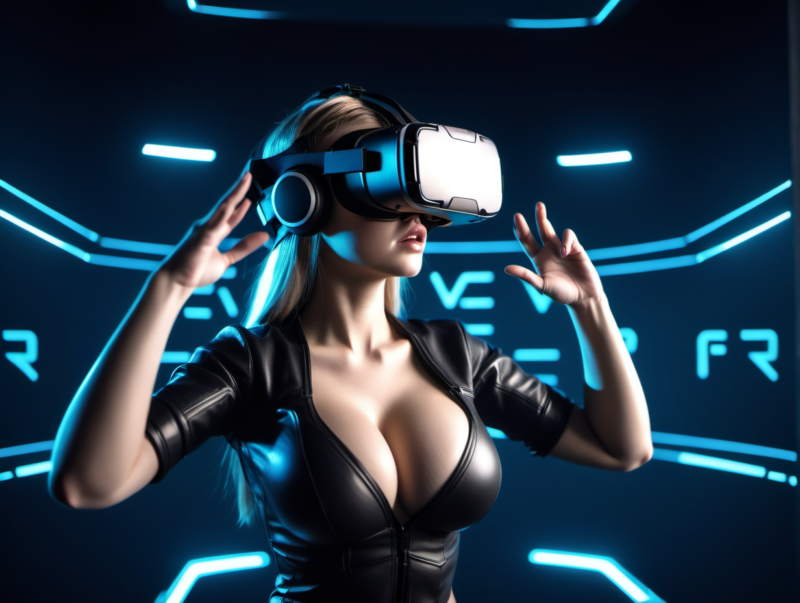
A free‑roam virtual‑reality (VR) arena is a purpose‑built space where participants can move freely while wearing a head‑mounted display (HMD) and, often, additional motion‑tracking equipment. Unlike seated or stationary VR setups that limit the user to a small play area, free‑roam arenas are equipped with safety‑netted walls, motion‑capture cameras, and sometimes wireless battery packs that let users walk, run, jump, or crouch without fear of colliding with real‑world obstacles. The digital environment is mapped in real time to the physical space, creating a seamless blend of the virtual and the tangible. The technology behind these arenas typically combines inside‑out tracking (where the headset’s own cameras locate the user) with external sensors that triangulate position across a larger footprint—sometimes as large as a basketball court.
Because the user’s body is the primary controller, developers can design experiences that rely on natural gestures and full‑body interaction. The result is an immersive, kinetic form of entertainment that feels more like stepping inside a video game than watching one on a screen.
The flexibility of a free‑roam arena lends itself to a wide variety of scenarios, each tailored to a different audience or purpose.
Adventure titles transport players to sprawling alien landscapes, ancient ruins, or fantasy kingdoms. Users can physically walk through a cavern, climb simulated ladders, or swing a virtual sword, making exploration feel visceral.
From futuristic soccer to laser‑tag style duels, free‑roam arenas host fast‑paced, multiplayer competitions. The physicality of the space adds a new layer of skill, where speed, agility, and spatial awareness become as important as strategy.
Scientists and educators use the technology to recreate historical events, molecular structures, or planetary surfaces. By walking through a 3‑D model of the human heart or a recreation of a Viking settlement, learners gain an intuitive grasp of complex concepts.
Interactive theater experiences blend scripted narrative with player agency. Participants can choose which characters to follow, solve puzzles, or influence plot outcomes simply by moving around the arena.
Gamified workout sessions—such as rhythm‑based boxing or obstacle‑course runs—turn exercise into play. The immersive environment distracts users from fatigue while still delivering a rigorous cardio session.
The demographic composition of free‑roam VR participants is surprisingly diverse, reflecting the broad appeal of full‑body immersion.
Designing a child‑friendly free‑roam experience requires careful attention to safety, accessibility, and content suitability.
Children are usually required to wear a lightweight harness or a soft‑padded vest that limits speed and alerts staff if a user approaches a boundary. The arena floor is often covered with non‑slip mats, and all physical props are made of foam or soft plastic.
Games are curated to avoid graphic violence or mature themes. Popular titles for younger audiences include whimsical treasure hunts, cooperative creature‑care missions, and educational adventures that teach math, language, or environmental stewardship through play.
Many platforms allow the difficulty level to be tuned in real time. For younger children, the system may provide visual cues, slower enemy movement, or extended time limits, ensuring that the challenge remains engaging without causing frustration.
Operators often provide a “watch‑and‑play” area where parents can view their child’s session on a monitor, intervene if necessary, and receive session summaries that highlight what the child learned or achieved.
Overall, free‑roam VR for kids merges the excitement of physical play with the educational potential of interactive media, offering a compelling alternative to traditional video‑game arcades.
The adaptable nature of free‑roam arenas makes them an attractive venue for a spectrum of celebrations and corporate gatherings.
A birthday party in a free‑roam arena becomes an immersive adventure. Packages typically include a themed game (pirate treasure hunt, space mission, or superhero training), a dedicated party host, and optional add‑ons like photo booths that capture avatars in the virtual world. The mix of teamwork and competition ensures that guests of varying skill levels can participate, while the arena’s staff handle setup, safety briefings, and post‑session clean‑up.
Graduates seeking a memorable send‑off have turned to free‑roam VR for interactive ceremonies. A custom experience can be programmed to celebrate the cohort’s achievements—walking through a virtual timeline of their school years, solving riddles that symbolize academic milestones, or performing a collaborative finale that culminates in a fireworks display synchronized with real‑world music.
Corporations leverage free‑roam VR for product launches, brand activations, or morale‑boosting events. Multi‑player challenges encourage communication and problem‑solving under pressure. Some firms integrate their own branding into the virtual environment, allowing employees to interact with branded objects or explore a digital replica of a new facility. The immersive setting also provides a memorable backdrop for award presentations and networking.
Event planners appreciate the modular design of most arenas. Walls can be re‑configured, lighting adjusted, and sound systems calibrated to match the tone of the occasion. Catering services are often coordinated on-site, with dedicated zones for refreshments that do not interfere with the VR space.
The academic and professional communities have taken a keen interest in free‑roam VR, recognizing its potential to push the boundaries of human‑computer interaction, training, and health research.
Ergonomists study how unrestricted movement influences motion sickness, fatigue, and spatial orientation. Findings suggest that natural locomotion reduces the sensory mismatch that often triggers nausea in seated VR, though careful design of acceleration cues remains essential.
Aerospace engineers and military trainers have piloted free‑roam simulations for emergency response, equipment maintenance, and tactical planning. The ability to practice physical procedures in a safe, repeatable environment shortens learning curves and improves muscle memory.
Clinical psychologists explore free‑roam VR for exposure therapy, especially for phobias involving motion, such as fear of heights or crowded spaces. The immersive, controllable setting enables gradual desensitization while therapists monitor physiological responses in real time.
Industry analysts point to the wealth of sensor data generated during sessions—positional tracking, biometric readings, and interaction logs. Machine‑learning models can parse this data to personalize experiences, predict player fatigue, or optimize crowd flow within the arena.
Market researchers forecast robust growth for free‑roam VR venues, citing rising consumer appetite for experiential entertainment and increasing corporate budgets for innovative training tools. The technology’s scalability—ranging from pop‑up installations to permanent megacenters—positions it as a versatile asset across multiple sectors.
Free‑roam VR arenas represent a convergence of cutting‑edge hardware, imaginative software, and thoughtful spatial design. By liberating users from the constraints of traditional seated or stationary VR, these venues unlock new possibilities for entertainment, education, celebration, and professional development. The diversity of scenarios—from high‑octane competitive games to gentle, age‑appropriate adventures—ensures that audiences of all ages can find a compelling experience. Meanwhile, scientists and industry experts continue to validate the technology’s benefits and explore its broader implications, from reducing motion sickness to enhancing training efficiency. As the ecosystem matures, free‑roam VR is poised to become a staple of modern social spaces, offering a glimpse of a future where the line between the virtual and the physical is not just blurred, but deliberately intertwined.


 9560 US-19, Port Richey, FL 34668, United States