
 El Monte
 Log in
Log in
Log in

Ctrl V is located in Bear, Delaware, easily accessible from New Castle, Newark, and Wilmington. This virtual reality arcade features 16 individual VR stations equipped with HTC Vive Pro headsets and a library of over 50 games, including multiplayer shooters, boxing simulations, mini-golf, and cooperative virtual escape rooms. Guests can switch between games freely during one-hour sessions, and first-timers receive a brief tutorial before playing. The facility also offers group discounts, free weekday demos, and a senior discount on Tuesdays.
Beyond standard gameplay, Ctrl V serves as a venue for birthday parties, corporate team-building events, and private celebrations. A private party room with seating for up to 32 guests, tables, and a refrigerator is available for groups booking six or more stations — outside food and drinks are welcome. The arcade also runs a loyalty program, participates in community charity drives, and maintains a lounge area where parents can relax while staff supervise younger players. With its friendly team and ever-growing game library, Ctrl V has become a go-to destination for family outings, date nights, and group events in northern Delaware.
 Indoors
Virtual Reality (VR) is swiftly becoming one of the most popular forms of entertainment. In Wilmington, Delaware, a new trend in entertainment is emerging that combines the immersive experience of VR with live gaming and leisure activities; VR arenas.
VR arenas offer an immersive and exciting experience for both novice and experienced players. Inside the arenas, players don headsets and other equipment, and can then immerse themselves in an alternate world. This world could be virtual reality-based games, such as driving racing simulators, or it could be a virtual reality environment where players can take part in paintball or laser tag.
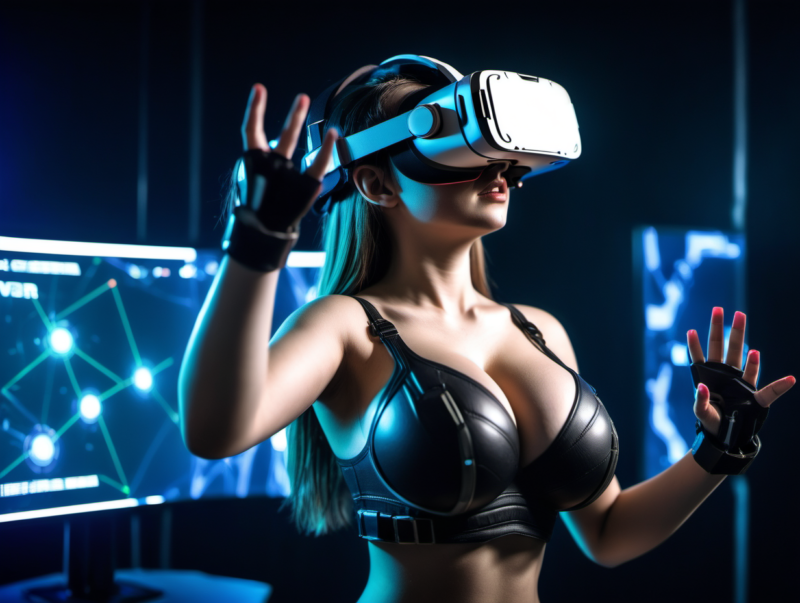
A free‑roam virtual‑reality arena is a purpose‑built physical space that lets participants move unhindered while their actions are captured and translated into a fully immersive digital world. Unlike seated or cabinet‑style VR systems, which restrict motion to a chair or a small play area, free‑roam setups combine high‑precision tracking, wireless head‑mounted displays, and often haptic accessories such as vests, gloves, or treadmills. The result is a large, obstacle‑free environment—usually ranging from a modest 500 square feet to a sprawling warehouse‑scale field—where users can walk, run, duck, and interact with virtual objects as naturally as they would in the real world.
The technology behind a free‑roam arena rests on a network of infrared or optical sensors placed around the perimeter, sometimes augmented by ceiling‑mounted cameras or lidar scanners. These sensors create a three‑dimensional map of the space in real time, allowing the system to pinpoint the exact position and orientation of each headset and peripheral with sub‑centimeter accuracy. Because the headsets are wireless, participants are not tethered to a computer, which eliminates the primary source of motion restriction in conventional VR.
Free‑roam arenas are typically operated by specialized businesses that maintain the hardware, handle sanitization, and design or license the virtual experiences. The venues can be found in major metropolitan areas, theme parks, university research labs, and even temporary pop‑up locations at festivals. Their purpose is to provide an experience that feels both physically active and mentally immersive—a synthesis that has become a cornerstone of the modern VR entertainment industry.
The open nature of a free‑roam arena opens the door to a wide spectrum of scenarios, each tailored to different audiences and objectives. Below are some of the most popular categories:
Adventure Quest – Participants embark on narrative‑driven missions that blend puzzle‑solving, combat, and exploration. The virtual world can mimic a medieval castle, a post‑apocalyptic city, or an alien planet, and the arena’s physical layout often mirrors the digital terrain, turning corners and climbing platforms into tangible challenges.
Team‑Based Competitive Games – Similar to laser tag or paintball, these games pit two or more squads against each other in fast‑paced matches. Popular formats include capture the flag, deathmatch, and objective‑based raids. The integration of haptic feedback allows players to feel virtual hits, adding a visceral layer to the competition.
Fitness and Training Modules – By converting cardio and strength exercises into game mechanics, free‑roam VR can transform a workout into an engaging quest. Users might sprint through a virtual jungle while dodging obstacles, or swing a virtual sword that corresponds to real‑world arm movements, delivering quantifiable data on calories burned and performance metrics.
Educational Simulations – Schools and museums use free‑roam environments to bring complex concepts to life. Students can walk through a scaled model of the human circulatory system, conduct virtual chemistry experiments without safety concerns, or explore historic sites reconstructed in high fidelity.
Creative Playgrounds – These sandbox experiences give users tools to design, paint, or sculpt within a three‑dimensional space. Artists can “walk” around their creations, manipulate textures with hand gestures, and instantly share their work with others in the arena or online.
Each scenario takes advantage of the arena’s ability to map physical motion onto a virtual landscape, delivering a level of immersion that is difficult to achieve in conventional seated VR.
Free‑roam VR appeals to a diverse demographic, reflecting the versatility of the technology. The following groups represent the core user base:
Youth and Teenagers – For this age bracket, the combination of physical activity and gaming thrills is a major draw. The social aspect of teaming up with friends in a shared physical space also encourages repeat visits.
Young Adults and Gamers – Hardcore gamers seek experiences that go beyond the limits of traditional consoles. Free‑roam arenas satisfy that appetite by offering large‑scale, high‑intensity gameplay that feels like stepping into a video game.
Corporate Teams – Companies book free‑roam sessions for team‑building exercises. The environment fosters communication, problem‑solving, and trust as participants rely on each other to succeed in collaborative missions.
Fitness Enthusiasts – People looking for novel ways to stay active gravitate toward VR fitness modules that make cardio workouts feel like a space‑race or zombie chase, keeping motivation high.
Educators and Researchers – Academic institutions utilize free‑roam arenas for experimental studies on spatial cognition, human‑computer interaction, and motion sickness. The controlled yet realistic setting provides rich data for scientific inquiry.
Families – Parents often bring children to arenas for special occasions, appreciating the safe, supervised environment where kids can explore without the risk of real‑world hazards.
The inclusive nature of the technology means that participants do not need prior VR experience to enjoy the arena; staff typically provide a brief tutorial and safety briefing before each session.
Designing a child‑friendly free‑roam experience requires careful consideration of safety, content, and developmental relevance. Most venues address these concerns in three primary ways:
Safety Protocols – The arena floor is covered with non‑slip mats, and obstacles are padded or clearly delineated. Staff members monitor the space through live camera feeds, ready to intervene if a child strays too close to the perimeter or exhibits signs of discomfort. Headsets are sanitized after each use, and age‑appropriate straps ensure a secure fit.
Age‑Specific Content – Virtual scenarios for children often feature bright colors, whimsical characters, and narratives that emphasize cooperation rather than competition. Popular themes include treasure hunts, fairy‑tale adventures, and educational journeys through space or the natural world. Difficulty levels can be adjusted on the fly, allowing younger children to explore at a slower pace while older kids tackle more complex puzzles.
Physical Development Benefits – By encouraging movement such as jumping, ducking, and reaching, free‑roam VR promotes gross‑motor skill development, balance, and spatial awareness. Some arenas integrate simple cognitive tasks—pattern recognition, memory challenges, or basic arithmetic—into the gameplay, providing a well‑rounded learning experience.
Parents appreciate the controlled environment, which eliminates the need for bulky equipment at home and offers a social outlet where children can interact with peers under professional supervision. As a result, free‑roam VR has become a sought‑after option for birthday parties, school field trips, and weekend family outings.
The adaptability of free‑roam VR makes it an attractive venue for a wide range of celebrations and corporate events. Here’s how organizers typically leverage the space:
A birthday party in a free‑roam arena can be themed around the child’s favorite franchise or a custom storyline. Packages often include a private session, personalized decorations projected onto the arena walls, and a photo‑capture system that records participants in their virtual avatars. The immersive nature of the experience ensures that guests are engaged from start to finish, eliminating the “downtime” common in traditional party formats.
For high‑school or university graduations, the arena can host a “future‑world” experience where graduates explore career‑related simulations—such as virtual labs for aspiring scientists or design studios for future architects. Some venues also offer a “time‑capsule” mode, allowing graduates to leave digital messages in a shared virtual space that can be revisited years later.
Corporate clients often seek experiences that blend entertainment with measurable outcomes. Free‑roam VR can be customized to include branding elements, such as company logos projected onto virtual billboards or scenario objectives tied to corporate values. Post‑session analytics provide data on team performance, communication patterns, and individual engagement levels, making the activity both fun and insightful for leadership.
In all cases, the key advantage is the ability to transform a physical location into a dynamic, story‑driven environment that can be tailored to any occasion. The sensory immersion ensures that participants remember the event long after the headset is removed.
The scientific community has taken a keen interest in free‑roam VR as a platform for research across multiple disciplines. Neuroscientists, psychologists, and ergonomics specialists point to several core benefits:
Ecological Validity – Because users can move naturally, experiments conducted in free‑roam arenas more closely reflect real‑world behavior than those performed on stationary rigs. This improves the external validity of studies on spatial navigation, motor learning, and social interaction.
Controlled Complexity – Researchers can manipulate every element of the virtual environment—from lighting and sound to object placement—while maintaining strict control over participant motion. This enables precise testing of hypotheses about perception, attention, and cognition.
Data Richness – Modern tracking systems capture high‑frequency positional data, heart rate, eye movement, and even physiological responses via wearable sensors. The multi‑modal datasets allow for comprehensive analyses that were previously unfeasible.
Industry experts in the entertainment and health sectors echo these sentiments, emphasizing the commercial potential of free‑roam VR:
Scalability – Advances in wireless headset technology and modular sensor setups are reducing the cost of building and operating arenas, making the model viable for mid‑size cities and even large retail chains.
Therapeutic Applications – Physical therapists are experimenting with VR‑guided rehabilitation exercises that require patients to perform functional movements in a motivating, gamified context. Early trials suggest improvements in adherence and outcomes compared to conventional therapy.
Safety and Accessibility – Ongoing research into motion sickness mitigation—through optimized frame rates, reduced latency, and adaptive locomotion methods—aims to make free‑roam experiences comfortable for a broader audience, including older adults and those prone to cybersickness.
Overall, the consensus among scientists and industry leaders is that free‑roam VR represents a convergence point where entertainment, education, health, and research can coexist. Its capacity to engage users physically and mentally positions it as a catalyst for future innovations in immersive technology.
Free‑roam VR arenas have evolved from experimental prototypes into mainstream venues that cater to a spectrum of users—from curious children to seasoned professionals. By removing the constraints of traditional seated VR, these spaces unlock a new dimension of immersion where the body and mind move in concert. Whether exploring fantastical worlds, competing in high‑octane team games, or participating in a scientifically rigorous study, participants experience a level of presence that is both exhilarating and informative.
The versatility of the arena format—supporting adventure quests, fitness modules, educational simulations, and bespoke events—ensures its relevance across entertainment, corporate, and academic realms. As hardware becomes more affordable and research continues to refine the user experience, free‑roam VR is poised to become an integral part of how societies play, learn, and collaborate in the years ahead.


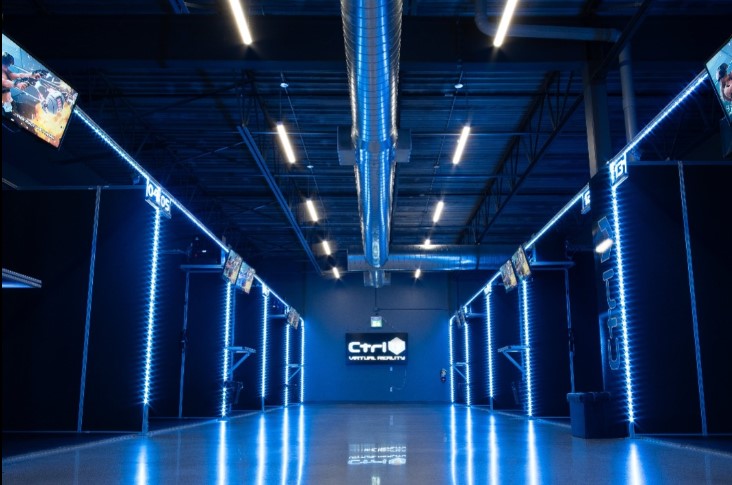
 142-144 Fox Hunt Dr, Bear, DE 19701, United States