
 El Monte
 Log in
Log in
Log in

Heroes Paradise is located at 733 Knowles Rd in Brandon, Florida, near the Lithia and Valrico communities.
The venue specializes in outdoor tactical laser tag across two fields — the 32,000-square-foot Hades arena with industrial and jungle themes, and the 14,000-square-foot inflatable Elysium field for beginners. Archery Tag sessions, an interactive ValoClimb rock wall, and a flight simulator chair round out the core activities. All laser tag sessions run 90 minutes with three missions, while archery tag runs 45 minutes.
Additional offerings include EpicSurf wave riding, on-road and off-road RC car tracks, a full-service café, and a two-story clubhouse with observation decks. The venue is suited for birthday parties, corporate team-building events, and group outings, with event planning services available. The facility is family-owned, veteran-operated, and designed to accommodate guests of all ages and abilities.
 Indoors
 Outdoors
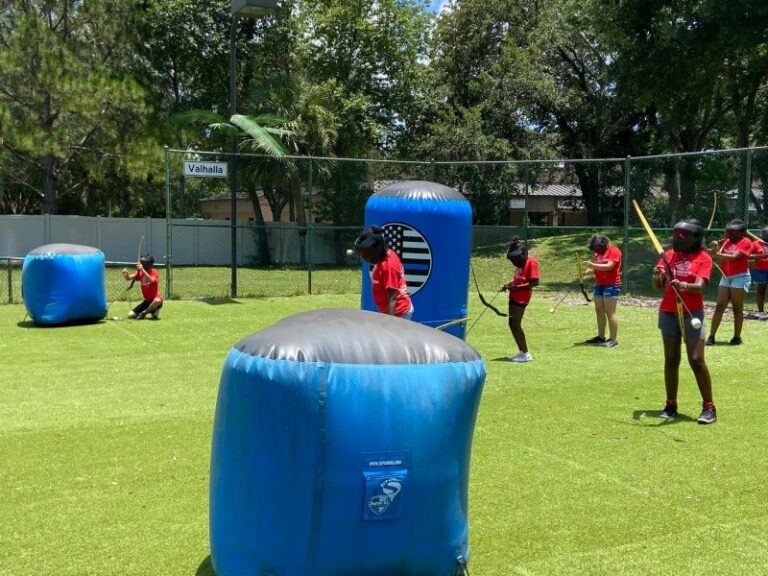
Archery Tag is a fast‑paced, adrenaline‑driven sport that blends the timeless skill of archery with the excitement of a dodge‑ball‑style combat game. Participants wield specially designed bows that launch low‑impact, foam‑tipped arrows at one another while moving through a defined arena. The goal is simple: eliminate opponents by striking their torso or a designated “head” zone, or capture a flag or “king‑pin” in team‑based formats. Because the arrows are soft, the equipment is lightweight, and safety protocols are strict, the activity feels both exhilarating and approachable for beginners and seasoned athletes alike.
The sport originated in the early 2010s as a spin‑off from traditional archery and paintball, quickly gaining a foothold in adventure parks, summer camps, and corporate team‑building programs. Its popularity stems from a unique combination of physical challenge, strategic thinking, and the sheer novelty of shooting arrows in a controlled, game‑like environment. Unlike conventional archery, which emphasizes precision and stillness, Archery Tag rewards agility, quick decision‑making, and coordinated teamwork, making it a perfect fit for recreational groups, birthday celebrations, and competitive leagues.
A typical Archery Tag session begins with a safety briefing, during which participants learn how to handle the bow, aim responsibly, and respect the “no‑shoot‑above‑the‑waist” rule. Players are fitted with protective gear—usually a full‑cover vest, helmet, and sometimes elbow or knee pads—to absorb impact and reduce the risk of bruises.
Equipment
Game Formats
The Flow of a Match
Because the sport relies on visible, low‑risk impacts, it encourages a high degree of movement—dodging, ducking, and sprinting—while still demanding enough accuracy to reward skilled aiming. The blend of physical exertion and target practice creates a uniquely engaging experience that feels both like a game and a workout.
Physical Fitness
Archery Tag offers a comprehensive cardio workout. The constant sprinting, lateral shuffling, and occasional jumping raise heart rates comparable to a moderate‑intensity HIIT session. Meanwhile, drawing the bow engages the upper back, shoulders, core, and forearms, strengthening muscles often neglected in traditional sports. Because participants must maintain balance while aiming, the activity also promotes proprioception and coordination.
Mental Sharpness
The sport demands rapid decision‑making: players must assess distance, angle, and opponent movement in split seconds. This sharpens spatial awareness and improves reaction time. The requirement to switch between offense (shooting) and defense (dodging) fosters strategic thinking, as successful teams often employ feints, decoys, and coordinated attacks.
Social Interaction
Team‑based formats nurture communication and trust. Players learn to call out enemy positions, coordinate flanking maneuvers, and support teammates who are out of ammunition. Even in free‑for‑all games, the shared experience of laughter, friendly competition, and occasional “near‑miss” moments builds camaraderie quickly.
Stress Relief
The combination of physical exertion and the focused nature of aiming provides a natural outlet for stress. The satisfying “pop” of a foam‑tipped arrow hitting a vest can release endorphins, and the playful atmosphere often leads to spontaneous humor that eases tension.
Skill Development
Participants develop foundational archery skills—stance, grip, draw, and release—without the intimidating pressure of a traditional target range. This makes Archery Tag an excellent gateway for those who might later pursue conventional archery, bowhunting, or even historical reenactments.
Inclusivity and Accessibility
Because the equipment is lightweight and the impact is low‑risk, individuals of varying fitness levels can join without fear of injury. The sport can be adapted for people with limited mobility by adjusting arena size or allowing seated positions, making it one of the more inclusive action sports available today.
One of Archery Tag’s most celebrated attributes is its universal appeal. The sport’s safety standards—soft arrows, mandatory protective gear, and strict “no‑head‑shots” policies—make it suitable for kids, teens, adults, and seniors alike.
Children (6–12 years): Younger participants typically use bows with even lower draw weights and may play shortened rounds. Many venues offer “Kids‑Only” sessions, ensuring a comfortable environment where elementary‑schoolers can develop confidence without feeling overwhelmed by older players.
Teenagers (13–18 years): High school groups often adopt Archery Tag for physical‑education classes, after‑school clubs, or as a fundraiser activity. The competitive edge satisfies adolescents’ desire for teamwork and excitement.
Adults (19–64 years): Corporate team‑building events, fitness groups, and recreational leagues find Archery Tag an effective way to break monotony, boost morale, and foster collaboration. The sport’s blend of mental focus and physical activity appeals to those looking for alternatives to conventional gym workouts.
Seniors (65+ years): Modified sessions with slower paces, larger safety zones, and shorter distances enable older adults to partake safely. The activity can improve balance, hand‑eye coordination, and social interaction, all of which are valuable for healthy aging.
Because the sport can be scaled in difficulty—adjusting arrow speed, arena complexity, or team size—it accommodates a wide spectrum of skill levels. Newcomers can start with basic target practice before diving into full‑contact games, while seasoned players can challenge themselves with advanced formats such as “Last‑Man‑Standing” or “Tournament Brackets.”
When planning a celebration, hosts often seek experiences that are both memorable and interactive. Archery Tag fulfills both criteria, turning a conventional birthday party into a dynamic event that guests will recount for years.
Customizable Packages
Most facilities offer party bundles that include a set amount of playtime (usually 60–90 minutes), a private arena, and a selection of game modes. Packages may also provide additional amenities such as themed decorations, snack stations, and photo‑ops with the bows and arrows as props.
Team‑Building Fun
Guests are divided into balanced squads, encouraging strangers to work together. The natural “friendly rivalry” sparks laughter, cheering, and occasional dramatic “heroic rescues,” creating a lively social atmosphere. For mixed‑age groups, organizers can tailor the rules—allowing younger participants a “safe zone” or using a “king‑pin” format where older players protect a designated child.
Memorable Keepsakes
Many venues allow participants to keep a personalized bow or a set of foam arrows as a souvenir. Some also offer digital video highlights of the match, providing a keepsake that captures the excitement of the day.
Inclusivity
Because the activity is not overly strenuous, even guests who might shy away from high‑impact sports (such as grandparents or relatives with limited mobility) can join in a modified capacity. This inclusivity ensures that no guest feels left out, a key consideration for family‑oriented celebrations.
Safety First
Professional staff supervise every session, reinforcing safety protocols, monitoring equipment, and stepping in when necessary. Parents can relax knowing that trained instructors handle the bows and enforce the “no‑head‑shot” rule rigorously.
Overall, Archery Tag transforms a birthday or party into an immersive adventure where guests actively engage, compete, and collaborate, producing a shared narrative that extends far beyond the usual cake‑cutting routine.
The sport’s versatility allows it to thrive in a variety of environments, each offering a distinct flavor of gameplay.
Outdoor Settings
Outdoor play benefits from fresh air and natural terrain, adding an element of realism to the combat scenario. However, weather conditions (rain, wind, extreme heat) can affect arrow flight and participant comfort, so many venues provide canopies or schedule sessions during favorable seasons.
Indoor Settings
Indoor venues excel in year‑round availability and consistent lighting, making them ideal for scheduled events, birthday parties, and league play. The softer surfaces and padded walls help dampen stray arrows, further enhancing safety.
Hybrid and Pop‑Up Options
A growing trend involves mobile Archery Tag packages that can be set up at private residences, schools, or community centers. Rental kits include portable bows, foam arrows, protective gear, and a set of modular obstacles that can be assembled quickly. This flexibility expands the reach of the sport to locations that lack permanent facilities.
Archery Tag stands at the intersection of sport, game, and social experience. By marrying the timeless discipline of archery with the kinetic thrill of a tag‑style battle, it delivers a uniquely engaging activity that can be enjoyed by anyone—from a six‑year‑old discovering the joy of aiming to a corporate team seeking a fresh approach to collaboration. Its accessible equipment, stringent safety measures, and adaptable formats make it suitable for birthdays, parties, fitness programs, and competitive leagues alike. Whether played under an open sky among trees or beneath the glow of warehouse lights, Archery Tag invites participants to run, duck, aim, and laugh—turning the simple act of shooting an arrow into a shared adventure that resonates long after the final “out” is called.


 6420 Lithia Pinecrest Rd, Lithia, FL 33547, USA