
 El Monte
 Log in
Log in
Log in

Archery Arena sits in West Chester Township, Ohio, on an industrial road just off the northern edge of the Cincinnati metro area. It’s an indoor, climate-controlled venue that has grown into one of the region’s most talked-about group activity spots since opening.
The heart of the place is combat archery — think dodgeball reimagined with bows and foam-tipped arrows — played on a roughly 3,500-square-foot arena with inflatable bunkers, graffiti-style wall art, and neon lighting. Sessions run about an hour with training included, and a dedicated host leads groups through a rotating mix of game modes like capture the flag and elimination. The same arena also hosts Nerf Wars with premium Rival blasters, classic dodgeball, and blacklight nights.
After the battle, groups can move into private party rooms or the front reception area, bringing their own food, cake, and decorations. The friendly staff is a recurring highlight in reviews, and parents can watch from a front viewing area. The venue suits kids’ birthday parties (ages 7 and up), bachelor and bachelorette parties, corporate team-building events, and solo players joining public games. It has earned Cincy Magazine’s Family Choice Awards, West Chester Township’s Best Recreation Center honor, and a TripAdvisor Travelers’ Choice Award.
 Indoors
 Outdoors
Archery Tag is a fast‑paced, team‑oriented sport that blends the classic skill set of archery with the dynamic, dodge‑ball‑style excitement of a tag game. Participants use specially designed bows that fire low‑impact, foam‑tipped arrows. The arrows are engineered to be safe for body contact, allowing players to aim at each other’s torso, legs, or arms without causing injury. The objective is simple: eliminate opponents by hitting them with an arrow, grab a flag or “base” in capture‑the‑flag variants, or simply survive longer than the opposing side. Because the equipment is lightweight and the rules are easy to learn, Archery Tag can be set up in a wide range of venues—from outdoor fields and forest clearings to indoor gymnasiums and warehouse spaces.
The sport was first introduced in the United States in the early 2010s as a way to bring archery to a broader audience. It quickly gained traction among adventure‑seeking families, corporate team‑building groups, and even youth sports leagues. Today, Archery Tag is recognized as a mainstream recreational activity, with organized leagues, national championships, and a growing network of commercial venues that specialize in hosting games for parties and events.
A typical Archery Tag match pits two teams of four to eight players against each other on a delineated playing field. The field may be as small as a basketball court or as large as a soccer field, depending on venue size and the specific game mode. At the start of each round, players receive a bow, a quiver loaded with foam‑tipped arrows, and a set of safety gear that usually includes a chest protectors, elbow and knee pads, and a face mask.
The bows are typically recurve or hybrid models that use a light draw weight—often between 10 and 20 pounds—making them accessible to beginners while still providing enough speed to reach a target at a reasonable distance. Arrows are made from a soft, rubbery foam core encased in a hard plastic shell; the tip is a blunt, rounded nub that disperses impact energy across a larger area, minimizing the risk of bruising or cuts. Players are required to wear a protective vest that covers the torso, as this is the primary scoring zone. Hits to the vest register as “outs,” and the struck player must either leave the field for a short penalty period or perform a designated “respawn” task before rejoining the game.
Several game formats keep the experience fresh:
Gameplay is fast and fluid. Players move, duck, and sprint while aiming their bows in real time, creating a thrilling mix of precision and agility. The foam arrows travel at speeds typically ranging from 20 to 30 miles per hour—fast enough to make the game exciting yet slow enough to allow for safe avoidance.
Standard rules emphasize safety and sportsmanship. Before each session, a brief safety briefing covers proper stance, how to retrieve arrows, and what constitutes an illegal hit (e.g., targeting the head or face). A referee or game master monitors the match, calling “out” when a player is hit and keeping track of scores or eliminations. Penalties are imposed for rule violations such as stepping outside the boundary lines, “double‑bowing” (shooting while holding two bows), or not wearing required protective gear.
Archery Tag delivers a blend of physical, mental, and social advantages that make it appealing to a wide demographic.
The sport engages the entire body. Shooting an arrow develops upper‑body strength, particularly in the shoulders, back, and arms. Simultaneously, dodging and sprinting across the field enhance cardiovascular endurance, agility, and lower‑body power. Because the activity is high‑intensity yet short‑duration—matches typically last 10‑15 minutes—players experience a vigorous workout without the monotony of traditional gym routines.
Accurately releasing a foam‑tipped arrow while on the move sharpens hand‑eye coordination. The need to track moving targets, anticipate opponents’ trajectories, and adjust aim under pressure fosters concentration and spatial awareness. These skills translate well to other sports, academic tasks, and even everyday activities that require precise motor control.
The adrenaline surge associated with a fast‑paced game releases endorphins, contributing to a natural mood boost. The playful competition also provides a mental break from daily stressors, allowing participants to immerse themselves fully in the present moment. Many players report feeling a “flow” state—a deep, enjoyable focus—that can improve overall mental resilience.
Because most game modes rely on coordinated strategies, Archery Tag enhances communication skills and fosters teamwork. Players must call out enemy positions, devise defensive formations, and support each other during respawn periods. This collaborative environment builds trust and improves interpersonal dynamics, making the sport especially valuable for corporate team‑building events and youth group activities.
The low‑impact nature of foam arrows, combined with adjustable draw weights, makes Archery Tag adaptable to various fitness levels and physical abilities. Participants can modulate the intensity of play by opting for less aggressive game modes or choosing shorter distances between shooting stations.
Researchers in sports science and injury prevention have begun to examine Archery Tag as a novel hybrid activity. Early studies suggest that the injury profile of Archery Tag is comparable to that of traditional non‑contact sports such as dodgeball or paintball. The most common minor injuries reported are bruises and occasional sprains, typically resulting from rapid directional changes rather than arrow impact.
Biomechanical analyses indicate that the recoil forces generated by the foam‑tipped arrows are insufficient to cause deep tissue damage, supporting the sport’s claim of safety. Moreover, the protective vests absorb the majority of kinetic energy, reducing the likelihood of concussions or fractures. Experts commend the sport’s emphasis on proper equipment fitting and mandatory safety briefings, noting that these protocols significantly lower risk.
From a psychological perspective, sport psychologists highlight Archery Tag’s capacity to improve “cognitive flexibility”—the ability to switch attention between different tasks quickly. The dual demand of aiming while maneuvering forces players to process visual and proprioceptive information simultaneously, training the brain to manage multitasking under pressure.
Industry analysts observe that Archery Tag’s growth aligns with broader trends in experiential recreation. Consumers increasingly seek activities that blend physical exertion with novelty and social interaction. As a result, the market for dedicated Archery Tag venues, mobile rental kits, and franchised event services is expanding at a double‑digit annual rate. Experts predict that continued innovation—such as laser‑based scoring systems and augmented‑reality overlays—will further boost the sport’s appeal and mainstream adoption.
One of Archery Tag’s most compelling selling points is its universal accessibility. The sport can be tailored to accommodate participants from early childhood through senior adulthood.
The inclusive nature extends to individuals with varying physical abilities. Adaptive equipment, such as modified grips and lighter bows, enables participants with limited upper‑body strength to compete alongside able‑bodied players. Many venues also provide wheelchair‑friendly field layouts, ensuring that mobility‑impaired athletes can fully engage in the game.
Because Archery Tag merges excitement with safety, it has become a popular choice for milestone celebrations and group events. Birthday parties, school outings, and family reunions benefit from the sport’s ability to cater to large groups while keeping participants actively engaged.
Event organizers typically offer tiered packages that include equipment rental, a dedicated game master, and optional add‑ons such as themed decorations, music playlists, and celebratory refreshments. Hosts can select a particular game mode—like a capture‑the‑flag tournament—to match the size and preferences of their guests.
For younger crowds, parties often incorporate structured rounds with clear objectives, interspersed with brief “skill‑challenge” stations where participants can practice shooting at static targets for additional points. Older groups may prefer a more free‑form session, allowing teams to devise their own strategies and negotiate rule variations on the fly.
The collaborative nature of Archery Tag encourages participants to interact, cheer each other on, and celebrate collective achievements. This social bonding creates memorable moments that extend beyond the typical cake‑and‑games format of conventional parties. Photographs and video recordings of intense arrow exchanges and victorious celebrations further enhance the lasting appeal of the event.
Professional venues enforce strict safety protocols regardless of party size. Staff members conduct a brief orientation before gameplay, ensuring that every participant understands the rules, wears protective gear, and practices proper bow handling. This systematic approach mitigates risk while allowing guests to focus on fun.
The versatility of Archery Tag stems from its adaptability to both outdoor and indoor environments. Each setting offers a distinct atmosphere and set of logistical considerations.
Open fields, parks, and forest clearings provide ample space for larger-scale matches. Natural terrain adds strategic elements—such as trees for cover or uneven ground that challenges footwork. Outdoor venues often feature permanent installations like target stands and obstacle courses, enhancing replay value. Weather conditions, however, can affect scheduling; rain or extreme heat may necessitate postponement or the use of shade structures.
Gymnasiums, warehouse spaces, and purpose‑built indoor arenas enable year‑round play, insulated from weather fluctuations. Indoor fields are typically marked with modular barriers and safety nets to contain arrows and protect surrounding areas. The controlled lighting and acoustic environment allow for precise scoring systems, including laser‑based hit detection that can automatically record eliminations.
Many Archery Tag providers offer mobile kits that can be set up at corporate campuses, school grounds, or community festivals. These pop‑up events use portable nets, collapsible target boards, and compact bows that can be assembled quickly. The flexibility of mobile setups expands access to regions without dedicated venues, fostering grassroots growth.
Across major metropolitan areas, specialized Archery Tag centers operate as full‑service entertainment hubs. They typically feature multiple game zones, a lounge area for spectators, and a retail space selling branded equipment. These centers often host leagues, birthday parties, and corporate events under one roof, providing a one‑stop destination for enthusiasts.
When selecting a venue, organizers should consider factors such as group size, desired game mode, and accessibility. Outdoor sites are ideal for large tournaments or events that benefit from natural obstacles, while indoor arenas are better suited for precise scoring and climate‑controlled comfort. Mobile options work best for short‑duration events or locations lacking permanent facilities.
Archery Tag has emerged as a dynamic, inclusive sport that merges the time‑honored discipline of archery with the energetic, team‑oriented spirit of modern tag games. Its straightforward rules, safety‑first equipment, and adaptability to a myriad of venues make it accessible to participants of all ages and abilities. The physical benefits—enhanced strength, cardiovascular fitness, and coordination—are complemented by mental gains in focus, stress relief, and teamwork. Scientific assessments underscore its low injury risk, while industry experts predict continued growth fueled by innovative technology and expanding market demand.
Whether enjoyed as a weekend pastime, a corporate team‑building exercise, or a birthday celebration, Archery Tag offers a unique blend of excitement, strategy, and camaraderie. As more communities embrace this fast‑growing activity, it is poised to become a staple of contemporary recreational culture, inviting anyone with a bow and a sense of adventure to step onto the field and experience the thrill of hitting the mark—safely, together.


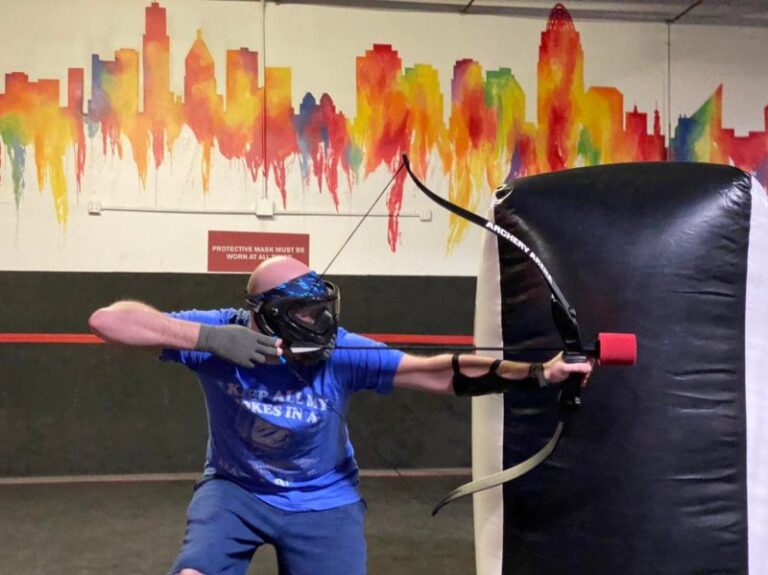
 4950 Provident Dr, West Chester Township, OH 45246