El Monte
 Log in
Log in
Log in

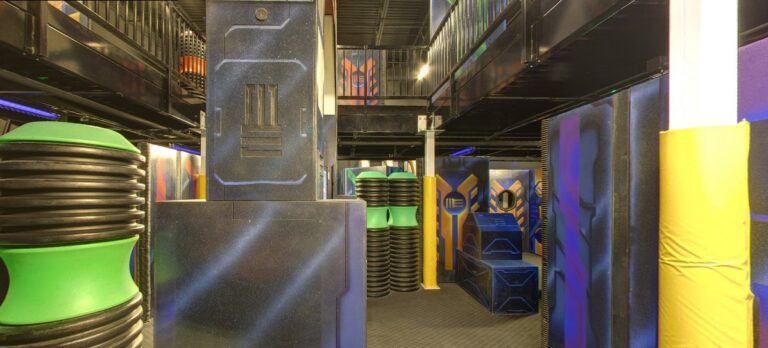
Main Event Indoor Laser Tag arena is located in Avon, OH.
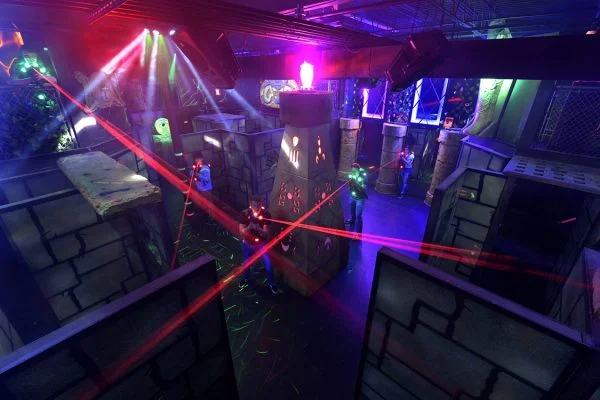
Main Event is a huge entertainment hub where you can spend your weekend or throw a birthday party. These laser-tag battles take place in a multi-story arena with fantasy-like decorations, neon lights, and laborious obstacles. Climb up the towers and rain fire on unsuspecting enemies.
There is also a large recreation area with snacks and drinks to chill after the game. There’s also bowling, pool, VR, mini-golf, a story room, and a ropes course – all available at one single place!
 Indoors
Full Throttle Adrenaline Indoor Park is located in Florence, KY
Full Throttle Adrenaline Park in Florence, KY offers a thrilling experience for adrenaline junkies of all ages. The park features go-kart racing, axe throwing, and an indoor trampoline park, as well as a variety of arcade games and virtual reality experiences. With options for private parties and team-building events, Full Throttle Adrenaline Park is the perfect destination for a day of heart-pumping fun and adventure.
IndoorsSandbox VR Indoor Center is located in Westlake, OH.
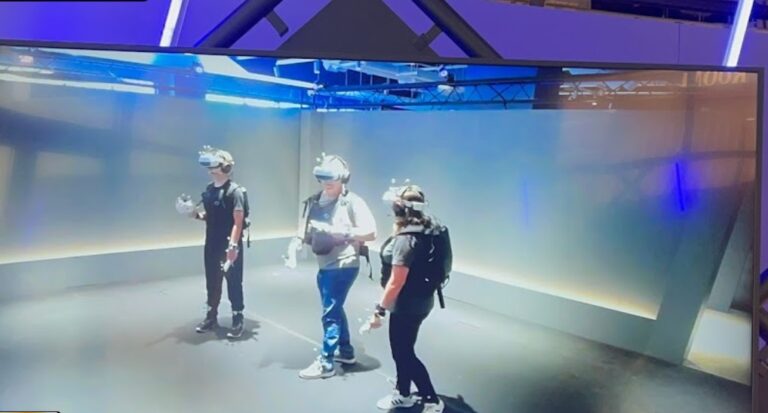
Sandbox VR is now open in Westlake, OH, offering a unique virtual reality experience in an immersive multi-player setting. Visitors can choose from a variety of games and scenarios, including sci-fi, fantasy and zombie adventures. The state-of-the-art equipment allows for highly realistic and interactive experiences, as players move and interact with each other and the virtual environment. Sandbox VR is suitable for groups of up to six people, who can book a private room for a 30 or 60-minute session. The Westlake location is the second Sandbox VR center to open in Ohio, following the Columbus location.
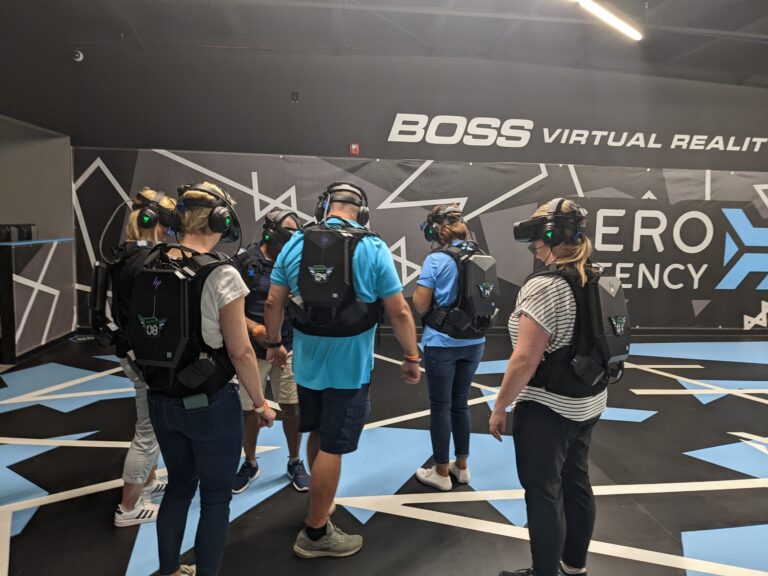
IndoorsZero Latency Cleveland Indoor Center is located in Cleveland, OH.
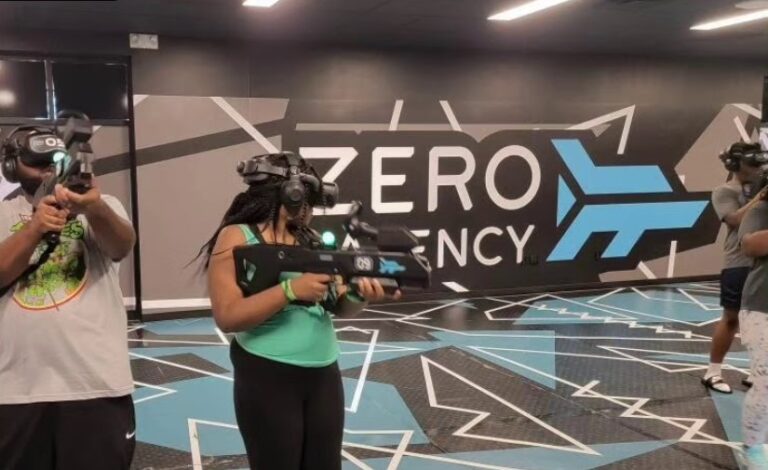
Zero Latency Cleveland is a cutting-edge virtual reality (VR) gaming attraction located in Cleveland, OH. The facility features a large open-play area with state-of-the-art wireless VR headsets and motion-tracking technology that allow players to navigate through immersive digital worlds with complete freedom of movement. The games available at Zero Latency Cleveland range from first-person shooters to puzzle-solving adventures, and all provide an unparalleled multiplayer gaming experience that must be seen to be believed. Whether you’re a die-hard gamer or just looking for a fun night out, Zero Latency Cleveland is sure to impress.
IndoorsMain Event Indoor Laser Tag arena is located in West Chester, OH.
Main Event is a huge entertainment hub where you can spend your weekend or throw a birthday party. These laser-tag battles take place in a multi-story arena with fantasy-like decorations, neon lights, and laborious obstacles. Climb up the towers and rain fire on unsuspecting enemies.
There is also a large recreation area with snacks and drinks to chill after the game. There’s also bowling, pool, VR, mini-golf, a story room, and a ropes course – all available at one single place!
IndoorsBill’s Crib is located in Cleveland, OH.
Bill’s Crib, located in Cleveland, OH, at Perplexity Games, is described as Cleveland’s virtual reality arcade.
Bill’s Crib VR room accommodates up to eight players simultaneously. A wide selection of single-player and multi-player VR games are available, ranging from casual adventures to eSports. The VR Arcade aims to offer a memorable experience. Visitors can test their abilities by trying to Walk the Plank, shooting zombies, or simply exploring virtual reality.
The selection of VR games includes classics such as Fruit Ninja and Angry Birds, along with shooters like Pavlov. The virtual reality arcade combines technology with customer service. Its aim is to create experiences that transport customers to new worlds.
The Cleveland VR room is designed for those seeking fun and adventure. Bill’s Crib is available for birthday parties and bachelor/bachelorette parties. The VR space can accommodate up to 8 people at once, ages 8 and up.
IndoorsUrban Air Trampoline and Adventure Indoor Park is located in Reynoldsburg, OH.
Urban Air Trampoline and Adventure Park is located in Reynoldsburg, OH offering a variety of activities for all ages. The park features trampolines, obstacle courses, battle beams, climbing walls, and more. Visitors can also enjoy virtual reality experiences, bumper cars, zip lines, and a Sky Rider coaster. Urban Air hosts birthday parties, group events, and summer camps. Safety is a top priority at the park, with trained staff and strict rules and guidelines in place to ensure a fun and safe experience for all.
IndoorsLaser Web Dayton is located in Dayton, OH.
Laser Web Dayton: Premier Entertainment and Event Venue in Dayton, OH
Their key attractions include:
Laser Tag
Virtual Reality (VR)
Laser Maze
Arcade
Snack Bar
Birthday Parties and Group Events: Laser Web Dayton specializes in hosting birthday parties and group events. Their recently renovated facility and specially trained party hosts ensure that children and their guests have an enjoyable time. In addition to laser tag and the laser maze, party packages can include fresh made-to-order pizza, soft drinks, and birthday cake. All birthday parties include a brightly colored private party room and tokens for the new arcade games, all at a great value. They strive to provide a seamless and memorable event experience for every group.
IndoorsSandbox VR Indoor Center is located in Dublin, OH.
Sandbox VR, a cutting-edge virtual reality experience, has opened its doors in Dublin, Ohio. The company uses state-of-the-art technology to create immersive games that transport players to another world. Customers can choose from a range of scenarios, including zombie apocalypse and futuristic space battles. The experience is enhanced by full-body tracking and haptic feedback, which allows players to feel the impact of their actions. SandBox VR aims to provide a unique and unforgettable adventure for individuals, groups, and corporate events alike.
IndoorsZero Latency Cincinnati Indoor Center is located in West Chester Township, OH.
Zero Latency, a virtual reality gaming experience, has arrived in West Chester Township, Ohio. The new location offers players the chance to engage in immersive game play using cutting-edge technology, including VR headsets, motion capture cameras, and real-time tracking systems. Games available include zombie apocalypse shooter “Outbreak Origins” and puzzle game “Engineerium.” The venue also features a lounge area where players can relax before and after their VR experiences. With locations around the world, Zero Latency is gaining popularity as a unique, high-tech entertainment option.
IndoorsSandbox VR Indoor Center is located in Liberty Township, OH.
Sandbox VR has opened its doors in Liberty Township, OH, promising to immerse visitors in virtual reality gaming experiences. Using state-of-the-art equipment, players can choose from a range of games, including zombie survival, space exploration and espionage. Sandbox VR is the latest addition to Liberty Centre, a popular destination for shopping, dining and entertainment. The facility, which measures over 4,000 square feet, is suitable for groups of up to six players at a time. Players are strapped into a harness and given a VR headset before entering the game.
Indoors
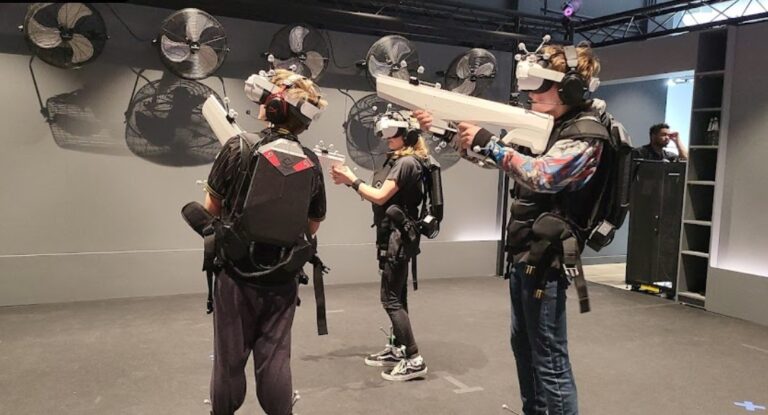
A free‑roam virtual‑reality (VR) arena is a purpose‑built physical space where participants can move unhindered while wearing VR headsets and, in many cases, haptic accessories such as vests, gloves, or boots. Unlike seated or room‑scale VR that confines the user to a small play area, free‑roam arenas blend the digital world with a larger, often obstacle‑filled environment. The floor is typically marked with a grid or RFID sensors that track each player’s position with centimeter accuracy, allowing the software to update the virtual scene in real time as the user walks, ducks, jumps, or even runs.
The architecture of a free‑roam arena is designed for safety and immersion. Soft padding, rounded corners, and clear “no‑go” zones keep participants from colliding with walls or equipment. Overhead tracking cameras, lidar scanners, or infrared beacons map the space continuously, while the headsets themselves can incorporate inside‑out tracking for redundancy. Because the environment is larger than a typical living‑room setup, game designers can create experiences that feel truly expansive—think of exploring a dense jungle, navigating a spaceship corridor, or dueling with opponents in a medieval castle—all without the user ever having to press a joystick to move.
The versatility of a free‑roam arena lends itself to a wide array of scenarios, each exploiting the freedom of movement to deliver experiences that would be impossible in a static setup.
| Scenario Type | Core Gameplay Elements | Typical Duration |
|---|---|---|
| Adventure Exploration | Walking through vast, narrative‑driven worlds; puzzle solving; environmental storytelling | 15‑30 minutes |
| Competitive Shooter / Battle Royale | Team‑based or solo combat, cover mechanics, real‑time strategy | 10‑20 minutes per match |
| Co‑Op Escape Room | Collaborative problem‑solving, timed challenges, multi‑room progression | 30‑45 minutes |
| Educational Simulations | Historical reenactments, scientific visualizations, procedural training | 20‑40 minutes |
| Fitness & Motion Games | High‑intensity cardio, rhythm‑based movement, agility drills | 10‑25 minutes |
Adventure Exploration might place a group of friends on a quest to retrieve a magical artifact hidden deep inside a pyramid. The physical layout of the arena mimics the winding corridors, while the VR world adds dynamic lighting, interactive hieroglyphs, and hidden traps that react to the players’ gestures.
Competitive Shooter experiences leverage the arena’s tracking to enable realistic cover mechanics—players can physically duck behind a foam barrier, peek around corners, and reload by reaching for a virtual magazine that appears on a physical prop.
Co‑op Escape Rooms translate the classic tabletop format into a three‑dimensional digital realm. The physical walls become part of the puzzle: a lever that must be pulled on a real pole triggers a virtual door, while a projected hologram hints at the next clue.
Educational Simulations allow students to walk inside a scaled‑down model of the human heart, watching blood flow in real time, or to stand on the surface of Mars as a rover drives past, feeling the planet’s reduced gravity through haptic feedback.
Fitness & Motion Games turn the arena into a high‑tech gym. Players might slash at floating targets in time with music, completing a full‑body cardio routine while their heart rate is monitored and displayed on a leaderboard.
These scenarios demonstrate the core appeal of free‑roam VR: the marriage of physical kinetic engagement with the limitless creativity of digital design.
Free‑roam VR has attracted a surprisingly broad demographic. While early adopters were primarily adult gamers and tech enthusiasts, the user base now includes families, corporate teams, educational institutions, and even senior citizens seeking low‑impact exercise.
Gamers and Esports Teams – Competitive players gravitate toward free‑roam arenas because the physicality adds a tactical layer impossible to replicate on a couch. Many professional VR leagues now schedule matches in dedicated arenas to standardize the playing field.
Families and Children – Parents appreciate the safe, supervised environment where kids can explore without the risk of bumping into furniture. The social aspect—playing side‑by‑side rather than taking turns—makes it an attractive family outing.
Corporate Groups – Companies use the arenas for team‑building exercises, leadership workshops, and product demos. The immersive nature encourages participants to step out of their comfort zones and collaborate in novel ways.
Educators and Researchers – Schools and universities have begun incorporating free‑roam VR into curricula ranging from biology to architecture. The tactile component helps students retain concepts that would otherwise be abstract.
Senior Citizens and Rehabilitation Patients – Some health centers employ free‑roam VR for gentle, low‑impact movement therapy, allowing seniors to engage in cognitive tasks while simultaneously improving balance and coordination.
The common thread linking all these groups is the desire for an experience that feels both physically active and mentally stimulating—a blend that traditional gaming or static VR cannot provide.
Children have a natural curiosity for immersive experiences, and free‑roam VR offers a safe conduit for that curiosity. The design of kid‑focused sessions takes several factors into account:
Age‑Appropriate Content – Adventures are themed around familiar stories (e.g., dinosaur expeditions, space missions) and incorporate educational tidbits, such as facts about planetary science or animal habitats.
Reduced Physical Demands – While the arena allows full movement, games for younger players often limit intense sprinting or high jumps to prevent fatigue. Instead, activities emphasize exploration, gentle puzzles, and cooperative play.
Safety Protocols – Staff members monitor each participant with handheld radios, and the arena’s layout includes clearly marked safe zones where a child can step back if they become overwhelmed.
Parental Involvement – Many venues offer “parent‑plus‑child” tickets, allowing an adult to accompany the child in the same session. This not only reassures parents but also fosters shared experiences.
Learning Integration – Some programs align with school curricula, providing teachers with post‑session reports that highlight concepts mastered during gameplay (e.g., identifying constellations or recognizing chemical symbols).
Because the hardware is lightweight and the arena’s padding reduces the risk of injury, children can enjoy longer sessions without the usual concerns associated with headset use, such as neck strain or motion sickness.
The flexibility of free‑roam VR makes it an increasingly popular choice for milestone celebrations and corporate gatherings. Below are three distinct use‑cases that illustrate how the technology can be customized to suit any occasion.
A birthday party in a free‑roam arena transforms a typical cake‑and‑balloons affair into a “choose‑your‑own‑adventure” extravaganza. Organizers can select a themed storyline—pirates searching for treasure, superheroes defending a city, or explorers escaping from an alien planet. Each guest receives a personalized avatar, and the session can be broken into short rounds to accommodate different age groups. After the gameplay, the arena can be converted into a photo‑op zone where participants pose with their virtual props, printing instant souvenirs that double as party favors.
Graduates often seek unique ways to mark the transition from school to the next chapter. A free‑roam VR experience can be framed as a “future‑vision” journey, guiding participants through simulated career paths, global travel, or even speculative futures based on current trends. Because the arena can support multiple simultaneous groups, entire graduating classes can share the same space while experiencing individualized storylines. The event can culminate with a group “light‑up” ceremony where each participant triggers a virtual fireworks display, symbolizing collective achievement.
Corporate events benefit from the arena’s ability to blend entertainment with skill development. Companies can design custom scenarios that reinforce brand values or product knowledge. For instance, a tech firm might create a VR simulation of their latest device, allowing employees to interact with it in an augmented setting. Team‑building exercises often involve problem‑solving under time pressure—splitting participants into cross‑functional squads that must cooperate to defuse a virtual bomb or navigate a maze. After the experience, debrief sessions allow facilitators to extract insights on communication styles, leadership emergence, and decision‑making processes.
In each case, the venue can be tailored with branded visuals, custom soundtracks, and even catering that aligns with the VR theme, ensuring that the event feels cohesive and memorable.
The scientific community has taken a keen interest in free‑roam VR, largely because it bridges the gap between controlled laboratory experiments and real‑world human behavior. Researchers from fields such as neuroscience, psychology, and human‑computer interaction (HCI) cite several advantages:
Ecological Validity – Traditional VR studies often limit participants to a standing or seated position, which can alter natural movement patterns. Free‑roam arenas allow subjects to act as they would in everyday life, yielding data that more accurately reflects real‑world cognition and motor control.
Rich Sensor Data – The combination of headset tracking, external cameras, and wearable haptics provides a multimodal dataset—position, orientation, heart rate, and even muscle activation (when integrated with EMG sensors). This wealth of information enables detailed analyses of stress responses, spatial awareness, and learning curves.
Rehabilitation and Therapy – Clinicians are experimenting with free‑roam VR for post‑stroke motor recovery and balance training. The immersive environment encourages patients to practice movements that would be monotonous in a conventional therapy room, while the system records progress in fine‑grained detail.
Safety and Ethics – Because the arena is a closed environment, researchers can safely expose participants to potentially disorienting stimuli—like simulated heights or rapid motion—without the risk of physical injury. This controlled exposure is valuable for studying phobias and anxiety disorders.
Industry experts, meanwhile, see free‑roam VR as a catalyst for new business models. Companies specializing in location‑based entertainment are expanding their offerings beyond arcade‑style games to include narrative experiences, corporate training modules, and educational tours. Hardware manufacturers are designing lighter, more durable headsets and modular haptic accessories that can be quickly swapped between scenarios, reducing downtime and operational costs.
However, both scientists and industry leaders acknowledge challenges. The high upfront investment for arena construction, ongoing maintenance, and staff training can be prohibitive for smaller operators. Data privacy is another concern; the detailed motion logs collected during sessions must be stored securely and used responsibly. Finally, there is a technical hurdle in ensuring low latency across large spaces, as any perceptible delay between movement and visual feedback can induce motion sickness.
Despite these obstacles, the consensus remains optimistic. The convergence of decreasing hardware costs, advances in real‑time rendering, and a growing appetite for immersive experiences suggests that free‑roam VR will continue to expand its footprint across entertainment, education, and health sectors.
Looking ahead, several trends are poised to shape the evolution of free‑roam VR arenas:
Hybrid Physical‑Digital Spaces – Integration with Augmented Reality (AR) will allow physical props to be dynamically re‑skinned, turning a simple foam wall into a shimmering ice barrier or a glowing energy shield, depending on the scenario.
Scalable Modular Designs – Portable “pop‑up” arenas composed of interlocking panels and wireless tracking nodes will enable event organizers to bring the experience to festivals, malls, or corporate campuses without permanent construction.
AI‑Driven Content Generation – Machine‑learning algorithms can generate procedural levels, quests, or adaptive difficulty curves on the fly, ensuring each session feels fresh even for repeat visitors.
Social Presence Enhancements – Advanced avatar systems that capture facial expressions and subtle body language will make remote participants feel truly present, opening the door to mixed‑reality gatherings where some users are in the arena and others join virtually.
Sustainability Focus – Energy‑efficient LEDs, recyclable foam padding, and solar‑powered tracking systems will become standard as venues seek to reduce their environmental impact.
These developments will deepen the appeal of free‑roam VR, making it not just a novelty but an integral part of how people learn, celebrate, and collaborate.
Free‑roam VR arenas represent a transformative step in immersive technology, shifting the experience from a confined, seated activity to a full‑body adventure that mirrors real life. By marrying sophisticated tracking, tactile feedback, and expansive digital worlds, these venues support a diverse range of scenarios—from high‑octane competitive shooters and cooperative escape rooms to educational simulations and therapeutic exercises.
The appeal cuts across age groups and use cases. Children enjoy safe, story‑driven exploration; families find a novel way to celebrate milestones; corporations leverage the medium for team building and brand immersion; and scientists gain a valuable platform for studying human behavior in realistic settings. While challenges such as cost, data privacy, and latency persist, ongoing advances in hardware, software, and design philosophy promise to make free‑roam VR increasingly accessible and versatile.
As the technology matures, the line between the physical and virtual will continue to blur, opening new possibilities for entertainment, education, and wellbeing. Whether one steps into a free‑roam arena to hunt for hidden treasure, rehearse a future career, or simply burn off birthday cake calories, the experience offers a glimpse of a future where immersive reality is as natural a part of daily life as walking down the street.


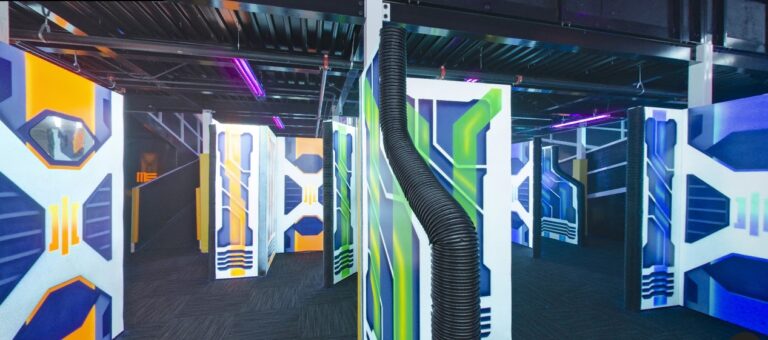
 35605 Chester Rd, Avon, OH 44011, United States