El Monte
 Log in
Log in
Log in

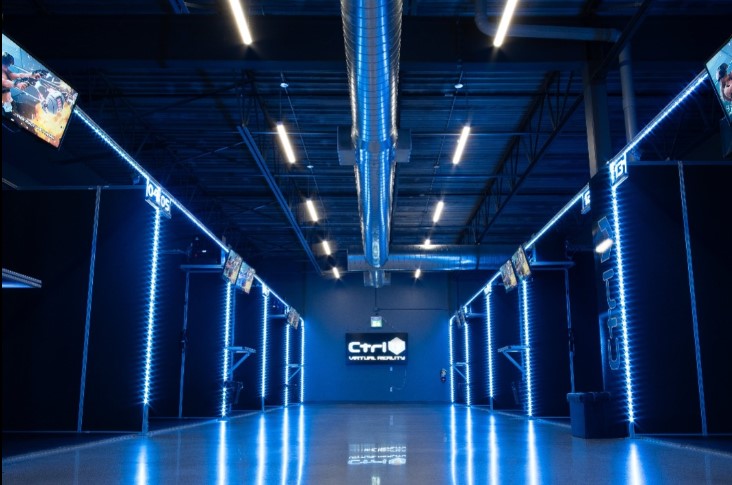
Ctrl V is located in Bear, Delaware, easily accessible from New Castle, Newark, and Wilmington. This virtual reality arcade features 16 individual VR stations equipped with HTC Vive Pro headsets and a library of over 50 games, including multiplayer shooters, boxing simulations, mini-golf, and cooperative virtual escape rooms. Guests can switch between games freely during one-hour sessions, and first-timers receive a brief tutorial before playing. The facility also offers group discounts, free weekday demos, and a senior discount on Tuesdays.
Beyond standard gameplay, Ctrl V serves as a venue for birthday parties, corporate team-building events, and private celebrations. A private party room with seating for up to 32 guests, tables, and a refrigerator is available for groups booking six or more stations — outside food and drinks are welcome. The arcade also runs a loyalty program, participates in community charity drives, and maintains a lounge area where parents can relax while staff supervise younger players. With its friendly team and ever-growing game library, Ctrl V has become a go-to destination for family outings, date nights, and group events in northern Delaware.
 Indoors
Paintball Action Games is located in Newark, Delaware, on Old County Road, just a short drive from the Maryland state line.
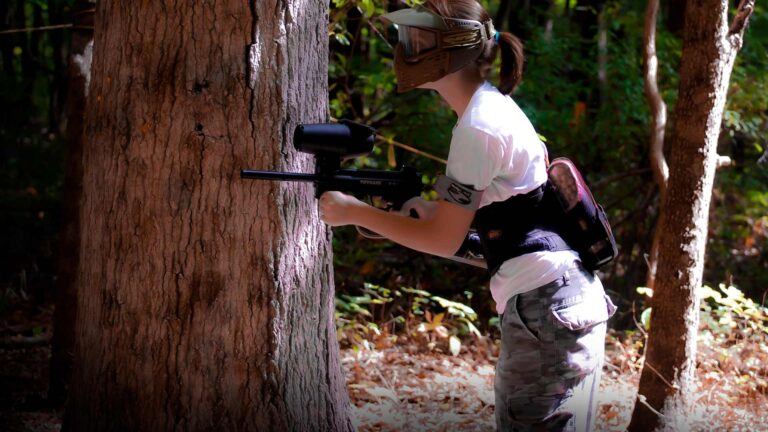
The club spans over 50 acres of wooded fields and is the longest-operating paintball facility in the state. It offers multiple outdoor scenarios including Capture the Flag, medic games, and elimination rounds across three distinct fields — Red, Orange, and Green — plus a hyperball field. The focus is on woodsball-style play with an emphasis on strategy and teamwork. Rental packages include markers, air tanks, paintballs, and protective gear, with unlimited CO2 refills during a session. The staff is experienced and safety-oriented, making it a popular choice for beginners as well as seasoned players.
Beyond the games, the facility provides a recreation area and lounge for relaxing between rounds, plus on-site parking and restrooms. It is well-suited for birthday parties, corporate team-building events, bachelor parties, and group outings. Group rates are available for parties of 15 or more with advance booking. Players must be at least 14 years old, and those under 18 need a parent or guardian to sign a release form. The club has been accredited by the BBB and has built a reputation over 40+ years as a welcoming, community-oriented paintball destination.
 Outdoors
OXCC – Outdoor Xtreme Chesapeake City Paintball & Airsoft is located on a 100-acre property just outside Chesapeake City, Maryland.
The park features 18 uniquely themed fields, including a Marina Field with over 20 boats, an Airfield with two Chinook helicopters, and wooded woodsball areas. They offer traditional paintball, low-impact paintball (ages 8+), airsoft, and Gellyball for younger players. Walk-on play is available on weekends, and large-scale scenario events like “The Battle of the Bulge” are held regularly. Private parties include dedicated referees, private field access, and rental equipment.
OXCC is well-suited for birthday parties, corporate team-building, and family outings. Covered picnic areas are reserved for private groups, and a meal deal can be added. The on-site pro shop sells gear, and the staff is consistently praised for their professionalism, safety focus, and friendly attitude. The park is open Saturdays and Sundays from 9 AM to 4 PM.
OutdoorsEvery year a birthday rolls around, and with it comes the inevitable question: where should the celebration take place? The decision can feel surprisingly weighty because the venue sets the tone for the entire day. Traditional options—home parties, restaurants, or a trip to the cinema—remain popular, but many families and groups are now looking for experiences that stand out, foster interaction, and leave lasting memories. Action‑filled games and free‑roam virtual‑reality (VR) centers have emerged as unconventional yet highly effective alternatives. They combine physical activity, teamwork, and a dash of friendly competition, making them ideal for birthdays that want to be more than “just cake and balloons.”
Action games encompass a broad spectrum of fast‑paced, interactive experiences. From the neon‑lit corridors of laser tag arenas to the gritty realism of paintball fields, these activities appeal to a wide range of ages and interests. What makes them especially attractive for birthday parties is the built‑in structure: participants are divided into teams, given clear objectives, and rewarded for strategic thinking and quick reflexes. The result is a party that feels more like an adventure than a conventional gathering.
Below is a closer look at four of the most popular action‑game formats and how they align with different age groups and party styles.
Laser tag is a staple of children’s party entertainment, and for good reason. The game uses harmless infrared beams emitted from lightweight “guns” to simulate combat in a safe, controlled environment. Modern laser tag arenas are often themed—space stations, futuristic cities, or jungle ruins—providing an immersive backdrop that fuels imagination.
Why laser tag works for younger guests
A laser‑tag birthday party can be further customized with themed decorations, personalized scoreboards, and even a “mission brief” printed on invitations. Parents appreciate that the activity burns energy, so children return home more relaxed and ready for the after‑party festivities.
When the birthday honoree has outgrown the glow of laser beams, paintball steps in as the next level of adrenaline‑pumping fun. Paintball pits participants against each other with pneumatic markers that fire gelatin capsules filled with non‑toxic paint. The splatter of color on clothing and gear is part of the excitement, turning each hit into a visual badge of honor.
Key considerations for a paintball birthday
For teenage or adult birthday parties, paintball offers a perfect blend of competition and camaraderie. Teams can be organized by friends, family, or even mixed groups to encourage new connections. Many facilities allow parties to reserve the entire field, giving the birthday group exclusive access and the freedom to customize game scenarios. After the action, participants can unwind in a designated lounge, share stories over pizza, and display their most colorful hits on a digital photo board.
Airsoft occupies a sweet spot between paintball’s bright spectacle and laser tag’s purely virtual experience. It uses realistic, replica firearms that fire 6 mm plastic BBs at velocities ranging from 250 to 400 feet per second. The realism of the gear—complete with tactical vests, helmets, and mock magazines—appeals to adults who appreciate military‑style simulations or tactical role‑playing.
Why airsoft resonates with grown‑up celebrants
Airsoft venues typically provide rental equipment, safety briefings, and a variety of game modes ranging from simple team deathmatches to intricate “scenario” battles (e.g., hostage rescue or bomb defusal). For an adult birthday, the host can arrange a private session, offer a “battle royale” tournament bracket, or even incorporate a post‑game awards ceremony to recognize the best sniper, most tactical leader, or most spectacular escape. A catered grill or food truck on site can round out the day, letting participants refuel before the next round.
Virtual‑reality clubs bring the digital frontier directly to birthday celebrations. Unlike the purely physical action games discussed above, VR immerses participants in computer‑generated worlds while still allowing them to move, duck, and reach out within a tracked space. Modern free‑roam VR arenas feature large, open rooms equipped with wireless headsets, motion controllers, and safety nets, enabling multiple players to explore the same virtual environment simultaneously.
Advantages of a VR birthday party
A VR club birthday can be structured around a “game marathon,” where guests rotate through different stations every 10–15 minutes, ensuring everyone gets a taste of multiple experiences. Some venues offer custom avatars or a “photo‑capture” mode that records a short video of each player’s in‑game highlights—perfect for creating a memorable birthday montage. After the virtual action, a lounge area with refreshments allows attendees to discuss their favorite moments, swap high scores, and plan the next round of challenges.
Choosing between laser tag, paintball, airsoft, or a VR club depends on several practical factors:
| Consideration | Laser Tag | Paintball | Airsoft | VR Club |
|---|---|---|---|---|
| Age suitability | 5 – 12 (often up to 14) | 12 + (teenagers & adults) | 18 + (most venues) | All ages (with content filtering) |
| Physical intensity | Low‑moderate | Moderate‑high | Moderate‑high | Low‑moderate |
| Safety gear required | Minimal (vest, visor) | Full mask & vest | Full mask, vest, gloves | Headset, wrist straps |
| Venue type | Indoor arenas, themed rooms | Outdoor fields, indoor arenas | Outdoor fields, indoor tactical rooms | Indoor, large open space |
| Setup time | Quick (10 min) | 15–20 min (gear check) | 15–20 min (gear check) | 10–15 min (calibration) |
| Cost per player | $$ | $$$ | $$$ | $$–$$$ |
(The table is provided for illustration purposes only; actual costs and requirements vary by location.)
When planning, the host should also think about the following logistics:
Regardless of the chosen activity, the secret to a successful birthday party lies in personalization. Hosts can enhance the experience with small touches that reflect the celebrant’s personality:
These details turn a straightforward game day into a narrative that the birthday guest and their friends will recount for years to come.
Choosing where to celebrate a birthday no longer has to revolve around the same old restaurant tables or backyard grills. Action games—laser tag, paintball, airsoft—and free‑roam VR clubs each offer a dynamic, immersive alternative that caters to specific age groups while still fostering the core elements of any good party: shared excitement, friendly competition, and lasting memories.
For a child who dreams of futuristic battles, a laser‑tag arena can transform the ordinary into a sci‑fi adventure. A teenager craving an edge‑of‑the‑seat thrill will find paintball’s burst of color and strategy the perfect match. Adults seeking a more realistic tactical challenge can turn to airsoft’s authentic gear and mission‑style gameplay. And families that want an inclusive, technology‑forward celebration can gather in a VR club where everyone—from preschoolers to grandparents—can explore fantastical worlds together.
By aligning the birthday’s age range, energy level, and personal interests with the right action‑game format, hosts can give the honoree an unforgettable day that goes far beyond cake and candles. The choice may be unconventional, but the payoff—laughter echoing through laser‑lit corridors, paint splatters marking victorious teams, BB‑filled air buzzing over a tactical field, or virtual avatars cheering in a shared digital space—will make it a birthday story worth retelling.


 142-144 Fox Hunt Dr, Bear, DE 19701, United States