El Monte
 Log in
Log in
Log in

Coliseum X is located in the northern part of Columbus, Ohio, along the I-71 corridor near the Polaris area, at 100 Dillmont Drive.
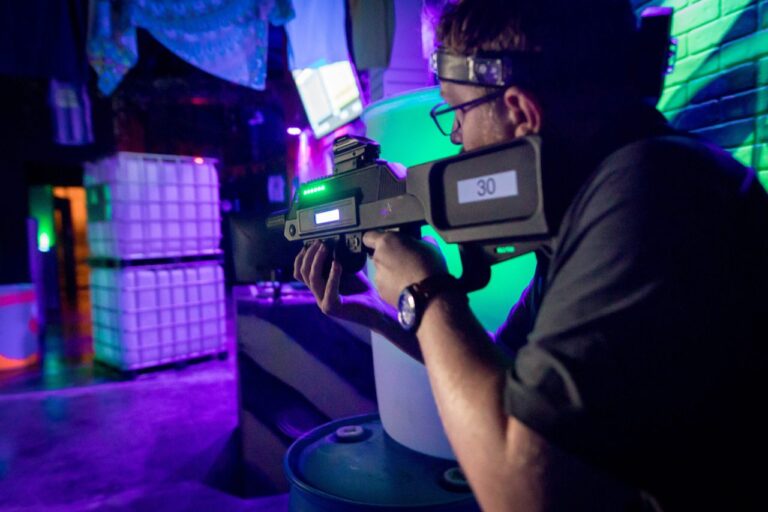
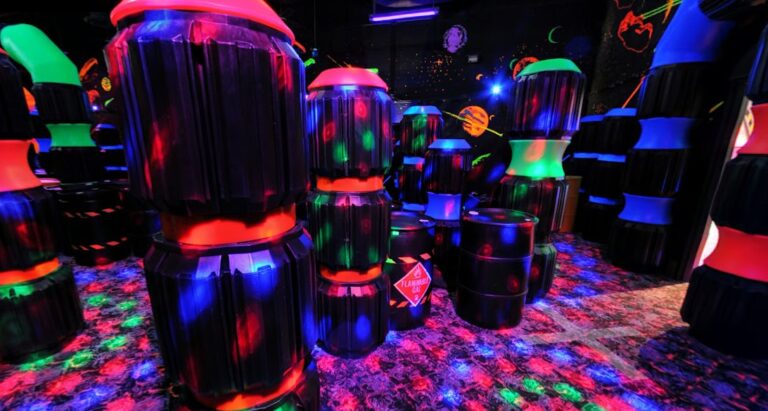
As Ohio’s largest indoor laser tag facility, it offers three urban-themed arenas that can host up to 150 players, more than 30 combat missions, and a wide selection of replica weapons. Beyond laser tag, the venue features Nerf/GellyBall wars, urban axe throwing with multiple lanes and coaching, and an arcade mixing modern titles like Halo with classics such as Pac-Man and Space Invaders.
The reception area doubles as a lounge with live video feeds of the arenas, sports on TV, free WiFi, and a cafe serving food, drinks, and adult beverages, with free parking on site. It’s a natural fit for birthday parties, corporate team-building, bachelor and bachelorette parties, youth groups, churches, and schools, with a dedicated private Nerf arena for group events and a staff praised for being kind and helpful.
 Indoors
Scene75 Entertainment Center Columbus is located in Dublin, Ohio, inside the Mall at Tuttle Crossing, in a former department store space that now holds one of the largest indoor family entertainment centers in the country. The venue centers on a multi-level laser tag arena called The Vault & Gold Mine, built with ramps, bridges, high-ground positions, blacklights, fog, and a maze of walls that fits up to 25 players per mission. Beyond laser tag, guests can race indoor go-karts, ride a spinning coaster and a 35-foot drop tower, play blacklight mini-golf, try bumper cars, a 7D dark ride, a laser maze, escape rooms, and an arcade with more than 200 games.
The venue also offers a full-service restaurant, several bars, and a wide range of event spaces, making it a popular spot for birthday parties, corporate events, field trips, and team-building outings. Admission is free, and everything runs on a reloadable game card with electronic tickets that never expire. With dedicated hosts, private rooms, and a grand hall for large celebrations, it suits everything from a child’s birthday to a company retreat, all under one weather-proof roof.
Indoors
RollHouse Columbus sits in the Hilltop area of Columbus, Ohio, at 500 Georgesville Road. It’s a full-scale family entertainment center where a state-of-the-art laser tag arena shares the building with 28 modern bowling lanes and an extensive arcade with a ticket-based prize system. Guests can jump between tactical laser tag rounds, bowling, and arcade games, making it easy to fill an entire afternoon with activity.
Beyond the games, the venue offers gourmet dining with burgers, pizza, wings, and drinks, plus dedicated party packages for kids’ birthdays, teen parties, adult celebrations, company events, school groups, and fundraisers. The friendly staff handles event logistics, and the comfortable seating lets guests relax between activities. It’s a versatile spot for family outings, team-building, and group celebrations alike.
IndoorsCombat Ops Entertainment-Columbus sits in the far north reaches of Columbus, Ohio, on Dillmont Drive, not far from the city’s northern suburbs. It is a locally owned, battle-themed family entertainment center that has been running for nearly a decade, open seven days a week with no general admission fee.
Its signature attraction is mission-based laser tag in one of Ohio’s largest indoor arenas, with objective-driven games like capture-the-flag, king-of-the-hill, and zombie missions, plus hundreds of blaster configurations. The venue also offers a dedicated Nerf-style tag arena, indoor axe throwing on digital targets, an arcade with a card-reader system, a motion-sensing pixel floor, dodgeball, free-roam virtual reality, and mini-golf.
Beyond the attractions, the facility includes four private party rooms and a Caliber Café serving pizza, beer, and wine slushies, with catered food options for larger events. The staff includes dedicated party captains and game masters, and the venue hosts birthday parties, corporate team building, private events, youth and school gatherings, fundraisers, and bachelor or bachelorette parties.
IndoorsSkate Zone 71 is located in the Northland neighborhood of Columbus, Ohio, at 4900 Evanswood Drive. It’s a long-running family entertainment center that remains open and operating, centered on a spacious roller skating rink with a freshly refinished color floor, a large arcade with prize redemption, and a fully stocked Roller Cafe. The venue offers themed birthday party packages with add-on bundles like Demon Hunters, Barbie, Swiftie, Glow, and Mario, plus skating lessons, adult skate nights, and group rates for parties of 15 or more. Its laser tag arena is currently out of service for renovations and upgrades, though the rest of the facility continues to run as usual.
Beyond skating, the venue hosts STEM field trips, school fundraisers, scout groups, private parties, and corporate events, and it now serves beer, wine, and seltzers for adults. The staff is frequently praised in reviews for friendly, attentive party hosting, and the facility offers everything from a Roller Cafe to glow skate sessions and arcade game cards. It’s a versatile, welcoming spot well suited to birthdays, school outings, and group celebrations of all kinds.
IndoorsIn the landscape of modern entertainment, few activities have managed to bridge the gap between childhood play and strategic physical exercise as effectively as laser tag. Far from the simplistic “tag” games of the past, contemporary laser tag has evolved into a sophisticated, high-tech experience that challenges the body and mind in equal measure. It is a sport where technology meets adrenaline, creating an environment where players of all experience levels can test their reflexes, teamwork, and tactical thinking.
At its core, laser tag is a recreational shooting sport in which players attempt to score points by tagging infrared-sensitive targets, typically attached to the vests worn by opposing players, using infrared-emitting light guns. Originating in the late 1970s and popularized throughout the 1980s, the technology has moved from clunky, tethered equipment to wireless, highly accurate sensors and ergonomic hardware.
Unlike traditional paintball or airsoft, laser tag is entirely non-contact and painless. Because it uses infrared beams—similar to the technology found in a standard television remote—there are no projectiles involved. This makes it an incredibly safe alternative for high-energy group activities. Modern systems often include sophisticated scoreboards, audio feedback, and computer-controlled play areas that allow for real-time tracking of statistics, such as accuracy percentages, lives remaining, and team standings.
The variety inherent in laser tag is what keeps players returning time and again. While casual play often defaults to a simple “Team Deathmatch,” professional and organized leagues utilize complex, narrative-driven scenarios that demand distinct skill sets.
“Capture the Flag” remains a staple, forcing players to balance defensive posturing with aggressive offensive maneuvers. In this scenario, teams must infiltrate the enemy territory, retrieve a virtual or physical flag, and return it to their home base without being “tagged out.” Another popular mode is “King of the Hill,” where a specific coordinate on the map becomes the focal point, forcing teams into intense skirmishes to hold the territory for the longest duration.
More advanced venues offer “Hostage Rescue” or “Bomb Defusal” scenarios, where time-sensitive objectives require players to communicate under pressure. These mission-based games turn the arena into a living puzzle, where speed alone is rarely enough to secure a victory; instead, tactical positioning and coordinated movement are the keys to success.
The physical and psychological benefits of laser tag are frequently understated. Physically, a session of laser tag is an intense cardiovascular workout. Players spend significant time sprinting, ducking, crawling, and maneuvering through intricate obstacle courses. It promotes agility, balance, and fine motor coordination.
Beyond the physical exertion, laser tag is a masterclass in soft-skill development. Communication is paramount; players must relay information about enemy locations and coordinate team movements in real time. It encourages critical thinking under duress, forcing participants to make split-second decisions that impact the outcome of the entire team. Furthermore, it acts as a stress-relief outlet, providing a healthy way to release pent-up energy and frustration in a structured environment.
Research into human behavior and developmental psychology suggests that simulation-based play, like laser tag, offers unique advantages. Behavioral scientists often point to “flow state”—a mental state of deep immersion and focus—as a key byproduct of laser tag. Because the game requires constant mental engagement, players often experience a sense of intense satisfaction that can improve mood and cognitive flexibility.
Industry experts also note the transition of laser tag into the realm of “e-sports adjacent” activity. With the integration of programmable arenas and mobile apps that sync with equipment, the industry is moving toward a more data-driven model. Experts argue that this gamification is essential for maintaining relevance in a digital world, as it provides instant gratification and measurable improvement, which keeps players motivated to refine their skills.
While laser tag is often marketed toward younger audiences, the demographic reach is significantly broader. For children, it serves as an excellent introduction to cooperative play. It teaches the value of following rules, respecting boundaries, and understanding that individual performance contributes to a group goal. The lack of projectiles ensures that parents feel comfortable allowing their children to play, knowing that the primary risks are limited to minor trips or falls.
However, the game is equally popular among teenagers and adults. The tactical depth of the game appeals to those who enjoy strategy games, while the physical intensity satisfies the need for an active hobby.
The versatility of laser tag makes it a premier choice for events. For birthday parties, it offers a high-energy, mess-free alternative to traditional venues. It provides a shared experience that creates lasting memories, with many facilities offering private party rooms and catering options to round out the celebration.
Graduation parties often feature laser tag as a way for peers to celebrate their transition to the next phase of life through friendly competition. Perhaps most notably, corporate parties have adopted laser tag as a leading team-building exercise. In a boardroom, hierarchy is rigid; in a laser tag arena, that hierarchy dissolves. Managers and entry-level employees must work together as equals to achieve common goals, fostering a culture of mutual respect and communication that translates back to the workplace.
The playing environment significantly alters the atmosphere of the game. Indoor laser tag arenas are typically controlled, dimly lit environments designed to maximize the “sci-fi” experience. These venues often feature fog machines, ultraviolet “black” lights, and elaborate neon-themed obstacles, such as mazes, ramps, and platforms. Being climate-controlled, indoor venues are the go-to choice throughout the year, regardless of the weather.
Outdoor laser tag, by contrast, offers a more rugged, tactical experience. Played in wooded areas, urban obstacle courses, or purpose-built “battlefields,” outdoor venues utilize natural cover like trees, bunkers, and trenches. The added challenge of navigating uneven terrain and adjusting to changing light conditions makes outdoor laser tag feel more akin to a military simulation. These venues often use longer-range equipment, allowing for sniper-style play and more expansive, realistic combat scenarios.
Ultimately, whether you are seeking the neon-drenched thrill of an indoor maze or the tactical challenge of an outdoor woodland skirmish, laser tag provides a rare combination of technology, sport, and social interaction. It remains one of the few activities capable of scaling from a simple childhood birthday bash to a complex corporate training simulation, proving that the simple joy of “tagging” an opponent with light will never go out of style.


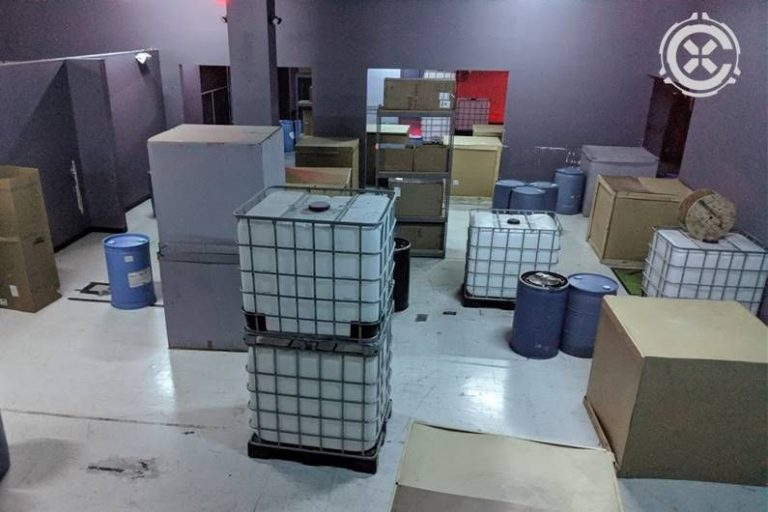
 100 Dillmont Dr, Columbus, OH 43235